Manitoba Crossings One Machine at a Time
Navigating Manitoba's vast network of trails and backroads with your ATV or UTV is an incredible experience, but it inevitably brings you to points where you need to cross a paved road or highway. This can be one of the trickiest parts of any ride, not just from a safety perspective, but also because the rules aren't always crystal clear, especially when you're out with a group. Many riders mistakenly believe they can cross en masse, or that a quick dart across is harmless if traffic is sparse. This guide is here to untangle those complexities, highlighting why the "one machine at a time" rule is paramount and ensuring you understand every step needed for a safe and legal crossing in Manitoba.
Understanding the Legal Landscape of Road Crossings
When you're out enjoying the Manitoba wilderness on your off-road vehicle, the moment you encounter a public roadway, the rules of the game change entirely. It's no longer just about trail etiquette; it becomes about highway safety and the law. This transition is where many riders get into trouble, either through misunderstanding or by underestimating the inherent risks.
Why Crossings Are a Big Deal
The provincial government takes road crossings very seriously, and for good reason. Highways are designed for high-speed vehicular traffic, and an ATV or UTV, even with all the proper modifications, is simply not built to integrate into that environment. The speed differential, the smaller profile of an ORV, and the often-unpredictable nature of off-road terrain leading up to a crossing all contribute to a significantly increased risk of collision. While you might be legally allowed to ride in a ditch in certain areas, [Manitoba Bans Riding on Roadways] themselves. A crossing is a brief, necessary exception to this rule, treated with the utmost caution.
Beyond the immediate danger to life and limb, there's the legal aspect. An improper crossing can lead to hefty fines, insurance complications, and even criminal charges if it results in an accident causing injury or death. It's not just about avoiding a ticket; it's about preventing a tragedy and protecting yourself and your riding companions from severe liability. Understanding the specific regulations is your first line of defense.
The Core Principle: One Machine at a Time
This is the golden rule for all ORV roadway crossings in Manitoba, and it cannot be stressed enough: one machine, one crossing. Imagine a car travelling at 100 km/h seeing a group of three or four ATVs attempting to cross a highway together. Even if the first machine makes it, the driver might misjudge the speed, the number of machines, or simply be unprepared for a second or third ORV immediately following. The "one machine at a time" rule is designed to give highway drivers maximum warning and time to react to one predictable obstacle, rather than a confusing parade of machines.
This means no convoys, no "follow the leader" directly behind each other, and certainly no spread-out lines of machines trying to make it across together. Each rider must approach the crossing as an individual event, ensuring the roadway is clear for their machine before proceeding. It requires patience and discipline, especially when riding with a larger group, but it is absolutely essential for safety and legality.
Who Can Cross? Licence and Age Requirements
It's not enough to simply have an ORV. The individual operating the machine during a road crossing must also meet specific licensing criteria. Because a crossing involves interacting with regulated highway traffic, the operator is essentially acting as a driver on a public thoroughfare, albeit briefly. Therefore, anyone performing an ORV crossing in Manitoba must possess a valid driver's licence. [Manitoba Crossings Need a Driver's Licence] to ensure that operators have at least a basic understanding of traffic laws and defensive driving.
This requirement has implications for younger riders. While there are specific age tiers for operating ORVs in Manitoba, the act of crossing a public road is reserved for those who hold a full, unrestricted driver's licence. For instance, while a 16-year-old can operate an ORV, [Manitoba Rules for a 16-Year-Old Rider] for ditch riding are different from the requirements for crossing a highway. A 16-year-old with a Class 5 Stage 2 Intermediate licence, for example, would be able to perform a crossing. However, a younger rider with a learner's permit or without a full licence would not be legally permitted to cross a highway, even under supervision. Always confirm the specific licence class and stage required, as these rules are designed to protect everyone on the road.
Executing a Safe and Legal Road Crossing
Successfully and safely navigating a road crossing with your ORV involves more than just knowing the "one machine at a time" rule. It demands a deliberate, step-by-step approach that prioritizes visibility, awareness, and yielding to all other traffic. Rushing this critical manoeuvre is never worth the risk.
Stop, Look, and Yield
Before you even think about putting a tire on the pavement, you must bring your ORV to a complete stop at the very edge of the roadway or shoulder, allowing yourself ample space to observe traffic. This isn't a rolling stop; it's a full, deliberate halt. From this stopped position, you need to execute a thorough scan of the highway in both directions. Look far down the road, assessing the speed and distance of any approaching vehicles. Your goal is to identify a sufficiently large gap in traffic that allows you to cross safely without causing any highway vehicle to slow down or alter its course.
This is where patience truly comes into play. If you're on a busy highway, you might have to wait a few minutes, or even longer, for a safe opportunity. It can be frustrating, especially when you're keen to get back on the trail, but yielding to all highway traffic is not just a courtesy; it's a legal obligation. [Stopping and Yielding Before You Cross a Highway] is a non-negotiable part of the process. Never assume a driver has seen you or will slow down for you. Always assume they haven't and plan your crossing accordingly.
The Importance of a Clear View
Having a "clear view" when crossing a highway is multifaceted. Firstly, it means you must have an unobstructed line of sight down the highway in both directions. This helps you accurately judge the speed and distance of oncoming traffic. If your view is blocked by a hill, a curve, thick brush, or a large vehicle like a semi-truck, you simply cannot proceed. You must find an alternative crossing point that offers a truly clear view, or wait until the obstruction clears.
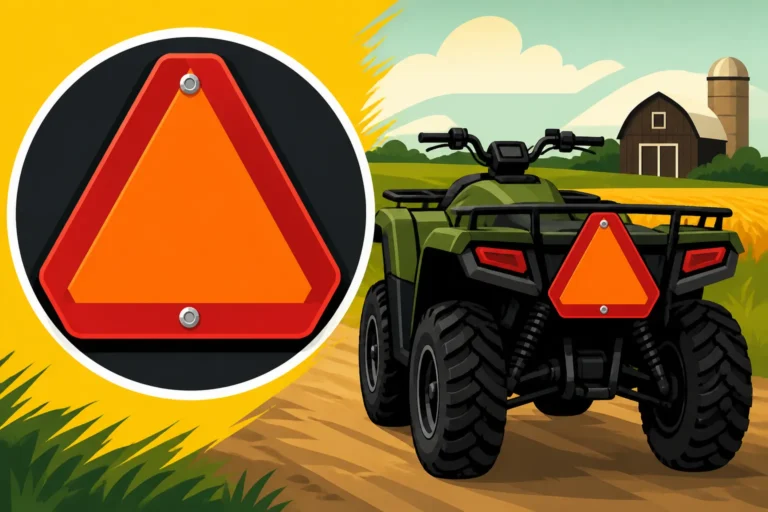
Secondly, and equally vital, is ensuring that highway drivers have a clear view of you. Off-road vehicles can be surprisingly hard to spot, especially in certain lighting conditions, against busy backgrounds, or if you're pulling a small trailer. Consider adding high-visibility flags or even illuminated whip lights, like those offered by SuperATV, to make your presence undeniable. Brightly coloured helmets and gear also help. A driver needs enough time to register your presence, understand your intent to cross, and react safely. [Manitoba Crossings Need a Clear View] is about mutual visibility, not just yours. Without it, you're putting yourself and others at extreme risk.
Crossing Procedure: Straight and Swift
Once you've stopped, looked, yielded, and identified a clear, safe gap in traffic, it's time to execute the crossing. The key here is a direct, perpendicular path across the roadway. You should aim to cross the highway at a right angle (90 degrees) to the flow of traffic, in as straight a line as possible. This minimizes the time your machine spends on the paved surface and makes your trajectory predictable for any distant highway traffic that might appear.
Accelerate smoothly but deliberately, maintaining full control of your machine. Do not weave, swerve, or ride along the shoulder of the highway. Get across the travel lanes and onto the shoulder or ditch on the other side as quickly and efficiently as possible, then move clear of the immediate crossing area. It's a quick sprint, not a leisurely stroll. The faster you clear the roadway, the less time you are exposed to potential hazards from highway traffic.
Group Riding and the Solo Crossing Imperative
Riding with friends or family is a huge part of the ORV experience, and it's fantastic for sharing the adventure. However, when it comes to road crossings, group dynamics must be set aside in favour of individual responsibility. This is where many groups struggle, either out of habit or a mistaken belief that "safety in numbers" applies.
Why Group Crossings Are Prohibited
The prohibition on group crossings isn't about being inconvenient; it's a critical safety measure. Imagine you're driving a car down a highway and suddenly an ATV appears from the ditch to cross. You react, perhaps slow down. Now imagine three more ATVs immediately follow that first one. Your brain, having processed the first ORV and potentially starting to accelerate again, suddenly has to re-evaluate and react to a continuous stream of unexpected vehicles. This can be incredibly confusing and dangerous for highway drivers. They might misjudge the number of machines, their collective speed, or simply not expect a succession of crossings.
This confusion dramatically increases the risk of a collision. For this reason, official regulations are clear: each ORV must execute its crossing independently, waiting for the road to be clear for its own safe passage. It prevents a chain reaction of risk and ensures that highway drivers only have to account for one off-road vehicle at a time. It's a rule that takes precedence over the camaraderie of a group ride when you're interacting with public roads.
Staggering Your Group for Safe Crossings
So, how do you manage a group when you reach a highway crossing? The answer is careful staggering and clear communication. When your group approaches a crossing, everyone should pull over to a safe, visible area well away from the road itself. The ride leader should then scout the crossing point, ensuring it's clear and safe for the first machine.
Once the leader determines it's safe, they cross alone, moving completely clear of the highway on the other side. They should then signal to the next rider when the coast is clear for that rider to begin their own stop, look, and yield process. It's not about giving a blanket "go" signal; it's about indicating that conditions might be favourable for the next rider to begin their assessment. Each subsequent rider then repeats the entire stop, look, yield, and cross procedure individually. This process requires patience from everyone in the group. Designate a "tail gunner" as well, who can help ensure the last rider crosses safely and that no one is left behind. Clear hand signals or even a simple two-way radio system can be invaluable for coordinating these crossings.
Maintaining Separation After Crossing
Once a rider successfully crosses the highway, the natural inclination is often to stop immediately on the other side and wait for the rest of the group. However, this can inadvertently create another hazard. By stopping too close to the crossing point, you might obscure the view for the next rider in your group, or worse, create a congestion point that confuses highway traffic if a vehicle pulls off the road.
Instead, after crossing, continue to move a safe distance away from the immediate crossing area. Find a spot where your machine is completely clear of the shoulder, well off the highway, and where you won't interfere with the next rider's clear path. This ensures that each crossing is treated as a distinct event, with minimal impact on highway traffic and maximum safety for your entire group. It also allows the ride leader or designated spotter to maintain a clear line of sight for signalling to the next rider. Think of it as creating a safe "landing zone" for each machine before the next one takes off.
Related Roadway Rules and General Safety
While the specific act of crossing a roadway is paramount, it's part of a broader set of rules governing how ORVs interact with public roads in Manitoba. Understanding these related regulations and general safety practices will ensure you're not just crossing legally, but riding responsibly overall.
Ditch Riding vs. Roadways
It's crucial to distinguish between riding in the ditch and crossing a roadway. In many areas of Manitoba, ORVs are permitted to operate in the ditch immediately adjacent to a public road, under specific conditions. This can be a convenient way to connect trails or access certain areas. However, ditch riding has its own detailed set of rules regarding direction of travel, speed limits, and even the type of machine permitted. [Manitoba Ditch Riding Rules] stipulate things like only riding in the ditch on the right side of the road in the same direction as traffic.
A ditch is considered part of the highway right-of-way, but it is distinct from the paved travel lanes. While you might be legally riding in a ditch, that does not grant you any special right to enter the roadway itself, except for a regulated crossing. Always remember that even when in the ditch, you are still in close proximity to high-speed traffic, and the same principles of vigilance and yielding apply. Never assume that ditch access translates to immediate roadway access.
Equipment and Visibility for Road Interactions
Visibility is your best friend when your ORV is anywhere near a public road. While headlights and taillights are mandatory during specific hours (half an hour before sunset until half an hour after sunrise), it's always a good idea to have them on, even in daylight, when operating near roads. This simple act dramatically increases your profile to other drivers. High-visibility flags, mounted securely, are also excellent additions.
For UTVs, which are often larger and might be mistaken for small cars at a distance, accessories that improve safety and communication can be invaluable. While not specifically mandated for a brief crossing, adding accessories like enhanced mirrors or even turn signal kits (especially on a UTV, where SuperATV offers robust options) can significantly improve your communication with other drivers. Ensuring your machine is in top condition, perhaps even with robust protection like a SuperATV skid plate, won't directly affect your legal crossing, but it builds confidence in your machine's ability to handle unexpected terrain transitions should you need to react quickly. Check [Manitoba Lighting Requirements on a Machine] for full details on what's required for your ORV. The more visible you are, the safer your interaction with roadways will be.
Always Carry Your Papers
This might seem like a basic point, but it's astonishing how many riders venture out without their essential documents. Whether you're making a quick crossing or just riding along a trail that might intersect with a road, you need to have your registration card with you. Law enforcement officers, including RCMP and Conservation Officers, can and will conduct random checks. If you're involved in an incident, or even just stopped for a routine check near a highway, having your documents readily available makes the process much smoother.
[Carrying Your Registration Card on Every Ride] is not just a suggestion; it's a legal requirement. An officer performing [Manitoba Equipment Checks by Officers] will likely ask for proof of registration and your driver's licence. Be prepared, be polite, and make sure your paperwork is up-to-date and accessible. A simple plastic sleeve or waterproof pouch in your glove box or saddlebag can protect these vital documents from the elements.
Common Rider Questions and Enforcement
Even with all the rules laid out, riders often have lingering questions about road crossings, especially concerning enforcement and the nuances of real-world scenarios. It's natural to wonder about exceptions or the likelihood of getting caught, but it's always best to err on the side of caution and compliance.
"What if there's no traffic for miles?"
This is a frequently asked question, and the temptation to simply 'fly across' when the highway appears empty is strong. However, the rule requiring individual crossings, stopping, looking, and yielding applies regardless of perceived traffic levels. The law is written to cover all situations, not just peak rush hour. While an officer might not be around every corner, the legal obligation remains.
Moreover, relying on the absence of traffic can be deceptive. A vehicle could appear over a hill or around a bend much faster than you anticipate. Or, an unforeseen mechanical issue with your machine could strand you on the roadway. The rules are in place for consistent safety standards, not just when a perceived threat is imminent. Violating these rules, even on an "empty" road, could still result in fines or penalties if observed by law enforcement. It's about instilling a safe habit, not just avoiding a ticket.
Penalties for Non-Compliance
Ignoring the rules for crossing a highway can lead to tangible and unpleasant consequences. Depending on the severity of the infraction, an officer can issue a ticket with a fine. [Manitoba Ticket Costs for Riders] can vary significantly depending on the specific violation, but they are never negligible. These fines are often designed to act as a deterrent, reflecting the seriousness of endangering yourself and others on a public roadway.
Beyond monetary fines, a serious infraction, especially one involving a collision or careless operation, could lead to more severe penalties. Reckless behaviour could result in higher fines or even court appearances. In the most serious cases, particularly if injury or property damage occurs, you could face civil liability and even criminal charges. And, of course, operating while impaired, even for a quick crossing, carries extremely harsh [Manitoba Impaired Riding Penalties] that can include licence suspension, significant fines, and potential jail time, treating an ORV just like any other motor vehicle in this context.
The Role of Autopac Insurance
Manitoba's public insurance system, Autopac through MPI, provides basic liability coverage for registered off-road vehicles. This fundamental coverage is crucial because it helps protect you in the event your ORV causes damage or injury to another person or their property. However, it's important to understand the conditions under which this coverage applies. When you operate your ORV in violation of provincial laws – such as performing an illegal group crossing, operating without a valid licence, or riding while impaired – you risk having your insurance claim denied or reduced.
For example, if you are involved in a collision while illegally crossing a highway with your group, your [Manitoba Liability Coverage Requirement] might not fully protect you. MPI could determine that your actions constituted a breach of policy conditions or a direct violation of the Off-Road Vehicles Act, potentially leaving you personally responsible for significant damages. Always follow the rules, not just to avoid a ticket, but to ensure your insurance coverage remains valid and ready to protect you should an unforeseen incident occur.
Summary of ORV Road Crossing Rules in Manitoba
To help consolidate these crucial rules for safe and legal ORV road crossings in Manitoba, here's a quick overview:
| Aspect | Legal Crossing | Illegal Crossing (Group/Improper) |
|---|---|---|
| Number of Machines | One machine at a time | Multiple machines crossing simultaneously or in close succession |
| Stopping | Must come to a complete stop at the roadway edge | Rolling stop, slow roll, or no stop |
| Yielding | Yield to all highway traffic in both directions | Assumes right-of-way, forces highway traffic to react, or crosses with insufficient gap |
| View | Both rider and highway traffic have a clear view | View obstructed (for rider or driver), low visibility conditions, or crossing blind |
| Crossing Path | Perpendicular (90 degrees), direct, and swift | Diagonal, meandering, riding along shoulder, or slow crossing |
| Driver's Licence | Valid driver's licence (Class 5 Intermediate or higher) | No valid driver's licence, or operating with a learner's permit without meeting specific conditions for ORV use |
| Consequences | Safe passage, legal compliance | Fines, potential for serious accident, insurance complications, civil/criminal liability |
This article is for general informational purposes only and does not constitute professional advice. Laws, prices and regulations vary by location and change over time. Consult a qualified professional for guidance on your specific situation.