What an Officer Can Ask to See in Manitoba
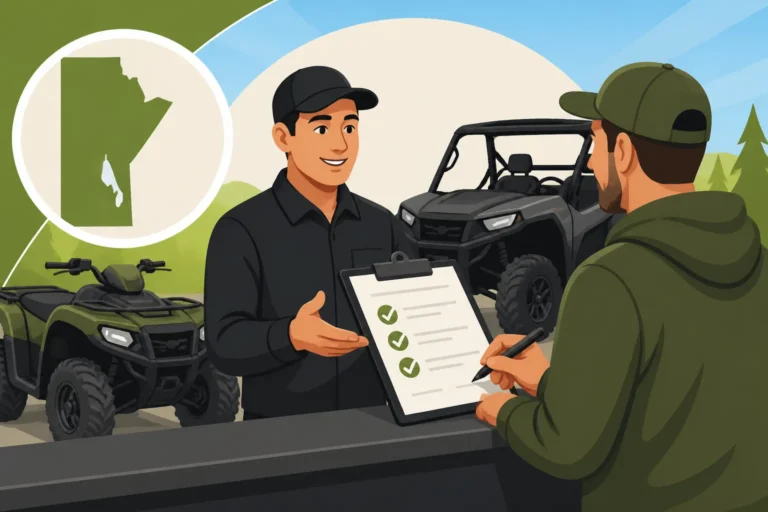
It's an experience every off-road rider in Manitoba eventually considers: what happens if a conservation officer, RCMP, or local police officer pulls you over while you're out on the trails or crossing a roadway? The thought can be a little unsettling, especially if you're not entirely sure what you're expected to provide. This guide is here to alleviate that anxiety, breaking down exactly what documentation and information an officer can legally ask you to produce while operating your ATV or UTV in our beautiful province.
The Essentials: What Every Rider Must Carry
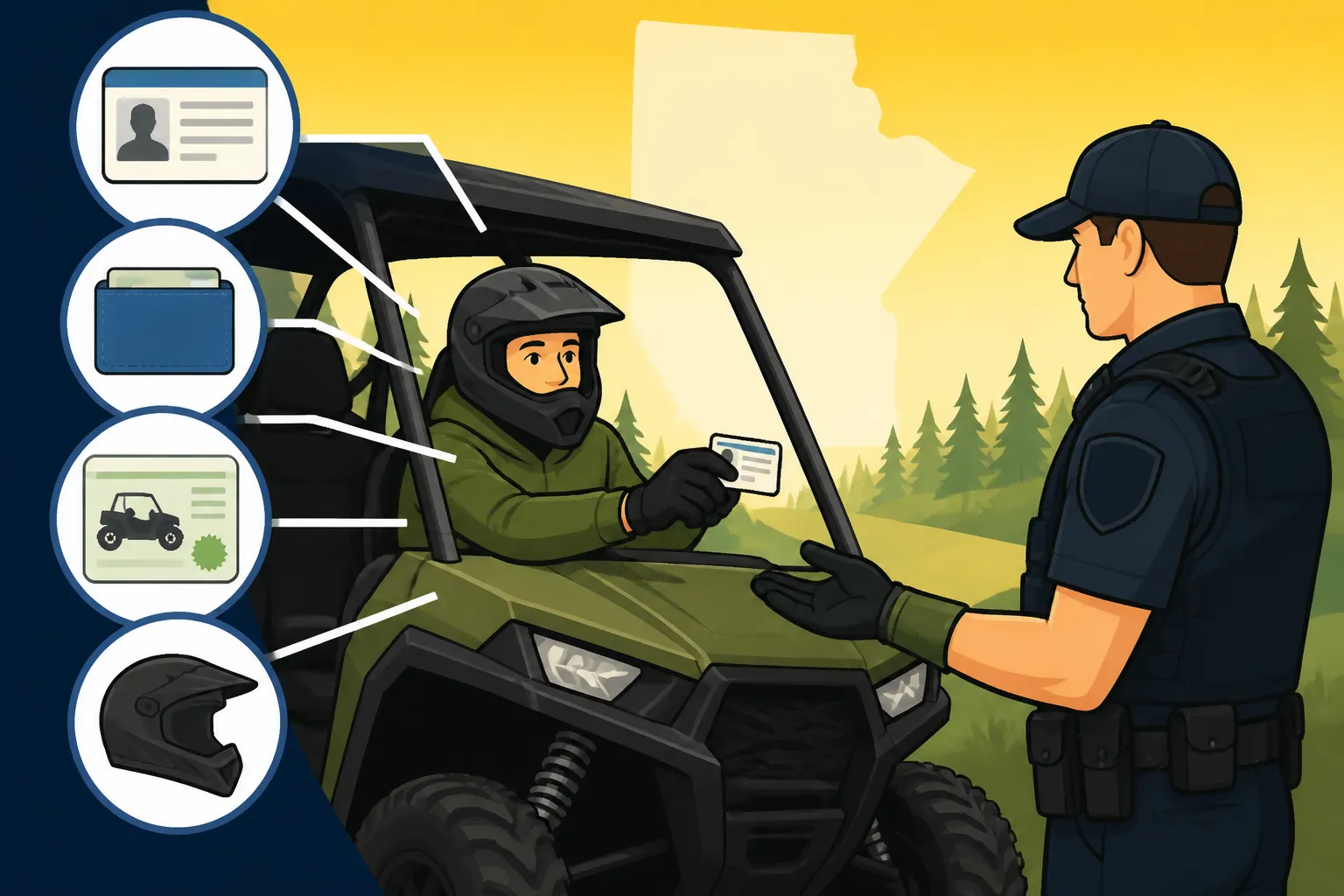
When you're out enjoying the Manitoba wilderness on your off-road vehicle, an officer isn't just checking to see if you're having a good time. They're ensuring you're operating safely and legally, which means having specific documents readily available. Think of these as your rider's toolkit – just as essential as your helmet or a basic repair kit.
Your Valid Driver's Licence
This is probably the most straightforward one, but it's crucial. While you don't always need a specific "off-road" endorsement on your driver's licence to operate an ATV or UTV, especially on trails or private land, you absolutely need a valid driver's licence if you're crossing a provincial road or highway, or engaging in any activity that puts you in traffic. An officer will definitely ask to see this. It proves you've met the basic requirements for operating a motor vehicle. Remember, even if you're a seasoned rider, a suspended or expired licence means you shouldn't be operating any vehicle, off-road or otherwise. [Do You Need a Licence for an ATV in Manitoba?] covers this in more detail.
If you're a younger rider, or just starting out, you might be wondering about learner's permits. Generally, you need at least a Class 5L (Learner's) driver's licence to operate an off-road vehicle in situations where a licence is required, such as crossing a highway. However, you'll still be subject to specific conditions, like needing supervision from a fully licensed adult. An officer will confirm not just that you have a licence, but also that it's the appropriate licence for the specific riding scenario you're in.
Proof of Your ORV Registration
This is non-negotiable for most off-road riders in Manitoba. Unless you fall under very specific [Manitoba Registration Exemptions Explained], your ATV or UTV must be registered with Manitoba Public Insurance (MPI). When an officer asks for your registration, they're looking for the physical registration card. This isn't just a formality; it links your machine to you, confirming its legal status.
The registration card contains vital information about your machine, including its Vehicle Identification Number (VIN), make, model, and the name of the registered owner. It also confirms that you've paid the necessary fees, including the provincial off-road trails fee, which supports trail maintenance across Manitoba. It's truly a critical piece of paper, and officers are well-versed in checking for its validity. You might think, "I'm just on a back trail, who's going to know?" But conservation officers, in particular, are regularly patrolling these areas. For more on this, check out [Manitoba ORV Registration Through MPI].
Many riders tuck their registration card into a waterproof pouch, maybe in a storage compartment or even a jacket pocket. That's a smart move, because getting it wet and illegible is just another headache you don't need. Keep it safe, keep it dry, and have it ready to present. [Carrying Your Registration Card on Every Ride] offers some practical tips on this.
Evidence of Ownership or Permission
While your registration card proves the machine is registered to someone, an officer might also ask for proof that you are the legitimate owner or have permission to operate it. This becomes particularly relevant if the machine is registered to someone else, or if there's any suspicion of theft.
For owners, a bill of sale or the original registration certificate (which includes a transfer of ownership section) serves as excellent proof of ownership. If you bought your machine used, holding onto that original transfer document from the previous owner, or a formal bill of sale, is paramount. Many riders rely on informal notes, but a proper document, perhaps created using a service like LawDepot, can make all the difference in proving legal ownership. These documents are vital, especially if there’s a discrepancy between who’s riding and who’s registered.
If you're borrowing a friend's or family member's ATV, it's wise to carry a written note of permission from the registered owner. This doesn't need to be fancy – just a simple statement confirming you have their consent to operate the machine, along with their contact information. It can save a lot of time and hassle if an officer needs to verify your story. This is especially true if you’re riding a machine that's been in the family for ages but is still technically registered in an older relative's name.
Machine-Specific Information and Equipment Checks
Beyond your personal documents, officers are also looking at the machine itself. They're making sure it meets basic safety and legal requirements, and that you're operating it responsibly.
Your Off-Road Vehicle Plate
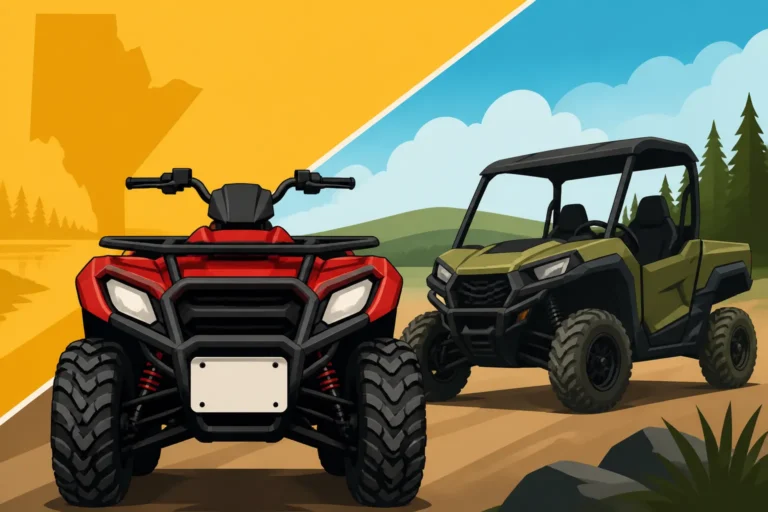
Manitoba requires off-road vehicles to display a registration plate. An officer will be looking for this plate, ensuring it's properly mounted and visible. For quads and side-by-sides, it typically goes on the rear. For dirt bikes, it's on the front. Snowmobiles have their own specific placement, usually on the left side. [Manitoba Issues One Plate, Not Two] and [Manitoba Plate Mounting by Machine Type] delve into the specifics.
If your plate is missing, obscured by mud, or improperly mounted, an officer will definitely notice. A missing plate could indicate a lapse in registration, or worse, that the machine might be stolen. It's a quick visual check for them that tells a lot about the machine's legal status. Always make sure your plate is clean, securely attached, and clearly visible.
Safety Equipment Verification
Officers are also tasked with ensuring you and your passengers are complying with safety regulations. The most common check is for helmets. Manitoba has a [Manitoba ATV Helmet Law] that applies to most riders, with a few specific exemptions. An officer will want to see that you and any passengers are wearing an approved helmet and that it's properly fastened.
Beyond helmets, an officer might also check for other equipment based on the type of machine and where you're riding. For example, if you're operating a side-by-side designed with seat belts, they'll expect them to be worn. If you're riding at dusk or night, they'll check that your lights are operational and meet the required visibility standards. Spark arresters are another key item, especially during wildfire season, as they prevent hot carbon from igniting dry vegetation. [Manitoba Equipment Checks by Officers] provides a good overview of what they might be looking for.
Vehicle Identification Number (VIN)
The VIN is your machine's unique fingerprint. Officers can and do ask to verify the VIN on the machine against the number listed on your registration card or proof of ownership. This is a crucial step in combating vehicle theft and ensuring that the machine you're operating is indeed the one legally registered to you or the owner.
The VIN is usually stamped on the frame in a visible location, though its exact position can vary by manufacturer and model. It's a good idea to know where your VIN is located before you head out, just in case you need to point it out to an officer. If the VIN on the machine doesn't match the documentation, or if it appears to have been tampered with, you'll have some serious explaining to do. This is where a formal bill of sale, perhaps a template from LawDepot, becomes even more critical for proving legitimate transfer of an asset.
Proving Your Identity and Age
Sometimes, it's not just about the machine or its documents, but about who is operating it. Officers need to confirm identity and ensure compliance with age restrictions.
Personal Identification
Just like with any other interaction with law enforcement, an officer can ask you for personal identification to confirm your identity. Your driver's licence usually serves this purpose perfectly, as it contains your name, address, and photo. If you don't have a driver's licence (for example, if you're riding in a situation where one isn't strictly required, like on private land where the owner gave permission), then another form of government-issued photo ID, such as a provincial identification card, might be requested.
This is all about accountability. If there's an incident, an accident, or a suspected violation of the Off-Road Vehicles Act or any other regulation, the officer needs to know who they are speaking with to properly document the encounter and follow up if necessary. It’s always best to be cooperative and provide your identification promptly.
Verifying Age Requirements
Manitoba has specific [Manitoba ATV Age Requirements] for operating off-road vehicles, especially for younger riders. An officer might ask for proof of age, particularly if you appear to be close to the minimum age limits or if there's a child passenger. Your driver's licence typically covers this, but if you're a younger rider without a licence, a birth certificate or a provincial ID card could be requested.
The rules around age are there for safety. For instance, riders under certain ages have restrictions on where and when they can ride, and often require adult supervision. Officers enforce these rules to protect young riders from serious injury. [Manitoba Rules for a 12-Year-Old Rider] and [Manitoba Rules for a 14-Year-Old Rider] outline some of these specific rules. If an officer suspects an age violation, they're simply doing their job to keep everyone safe.
What Happens if You Don't Have the Required Information?
Let's be realistic: sometimes, despite our best intentions, we forget things. Maybe your registration card slipped out of your pocket, or you accidentally left your licence at home. It happens.
Potential Consequences
Not having the required documents or equipment readily available can lead to various outcomes, ranging from a warning to a fine, or even your machine being impounded. It largely depends on the specific document, the officer's discretion, and whether there are other suspected violations.
- Warning: For minor oversights, an officer might issue a verbal warning and give you a short period (e.g., 24-48 hours) to produce the missing document at an MPI office or police station.
- Ticket/Fine: More serious infractions, like not having a valid registration or operating without a licence where one is required, will almost certainly result in a ticket and a fine. These can add up quickly.
- Impoundment: In severe cases, such as operating an unregistered machine, a stolen machine, or if you're unlicensed and causing a danger, an officer has the authority to impound your ATV or UTV. Getting your machine back from impound can be a costly and time-consuming headache.
It's always better to comply and explain any genuine oversight calmly. Cooperation can often lead to a more lenient outcome than confrontation. Remember, the officer isn't trying to ruin your day; they're upholding provincial regulations designed to keep everyone safe and ensure legal operation of these powerful machines. This can also extend to issues like not having the correct [Manitoba Insurance Included With Registration] or operating in a prohibited area, which an officer might investigate further if basic documents are missing.
Table of Common Requests and Their Importance
Here's a quick summary of what an officer might ask for and why it matters:
| Item Requested | Why It's Important | Potential Consequence if Missing (Example) |
|---|---|---|
| Valid Driver's Licence | Proves identity and legal qualification to operate a motor vehicle. | Fine for operating without a licence. |
| ORV Registration Card | Proves the machine is legally registered with MPI. | Fine for unregistered vehicle, impoundment. |
| Proof of Ownership / Consent | Confirms you lawfully own or have permission to operate the machine. | Machine impounded, theft investigation. |
| ORV Registration Plate | Identifies the machine and confirms registration status. | Fine for improper display or missing plate. |
| Approved Helmet | Required for rider safety in most situations. | Fine for not wearing a helmet. |
| VIN (on machine) | Unique identifier to verify against documents, combat theft. | Further investigation for tampering. |
| Proof of Age | Confirms compliance with age restrictions for operation and supervision. | Fine for age violations, machine impoundment. |
Staying Prepared for Your Rides
The best defense against a stressful encounter with law enforcement is preparation. Before every ride, take a few moments to ensure you have all your necessary documents and that your machine is compliant.
- Checklist: Create a mental or physical checklist. Licence, registration, proof of ownership, helmet, plate visible.
- Waterproof Storage: Invest in a waterproof bag or container for your documents. There’s nothing worse than soggy paperwork.
- Know Your Machine: Understand where your VIN is, and check that all your required safety equipment (lights, spark arrester) is in good working order.
- Know the Rules: Familiarize yourself with the [Manitoba ORV Road Rules Explained] and where you can legally ride. This includes understanding [Manitoba Ditch Riding Rules] and crossing regulations. This knowledge isn't just for avoiding fines; it's for your safety and the safety of others.
Being stopped by an officer while enjoying your off-road machine doesn't have to be a scary experience. By understanding what they can ask to see and ensuring you're always prepared, you can quickly and confidently provide the necessary information, confirm your compliance, and get back to enjoying the trails.
Disclaimer
This article is for general informational purposes only and does not constitute professional advice. Laws, prices and regulations vary by location and change over time. Consult a qualified professional for guidance on your specific situation.