Buying From a Seller in Saskatchewan
So, you've been scrolling through online marketplaces, maybe even taken a road trip, and you've found the perfect ATV or UTV just across the border in Saskatchewan. It happens all the time – sometimes the deal is just too good to pass up! But then the questions start bubbling up: how on earth do I bring this beauty home and make it legal to ride here in Manitoba? This guide is here to walk you through the process of buying an off-road machine from a Saskatchewan seller and getting it properly registered in our province, helping you avoid headaches and unexpected costs.
Understanding the Essential Paperwork for an Out-of-Province Purchase
When you're buying an off-road machine from Saskatchewan and bringing it to Manitoba, the most crucial thing is getting your hands on the right paperwork. Without it, you're going to hit a brick wall at your local Autopac agent. It's not just about the machine itself; it's about proving ownership and making sure it's legally transferred to your name. This is where many buyers get tripped up, thinking a handshake and cash are enough. They are absolutely not.
The Bill of Sale: Your Proof of Purchase
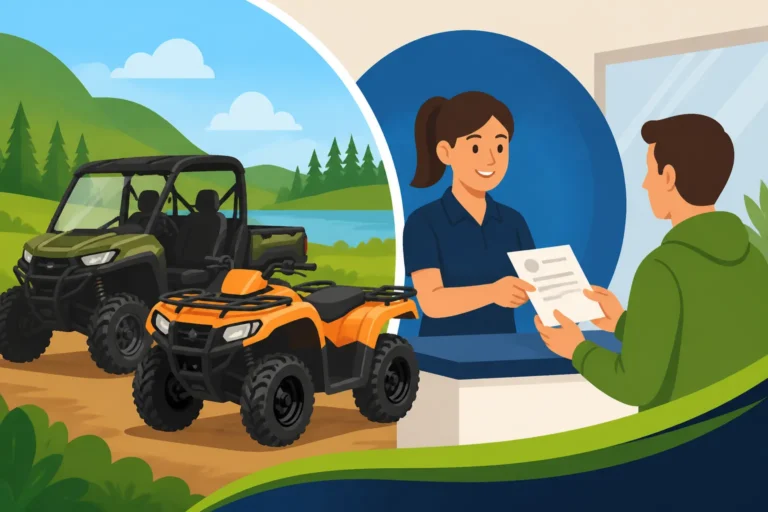
The bill of sale is the cornerstone of your purchase. It's the document that officially records the transfer of ownership from the seller to you. For a Saskatchewan purchase, it needs to be comprehensive and clear. Don't settle for a flimsy handwritten note. While sometimes those are all you get in a private sale, you can always enhance it. Make sure it includes the full legal names and addresses of both the buyer (you) and the seller, the date of sale, the exact purchase price, and a detailed description of the ATV or UTV. This description absolutely must include the Vehicle Identification Number (VIN), make, model, and year. It's also a good idea to include odometer or hour meter readings, if applicable, and a statement that the machine is being sold "as is."
If the seller is a dealership in Saskatchewan, they will typically provide a professional, printed bill of sale. For a private seller, you might need to be more proactive. Consider using a template service like LawDepot to generate a formal bill of sale before you even meet the seller. This ensures all the necessary legal fields are covered and protects both parties. It also demonstrates you're serious about a proper transaction. Getting a clear, accurate bill of sale is step one to ensuring a smooth registration process in Manitoba. Without it, verifying the purchase at MPI can become a real ordeal.
The Transfer of Ownership Section on the Saskatchewan Registration
In Saskatchewan, much like Manitoba, off-road vehicles are registered. The seller should have a registration certificate for the machine. This document often has a specific section on the back or an attached form designed for transferring ownership. It’s absolutely vital that the seller properly fills out and signs this transfer section, indicating the date of sale and your details as the new owner. This is often what the Manitoba Public Insurance (MPI) agent will look for first to confirm the legal transfer from the previous owner.
Sometimes, sellers might be a bit confused about this process, especially if they haven't sold a machine out-of-province before. It's your responsibility as the buyer to ensure this step is completed accurately. If the registration certificate is missing or not properly endorsed, you could face delays or even be unable to register the machine in Manitoba until you can sort out the ownership chain. Always ask to see the current registration certificate and inspect it for the transfer section. If they don't have it, that's a huge red flag and you might want to reconsider the purchase, or at least get a clear explanation and supplementary proof of ownership. Remember, [Manitoba Transfer of Ownership Rules] exist for a reason – to protect both buyers and sellers.
Verifying the VIN
The Vehicle Identification Number (VIN) is like your off-road machine's DNA. It's a unique identifier that is critical for everything from registration to insurance to checking for stolen vehicles. Before you hand over any money, verify that the VIN on the machine physically matches the VIN on the bill of sale and any Saskatchewan registration documents. Locate the VIN on the machine itself – usually stamped on the frame, often near the steering head, engine, or on the lower frame. It's an easy step that can save you a world of hurt.
Why is this so important? Because a mismatched VIN can indicate a number of serious problems, including a stolen machine, a rebuilt machine with parts from different sources, or simply a clerical error that will cause major headaches at MPI. If there's a discrepancy, stop the transaction immediately and get it clarified. It's better to walk away from a deal than to end up with a machine you can't legally register or worse, one that's been reported stolen. An MPI agent will confirm the VIN during your registration visit, so any inconsistencies will definitely come to light then.
Navigating Taxes and Fees for an Out-of-Province Purchase
Bringing a machine across provincial lines means dealing with a different set of tax rules than if you bought it right here in Winnipeg or Brandon. Many people assume they pay tax in Saskatchewan, and that's it. Not quite. When you bring an off-road vehicle into Manitoba, you'll be paying Manitoba Retail Sales Tax (RST).
Manitoba Retail Sales Tax on Your Purchase
Even though you're buying from Saskatchewan, Manitoba will collect its provincial sales tax (RST) when you register the machine. This is a common point of confusion for buyers. You won't pay Saskatchewan's provincial sales tax (PST) at the time of purchase unless you're a Saskatchewan resident. As a Manitoba resident, you're exempt from Saskatchewan's PST if you're taking the machine out of their province, but you'll owe Manitoba's 7% RST, plus the federal 5% GST, for a combined total of 12% on the purchase price. [Manitoba RST Collected at Registration] makes this clear.
The tax will be calculated on the greater of the purchase price (as declared on your bill of sale) or the machine's actual market value, often determined by industry guides like the "Blue Book" for off-road vehicles. So, don't think you can write a ridiculously low price on the bill of sale to save a few bucks on tax – MPI has systems in place to prevent this. If the declared price is significantly lower than market value, you might be asked to provide an appraisal or justification. For instance, if you paid $2,000 for a machine that the Blue Book says is worth $5,000, you could be taxed on the higher amount. Be prepared for this calculation.
Other Fees to Expect at Registration
Beyond the sales tax, there are a few other fees that you’ll encounter when you register your Saskatchewan-bought ATV or UTV at an Autopac agent in Manitoba.
First, there's the registration fee itself, which covers the administrative cost of putting your machine on the provincial registry. This fee renews annually with your Autopac policy.
Second, a crucial one for all Manitoba ORV owners, is the Manitoba Off-Road Vehicle Trails Fee. This fee, currently a specific amount that contributes to the maintenance and development of off-road trails across the province, is automatically added to every ORV registration. It’s mandatory, regardless of whether you plan to ride on designated trails or just on your own land. This is why [Why Manitoba Adds $25 to Every ORV Registration] is a topic many riders discuss. It's designed to ensure a sustainable trail system for everyone.
Finally, while not a "fee" in the same sense, you'll need to consider insurance. Basic liability coverage for third-party damage is typically included with your ORV registration through MPI. However, this basic coverage doesn't protect your machine from theft, fire, or collision damage, nor does it cover your own injuries. Many riders opt to purchase additional coverage from MPI or a private insurer to get comprehensive protection for their investment and peace of mind. This means the overall cost of ownership will include these insurance premiums.
| Item/Fee Type | Applicability to SK Purchase | How It's Calculated/Applied |
|---|---|---|
| Manitoba RST | Yes | 7% of purchase price or market value (whichever is higher) |
| Federal GST | Yes | 5% of purchase price or market value (whichever is higher) |
| Registration Fee | Yes | Fixed annual fee, part of your Autopac policy |
| Trails Fee | Yes | Fixed annual fee, mandatory for all ORV registrations |
| Basic Liability Ins. | Yes | Included with registration |
| Optional Collision/Comp. | Optional | Based on machine value, rider history, chosen deductible, etc. |
Registering Your Saskatchewan Machine in Manitoba
Once you have all your paperwork in order and understand the costs, it’s time to head to an Autopac agent to get your machine registered. This is where your diligent preparation pays off!
What to Bring to Your Autopac Agent
To register your ATV or UTV that you bought in Saskatchewan, you'll need to gather a few key documents and pieces of information. It's best to have everything organized before you go to avoid multiple trips or delays.
You’ll need:
- Your valid Manitoba Driver's Licence or Manitoba Identification Card: This proves your identity and residency.
- The original bill of sale: As discussed, this is critical proof of purchase.
- The original Saskatchewan registration certificate: Ensure the transfer of ownership section is properly completed and signed by the seller.
- Proof of age: If you're 16 or 17 years old, you'll need parental consent and proof of your age, such as a birth certificate. [Manitoba Registration Age of 16] outlines these requirements.
- Payment for taxes and fees: Be prepared to pay the RST, GST, registration fee, and trails fee. Most Autopac agents accept debit cards, credit cards, and cash.
The MPI agent will review all these documents to ensure the transfer is legitimate and that all information aligns. They will also verify the VIN from your paperwork against their system to check for any discrepancies or flags (like a stolen vehicle report). This meticulous process is designed to protect you, the buyer, and maintain the integrity of the provincial registry.
The Registration Process: Step-by-Step
When you arrive at the Autopac agent, tell them you're there to register an off-road vehicle purchased out-of-province. The process will generally unfold like this:
- Document Review: The agent will ask for all the documents listed above. They’ll carefully examine the bill of sale and the Saskatchewan registration for completeness and accuracy. They might even call the seller or previous insurer to verify details if anything seems amiss, though this is rare for a straightforward transaction.
- VIN Verification: They will input the VIN into their system to conduct a search. This confirms the machine's history and ensures it isn't stolen or subject to any liens that haven't been cleared. [Manitoba Registration and Lien Records] are important here.
- Tax and Fee Calculation: The agent will calculate the RST and GST owed based on your bill of sale or the machine's market value. They will also add the registration fee and the mandatory trails fee.
- Insurance Discussion: You’ll discuss your insurance options. Basic liability is included, but this is your chance to add collision, comprehensive, or extended accident benefits if you want them. Don't gloss over this, as [Manitoba Insurance Included With Registration] only covers the bare minimum.
- Payment: You’ll pay all applicable taxes and fees.
- Issuance of Registration and Plate: Once everything is processed and paid for, the agent will issue your Manitoba ORV registration certificate and your new Manitoba license plate. Remember, [Manitoba Issues One Plate, Not Two] for off-road vehicles.
- Plate Mounting: You'll need to properly mount this plate on your machine. For most ATVs, it's on the rear, but for some UTVs or two-wheelers, there are specific rules. [Manitoba Plate Mounting by Machine Type] can offer more detail. It needs to be visible!
It's common for this whole process to take a little while, especially if there are questions or if the system is slow. Plan accordingly, and don't rush the agent. Ask questions if you're unsure about anything. Once you have that Manitoba plate in hand, you’re officially ready to hit our beautiful trails! Just make sure to always carry your [Manitoba Registration Cards Carried at All Times] when you ride.
Potential Pitfalls and How to Avoid Them
Buying a machine from out-of-province introduces a few extra wrinkles compared to buying locally. Being aware of these potential issues can save you a lot of grief.
Unpaid Liens or Encumbrances
One of the biggest risks when buying a used off-road vehicle from a private seller, especially from another province, is the possibility of an unpaid lien. A lien means that a bank or financial institution has a claim on the machine because the previous owner used it as collateral for a loan. If the seller hasn't paid off that loan, the bank could still have a legal right to repossess the machine, even if you've paid for it in full. This is a nightmare scenario.
Before you finalize the purchase, particularly from a private seller in Saskatchewan, you should strongly consider doing a lien check. While Manitoba's Personal Property Registry doesn't directly cover Saskatchewan, you can often request a search through a service that checks Saskatchewan's registry. Ask the seller for the VIN well in advance so you can perform this check. A reputable seller should have no problem providing this. If they refuse, or if the search shows an active lien, walk away. It’s simply not worth the risk. Always buy with a clear title.
Discrepancies on the Bill of Sale or Registration
We touched on this earlier, but it bears repeating: any mismatch between the VIN on the machine, the bill of sale, and the Saskatchewan registration documents can cause serious problems. It’s not just about clerical errors; it can hint at deeper issues. For example, if the bill of sale shows a different owner than the Saskatchewan registration, it might mean there’s an unregistered transaction in the chain of ownership. This is sometimes called a "skipped transfer."
MPI wants to see a clear, unbroken chain of ownership. If you're not the direct buyer from the person listed on the last registration, you might need an additional bill of sale from that intermediary person. This can quickly complicate things. Before you complete the purchase, ensure the seller's name on their Saskatchewan registration matches the seller's name on your bill of sale. If it doesn't, insist on clarification and additional documentation, or consider finding another machine. When you're [Buying From a Private Seller in Manitoba], similar rules apply, but inter-provincial adds another layer of complexity.
Missing or Incomplete Paperwork
It's astonishing how often sellers have misplaced their registration, or they only have a partial bill of sale from when they bought the machine. While it might seem like a minor inconvenience, missing paperwork can turn your registration dreams into a bureaucratic nightmare. If the seller doesn't have the original Saskatchewan registration certificate, or if the transfer section is blank or unsigned, you will struggle to register the machine in Manitoba. MPI needs that official paper trail.
In some cases, if the original owner is still traceable and cooperative, they might be able to request a duplicate registration from Saskatchewan's equivalent of MPI (SGI in Saskatchewan). However, this adds significant delays and relies entirely on the seller's willingness to help after you've bought the machine. It's much, much better to insist on complete and correct paperwork before you finalize the purchase. Don't let the excitement of a new machine overshadow the importance of thorough documentation. Using a structured form like one from LawDepot can prevent omissions on the bill of sale itself.
Disclaimer
This article is for general informational purposes only and does not constitute professional advice. Laws, prices and regulations vary by location and change over time. Consult a qualified professional for guidance on your specific situation.