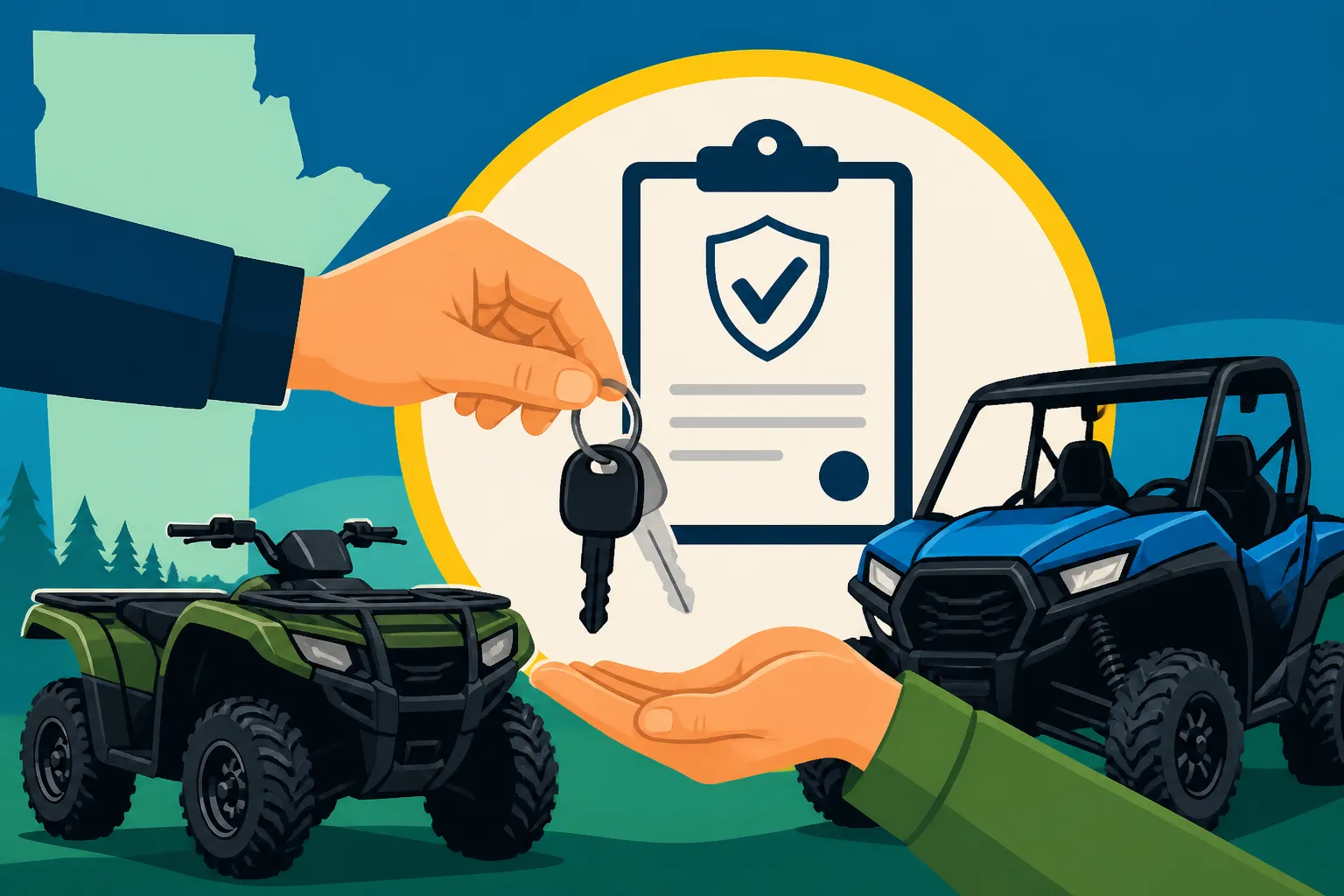
Manitoba Transfer of Ownership Rules
Anyone who's ever tried to sell or buy an ATV or UTV in Manitoba from a private individual knows the headache of paperwork. It's not just a handshake and handing over the keys; there's a whole dance of documents, signatures, and deadlines that can leave you scratching your head, wondering if you've missed something crucial. This guide is here to walk you through every step of transferring ownership for your off-road vehicle in Manitoba, making sure you dot all your i's and cross all your t's, whether you're the one selling or the one eagerly awaiting a new set of wheels.
The Basics of Transferring Ownership in Manitoba
When you buy or sell an off-road vehicle (ORV) in Manitoba, it's not quite like selling a used bicycle. There are legal and administrative steps you absolutely must follow to ensure the ownership is properly transferred from one party to another. Skipping these steps can lead to a world of trouble down the line for both the buyer and the seller. It’s all about protecting yourself and making sure your machine is legitimately yours to ride.
Why Transfer Matters Beyond Just Riding
Let's face it, when you get a new-to-you quad or side-by-side, all you want to do is hit the trails, right? But pausing to handle the transfer of ownership correctly is paramount. Firstly, it legally establishes who the responsible party is for the machine. If anything goes wrong—an accident, a fine, or even if the vehicle is reported stolen—official ownership is the first thing authorities will look at. Without a proper transfer, the previous owner could still be held liable for something that happens after they "sold" it, or you, as the new owner, might struggle to prove it's actually yours. Think about it: if the registration is still in the seller's name and you get into an incident, they might be on the hook, not you. It's a risk no one wants to take.
Secondly, proper ownership is directly tied to your insurance. In Manitoba, your ORV needs to be registered through MPI, and that registration comes with basic liability coverage. If the vehicle isn't legally registered in your name, any insurance claims could be denied, leaving you on the hook for damages or injuries. Imagine an unfortunate incident where your unregistered-in-your-name quad is involved, and you're suddenly facing a massive bill because the insurance company denies your claim. It's a nightmare scenario that proper transfer avoids. Furthermore, a clear ownership record is essential for any future resale. When it's your turn to sell, having a complete paper trail proves legitimacy and makes the process smooth for your buyer, increasing the value and trustworthiness of your machine. It’s not just about today; it’s about future-proofing your investment.
The Core Document: Your Registration Certificate
The absolute heart of any ORV ownership transfer in Manitoba is the vehicle's registration certificate, issued by Manitoba Public Insurance (MPI). This isn't just a piece of paper you keep in your glove box; it's a legal document that proves who the registered owner is and contains a specific section dedicated to transferring that ownership. When you're buying or selling a used ORV, this document becomes critically important. It's where the magic happens, so to speak, in terms of legally documenting the change of hands.
The transfer section is typically found on the back or a designated area of the certificate. It's designed to be filled out by both the seller and the buyer, requiring specific information like the sale date, the purchase price, and, crucially, the signatures of both parties. This is the official record that MPI uses to update their database and issue a new registration certificate to the buyer. Without this document being properly completed, the transfer simply hasn't happened in the eyes of the law. A common mistake is to lose this document or not realize its importance, which can halt a sale dead in its tracks. Always ensure you have the original, untampered registration certificate when dealing with a private sale. It's the key to everything.
What Happens When Ownership Isn't Transferred
Ignoring the proper transfer process might seem like a shortcut, but it's a shortcut to a world of headaches for both parties involved. For the seller, the most significant risk is continued liability. If the ORV is still registered in your name, even if you’ve handed over the keys and received payment, you could still be held responsible for tickets, fines, or even accidents involving the machine. Imagine getting a parking ticket for a quad you sold months ago, or worse, being contacted by law enforcement about a serious incident because the ORV is still technically registered to you. It's a frustrating situation that can take significant time and effort to resolve, proving you're no longer the owner.
For the buyer, the consequences are equally daunting. Without a proper transfer and a new registration in your name, your brand-new-to-you ORV is essentially riding in legal limbo. You won't be able to get it properly insured under your name, which, as we discussed, is a massive risk. If you get stopped by an officer and can't provide current registration in your name, you could face fines or have your machine impounded. It makes future resale incredibly difficult, as no new buyer will want to touch a machine with unclear ownership history. Furthermore, you won't be able to renew the registration when it comes due, effectively making your ORV unusable on public trails or designated areas. The inconvenience alone is enough to make anyone want to follow the rules diligently. It also means you won't receive [The Transfer Document Hiding in Your Registration Certificate] that you'll need for future dealings.
Steps for the Seller: Ensuring a Smooth Handover
Selling your ATV or UTV can be an exciting process, especially if you're upgrading to a newer model or just clearing out some space. However, it's not just about finding a buyer and agreeing on a price. There's a responsibility that comes with being the seller to ensure the ownership transfer is handled correctly and smoothly, protecting both you and the new owner. Taking the time to do things right upfront can save you a lot of grief down the road.
Preparing Your Machine for Sale
Before you even list your ORV for sale, a little preparation goes a long way in attracting buyers and ensuring a fair transaction. First impressions matter, so give your machine a thorough cleaning. Wash away all the mud, wipe down the plastics, and make it shine. A clean machine suggests it's been well-cared for, which builds trust with potential buyers. Beyond aesthetics, consider any minor repairs that might be needed. Fixing small issues like a loose grip, a worn seat cover, or a non-functioning headlight can increase your asking price and make the machine more appealing. Be honest about any known issues, and if there are significant repairs needed, factor that into your pricing discussion.
Gathering all your maintenance records is also incredibly valuable. Buyers appreciate knowing the history of the machine, including when oil changes were done, what parts were replaced, and if any major services were performed. This documentation provides peace of mind and proves you’ve been a responsible owner. Finally, consider a pre-sale inspection, especially if your ORV is older or has seen a lot of trail time. Having a certified mechanic give it a once-over can identify any hidden issues that you can either fix or disclose upfront. This transparency fosters trust and can prevent disputes later. A well-prepared machine makes the sales process smoother and faster.
Completing the Transfer Section Correctly
This is arguably the most critical step for any seller: accurately completing the transfer section of your MPI registration certificate. This isn't a place for shortcuts or illegible handwriting. You'll need to fill in your information as the seller, the buyer's full legal name and address, the exact date of sale, and the agreed-upon purchase price. It’s vital to use the full, legal names and current addresses for both parties to avoid any discrepancies that MPI might flag. A common mistake here is rushing through it, leading to errors that can hold up the buyer's registration process.
One piece of information often overlooked but legally required is the odometer or hour meter reading at the time of sale. Be sure to accurately record this in the designated spot. Both you and the buyer must sign and date this section. Your signature confirms you are releasing ownership, and the buyer's signature acknowledges receipt of the machine and the details of the transaction. Keep in mind, this document is a legal declaration, so ensure all information is truthful and accurate. If you make a mistake, do not use correction fluid; it's often best to initial small corrections or, if the error is significant, seek advice from an Autopac agent. This official transfer is the primary proof of the change of ownership, allowing the buyer to then register the vehicle in their name. This step directly relates to [Signing the Transfer Section Over to a Buyer] and is what officially severs your ties to the machine.
Providing a Bill of Sale
While the transfer section on the registration certificate is crucial, a separate, detailed bill of sale is equally important, offering an additional layer of protection and clarity for both parties. Think of the registration certificate as the official government document for ownership, and the bill of sale as the private contract detailing the terms of the transaction. A good bill of sale should include the full legal names and addresses of both buyer and seller, the date of the sale, the purchase price, and a complete description of the ORV, including its make, model, year, and crucially, its Vehicle Identification Number (VIN).
This document helps to clarify what exactly was sold and for how much, which can be invaluable in preventing disputes later. It can also outline any "as is" conditions, if applicable, making it clear the buyer accepts the machine in its current state. You can find excellent templates for a bill of sale online, for instance, through services like LawDepot, which offer customizable legal documents tailored to your specific needs. Using a professional template ensures all necessary legal points are covered, providing peace of mind. Both the buyer and seller should sign and date two copies of the bill of sale, with each party retaining an original. This way, you both have a clear record of the transaction. [A Bill of Sale From a Manitoba Neighbour] is a great example of why this document is so critical in a private sale.
Surrendering Your Plate and Cancelling Registration
After the sale is complete and you've properly handed over the machine and the signed registration certificate, your final critical step as the seller is to officially surrender your ORV's license plate and cancel your registration with MPI. This might seem like a small detail, but it’s a huge one for avoiding lingering liabilities. Until you do this, the machine is still technically active under your name in MPI's system. To complete this, you simply need to take the physical license plate to any Autopac agent. They will process the cancellation, ensuring your record is updated and you are no longer associated with that specific ORV.
The cancellation process is also how you might be eligible for a refund on any unused portion of your registration fees or the annual trails fee. MPI often provides a pro-rated refund once the plate is surrendered. Don't delay this step; it's your final act in disconnecting from the ORV. [Surrendering a Plate at an Autopac Agent] is quick and easy, and it provides you with definitive proof that you've completed your part of the transaction. Without this, you run the risk of receiving fines or being contacted about incidents long after you’ve sold your machine, which is a frustration no seller wants to endure. Make sure you get a receipt or confirmation from the Autopac agent that the plate has been surrendered and the registration cancelled.
Steps for the Buyer: Securing Your New Ride Legally
Congratulations, you've found your dream ATV or UTV! The thrill of getting a new machine is unmatched, but before you hit the throttle, there are essential steps you, as the buyer, must take to legally secure your new ride. This means more than just having the keys in your hand; it means making sure all the paperwork is in order, the machine is registered in your name, and you're protected.
Verifying the Seller and the Machine
Before you hand over any money, take a deep breath and do your due diligence. Verifying both the seller and the machine itself is paramount to a secure transaction. Always ask to see the seller's identification and compare the name on their ID to the name on the ORV's registration certificate. This helps confirm they are indeed the registered owner and have the legal right to sell the machine. If the names don't match, or if there are multiple names on the registration, proceed with extreme caution and ask for clarification. You want to ensure you're buying from the legitimate owner, not someone trying to flip a stolen or improperly acquired machine.
Next, meticulously verify the Vehicle Identification Number (VIN) on the registration certificate against the VIN stamped on the physical machine. These numbers must match exactly. The VIN is usually located on the frame, under the seat, or in another easily accessible spot. Discrepancies here are a major red flag. [Matching the VIN to the Bill of Sale] is a non-negotiable step. Also, it’s highly recommended to check if there are any outstanding liens on the ORV. In Manitoba, MPI can assist with a lien search, or you can inquire directly with them. A lien means someone else has a financial claim on the machine, and if you buy it with a lien still attached, you could become responsible for that debt. This step, while sometimes overlooked, protects you from potential financial headaches down the line.
The Bill of Sale and Its Importance to You
As a buyer, receiving a properly executed bill of sale from the seller is incredibly important. This document serves as your personal proof of purchase and outlines the specifics of the transaction. It should clearly state your full legal name and address, the seller's information, the date of sale, the agreed-upon purchase price, and a detailed description of the ORV, including its make, model, year, and VIN. Ensure the document also includes a clause stating that the seller guarantees they are the legal owner and that the machine is free of any encumbrances (unless explicitly stated and agreed upon).
Having a comprehensive bill of sale protects you in several ways. Firstly, it's a solid legal document proving you legitimately bought the machine, which can be crucial if any disputes arise later regarding ownership or the terms of the sale. Secondly, it's a key piece of documentation you'll need when you go to register the ORV in your name at an Autopac agent. MPI will want to see this as proof of your purchase. Ensure you receive an original, signed copy and keep it in a safe place. Services like LawDepot can be useful resources if you want to understand the typical clauses and protections found in a robust bill of sale. [Buying From a Private Seller in Manitoba] is an exciting prospect, but having this paperwork squared away solidifies your legal position and provides immense peace of mind.
Registering Your New-to-You ORV
Once you've secured your new ORV and have all the necessary documents from the seller, the next crucial step is to register it in your name with Manitoba Public Insurance (MPI). This isn't just a suggestion; it's a legal requirement if you plan to operate your ORV anywhere off your own private property, including designated trails, Crown land, or even crossing roadways. To do this, you'll need to visit any Autopac agent in Manitoba. They are your one-stop shop for everything related to ORV registration and insurance.
When you go, make sure you bring all the necessary paperwork: the original registration certificate signed over by the seller, the completed bill of sale, and valid personal identification. You'll also need to provide your Manitoba driver's license number (if you have one) and proof of address. The Autopac agent will process the transfer, collect the applicable Retail Sales Tax (RST) based on the purchase price or the machine's book value, and issue you a new registration certificate and a license plate (if the machine didn't come with one from the seller, or you need a new one). This is also when you'll pay the annual [The $25 Trails Fee Added to Every Registration], which supports Manitoba's trail systems. Getting this done promptly means you're legally compliant and your machine is properly insured under your name. For more detailed steps, refer to [How to Register an ATV in Manitoba].
The Seven-Day Grace Period for Plates
Buying a used ORV often means that the seller will remove their license plate when they surrender their registration. This leaves you, the buyer, with a shiny new-to-you machine, but no plate immediately. MPI understands this practical challenge and provides a temporary solution: a seven-day grace period. This allows you to legally transport and operate your newly acquired ORV, without a plate, for up to seven days from the date of purchase, provided you have all the necessary documentation with you.
During this seven-day window, you must carry the properly endorsed (signed over) registration certificate from the previous owner and your bill of sale. These documents serve as your temporary proof of ownership and the authorization to operate the machine while you get your new plate. This grace period is incredibly handy for getting your ORV home, or for a quick trip to the Autopac agent to complete your registration. However, it's absolutely crucial to remember that this is a temporary grace period. You must register the ORV in your name and acquire your new license plate before the seven days are up. After this period, operating without a valid plate in your name can lead to fines and other penalties. Don't push your luck; use this period wisely to complete your registration. For further details on this window, check out [You Get Seven Days to Move a Plate].
Special Circumstances and Common Pitfalls
While most ORV ownership transfers follow a standard process, life often throws us curveballs. There are scenarios where the paperwork might not be straightforward, or the circumstances of the acquisition are a bit out of the ordinary. Knowing how to navigate these special situations can save you from potential legal headaches and ensure your machine remains legitimately yours.
Machines Without Proper Paperwork
One of the most common and frustrating scenarios for a buyer is encountering an ORV for sale without complete or proper paperwork. Perhaps the seller has lost the original registration certificate, or maybe they don't have a formal bill of sale. This immediately raises red flags and should prompt extreme caution. In Manitoba, the registration certificate is the primary document of ownership. Without it, or without the proper transfer section completed, registering the ORV in your name can become incredibly difficult, if not impossible. MPI needs a clear chain of ownership.
If you find yourself in this situation, do not proceed with the purchase lightly. If the seller has lost the registration, they must obtain a duplicate from MPI before they can legally transfer ownership to you. This is their responsibility as the current registered owner. If there's no bill of sale, you might be able to create one using a template (like those from LawDepot) and have both parties sign, but this is less ideal than having an original from the point of sale. Be wary of machines that seem like too good a deal but lack documentation; they could be stolen, have unresolved liens, or simply be impossible to register. It's often safer to walk away than to inherit a paper trail nightmare. For more insights on dealing with such situations, look at [Manitoba Machines With No Paperwork].
Gifts, Inheritance, and Family Transfers
Not all ORVs change hands through a direct sale. Sometimes, a machine is given as a gift, inherited after the passing of a family member, or transferred between family members for little to no monetary exchange. While the core principle of transferring ownership remains, the process for these situations can have slightly different requirements, especially concerning taxes and specific documentation. When an ORV is gifted, you'll still need to complete the transfer section of the registration certificate. However, the purchase price would be listed as "gift" or a nominal amount. MPI may still assess Retail Sales Tax (RST) based on the machine's book value, even if no money exchanged hands. This is to prevent people from declaring a low sale price to avoid tax.
For inherited machines, the process involves providing documentation like a death certificate and potentially legal documents proving you are the executor of the estate or the legal heir. MPI will guide you through what specific estate paperwork they require to transfer the registration. Similarly, for family transfers, ensure all names and addresses are correctly updated, and be prepared for potential tax assessments. It's always best to consult directly with an Autopac agent for these specific scenarios, as they can provide precise guidance on the required forms and any tax implications. They can walk you through the nuances for something like [Manitoba Registration After the Owner Dies] or [Manitoba Tax on a Gifted Machine].
Buying from a Dealer vs. Private Sale
The experience of acquiring an ORV differs significantly whether you're buying from a licensed dealer or a private seller. Each has its own set of advantages and challenges, particularly concerning the transfer of ownership and associated paperwork. When you purchase from a reputable dealer, much of the registration and transfer process is handled for you. Dealers are authorized to collect Retail Sales Tax (RST) directly, process the initial registration paperwork, and often arrange for your license plate. They typically provide you with a comprehensive bill of sale, often with warranty details and financing agreements all in one package.
This convenience comes at a cost, as dealer prices are generally higher due to overheads and services. However, the peace of mind knowing the paperwork is correctly managed is a significant benefit. [Manitoba Dealer Paperwork at Delivery] usually means you're leaving with a legally registered machine. Private sales, on the other hand, often offer lower prices but place the full burden of paperwork and due diligence squarely on your shoulders. You are responsible for ensuring the seller provides all the correct documents, verifying the VIN, checking for liens, and then taking all that information to an Autopac agent yourself. While potentially cheaper, a private sale requires more vigilance and effort to ensure a smooth and legal transfer.
Machines with a Lien or Financing
One of the most critical checks a buyer must perform, especially in a private sale, is to ascertain whether there's an outstanding lien or financing attached to the ORV. A lien means that a lender (like a bank or credit union) has a legal claim on the machine until a debt is fully paid. If you buy a machine with an active lien, that claim can transfer to you, potentially leaving you responsible for the previous owner's debt or even having the machine repossessed if the debt isn't settled. This is a nightmare scenario that can easily be avoided with a bit of proactive investigation.
In Manitoba, you can perform a lien search through MPI to determine if any financial institutions have a claim on the ORV. Always insist on doing this check before finalizing the purchase. If a lien is found, the seller is legally obligated to clear it before they can transfer unencumbered ownership to you. This means they must pay off their loan in full, and the lender must officially release the lien. Do not accept promises that "it will be paid off next week"; ensure the lien is cleared and documented before any money changes hands or before you sign the transfer paperwork. [Manitoba Registration and Lien Records] are publicly accessible for a reason – they protect buyers like you. If the seller cannot or will not clear the lien, it's a strong indicator that you should walk away from the deal.
Understanding Taxes and Fees in a Transfer
When you transfer ownership of an ORV in Manitoba, it's not just about changing names on a piece of paper; there's also the financial reality of taxes and fees. These costs are an unavoidable part of owning and operating an off-road vehicle, and understanding them upfront can help you budget accurately and avoid any unpleasant surprises at the Autopac counter.
Retail Sales Tax (RST) on Used Machines
One of the primary financial considerations when acquiring a used ORV in Manitoba is the Retail Sales Tax (RST). This provincial tax is applied to the purchase price of the machine, and it's collected by MPI when you register the ORV in your name, whether you bought it from a private seller or a dealer. The current RST rate in Manitoba is 7%, and it's calculated on the agreed-upon selling price of the machine. However, there's an important caveat: MPI has a mechanism to ensure fairness and prevent undervaluation.
If MPI determines that the declared purchase price is significantly lower than the machine's actual market value, they reserve the right to assess the RST based on what they consider the "fair market value" or "book value" of the ORV. This prevents individuals from intentionally listing a very low sale price on the bill of sale to reduce the amount of tax paid. So, while you and the seller might agree on a price, MPI's valuation might be the ultimate factor in determining your RST payment. It’s always best to be honest about the sale price, but also be prepared for MPI to use their own valuation. This is why [Manitoba Tax on a Private ATV Sale] can sometimes feel a bit complex.
The Role of Book Value in Taxation
The concept of "book value" is incredibly important when it comes to calculating RST on used ORVs in Manitoba. MPI utilizes established industry guides, often referred to as "Blue Book" values, to determine the average market value of specific makes, models, and years of off-road vehicles. This is their way of ensuring that taxes are assessed fairly, regardless of the price a private seller might list on a bill of sale. If you declare a purchase price that is substantially lower than the machine's Blue Book value, MPI will likely tax you based on that higher book value, not your stated purchase price.
This can sometimes be a point of contention for buyers who feel they got a great deal and are then surprised by a higher-than-expected tax bill. It's why it's crucial to understand that the "book value" is often the baseline for RST calculation. For older machines or those not listed in standard guides, MPI may use a depreciation schedule or an appraisal to determine a fair market value. So, while your bill of sale is essential, be aware that MPI has the final say on the taxable value of the ORV. [The Blue Book That Prices Quads for Tax] is a tool MPI uses to maintain fairness in taxation across the province, ensuring everyone contributes appropriately to provincial revenue, regardless of how good a deal they might have found.
Registration and Trails Fees
Beyond the Retail Sales Tax, there are annual fees associated with owning and registering an ORV in Manitoba that you'll incur once the transfer of ownership is complete. The most prominent of these is the annual registration fee itself, which covers the administrative costs of maintaining your ORV's record with MPI and provides basic third-party liability insurance. This fee is essential for legal operation anywhere off your private land.
In addition to the registration fee, every ORV registered in Manitoba is also subject to an annual [The $25 Trails Fee Added to Every Registration]. This fee, mandated by the province, directly contributes to the maintenance, development, and improvement of Manitoba's vast network of off-road vehicle trails. It helps fund grants for ATV and snowmobile clubs, supports trail signage, and ensures these recreational areas remain safe and accessible for all riders. While it's an additional cost, it's a vital contribution to the ORV community. These fees are collected at the time of registration by your Autopac agent and are part of the ongoing cost of ownership, ensuring your machine is not only legally registered but also contributes to the very trails you'll likely be enjoying. Don't forget to factor in these recurring costs when budgeting for your new machine!
Navigating Potential Issues and Getting Help
Even with the best intentions and careful adherence to every step, sometimes things don't go perfectly during an ORV ownership transfer. Mistakes happen, unforeseen issues arise, or disputes can unfortunately develop. Knowing how to navigate these potential issues and where to seek reliable assistance is crucial for a smooth resolution.
Missing Signatures or Incorrect Info
One of the most common hiccups in a private ORV sale is encountering a registration certificate with missing signatures or incorrect information. Perhaps the seller forgot to sign, or they accidentally wrote the wrong date or purchase price. These seemingly small errors can cause big delays when you try to register the machine in your name at an Autopac agent. MPI requires all fields to be accurately and fully completed on the transfer section of the registration certificate to process the change of ownership.
If you discover a missing signature, the immediate solution is to contact the seller and arrange to get their signature on the document. If information is incorrect, such as a wrong date or VIN, it's best to have the seller initial any small corrections. For significant errors, an Autopac agent can advise on the best course of action, which might involve a statutory declaration or new paperwork. The key is to address these issues before you leave the Autopac office, or ideally, before you even leave the seller. Having to chase down a seller after the fact for a signature or correction can be incredibly frustrating. Prevention is key; always double-check everything before shaking hands and leaving with the machine. For instance, [Fixing a Missing Signature on a Transfer Form] is much easier when the seller is still available.
Resolving Disputes After the Sale
Despite best efforts, disputes can occasionally arise after an ORV sale has been finalized. This could be anything from a hidden mechanical issue discovered shortly after purchase, to disagreements about the true condition of the machine, or even legal questions about the transfer itself. If you find yourself in such a situation, the first step is always to try and communicate directly and calmly with the other party to see if a mutual resolution can be reached. Often, misunderstandings can be clarified through open dialogue.
If direct communication fails, your detailed bill of sale and the properly completed registration certificate become your most important tools. These documents legally outline the terms of the sale and the condition of the machine as agreed upon. Should a resolution remain elusive, you may need to seek legal advice. For creating formal demand letters or understanding your rights as a buyer or seller, resources like LawDepot can provide access to legal templates and information that might guide your next steps. Small claims court can be an option for monetary disputes that can't be resolved otherwise. While no one wants a dispute, having clear documentation and knowing your options is essential for protecting your interests.
Where to Find Reliable Information
When you're dealing with something as important as transferring ownership of an ORV, you want to ensure you're getting accurate and up-to-date information. The best place to start for any official procedures, forms, or specific questions related to ORV registration and transfer in Manitoba is Manitoba Public Insurance (MPI). Their website is a valuable resource, and their Autopac agents are equipped to answer your questions and guide you through every step of the process. Think of your local Autopac agent as your go-to expert for all things related to ORV paperwork.
Beyond MPI, reputable off-road vehicle clubs in Manitoba often have experienced members who can share practical advice based on their own experiences. While their advice shouldn't replace official guidance, it can offer valuable real-world insights. Provincial government websites for transport or natural resources might also provide supplementary information, especially concerning rules for riding on Crown land or trail access. Always cross-reference information and, when in doubt, consult directly with an Autopac agent. They are the official point of contact for these matters and can provide definitive answers to your specific questions. Never be afraid to ask [Questions Worth Asking an Autopac Agent] – that's what they're there for!
Seller vs. Buyer Responsibilities in a Private ORV Transfer
To make things a little clearer, here's a quick breakdown of who is generally responsible for what when transferring ownership of an ORV in Manitoba through a private sale. This table is a good checklist for both parties to ensure nothing gets overlooked.
| Aspect of Transfer | Seller's Responsibility | Buyer's Responsibility |
|---|---|---|
| Machine Preparation | Clean ORV, make minor repairs, gather maintenance records. | Inspect ORV thoroughly, ask questions about its condition. |
| Documentation Prep | Have original registration certificate ready. | Verify VIN on machine matches registration. |
| Transfer Section | Accurately complete seller's info, sign, provide odometer. | Accurately complete buyer's info, sign. |
| Bill of Sale | Provide a detailed, signed bill of sale. | Retain original signed bill of sale. |
| Lien Check | Ensure all liens are cleared before sale. | Perform own lien search to verify. |
| Plate/Registration | Surrender license plate and cancel registration promptly. | Register ORV in own name and get new plate within 7 days. |
| Taxes & Fees | N/A (buyer pays RST) | Pay Retail Sales Tax (RST) and annual registration/trails fees. |
| Proof of Ownership | Provide original signed registration cert. and bill of sale. | Keep all ownership documents safe and accessible. |
Disclaimer
This article is for general informational purposes only and does not constitute professional advice. Laws, prices and regulations vary by location and change over time. Consult a qualified professional for guidance on your specific situation.