Registering a Side-by-Side in Manitoba
The world of off-road vehicles in Manitoba can sometimes feel like navigating a bog without a winch – full of unexpected challenges and confusion. A common sticking point for many riders is understanding the specific requirements for registering a side-by-side (UTV), especially with their growing popularity and unique characteristics. This guide aims to clear the mud, walking you through every step of registering your side-by-side in Manitoba, from the paperwork you'll need to the nuances of ownership and the rules of the trail.
Understanding Side-by-Sides in Manitoba's ORV Framework
Side-by-sides, often called UTVs (Utility Terrain Vehicles) or SxSs, have become incredibly popular across Manitoba, from the vast agricultural fields to the winding bush trails. These machines, with their car-like steering wheels, bucket seats, and often higher capacities, differ significantly from traditional ATVs, yet they fall under the same regulatory umbrella: Manitoba's Off-Road Vehicles Act. It's easy to assume that because they're bigger or more "utility-focused," they might have different rules, but for the most part, the province treats them similarly to quads when it comes to registration.
What Qualifies as a Side-by-Side UTV for Registration?
When the province talks about an "off-road vehicle," they're casting a pretty wide net, and side-by-sides definitely get caught in it. Generally, if it's designed to travel on land, water, snow, or ice, and isn't a highway vehicle, bicycle, or an agricultural tractor, it's an ORV. For UTVs, specifically, we're talking about those machines that typically have four or more wheels, side-by-side seating (often for two, four, or even six passengers), and a steering wheel instead of handlebars. Think of models like a Polaris RZR, Can-Am Defender, or a Yamaha Wolverine – these are all UTVs that require registration.
This distinction is crucial because while an ATV (All-Terrain Vehicle) usually has a straddle seat and handlebars, both machine types share the same fundamental requirement: they must be registered if you plan to operate them anywhere beyond very specific, limited exemptions. It doesn't matter if it's a sport model built for speed or a heavy-duty utility model destined for the farm; if it's a side-by-side, it's an ORV in the eyes of the law.
Why Side-by-Sides Aren't Exempt Like Some Other Machines
One of the biggest misconceptions riders encounter is the idea that their particular use case might exempt their side-by-side from registration. Perhaps you only use it on your private farm land, or you primarily haul things around a remote cabin. While there are indeed specific exemptions listed in the Off-Road Vehicles Act, they are quite narrow and rarely apply to the average recreational or even utility-focused side-by-side user. For instance, some farming operations can get a refund on the Retail Sales Tax (RST) paid on a UTV, but this doesn't exempt the machine itself from the basic registration requirement.
The law is clear that [Manitoba Requires Registration in Any Location] where the Act applies, which is virtually everywhere unless explicitly exempted. This means that merely riding your side-by-side on your own acreage or sticking to a local trail system doesn't magically make the registration requirement disappear. These machines are powerful, capable, and, like any motor vehicle, need to be accounted for. Failing to register can lead to fines and legal complications, turning a fun day out into a costly headache.
The Legal Obligation to Register Your UTV
At its core, registering your side-by-side in Manitoba is a legal obligation designed to ensure accountability, fund trail maintenance, and provide a basic level of third-party liability insurance. Without registration, your UTV isn't properly recognized by the province, which can put you in a tough spot if you're ever stopped by law enforcement or involved in an incident. The registration process formally links you as the owner to the specific machine, identified by its Vehicle Identification Number (VIN).
This is more than just paperwork; it's about being a responsible off-road enthusiast. The fees collected, including the mandatory trails fee, go towards maintaining the very trails we all love to ride. So, by registering, you're not just complying with the law, you're also contributing to the health and future of the Manitoba off-road community. Think of it as your official handshake with the province, acknowledging your machine and your commitment to riding legally and responsibly.
The Registration Process: Your First Visit to an Autopac Agent
For most Manitobans, the journey to officially registering a side-by-side begins at an Autopac agent. These agents, part of the Manitoba Public Insurance (MPI) network, are your one-stop shop for everything related to vehicle registration, including your off-road machine. While the process is generally straightforward, being prepared can save you a lot of time and potential frustration. It’s not like buying a loaf of bread; there are specific documents and steps involved that you'll want to be aware of before you head out.
Gathering Your Essential Documents
Before you even step foot into an Autopac agent’s office, the most crucial step is to gather all the necessary paperwork. This is where many people get tripped up, leading to multiple trips or delays. For a side-by-side, you'll definitely need:
- Proof of Ownership: This is paramount. If you bought it new from a dealer, you'll need the New Vehicle Information Statement (NVIS). If it's a used machine from a private seller, you'll need a properly completed bill of sale, often referred to as a transfer of ownership document. Make sure it includes the seller's name and signature, your name, the date of sale, the purchase price, and critically, the machine's full Vehicle Identification Number (VIN). A general sales receipt won't cut it. For peace of mind, many people use professional templates for their bill of sale, and resources like LawDepot offer templates that help ensure all necessary fields are included for a smooth transaction.
- Proof of Identity: Your valid Manitoba driver's license or another form of government-issued photo ID is required.
- Proof of Age: If you're 16 or 17 years old, you'll need parental consent. Otherwise, your driver's license will usually suffice.
- Payment: Be ready to pay the registration fee, the provincial sales tax (RST), and the trails fee. Autopac agents typically accept various forms of payment, but check with your specific agent if you have questions about methods like debit, credit, or cash.
Having these documents neatly organized will make your visit much smoother. It’s easy to forget one small detail, but that small detail can be the difference between leaving with your plate or having to come back another day.
Navigating the Autopac Office Experience
Once you have your documents in hand, head to your preferred [Manitoba Autopac Agents and ORV Registration]. When you arrive, you’ll typically take a number or be directed to a service counter. Inform the agent that you're there to register an off-road vehicle – specifically, a side-by-side. They will guide you through the process, but here's a general idea of what to expect:
The agent will review your proof of ownership, verify the VIN, and confirm your identity. They'll input the machine's details into the MPI system. This is also the point where they will calculate the Retail Sales Tax (RST) on your purchase, which is collected directly by MPI during registration. Don't be surprised if they ask questions about the machine's primary use, especially if there are any potential exemptions you might be inquiring about, though remember that actual exemptions for side-by-sides are quite rare. They'll also explain the basic third-party liability insurance that's included with your registration, and likely ask if you'd like to explore additional coverage options like collision or comprehensive.
Understanding the Costs Involved
Registering a side-by-side isn't just a matter of showing up; there are several costs associated with it. Being aware of these upfront helps avoid any surprises and ensures you budget correctly for your new off-road adventure.
Here's a breakdown of the typical costs:
| Cost Type | Description | Key Details |
|---|---|---|
| Registration Fee | The base fee for registering your off-road vehicle. | This fee varies depending on the type of machine and the registration period. It's a fundamental cost for legal operation. |
| Retail Sales Tax (RST) | Manitoba's provincial sales tax, currently 7%, applied to the purchase price of the side-by-side. | [Manitoba RST Collected at Registration] directly by MPI. If you bought from a dealer, it's typically already collected. If private sale, it's collected when you register, based on purchase price or "Red Book" value. |
| Off-Road Trails Fee | A mandatory annual fee added to every ORV registration. | This is the $25 fee that contributes to the maintenance and development of ORV trails across Manitoba. [Manitoba's Off-Road Trails Fee Explained] covers more on where this money goes. |
| Insurance Premiums | While basic third-party liability is included, additional collision, comprehensive, or other coverage costs. | These are optional but highly recommended. The base registration includes a very limited form of injury coverage, so many riders choose to increase their liability and add other protections. |
It's important to remember that these costs are subject to change, so always confirm the current figures with your Autopac agent. The total amount can vary significantly based on the value of your side-by-side and any optional insurance coverages you choose.
Specific Scenarios for Side-by-Side Registration
Not every side-by-side enters the world, or your garage, in the same way. Whether you're buying brand new from a dealership, picking up a used gem from a private seller, or even bringing one in from another province, the registration path can have slight variations. Understanding these differences can save you a lot of hassle and ensure you have all the correct documentation.
Registering a Brand-New Side-by-Side from a Dealer
Congratulations on your new ride! Buying from a dealer is often the smoothest route for registration because they handle a lot of the initial paperwork for you. When you purchase a new side-by-side, the dealer will provide you with a New Vehicle Information Statement (NVIS). This document essentially proves that the vehicle is brand new and has never been registered before. The dealer will also collect the Retail Sales Tax (RST) on the sale, meaning you won't have to pay it again at the Autopac office.
Upon purchase, the dealer typically issues a temporary permit that allows you to transport your new machine home or to your initial riding spot for a short period, usually a few days. During this time, you must visit an Autopac agent to complete the permanent [Manitoba ORV Registration Through MPI]. Bring your NVIS, proof of identity, and payment for the registration fee and the mandatory trails fee. The agent will process your information, issue your permanent registration card, and provide you with a single license plate for your side-by-side. It’s a fairly quick process once you have all the necessary documents in hand.
Registering a Used Side-by-Side from a Private Seller
Buying used from a private seller can be a great way to get into the side-by-side world, but it places more responsibility on you, the buyer, to ensure the paperwork is correct. The most crucial document here is the bill of sale, which serves as your proof of ownership and facilitates the [Manitoba Transfer of Ownership Rules]. This bill of sale must be comprehensive, including:
- The full names and addresses of both the buyer and seller.
- The date of the sale.
- The purchase price (this is what the RST will be calculated on, unless MPI deems it significantly under market value, in which case they may use a "Red Book" value).
- The year, make, model, and, most importantly, the complete Vehicle Identification Number (VIN) of the side-by-side.
- The signatures of both the buyer and the seller.
Without a properly filled-out bill of sale, you might face significant delays or even refusal to register the machine. If the previous owner's name on the registration certificate doesn't match the seller on the bill of sale, you'll need a "chain of bills of sale" to prove legitimate ownership from the last registered owner to you. For a robust and legally sound document, consider using a template from a service like LawDepot to create your bill of sale, which can prevent common omissions that cause problems at MPI. After completing the sale and obtaining the bill of sale, take it, along with your proof of identity and payment, to an Autopac agent to complete the registration. You'll pay the RST and the trails fee at this point. For more details, see [Buying From a Private Seller in Manitoba].
Registering an Out-of-Province or Imported Side-by-Side
Bringing a side-by-side into Manitoba from another province or, even more complex, from another country, adds a few more layers to the registration process.
- From Another Canadian Province: If you're moving to Manitoba with an already registered side-by-side from another Canadian province, you'll generally follow a process similar to a private sale. You'll need your previous province's registration document and proof of ownership (which might be the registration certificate itself or a bill of sale if you just acquired it). MPI will assess any applicable RST if it wasn't paid previously or if the machine has appreciated significantly. You will, of course, pay the Manitoba registration fee and the trails fee.
- From Outside Canada (Imported): This is the most involved scenario. When importing a side-by-side from a country like the United States, you'll first need to ensure it meets Canadian import requirements, including those set by Transport Canada and the Canada Border Services Agency (CBSA). You'll typically pay duties and taxes at the border. Upon arrival in Manitoba, you'll need proof of legal importation (e.g., a properly stamped Form 1 or a customs declaration), proof of ownership (bill of sale), and potentially a provincial inspection if required. MPI will need to see all these documents before they will register the machine. It's crucial to complete all federal import steps before attempting provincial registration.
In all these scenarios, clear, accurate documentation is your best friend. Any discrepancies can lead to significant delays and additional requirements.
Ownership and Plate Management for Your Side-by-Side
Once your side-by-side is registered, you'll receive your official registration card and a license plate. But ownership doesn't end there. Understanding how to properly manage your plate, handle ownership changes when you sell, and keep your registration current is just as important as the initial registration. These are the details that keep you riding legally year after year.
Receiving and Mounting Your Single Registration Plate
Unlike cars or trucks that often get two plates, [Manitoba Issues One Plate, Not Two] for off-road vehicles like side-by-sides. This single plate is issued by your Autopac agent once your registration is complete. The law is quite specific about where and how this plate must be mounted: it needs to be securely affixed to the rear of your side-by-side and clearly visible.
Think about it from an enforcement perspective: an officer needs to be able to easily identify your machine. This means no obscuring it with mud, gear, or modifications. While there might be some flexibility in the exact mounting point on the rear (e.g., on a cargo rack, bumper, or designated plate bracket), the key is visibility and security. A loose plate that rattles off on the trail or gets caked in mud defeats the purpose. Always double-check your plate's security before heading out, especially after a rough ride. For more specific guidance, refer to [Manitoba Plate Mounting by Machine Type].
Transferring Ownership When You Sell Your Side-by-Side
Just as you needed a proper bill of sale when you bought your side-by-side, you'll need to provide one when you sell it. This is a critical step for both the seller and the buyer. As the seller, it's your responsibility to formally transfer ownership to the new owner. This usually involves signing over the transfer portion of your existing registration certificate or providing a separate, detailed bill of sale. Crucially, you should also remove your license plate from the machine before the buyer takes possession.
Failing to properly transfer ownership can leave you liable for tickets or incidents involving the side-by-side after you've sold it. The new owner cannot legally ride or register the machine until they have valid proof of purchase linking them to the vehicle. MPI will only recognize the last registered owner until the transfer is processed. To ensure a clean break, document everything, get signatures, and keep copies for your records. Using a standardized bill of sale template, perhaps from LawDepot, can protect both parties by ensuring all legal necessities are covered. This protects you by documenting the sale date and passing on liability. You can learn more about this process in [Selling a Registered Machine in Manitoba].
Renewing Your Side-by-Side Registration
Your side-by-side registration isn't a one-time deal; it needs to be renewed annually. Thankfully, MPI makes this process quite simple, as [Manitoba Registration Renews With Your Autopac Policy]. This means that the renewal period for your side-by-side will typically align with the renewal date for your other vehicles (car, truck, etc.) registered with Autopac. You'll receive a renewal notice in the mail or via email from MPI well in advance of the expiry date, reminding you to update your registration.
Renewing usually involves confirming your details, paying the annual registration fee, and the mandatory off-road trails fee. You can often do this online through the MPI website, over the phone, or by visiting an Autopac agent. Don't let your registration lapse! Riding with an expired registration is just as illegal as riding unregistered and can lead to fines and potential insurance complications. Keep an eye on your renewal date and get it done promptly to ensure uninterrupted legal riding.
Navigating Special Circumstances and Exemptions
While the general rule is to register your side-by-side, there are specific situations and exemptions that can sometimes apply. However, it's incredibly important to understand these nuances, as misinterpreting them can lead to significant issues. These exemptions are usually very limited and tied to specific operational uses or geographic locations.
When a Side-by-Side Might Be Exempt
Manitoba's Off-Road Vehicles Act does outline certain exemptions from registration, but for side-by-sides, these are often misunderstood. Most side-by-sides, even those used for utility purposes, do require registration. Here are a few scenarios where an exemption might apply, though you should always verify with MPI or an Autopac agent:
- Farm Use (Limited): If your side-by-side is exclusively used for farming operations and never operated on public land, roads, or designated trails, it might qualify for certain tax refunds. However, the machine itself still typically requires registration if it's operating beyond a very strict definition of "exclusively on private land for agricultural purposes." The rules are very tight; using it for a quick run down the road to check a fence line or going to a neighbour's field could negate the exemption. [Manitoba Machines the Act Excludes] further details these rare cases.
- Remote Communities: In some officially designated remote communities that are not accessible by all-weather roads, ORVs may have different operating rules, and sometimes even exemptions from certain registration requirements if used strictly within that community. This is a very specific geographic exemption and doesn't apply to most of Manitoba.
- Specific Business Operations: Some very limited commercial operations, like certain forestry or mining activities, may have specific exemptions, but these are for specialized machines and uses, not general utility side-by-sides.
- Private Land Only: If your side-by-side is solely operated on private land owned by you or with direct permission from the landowner, and never crosses or operates on public land (including ditches or roadways), registration might not be required. However, this is a very narrow exception, and even a brief venture onto public land makes it mandatory.
It is absolutely crucial to verify any potential exemption with MPI directly. Do not assume your situation fits an exemption without official confirmation, as the penalties for riding an unregistered machine can be steep.
Youthful Operators and Side-by-Side Registration
Manitoba has specific rules regarding the age at which individuals can operate off-road vehicles, including side-by-sides, and how that impacts registration. While an individual must be at least 16 years old to register a side-by-side in their own name, there are provisions for younger riders.
- Age 16 and Over: An individual aged 16 or older can register a side-by-side in their own name, provided they have parental consent if they are under 18 years old. They must also possess a valid driver's license or an off-road vehicle safety course certificate if they do not hold a driver's license. For specific details on this, see [Manitoba Registration Age of 16].
- Under Age 16: A side-by-side cannot be registered in the name of someone under 16. If a family owns a UTV that a younger, supervised rider will use, it must be registered in the name of an adult. Additionally, specific rules on supervision, machine size, and operating areas apply to riders under 16.
These age restrictions are in place for safety reasons and to ensure that operators have a basic understanding of responsible vehicle operation. Always ensure that both the machine is properly registered to an eligible owner and that the operator meets the age and licensing requirements.
What to Do if Your Registration Card or Plate is Lost
Losing your registration card or, even worse, your license plate, can feel like a major setback, but it's a relatively easy problem to fix. The key is to address it promptly, as riding without a valid registration card or a visible plate is against the law.
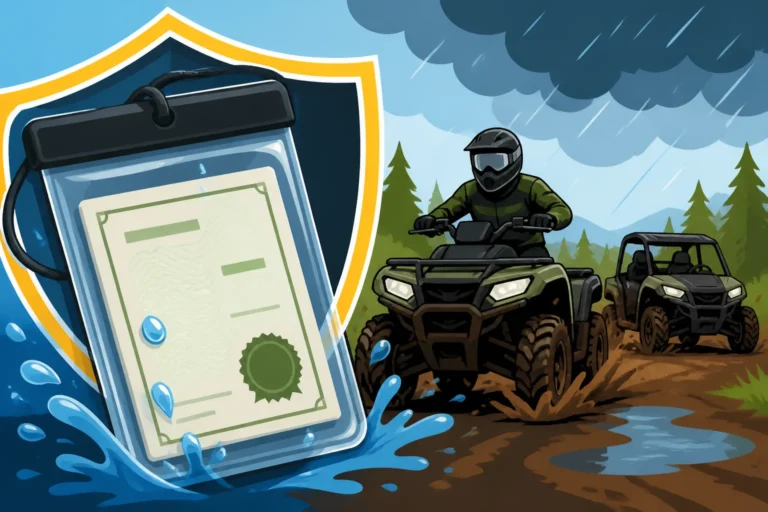
- Lost Registration Card: If you lose your [Manitoba Registration Cards Carried at All Times], you can obtain a replacement from any Autopac agent. You'll need to provide proof of identity. There may be a small administrative fee for the replacement card. It's always a good idea to keep your card in a waterproof pouch on your machine to prevent damage or loss while riding.
- Lost License Plate: If your side-by-side's license plate goes missing, you should report it to an Autopac agent as soon as possible. They will issue you a new plate and update your registration records. There will be a replacement fee for the new plate. Again, ensuring your plate is securely mounted can prevent it from falling off during rough rides. Riding without a plate is a guaranteed way to attract attention from law enforcement, so don't delay in getting a replacement.
Dealing with these situations quickly ensures you remain compliant with the law and avoids any unnecessary fines or complications during your off-road adventures.
Beyond Registration: What Else You Need to Know for Side-by-Side Use
Registering your side-by-side is the foundational step, but it's just one piece of the puzzle for legal and responsible operation in Manitoba. There are other crucial aspects that every side-by-side owner should be aware of, including the extent of their insurance coverage, the purpose of the mandatory trails fee, and the ongoing requirement to carry your documents. These details ensure you're not just registered, but fully prepared for the trail.
Understanding Your Included Insurance Coverage
When you register your side-by-side with MPI, your basic registration fee includes a limited form of third-party liability insurance. This is a critical safety net, but it's vital to understand its limitations. [Manitoba Insurance Included With Registration] generally covers damage or injury you might accidentally cause to other people or their property while operating your registered side-by-side. For example, if you accidentally collide with another ORV or damage someone's fence, this basic coverage would help.
However, it's important to recognize what this basic coverage doesn't typically cover:
- Damage to Your Own Side-by-Side: The base insurance does not cover repairs or replacement for damage to your own machine, whether it's from a collision, fire, theft, or vandalism.
- Injuries to Yourself: While there are some accident benefits tied to MPI's overall system, the basic ORV liability does not provide comprehensive medical or income replacement coverage for injuries you sustain while operating your own side-by-side.
- Enhanced Liability: The basic liability limits might not be sufficient for all situations. Many riders opt to purchase additional coverage to increase their liability limits (e.g., to $1 million or $2 million), as well as add collision, comprehensive, or specified perils coverage for their own machine and occupants.
It is highly recommended to speak with an Autopac agent or an independent insurance broker about purchasing additional coverage to protect yourself, your passengers, and your investment. The wild can be unpredictable, and having robust insurance provides peace of mind.
The Mandatory Trails Fee and Where it Goes
Every time you register or renew your side-by-side registration in Manitoba, you'll pay a mandatory $25 Off-Road Trails Fee. This fee is often a point of confusion for riders, especially those who primarily ride on private land or feel they don't use provincial trails. However, it's important to understand that this fee is non-refundable and applies to every registered ORV, regardless of where you plan to ride.
So, where does this $25 go? It's earmarked specifically for the betterment of the entire off-road vehicle community in Manitoba. The funds are channeled into a grant program that supports:
- Trail Maintenance and Development: This includes funding for clubs and organizations that build, maintain, and sign designated ORV trails across the province.
- Rider Education and Safety Programs: Promoting safe riding practices and providing educational resources for all ORV operators.
- Environmental Rehabilitation: Helping to repair and restore areas that may have been damaged by off-road vehicle use, ensuring sustainable riding environments.
Essentially, this fee is an investment in the future of off-road riding in Manitoba. Even if you don't frequent specific club trails, the overall health of the ORV infrastructure benefits from these contributions. For a deeper dive into this, check out [Manitoba's Off-Road Trails Fee Explained].
Carrying Your Registration Documents
This is a non-negotiable requirement: you must carry your side-by-side's registration card with you at all times when operating the machine. This is explicitly stated in the Off-Road Vehicles Act and is something law enforcement officers will ask to see if you're stopped. It's proof that your machine is legally registered and that you are the legitimate owner or authorized operator.
Imagine being pulled over and not being able to produce your registration – it can quickly escalate a simple check into a more serious issue, potentially leading to fines or even temporary impoundment of your machine. The best practice is to keep your registration card, along with any other important documents like your driver's license, in a waterproof and secure location on your side-by-side. Many riders use small, watertight containers or pouches that can be affixed to the machine or kept in a glove box. Just make sure it's easily accessible but protected from the elements and the rigors of the trail.
Common Pitfalls and How to Avoid Them
Even with the best intentions, it's easy to fall into common traps when it comes to ORV registration. From overlooked paperwork to misunderstood rules, these pitfalls can lead to unnecessary stress, delays, and even penalties. Being aware of them can help you steer clear and ensure your side-by-side experience remains enjoyable and hassle-free.
The Dangers of Incomplete Paperwork
Perhaps the most frequent stumbling block for side-by-side owners, especially those buying from private sellers, is incomplete or incorrect paperwork. A missing signature, an incomplete VIN, an unregistered previous owner, or a vague description of the machine on a bill of sale can grind the registration process to a halt. Autopac agents are meticulous for a good reason: they need to ensure legal ownership and prevent fraud. If there are any doubts, they simply cannot process your registration.
The consequences of incomplete paperwork can range from minor delays (having to track down the seller for a signature) to significant problems (discovering the seller wasn't the legal owner, or the VIN is fraudulent). Always be diligent when acquiring a used side-by-side. Double-check every detail on the bill of sale against the machine itself. Verify the VIN on the paperwork matches the VIN stamped on the frame. If possible, consider doing a lien check before purchase to ensure there are no outstanding debts against the machine. Resources like LawDepot provide templates for bills of sale that are designed to capture all essential information, helping to prevent these common omissions. Never rush the paperwork, no matter how excited you are about your new ride.
Misinterpreting Exemptions
The Off-Road Vehicles Act does contain exemptions, but a common mistake is for riders to interpret these broadly to fit their own situation, rather than understanding their strict and narrow application. For example, the idea that a side-by-side used "mostly" for farming or "only" on your own land might be exempt from registration. As we discussed, these exemptions are highly specific. Simply driving across a ditch to get to another field, or taking a quick run down a municipal road to a neighbour's property, often negates any potential exemption for private land use.
The safest approach is to assume your side-by-side requires registration unless you have explicit, written confirmation from MPI that you qualify for a specific, rare exemption. If in doubt, register it. The cost of registration is far less than the potential fines, legal fees, or headaches associated with riding an unregistered machine and finding yourself on the wrong side of the law. Don't rely on hearsay or assumptions when it comes to legal compliance.
Ignoring Renewal Notices
Life gets busy, and it's easy to let things slip through the cracks. However, ignoring your side-by-side registration renewal notice is a mistake that can quickly lead to problems. As mentioned, your ORV registration renews annually, typically aligned with your other Autopac policies. MPI sends out reminders, but ultimately, it's the owner's responsibility to ensure their registration is current.
Riding with an expired registration is not only illegal but can also complicate insurance claims if you're involved in an incident. Basic third-party liability insurance is tied to your active registration, so a lapse in registration could mean a lapse in critical coverage. Set a reminder on your phone, mark it on your calendar, or take advantage of online renewal services as soon as you receive your notice. Keeping your registration up-to-date is a simple task that ensures you can continue enjoying your side-by-side without any unnecessary worries.
Disclaimer
This article is for general informational purposes only and does not constitute professional advice. Laws, prices and regulations vary by location and change over time. Consult a qualified professional for guidance on your specific situation.