Using an Approved Firepit at a Provincial Campsite
A designated firepit at a Manitoba provincial campsite does not automatically mean a campfire is allowed. Fire restrictions can change, and park rules still apply. If you are planning to ride an ATV or UTV and camp overnight, check the current fire status before you go, know what the campsite’s pit is meant for, and bring a backup plan for cooking and warmth.
What “approved firepit” means at a provincial campsite
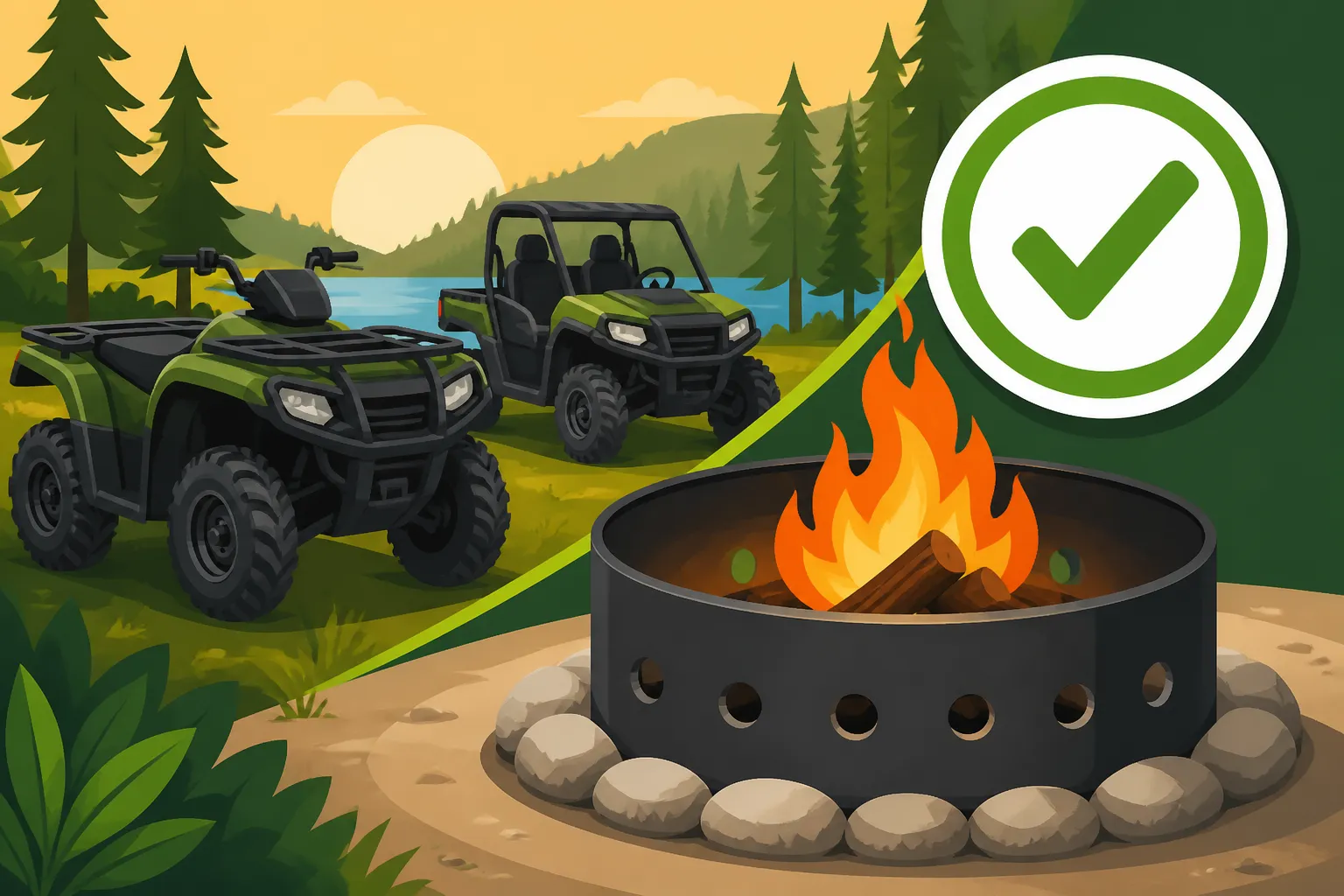
At a provincial campsite, an approved firepit generally means the fire facility provided or designated for that campsite—not simply any container that seems fire-safe. Use the site’s installed pit as intended, and do not move it, modify it or build a separate fire ring unless park staff explicitly allow that.
A portable fire bowl, barbecue or wood-burning stove may be treated differently from a campground firepit. Its design alone does not establish that it is allowed. If you want to bring one, ask the park office or check the park’s current rules before packing it. Never assume that a device is permitted just because it is raised off the ground or sold for camping.
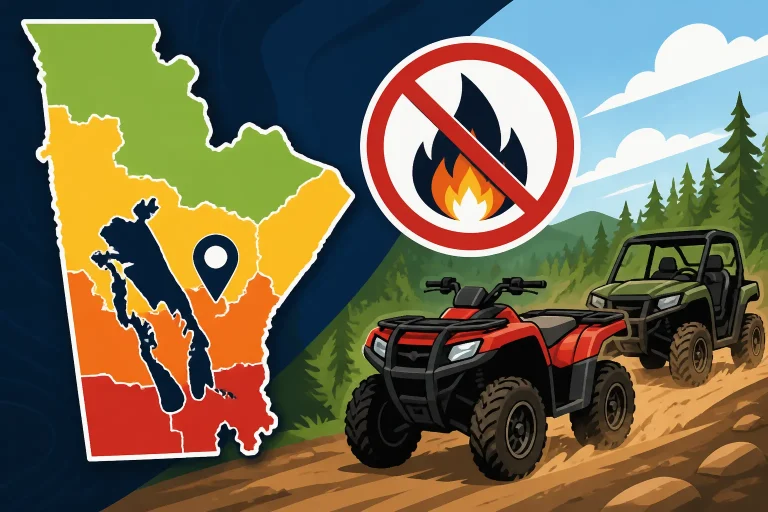
The key distinction is between the pit being approved for the site and a fire being allowed on the day you arrive. A designated pit does not override a fire restriction. When restrictions prohibit campfires, the restriction applies even if the campsite has a permanent pit. Check the current notices for the park and area, including any closure order that affects your dates. Manitoba Fire Ban Lookups and Manitoba Area Closure Orders can help you understand what to check, but confirm the status through the current official information before lighting anything.
An approved pit is also not permission to burn any material. Follow park instructions about what can go in the fire, and avoid burning garbage, packaging, plastics or other materials that create smoke or leave harmful residue. Keep the fire small and contained, and do not leave it unattended. If the pit is damaged, full of ash or surrounded by dry vegetation, contact park staff for direction rather than moving the fire to another spot.
For riders, fire rules are one part of campsite planning. A park vehicle permit and permission to use a firepit are separate matters. A permit for a tow vehicle does not make an ATV or UTV route legal, and registration does not replace park rules. Review A Park Vehicle Permit Covers the Truck and Manitoba Provincial Park Machine Rules before bringing an off-road machine into a park.
| Situation | What to do |
|---|---|
| The campsite has a built-in firepit and no restriction is in effect | Use only the designated pit and follow posted park instructions |
| A fire restriction or closure may apply | Check current notices before travelling; do not rely on the presence of a pit |
| You want to use a portable fire bowl or stove | Confirm that the device is allowed at that park and campsite |
| The pit is damaged, unsafe or unusable | Ask park staff for guidance; do not create a replacement fire ring |
| You cannot confirm whether fires are allowed | Plan to go without a campfire until you have clear confirmation |
Check restrictions before travelling
Fire conditions can change faster than a campsite reservation or a trail plan. A fire that was permitted when you booked may not be allowed when you arrive. Check the current status close to departure, then check again at the park entrance or campsite if notices are posted there.
Manitoba’s fire season and restrictions may affect where and when fires are permitted. The dates and rules that apply can change, so do not treat a past season’s calendar, an old social media post or a previous visit as confirmation. For background on how restrictions affect riders, see Manitoba Wildfire Season Rules for Riders and Manitoba Fire Season Riding Restrictions.
A useful pre-trip check includes:
- Confirm the name of the park and the campground where you will stay.
- Look for current fire notices or area closure orders for that location.
- Check whether the notice prohibits all campfires or sets conditions for particular types of fire.
- Read the campground’s posted instructions when you arrive.
- Ask park staff if the wording is unclear or if conditions have changed.
Do not interpret an exception narrowly in your own favour. For example, a restriction that refers to campfires may still cover a fire in a designated campsite pit. If the notice does not clearly state that your type of fire is allowed, ask the park office before lighting it.
A burning permit is not a workaround for a park restriction. Burning permits and campsite fire rules serve different purposes, and having permission for one type of burning does not necessarily authorize a campfire at a provincial campsite. For the distinction, see Manitoba Burning Permits and Firepits. If you are unsure whether a permit is relevant to your planned activity, confirm with the appropriate park or fire authority rather than relying on assumptions.
The same caution applies to changing location. A restriction may cover a specific area, road, trail or park. Do not move to a different campsite or nearby piece of land on the assumption that the rules are different. Check the boundaries of the notice and make sure you have permission to use the alternative location.
For ATV and UTV trips, build this check into your route planning. A fire restriction can affect more than the evening campfire: it may also impose conditions on equipment or travel in an area. Read Manitoba Wildfire Season Rules for Riders for the broader riding context, and check any current closure information before unloading or starting a ride. A route that was open on a previous trip may be subject to a temporary restriction.
Use the pit safely and leave the site clean
Once a fire is allowed, treat the designated pit as a contained fire area—not a place to walk away from while you ride, eat or prepare for bed. Keep children, pets, fuel containers and loose gear well back. Do not park an ATV, UTV or trailer where heat or sparks could reach tires, plastic bodywork, dry grass or stored fuel.
Use only a fire small enough to stay within the pit. Wind can carry sparks beyond the campsite, so postpone lighting if conditions make it hard to control the fire. Keep a suitable means of putting it out close at hand, such as water, when available. A shovel can help manage ash or soil, but it is not a substitute for enough water or for remaining with the fire.
A simple routine helps reduce risk:
- Check the pit and surrounding area before lighting. If it is cracked, unstable or full of unremoved debris, ask staff what to do.
- Keep the fire attended by a responsible adult.
- Do not add fuel that makes the fire difficult to contain.
- Put the fire out completely before leaving the campsite or going to sleep.
- Check that no heat or smoke remains before you consider it extinguished.
- Leave the pit and campsite tidy, following local instructions for ash and waste.
Do not dump hot ash into vegetation, a ditch, a lake or a garbage bin. Follow the campground’s directions for ash disposal. If no instructions are posted, ask staff instead of improvising. Even ash that looks cold can contain embers, especially after a fire has been covered over.
For a ride-and-camp trip, consider carrying basic fire-safety supplies in a secure, accessible place. A small fire extinguisher, a shovel and water containers can be useful for general preparedness, but they do not make an otherwise prohibited fire legal. Secure equipment so it cannot shift on rough trails. If you need to buy supplies, local hardware or outdoor stores and Amazon may offer options; check that any item is suitable for your intended use and can be carried safely.
Keep the fire separate from machine maintenance. Do not refuel an ATV or UTV near the pit, and do not use the fire to dispose of oily rags, fuel containers or other hazardous waste. If a machine has a leak or mechanical problem, move away from the fire area and deal with the hazard safely. Fire safety is part of campsite safety, not a substitute for maintaining the machine.
Plan for a trip without a campfire
The safest plan is one that still works if a restriction is announced after you have packed. Bring food that can be eaten without cooking, or use a cooking appliance only if the park’s current rules allow that appliance. Do not assume that a camp stove is permitted during every fire restriction; some orders limit equipment as well as open flames. Confirm the specific rules before relying on it.
Warmth should not depend on a fire either. Pack suitable layers, dry sleep clothing and weather protection. This matters especially on a ride where you may spend the day exposed to wind or get caught by rain. A fire is not a reliable way to dry wet riding gear overnight, and using one for that purpose can put clothing too close to flames.
If the park prohibits fires, respect the restriction even if other campers appear to be burning wood. Do not use a portable pit as a substitute, and do not move the fire to a parking area, trailhead or nearby public land. A restriction can apply beyond the campsite, and a different location may have its own access and fire rules. Check [Manitoba Crown Land Access Rules] before considering any alternative location; permission to access land does not automatically mean a fire is allowed there.
You can still make a camping trip enjoyable without a fire. Plan a simple meal, bring a lantern, arrange warm clothing and choose activities that do not depend on an evening flame. If a fire is central to your plans, reschedule or choose a location only after confirming that fires are permitted there. The cost of changing plans is usually easier to manage than the risk of starting a wildfire or violating a closure.
Before leaving the campsite, make sure the fire is fully out and all food and rubbish are secured. On an ATV or UTV trip, pack out what you brought in and leave access routes clear for other visitors and park staff. A final check of the firepit, machine, trailer and campsite helps prevent a small oversight from becoming a safety problem on the trail or after you have driven away.
Disclaimer
This article is for general informational purposes only and does not constitute professional advice. Laws, prices and regulations vary by location and change over time. Consult a qualified professional for guidance on your specific situation.