Manitoba Wildfire Season From April to November
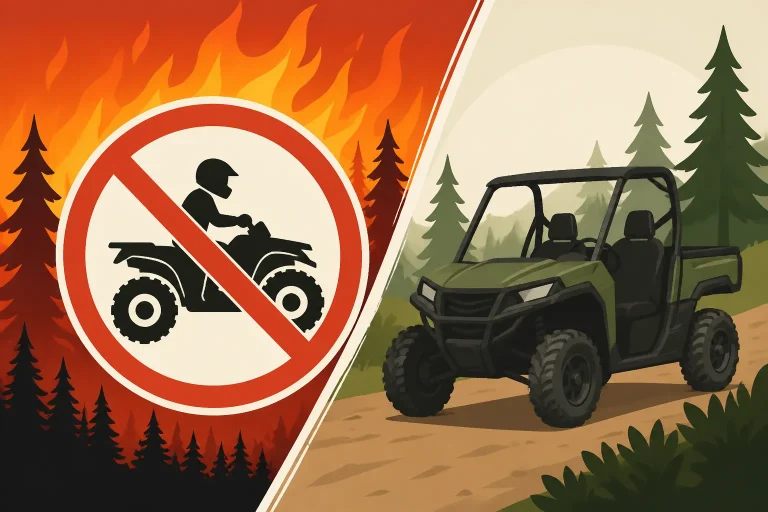
Manitoba wildfire season creates extra rules and uncertainty for ATV and UTV riders. The season is commonly described as running from April to November, but that does not mean every trail is automatically closed. The practical question is whether a restriction or area closure applies to your route today—and whether your machine and plans are ready for fire risk.
What Manitoba’s wildfire season means for ATV and UTV riders
Manitoba’s wildfire season is generally described as running from April 1 to November 15. Treat those dates as a planning reference, not a guarantee that a particular trail is open or that the same restrictions apply everywhere. The dates and orders in force can change, so check official Manitoba wildfire information before riding.
The season is not, by itself, a province-wide ban on off-road riding. Instead, fire danger and access rules can vary by area and over time. A route that was open recently may be affected by a new closure, while another area may remain accessible under its current rules.
That distinction matters when you are hauling a machine to a trailhead or riding a long loop through remote country. A club map can help with navigation, but it does not override a current fire restriction or closure order. Check the applicable [Manitoba Area Closures During Fire Season] and Manitoba Fire Season Riding Restrictions information before you leave.
It also helps to separate three things that riders sometimes treat as one:
- Wildfire season dates: the general period when seasonal wildfire rules and heightened fire risk are relevant.
- Fire restrictions: limits on activities or equipment that can create a fire hazard. These may apply to a defined area or activity.
- Area closures: orders that restrict access or travel in a specific place. A closure may affect a route even if your machine is otherwise compliant.
Do not assume that a route is legal simply because it is a trail, a fire guard, or a route you have used before. Access rights and current restrictions are separate questions. For example, permission to travel on Crown land does not automatically authorize riding through a closed area. Review Manitoba Crown Land Access Rules and Manitoba Crown Land Restrictions when your route crosses public land.
Is April to November one continuous riding ban?
No. The season dates do not mean all ATV or UTV riding stops for those months. Whether you can ride depends on the rules in force for your location and the route you intend to use. Restrictions may be limited to certain areas, activities, or periods of elevated fire danger.
A rider should therefore avoid both extremes: assuming that wildfire season closes every trail, or assuming that an open trail listing means there are no fire-related restrictions. Confirm the current status rather than relying on last season’s information, a saved map, or a social media post.
| What you are checking | What it tells you | What it does not tell you |
|---|---|---|
| Wildfire season dates | When seasonal fire rules may be relevant | Whether a specific trail is open today |
| Fire restriction information | Which fire-related limits may apply in an area | Whether you have permission to ride on the land |
| Area closure order | Whether access or travel is restricted in a defined place | Whether your machine meets equipment requirements |
| Club trail map | Where a club identifies its routes | Whether a route remains open under a current order |
| Local land permission | Whether the landholder or leaseholder allows access | Whether fire restrictions permit the activity |
The useful habit is to check the current order for your destination and then check the route itself. If either is unclear, contact the responsible office, land manager, or local club before unloading.
How restrictions and closures affect a ride
A wildfire restriction can change what you are allowed to do, while a closure can make an otherwise legal route unavailable. The terms can sound similar, but they are not interchangeable. Read the exact order and its boundaries instead of relying on a short summary or a trailhead conversation.
An area closure may apply to a named region, road, trail, or other defined area. Follow the boundary and directions in the order. Do not enter through a different access point because the main gate is unmanned, a sign is missing, or a digital map has not updated. If the closure language is unclear, pause the trip and confirm it with the relevant authority.
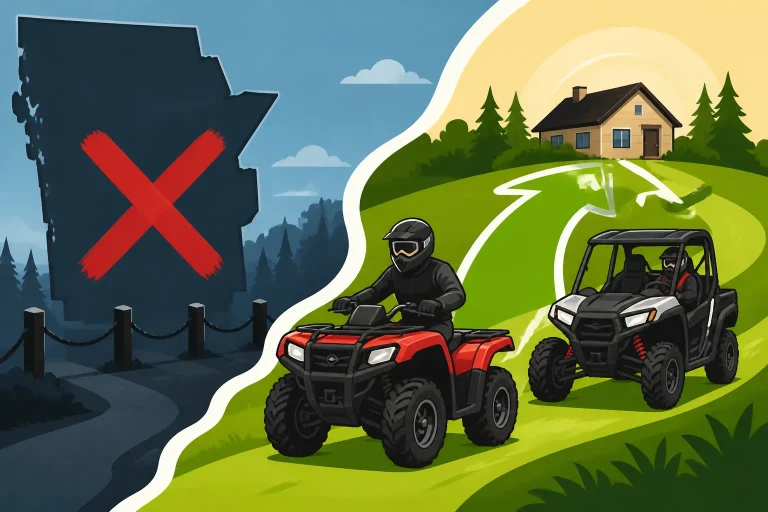
Some travel may be treated differently from recreational riding during a closure. For instance, a rule may provide an exception for residents travelling by the most direct route to or from a home. That is not a general permission to ride recreationally through the closed area, take a scenic detour, or use a closure as a shortcut. Check the precise wording of the order before relying on an exception.
Highways can also be treated differently from the land or trail they pass through. Do not infer that a route through a closed region is open to an ATV or UTV because a nearby highway remains open to regular traffic. Highway access and off-road access are distinct. If your planned route depends on riding along or crossing a road, check the relevant Manitoba ORV Road Rules Explained and any current closure details.
What a fire restriction map can and cannot do
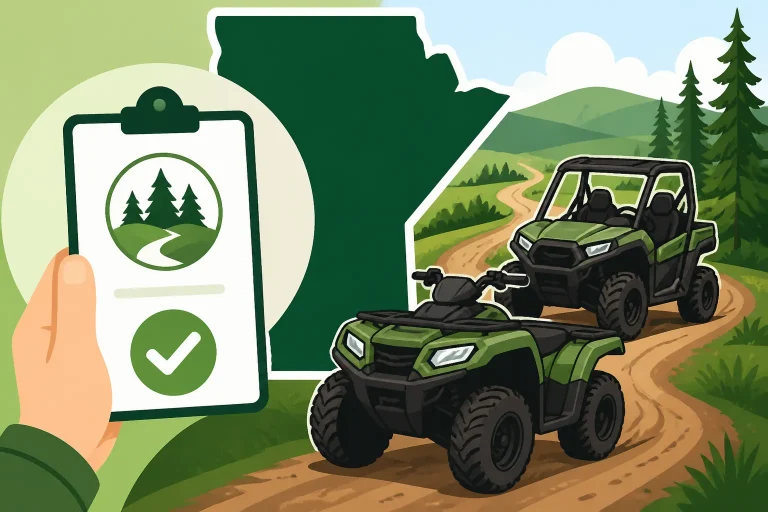
A current fire restrictions map is a practical starting point for checking conditions, but it is not a substitute for reading the actual rules. Maps may show areas where restrictions apply, while orders, notices, or local directions explain what is prohibited and who is affected.
Before you set out:
- Search for current fire restrictions and area closures for the destination.
- Read the details, including the boundaries and any exceptions.
- Compare those boundaries with your intended route, not just the trailhead.
- Check whether the route crosses a park, Crown land, a Crown lease, private land, or municipal land.
- Recheck on the day of travel, especially if the trip involves remote areas or a long drive.
A screenshot can help when mobile service is weak, but it can become outdated. Save the date and time of the information you checked, and carry a second way to navigate. For route planning away from service, see Carrying a Paper Map in the Manitoba Bush.
Do not confuse a permit with permission to ride
A park permit, club affiliation, event authorization, or machine registration does not automatically override a wildfire closure. Each serves a different purpose. A permit may meet an access or administrative requirement while fire orders still limit where or how you can travel.
Likewise, a trail that appears on a club map is not automatically open during a closure. Check the current trail status and any official orders before you go. If you are riding in a provincial park, confirm that your route is designated for off-road machines and that it remains available under current park and fire rules. Manitoba Provincial Park Machine Rules explains why park access is not the same as general trail access.
Prepare your ATV or UTV for fire season
Fire risk is not only about campfires. A machine can create heat or sparks, and riding through dry vegetation can increase the chance of ignition. Manitoba’s equipment rules and any temporary restrictions both matter. A machine that is roadworthy or recently serviced is not necessarily compliant with fire-related requirements.
Spark-arrester requirements are an important part of preparation. Check that the machine has the required equipment, that it is in sound condition, and that the exhaust system has not been modified in a way that makes it non-compliant. Do not assume that a stock-looking muffler is proof that the machine meets the rule. Review Manitoba Spark Arrester Requirements and check current restrictions for your destination.
Also look over the machine before every trip. Pay attention to:
- The exhaust and spark-arrester assembly for damage, loose fittings, or unauthorized changes.
- Debris around the exhaust, engine, skid plate, or other hot areas.
- Leaks that could leave fuel or oil on dry grass or brush.
- Electrical wiring, battery connections, and accessories that may be damaged or poorly secured.
- Any equipment or work attachment that could create sparks during operation.
A fire-related restriction may apply to more than the machine’s exhaust. It can also limit activities or equipment that may produce sparks. Read the local rule rather than assuming that a spark arrester makes every activity acceptable. The general reference Manitoba Equipment Checks by Officers is useful for understanding why equipment condition and compliance matter on a ride.
Riding habits that reduce ignition risk
Even when riding is permitted, use conservative habits in dry conditions. Stay on the authorized route instead of cutting across grass, brush, or roadside vegetation. Avoid parking over dry vegetation when hot components could contact it. If you stop, choose a cleared, stable place and keep the machine away from dry material.
Do not leave a running machine unattended. If you notice smoke, a burning smell, or signs of a small fire, stop safely and act promptly. Do not put yourself or others at risk trying to handle a fire that is beyond your ability to control. Contact emergency services when needed and provide a clear location, access route, and description of what you see.
Carry basic emergency supplies that suit the length and remoteness of the ride. A first-aid kit, communication device, navigation backup, and water are sensible basics. Depending on the route and current conditions, you may also choose to carry a suitable fire extinguisher and other equipment. Confirm what is required, select equipment appropriate for your machine, and secure it so it cannot shift while riding. Whether you source supplies locally or through Amazon, check that the item fits your needs rather than buying based on a generic product listing.
Avoid creating a new ignition source through careless camp use. A firepit that is acceptable at one campsite may be restricted elsewhere or during a fire ban. Do not assume that carrying a fire-starting tool means you may use it. Check current Manitoba Burning Permit Rules and follow any restrictions that apply at your campsite or destination.
Plan a route that can adapt to changing fire conditions
Wildfire information can change after you have planned a trip. A reliable plan therefore needs an alternative, not just a single route and a fixed return time. This is especially important for a long ride where a closure could affect access to a trailhead, fuel stop, campsite, or return route.
Start with a realistic route and check each section. Note where the trail crosses land with different managers, where you may leave a club trail, and where a closure would leave you with no safe way out. If a planned loop relies on a narrow corridor or a single access road, identify a legal alternative before you depart.
Use this process:
- Choose the riding area. Confirm that machines are allowed on the route and that you have the necessary land access or permit.
- Check current wildfire information. Look for both restrictions and area closures, not just general fire danger.
- Compare the order with your route. A closure boundary may not match the boundary of a club map or park map.
- Check access points and return options. Make sure you can avoid a restricted area without trespassing or using an unauthorized route.
- Confirm local trail status. A club may know about conditions or temporary route issues, but official orders still govern.
- Recheck before unloading. Conditions and orders may change between your initial planning and arrival.
- Tell someone your plan. Share the route, expected return time, and a way to raise the alarm if you do not check in.
If the route becomes restricted while you are already out, do not press on to “see whether the trail is really closed.” Follow the order and use a lawful, safe route out. If you cannot identify one, stop at a safe location and contact the appropriate authority or emergency service for direction.
A club volunteer can be useful for practical trail information, but do not ask a volunteer to interpret an official closure as permission to ride. Likewise, a trail app may show a route without reflecting an order issued later. Use apps as navigation tools, not as the final word on access.
For multi-day trips and remote rides
Multi-day riding adds a second challenge: a route that is legal on the first day may be affected by a new order before the group returns. Build flexibility into the itinerary. Keep a way to receive updates, maintain enough fuel and supplies to change plans, and make sure every rider understands the alternate route.
A group should agree in advance on who checks official information and who makes the call to turn around. Set a clear rule that any rider can raise a safety or closure concern without pressure to continue. Keep the group together when conditions are uncertain, and avoid splitting up to investigate a route separately.
If you are camping, treat campsite rules as a separate check. Confirm whether campfires are allowed at that location and whether current restrictions prohibit them. Do not assume that an established fire ring means a fire is permitted under current conditions. Where fires are restricted, follow the restriction even if other campers are using one.
You can still have a useful ride if a preferred route closes. Consider shortening the day, choosing a different open area, or postponing the trip. A long tow to the trailhead is frustrating, but it is not a reason to ignore an order or take an unapproved detour.
A practical checklist before you unload
Use a short checklist rather than relying on memory, especially when the ride is planned weeks in advance or includes riders unfamiliar with the area.
Rules and route
- Confirm the wildfire season information and current restrictions for the destination.
- Check whether any area closure affects the trail, staging area, or route home.
- Confirm that the route is authorized for ATV or UTV use.
- Check land access, park rules, and any required permits separately.
- Identify an alternate route that remains lawful if conditions change.
- Review any local notices posted at the trailhead.
Machine and gear
- Inspect the spark arrester and exhaust system.
- Remove dry debris from hot areas and check for leaks or damaged wiring.
- Confirm that carried gear is secured and suitable for the ride.
- Bring navigation and communication backups for areas with weak service.
- Carry emergency supplies appropriate to the trip’s distance and conditions.
Group decisions
- Make sure every rider knows the closure procedure and alternate plan.
- Agree on a turnaround time and a check-in plan.
- Keep the group together if an order or route status is uncertain.
- Do not use a club map, app, or old screenshot as proof that a route remains open.
This checklist does not replace the actual order or machine requirements. It is a way to catch common gaps before they become a problem far from the trailhead.
Frequently Asked Questions
Does Manitoba’s wildfire season close every ATV trail?
No. The season dates do not automatically close all trails. Restrictions and closures can apply to specific areas or activities, so check current information for your route before riding.
Can I ride through an area closure if my machine has a spark arrester?
Not unless the closure or its exact terms allow it. Equipment compliance does not grant access to a closed area. Read the order and follow its boundaries and exceptions.
Is a club trail map enough to confirm that a route is open?
No. A club map is useful for navigation and identifying routes, but it may not reflect a newer restriction or closure. Confirm current official information and local trail status before unloading.
Can I have a campfire during wildfire season?
It depends on the location and current restrictions. Check the applicable rules for the campsite and follow any fire ban or order in force. An established fire ring does not guarantee that a fire is permitted.
What should I do if a closure affects my route while I am riding?
Do not continue into the closed area. Follow the order and use a lawful route out. If you cannot identify a safe, permitted way to leave, stop in a safe place and seek direction from the appropriate authority.
Disclaimer
This article is for general informational purposes only and does not constitute professional advice. Laws, prices and regulations vary by location and change over time. Consult a qualified professional for guidance on your specific situation.