A Park Vehicle Permit Covers the Truck
Taking an ATV or UTV into a Manitoba provincial park can raise a practical question: does the park vehicle permit go with the machine, the truck, or both? The key is to separate park entry from off-road riding. A permit for the truck does not automatically make an ATV ride legal, and a permit is not a substitute for registration, insurance, or permission to use a route.
What a Manitoba park vehicle permit covers
A park vehicle permit is associated with a vehicle entering a provincial park. If you drive your truck into the park, the permit is for that truck. It addresses park entry, not the legal status of every recreational machine you bring along.
That distinction matters when a truck is hauling an ATV or UTV on a trailer. The truck is the vehicle travelling into the park under its own power. The ATV or UTV is cargo while it remains on the trailer. Once you unload the machine, separate rules determine whether you may operate it and where.
A park permit should not be treated as a general pass for all the vehicles in your group. It does not, by itself, mean that a second truck, a separate ATV, or a UTV can enter or be operated wherever you choose. If more than one motor vehicle will be driven into the park, check whether each needs its own permit. The answer can depend on the type of vehicle and the park’s current instructions.
| Situation | What the park vehicle permit does | What it does not establish |
|---|---|---|
| You drive your truck into a provincial park | Covers park entry for the truck, subject to the permit’s terms | Permission to ride an ATV or UTV |
| Your ATV is secured on a trailer behind the truck | The truck’s permit applies to the truck entering the park | A separate right to unload or operate the ATV |
| You unload an ATV or UTV | The truck’s park permit remains about the truck | That the machine is registered, insured, or allowed on the route |
| A second vehicle enters separately | That vehicle may need its own permit | That the first vehicle’s permit transfers to it |
| You ride on a park route | The park permit may cover the vehicle entering the park, if applicable | That the route is open to your machine or that other requirements are met |
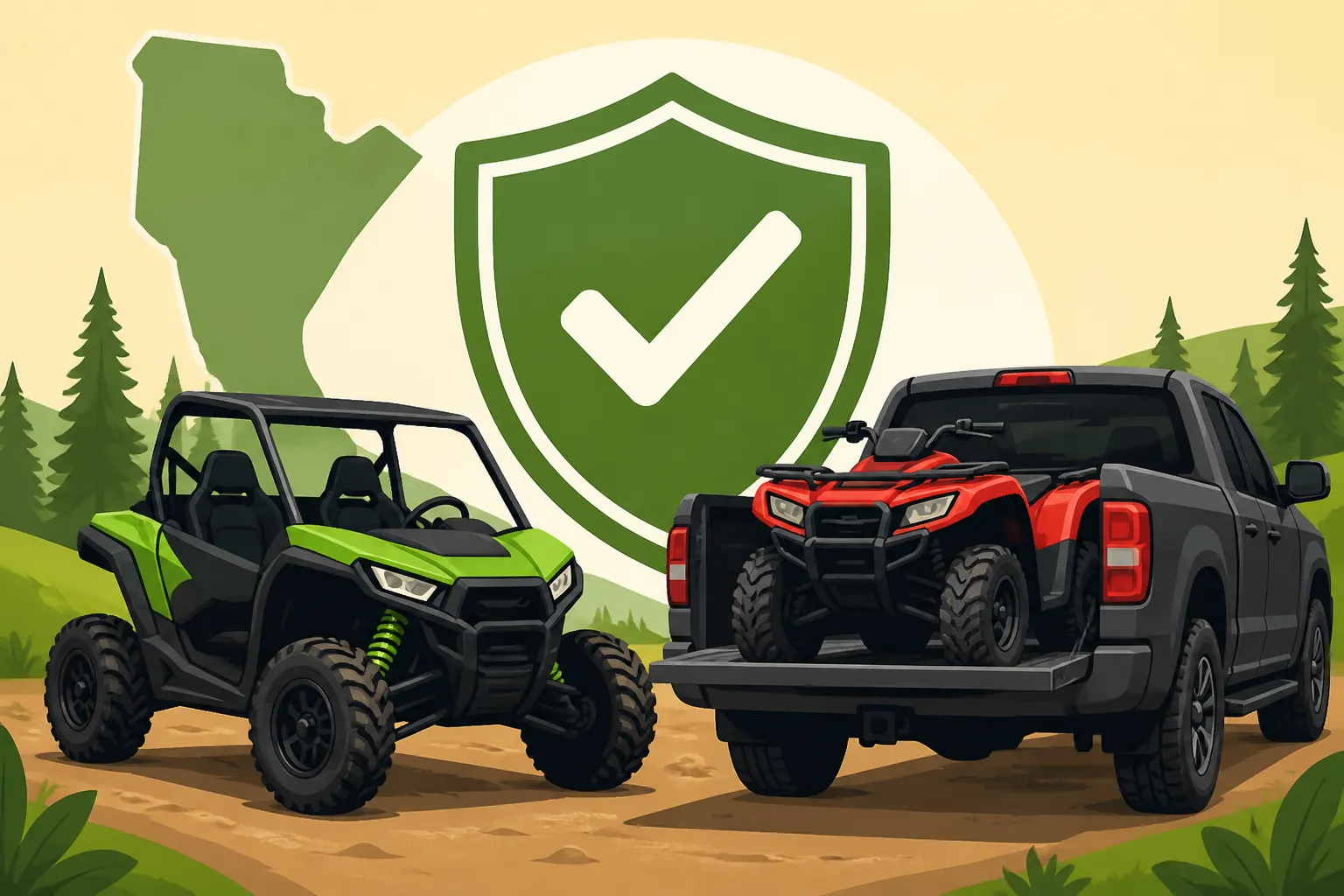
The practical answer to the title question is therefore limited but useful: the permit for your truck covers the truck’s park entry. Do not assume it also serves as an ATV permit or riding authorization.
A park vehicle permit is also different from Manitoba ORV registration. Registration is a provincial requirement for many off-road vehicles and has its own rules about plates and carrying the registration certificate. Review Manitoba ORV Registration Through MPI and [Manitoba Park Vehicle Permit Cost] separately rather than treating one as proof of the other.
Truck, trailer, and ATV: how to think about the combination
Most confusion comes from treating a truck-and-trailer setup as one indivisible vehicle. For park entry and off-road operation, it is more helpful to think of the setup as separate parts.
The truck
The truck is driven into the park and is the vehicle for which you obtain or display a park vehicle permit. Keep the permit and any purchase confirmation accessible, and follow the instructions for how it must be displayed. For practical display details, see Displaying a Park Permit in Your Windshield.
If you arrive in a different truck from the one you expected to use, do not assume the permit automatically transfers. Permit terms can specify how a permit is associated with a vehicle. Check before changing vehicles, especially if you bought a permit ahead of the trip or are sharing transport with another group.
The trailer
A trailer carries the ATV or UTV, but its presence does not turn the truck’s park permit into a riding pass. Whether a trailer itself needs any separate park authorization is a different question from whether the truck needs a permit. Follow the park’s instructions for vehicles, trailers, parking, and unloading.
Also consider where you will leave the trailer. A permit for entering the park does not guarantee a suitable parking space, reserve a staging area, or authorize parking in a restricted spot. If you plan to unload, confirm that the location is appropriate and that the machine is allowed on the route you intend to use.
The ATV or UTV
An ATV or UTV has its own legal identity as an off-road vehicle. Its registration, plate, insurance, equipment, and operating permissions do not come from the truck’s park permit. If you plan to ride it, check those requirements independently. Manitoba ATV Insurance Requirements and Manitoba Registration Cards Carried at All Times cover two requirements riders should not overlook.
The machine also has to be allowed in the place where you intend to ride. Provincial parks do not become open riding areas simply because a truck has paid for park entry. In parks where ORV use is allowed, it may be limited to designated routes or particular conditions. A trail shown on a general map, an old online post, or a line visible on the ground is not enough to establish that riding is currently permitted. See Manitoba Parks Allow Machines on Designated Routes Only and check the park’s current information before unloading.
If you are bringing a second truck, a separate ATV or UTV that will be driven into the park, or a vehicle for another household, ask whether that vehicle needs its own park permit. Manitoba Park Permit for a Second Vehicle addresses the second-vehicle question; the important thing is not to assume that one permit covers every vehicle travelling with your group.
A park permit is not permission to ride
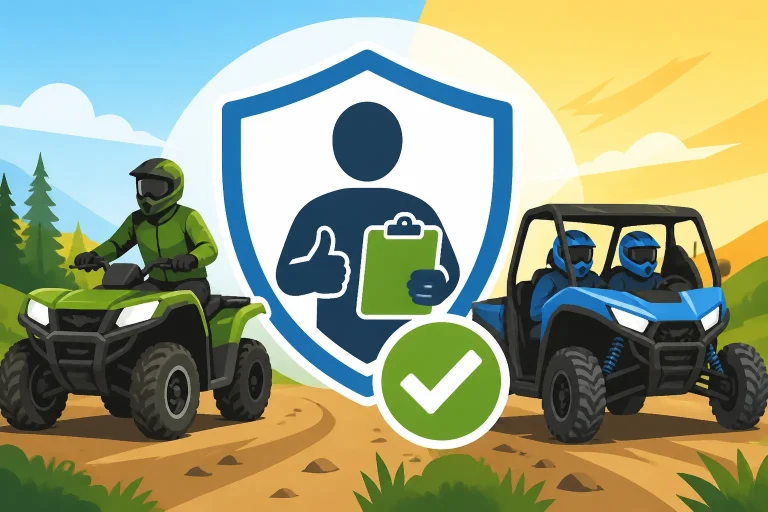
A vehicle permit, ORV registration, insurance, and route permission solve different problems. Having one does not replace the others.
For example, the truck may have a valid park permit, while the ATV is not properly registered. Or the ATV may be registered and insured, but the route you want to use is closed to ORVs. In either case, the truck’s permit does not fix the problem.
Before planning a ride, check each part of the trip:
- Park entry: Does the truck need a park vehicle permit, and how must it be displayed?
- Vehicle status: Is the ATV or UTV registered as required, and do you have its registration certificate?
- Insurance: Does the machine meet the applicable insurance requirements?
- Route access: Is the specific route open to the type of machine you have?
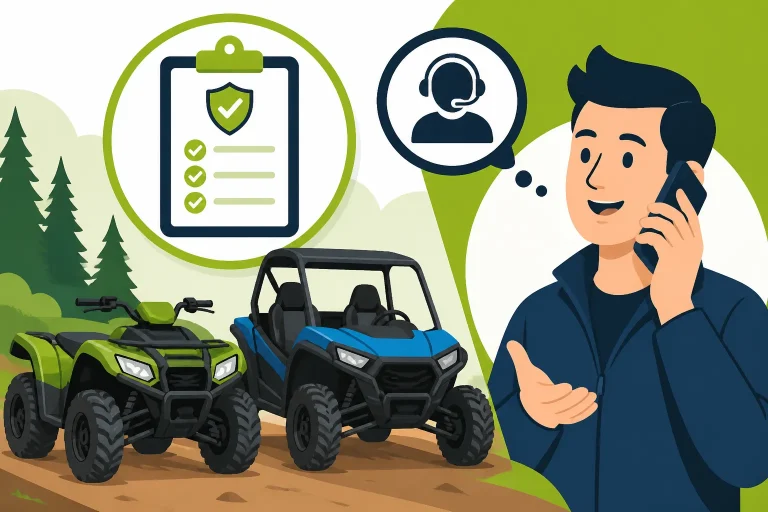
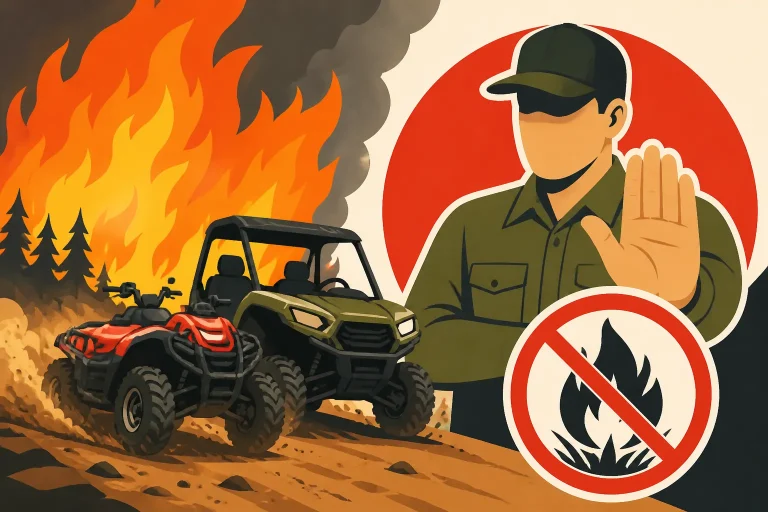
- Local restrictions: Are there current closures, park rules, fire restrictions, or other limits?
- Rider requirements: Do age, supervision, helmet, passenger, or equipment rules apply to the operator and passengers?
The route question deserves particular care. Manitoba’s park rules are not a blanket invitation to ride through parkland. A trail may be for hikers, cyclists, or another kind of use, and a route that is permitted for an ATV in one place does not establish permission elsewhere. Confirm that the park and the specific route allow your machine before you haul it there.
The same caution applies to nearby public land. A provincial park permit does not grant access to adjacent Crown land, private property, a Crown lease, a municipal road, or a club trail. Each place can have its own access conditions. For related rules, see Manitoba Crown Land Riding Explained and Manitoba Private Land Permission.
A registered machine can also be barred from a route. Registration helps establish that the machine meets an administrative requirement; it does not give the owner a general right to ride wherever the machine can physically travel. Similarly, permission to enter a park in a truck is not permission to unload an ATV in a parking area and ride away.
This distinction is useful even if you are not planning to ride inside the park. You may be driving to a campground, cabin, or trailhead with the ATV secured on the trailer. In that case, the park permit question concerns the truck’s entry. The separate riding question matters only if you intend to unload and operate the machine, but you should still verify the park’s rules about transporting, parking, and storing it.
How to prepare before entering a park
A few checks before departure can prevent an avoidable stop at the gate or a wasted trip with a trailer. Treat park entry, machine paperwork, and riding access as three separate tasks.
- Identify every vehicle you will drive into the park. List the truck and any other motor vehicles that will enter under their own power. Do not count the ATV on the trailer as automatically included in the truck’s permit.
- Confirm the permit requirement and terms. Check whether the truck needs a day or annual permit, whether the permit is tied to a specific vehicle, and whether the park has instructions for a trailer. Current permit options and conditions should be confirmed with the park or the official permit service.
- Check the route before loading. Find out whether the particular park has an ORV route and whether the route is open to your ATV or UTV. Do not rely on the fact that other riders have used the area.
- Check the machine’s documents. Confirm that the ATV or UTV is registered and insured as required, and pack its registration certificate. A truck permit does not replace those documents. See Carrying Your Registration Card on Every Ride.
- Review current restrictions. Look for closures, fire-related restrictions, construction, or seasonal limitations that could affect access. A route that was open on a previous visit may not be open for your planned trip.
- Plan unloading and parking. Make sure there is an appropriate place to leave the truck and trailer, and do not assume that a permit reserves space or permits parking outside designated areas.
- Keep proof available. Follow the permit’s display instructions and have any confirmation or relevant vehicle documents accessible. Keep the ATV’s paperwork with the machine or with the operator, as required.
If you buy a small clear holder for paperwork, make sure it does not obstruct the driver’s view or damage the windshield. A basic document pouch available through retailers such as Amazon may help keep a printed confirmation dry, but it is not a substitute for any required windshield display. Follow the official display instructions rather than improvising a placement.
At the park entrance, answer questions clearly and describe the setup: the truck is entering, the ATV is on a trailer, and you want to know whether unloading or riding is allowed. If you are unsure whether the permit covers a particular vehicle, ask before proceeding. That is much easier than assuming the answer and discovering a restriction after unloading.
When an employee or sign gives park-specific instructions, follow those instructions even if your general understanding of park permits differs. Permit rules and park access conditions can change, and separate parks may have different arrangements. Does One Park Permit Cover Every Provincial Park? is useful if your itinerary includes more than one park.
Common situations and the right question to ask
Driving in to camp with an ATV on the trailer
The truck’s permit concerns the truck entering the park. The ATV remains on the trailer until it is unloaded. If you do not plan to ride the ATV in the park, confirm the park’s requirements for the truck and any trailer-related restrictions. If you do plan to ride, verify that there is a designated route open to your machine and that you meet all ORV requirements.
Unloading the ATV at a campground
Do not treat the campground as a staging area for unrestricted riding. Ask whether the park allows the ATV to be unloaded and where, and whether there is an authorized route from the campground. The permit for the truck does not answer those questions.
Bringing two trucks with one trailer
The truck towing the trailer is one vehicle entering the park; the second truck is another. Check whether each truck needs its own permit. A permit purchased for one vehicle should not be assumed to cover a different one. Review How to Buy a Manitoba Park Permit if you need to confirm the purchase process.
Riding to a trailhead outside the park
A park permit does not automatically authorize travel on roads or land outside the park. Confirm the legal route to the trailhead, the rules for any road crossing, and the status of the land you intend to use. If the route passes through private property or a Crown lease, access permission may be required.
Visiting more than one park
Do not assume that a permit issued for one park or vehicle covers every part of the itinerary without checking its terms. The permit’s scope and the destination’s rules matter. Verify the permit requirements for each park and vehicle before setting out.
The ATV is the only motor vehicle entering
If you plan to drive an ATV into a provincial park rather than carry it on a trailer behind a truck, ask specifically whether the ATV needs a park vehicle permit and whether it may use the route or area you have in mind. Do not infer the answer from rules for a passenger vehicle. Park entry permission and permission to ride remain separate questions.
Frequently Asked Questions
Does my truck’s park permit cover the ATV on its trailer?
The truck’s permit is for the truck’s park entry. It does not automatically authorize the ATV to be unloaded or ridden. Check park instructions for trailers and confirm that any intended riding route is open to your machine.
Can I use one permit for two trucks?
Do not assume so. A permit may be associated with a particular vehicle, and a second truck entering the park may need its own permit. Check the current permit terms before travelling.
Does a park vehicle permit replace ATV registration?
No. A park vehicle permit and ORV registration serve different purposes. Carry the ATV’s registration certificate when required, and meet the applicable insurance and operating rules.
If my ATV is registered, can I ride it anywhere in a provincial park?
No. Registration does not create route access. Ride only where the park allows that type of machine, and check for closures or other restrictions before unloading.
Disclaimer
This article is for general informational purposes only and does not constitute professional advice. Laws, prices and regulations vary by location and change over time. Consult a qualified professional for guidance on your specific situation.