Plantations and Sensitive Ground
A plantation can look like an open stretch of bush from the trail, but young trees, soft soil and narrow access lanes can be easy to damage with an ATV or UTV. In Manitoba, the key is not simply whether a machine can get through: it is whether riding is allowed there and whether the ground can handle it. This guide explains what to avoid and how to choose a responsible route.
Why plantations and sensitive ground need extra care
What counts as a plantation or sensitive area
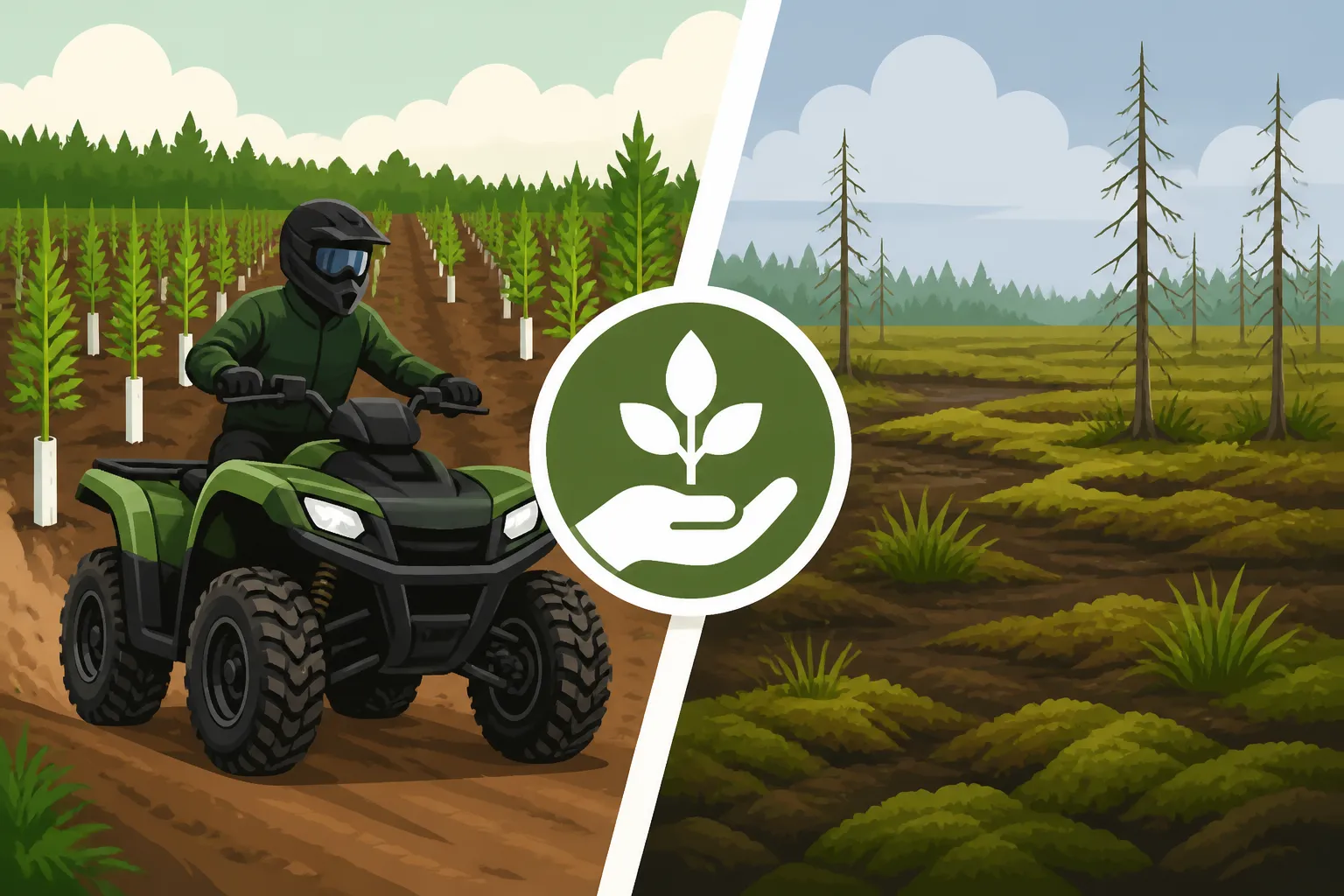
A plantation is an area where trees have been planted or managed, often in rows or blocks. It may be newly planted, recently harvested and replanted, or part of a larger forest-management area. From a rider’s perspective, it can resemble ordinary bush, especially where vegetation has grown in around the trees. But young trees and planted rows may be vulnerable even when the route looks firm and passable.
Sensitive ground is broader than plantations. It can include wetlands, muskeg, stream edges, wetland margins, sandy slopes, erodible soil, and vegetation that takes a long time to recover from tire damage. A trail may seem solid when frozen or dry, then become soft and easily rutted after rain, during spring thaw, or when water levels change. The same machine can leave very different impacts depending on soil moisture, tire choice, ground cover and how often riders pass through.
The distinction matters because a route that is physically rideable is not automatically open for riding. A map, visible tire tracks or an old cut line is not proof that access is permitted. For a broader overview of areas that deserve caution, see Manitoba Sensitive Areas to Avoid and Manitoba Crown Land Restrictions.
How tire damage spreads beyond the first rut
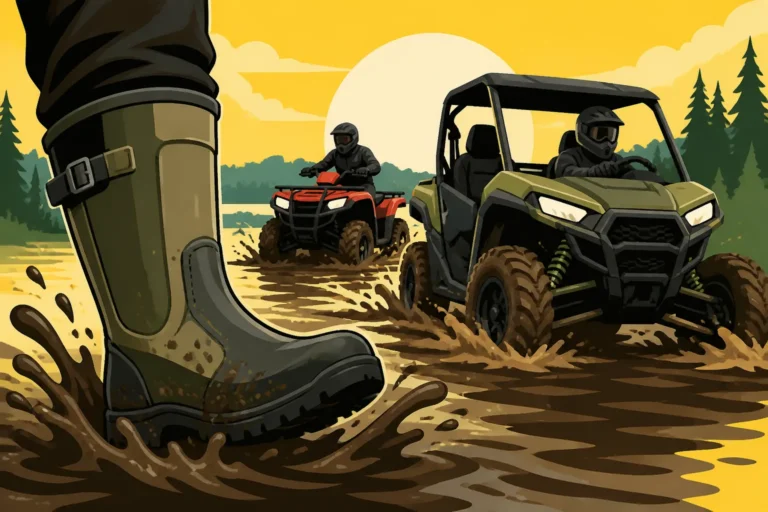
When tires spin on soft ground, they can remove plant cover and loosen soil. Water then follows the disturbed line, carrying soil downhill or into nearby low ground. A shallow rut can deepen as more riders use it, turning a small disturbance into a muddy trench that is harder to cross without widening the damage.
The impact is not limited to the tire track. Riders trying to get around a muddy section often create parallel tracks through vegetation. A group can widen a narrow opening quickly, particularly if machines stop, turn around or repeatedly try different lines. Around planted trees, those detours can damage roots or young growth even if no tree is visibly knocked down.
That is why “just one pass” is not always harmless. If the ground is soft enough to leave deep ruts, the responsible choice is usually to turn around or use a clearly permitted alternative. Manitoba Muskeg and Machines offers more context on why boggy ground calls for a different approach from a firm, established trail.
Check access before entering a plantation
Confirm who controls the land and whether the route is open
Before riding into a plantation or forestry area, establish who manages the land and what access rules apply. A route could cross private land, Crown land, a Crown lease, a provincial park, or land managed for a specific purpose. Permission and access conditions can differ, so do not assume that a route is open just because it appears on a map or connects to a familiar trail.
Start with the trail operator, local ATV club, land manager or relevant public office. Look for current signs at the trailhead and along the route, and pay attention to gates, barriers, closures and posted restrictions. If a route crosses leased or privately occupied land, permission from the appropriate person may be necessary. The guides Manitoba Crown Land Riding Explained, Manitoba Crown Lease Access Rules and Manitoba Private Land Permission can help you think through those distinctions.
Mapping apps can support planning, but they cannot grant permission or guarantee that a track is open. For example, onX Offroad may help riders review mapped routes and terrain, but a mapped line should be treated as a planning clue, not as confirmation of legal access. Check local information and posted directions before unloading.
Read signs and respect barriers even when the trail looks tempting
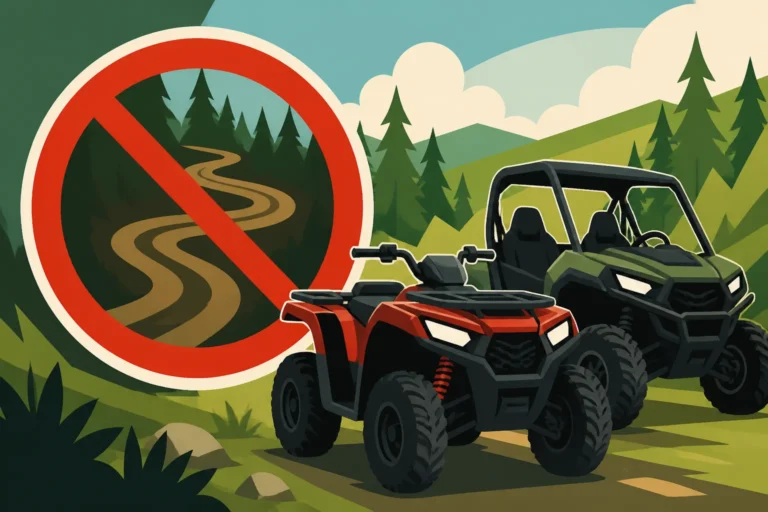
A closed gate, marked plantation boundary or “no motor vehicles” sign can be frustrating when you have already hauled your machine a long way. Still, do not ride around, under or through a barrier. It may protect a replanting area, prevent access to active work, or keep riders away from ground that cannot support traffic. If the reason for a closure is not obvious, that does not make the restriction optional.
Avoid entering through an unmarked opening simply because it looks like a trail. It may be an equipment access lane or a route reserved for land-management work. Likewise, avoid following fresh tire tracks into an area if you cannot confirm they belong to an authorized route. Tracks can be old, unauthorized or made under conditions that no longer apply.
When you cannot confirm access, stop and check rather than guessing. A local club can often explain where its trail ends and whether nearby tracks are part of the system. Manitoba Trail Etiquette Locals Expect is useful background for riders who want to avoid creating conflict with land managers, neighbours and other trail users.
Choose a route that protects the ground
Use established trails and avoid creating detours
Stay on a clearly established, permitted trail. Do not widen it to get around puddles, low branches or a rough patch. If the trail is too wet, blocked or badly rutted, stop before the group spreads out and makes several new lines. Turning around may be inconvenient, but it is usually less damaging than pushing through and leaving a wider, deeper route behind.
On narrow trails, give the machine ahead enough space to get through without rushing. Following too closely can lead to sudden braking, wheelspin or a series of stop-and-start attempts on soft ground. If a machine gets stuck, avoid having several other machines drive over the same wet section to reach it. Use a recovery plan that does not require widening the trail or dragging equipment across fragile vegetation.
A practical rule is to pay attention to the ground before it becomes a problem. If the surface begins to deform under your tires, or you can see water welling into a track, treat that as a warning rather than a challenge. The advice in Manitoba Riding After Heavy Rain is especially relevant when a trail has recently soaked up water.
Keep clear of planted rows, wetlands and working areas
Do not ride between planted rows or use a plantation as a shortcut. Even if there is space between trees, the route may cross roots, new growth or soil that is being restored. Stay out of fenced, signed or visibly managed planting blocks, and do not use tree lines or access lanes as an invitation to explore beyond the established route.
Wetland edges and low spots deserve the same restraint. Water may conceal soft soil, and the vegetation beside it may hold the ground together. Avoid driving around a wet section through grass, brush or young trees; that detour can damage more ground than the original trail. If the route is blocked by a sensitive area, choose a documented alternate route or turn back.
| What you encounter | Safer response | Avoid |
|---|---|---|
| Posted closure or barrier | Turn around and check for an authorized alternative | Riding around or moving the barrier |
| Young trees or planted rows | Stay on the marked, permitted route | Cutting through the plantation |
| Deep mud or water-filled ruts | Stop before the group enters and reassess | Spinning tires or making parallel tracks |
| Wetland edge or soft low ground | Keep to firm established trail | Detouring through vegetation |
| Unclear land access | Ask the club or land manager | Assuming a track is public because it appears on a map |
Plan for changing conditions and make a careful decision
Check conditions before you leave
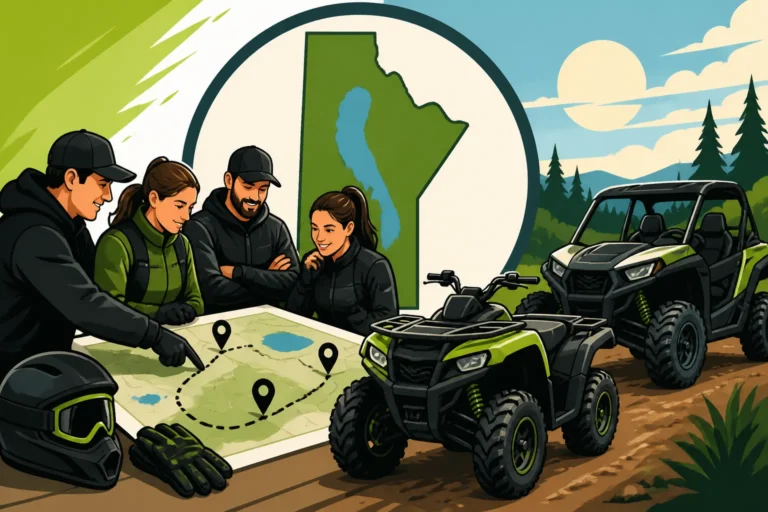
A route that was firm last weekend may be soft after rain or thaw. Before a trip, check with the club or land manager responsible for the trail and look for current closures or condition updates. If you use onX Offroad or another mapping tool to prepare, compare what the map suggests with local route information. Conditions can change faster than a digital map, and a visible track does not necessarily show whether it is permitted or passable today.
Think through the whole ride, not just the first kilometre. A short route may lead into low ground with no sensible place to turn a group around. Make sure everyone understands where the group will stop if the route is closed or too wet. Carry a paper map or another backup navigation option in areas where phone service may be unreliable.
If the trail is deteriorating, the group should agree to turn back before anyone becomes committed to crossing. It is easier to make that call at a firm junction than halfway through a muddy section. Riders should also know who will communicate with the club or land manager if they encounter damage, a fallen tree or a closure sign.
Use a simple stop-and-decide routine
When you reach uncertain or sensitive ground, pause rather than letting the lead machine set an unexamined example. A few minutes of discussion can prevent a group from making a new route across a plantation or wetland. Ask these questions before proceeding:
- Is riding clearly allowed here? Check signs, route information and land-access rules.
- Is this an established trail? Do not treat a faint track or equipment lane as an approved ATV route.
- Can the surface support the group? Look for standing water, soft edges, fresh ruts and vegetation that would need to be pushed aside.
- Can everyone pass without leaving the trail? If not, stop and consider an alternate route or turning back.
- Does the group have a safe recovery option? Avoid entering a spot where a stuck machine would require repeated passes through fragile ground.
A map app can help answer where you are, but it cannot make the decision for you. onX Offroad may be useful for comparing mapped route options, while local signs, land-manager guidance and actual trail conditions remain essential. If you are unsure whether a plantation or sensitive area is open, choose the route that avoids it until you can confirm access.
When riders stay on permitted trails and turn back before the ground is damaged, they help keep routes usable for everyone. For more on avoiding crop areas and other land that should not be crossed, see Crops and Gated Rangeland to Avoid. And when you want a broader picture of responsible shared-trail behaviour, Manitoba Trail Etiquette Locals Expect is a helpful companion guide.
Disclaimer
This article is for general informational purposes only and does not constitute professional advice. Laws, prices and regulations vary by location and change over time. Consult a qualified professional for guidance on your specific situation.