Manitoba Registration for a Trapline Machine
It can feel like you need a whole rulebook just to understand what paperwork your off-road vehicle needs, especially when your machine is a vital tool for your livelihood, like a trapline quad. Many licensed trappers assume their work vehicle is automatically exempt from registration, only to find themselves scratching their heads over the nuances. This guide aims to clear up the confusion surrounding Manitoba ORV registration for machines used on a trapline, outlining the specific conditions under which you might be exempt and when you'll definitely need those plates.
Understanding the Trapper's Registration Exemption in Manitoba
If you're a licensed trapper in Manitoba, you're probably well aware that your off-road vehicle isn't just for fun; it's an essential part of your business. Hauling traps, checking lines, and transporting furs often requires navigating some pretty remote and challenging terrain. The good news is, Manitoba law does offer a specific exemption for trappers when it comes to ORV registration. But, like many exemptions, it comes with conditions, and understanding these is key to staying on the right side of the rules.
The core of the exemption states that an ORV does not need to be registered if it is "used on their trapline by a person who holds a valid trapper's licence." This sounds straightforward enough, but let's really break down what that means in practice. It's not a blanket exemption for all trappers or all ORV use. The exemption is tied directly to the activity and the location. You, the operator, must hold a current, valid trapper's licence. The machine must be actively used for trapline activities, and crucially, it must be used on your designated trapline. This means if you're taking your quad out for a recreational ride with the family on a weekend, or if you're using it to haul firewood from Crown land outside your trapline boundaries, that specific exemption won't apply.
Think of it this way: your trapline machine is considered a tool of your trade, much like a chainsaw or a specialized snowshoe. When you're using that tool for its intended purpose, within the designated area of your trade, the province offers some leeway. However, step outside that very specific context, and the ORV reverts to being a regular off-road vehicle subject to the standard registration requirements that apply to everyone else. It's a pragmatic approach that recognizes the unique operational needs of trappers while still ensuring public safety and accountability for general recreational or off-trapline use. This distinction is paramount, as misinterpreting the exemption could lead to unexpected fines or legal troubles.
Who Qualifies for the Trapper Exemption
So, who exactly falls under this exemption? It's pretty specific. First and foremost, you must be an individual who holds a current and valid trapper's licence issued by the Province of Manitoba. This isn't just about having been a trapper; it's about actively holding that licence for the current season. If your licence has lapsed, or if you're merely assisting a licensed trapper but don't hold your own licence, the exemption for your machine won't apply. It's about personal accountability and direct association with the licensed activity.
Secondly, the machine in question must be your machine, or at least a machine for which you are the primary operator and directly responsible. If a family member who isn't a licensed trapper uses the machine on the trapline, they would need to meet the standard registration requirements or operate under the supervision rules for younger riders, assuming it's an appropriate scenario. The exemption isn't transferable to just anyone using the machine. This is critical because officers conducting compliance checks on traplines will look for proof of your licence and may question the identity of the operator if it's not you. Keeping your licence handy, alongside other relevant documentation, is always a good practice. [Carrying Your Registration Card on Every Ride] discusses the general importance of having your papers accessible.
What "On Their Trapline" Truly Means
The phrase "on their trapline" isn't just a casual term; it refers to the geographically defined area for which your trapper's licence is valid. This area is typically outlined on your licence or associated documentation provided by the provincial government department responsible for natural resources. It means that while you're physically operating your ORV within those specific boundaries for the purpose of trapping, the exemption applies.
However, once you leave that designated trapline area – even if it's just to get to another section of Crown land, or to head into the nearest community for supplies – the exemption generally ceases to apply. For instance, if you need to cross a public road, ride along a ditch to access your trapline, or traverse someone else's private property (even with permission) to reach your trapline, you would likely need to have your ORV registered. The exemption is extremely narrow in its geographical scope. It's not about the nature of the machine or even the person operating it in general; it's about the very specific context of where and why it's being operated at that moment. Many trappers might keep a separate, registered ORV for uses that fall outside the strict definition of "on their trapline" just to avoid any ambiguity. It's better to be overly cautious than to risk a ticket when you're simply trying to conduct your business.
When a Trapline Machine Still Needs Registration
The trapper's exemption is a valuable provision, but it's crucial to understand its limitations. Just because you're a licensed trapper doesn't mean every ORV you own or operate is automatically exempt from registration forever. There are several common scenarios where, even with a trapper's licence, your machine will absolutely need to be registered with Manitoba Public Insurance (MPI) and display a valid plate. Ignoring these situations could lead to significant headaches, including fines and potential impoundment of your machine.
One of the most frequent misunderstandings revolves around the transition between trapline use and other activities. If you use your quad for recreational rides – say, exploring some bush trails on a Sunday afternoon, even if those trails are adjacent to your trapline – the exemption evaporates. Similarly, if you lend your machine to a friend or family member who isn't a licensed trapper, or if they're using it for something other than active trapping on your designated line, registration is required. The exemption is personal and activity-specific. [Manitoba Registration Exemptions Explained] provides a broader view of other scenarios where registration might not be needed, but it reinforces how specific each exemption is.
Another key area is transportation. If you're trailering your ORV to your trapline, that's fine; the machine doesn't need to be registered while it's being transported on a highway. However, if you drive your ORV along a public road, even briefly, to get to your trapline, or if you ride it through a community, it must be registered. This includes ditch riding along roadways that aren't specifically part of your trapline, or crossing highways. The rules around public access and roadways are very strict for ORVs, and a trapper's licence does not grant special permission to operate unregistered machines in these areas.
Recreational Use Outside the Trapline
This is probably the biggest trap (pun intended!) for trappers regarding registration. It's incredibly easy to blur the lines between working on the trapline and simply enjoying the outdoors with your machine. Let's say you finish checking your traps early on a beautiful fall day and decide to take a scenic detour through some Crown land that isn't part of your registered trapline. Or maybe you use your "trapline quad" to go hunting or fishing in an area separate from your trapping activities. In these instances, your ORV is no longer being used "on their trapline" for trapping purposes.
The moment your machine's primary purpose shifts from licensed trapping activity within your designated trapline boundaries to anything else, including leisure or other forms of outdoor recreation, it becomes subject to standard registration. This is where many trappers get caught out. They might assume, "It's my quad, I'm a trapper, so it's always exempt." This is not the case. An officer encountering you on a trail not officially part of your trapline, or if you're clearly not engaged in trapping activities, will expect to see a valid registration plate and card. Don't risk a fine just because you thought your special status covered all your off-road adventures.
Using it for Other Work or Activities
Beyond recreational use, there are other work-related activities that do not fall under the trapper's exemption. For example, if you use your ORV to help a neighbour move wood, or for general property maintenance on your own land (unless that land is your trapline, and you're actively trapping on it), or for any commercial activity outside of trapping, it needs to be registered. The exemption is very narrowly defined to "trapline" use by a "licensed trapper." [Manitoba Commercial Fisher Exemption] offers another example of how specific these work-related exemptions are.
Even within the context of a trapper's life, there are machines that serve multiple purposes. Maybe you have one heavy-duty machine for hauling large game or timber, and a lighter one for quick trap checks. If the heavier machine is also used for tasks like clearing brush for your cabin, or pulling a boat to a lake for fishing, those non-trapping uses mean it needs to be registered. It’s not just about what type of machine it is; it’s about the specific function it’s performing at any given moment and the location of that function. Be honest with yourself about how your machine is truly being used, and if there's any doubt about whether an activity falls outside the strict exemption, register it.
Transporting the Machine on Public Roads
This is perhaps the most critical point of all. The moment your ORV touches a public roadway, path, or any area outside your private property or designated trapline that is generally accessible to the public, it typically requires registration. This includes riding along shoulders, crossing highways, or even driving through small communities to get from one section of your trapline to another if those sections are separated by public land or infrastructure.
While you might be exempt from registration on your trapline, that exemption does not extend to the public roads you might use to get to your trapline. If you're driving your quad or side-by-side along a municipal road or a provincial highway ditch, even for a short distance, it must be registered, and you must adhere to all road-use rules for ORVs, such as having a valid driver's licence and meeting specific equipment requirements. [Manitoba Ditch Riding Rules] provides essential information about where and how you can legally operate an ORV near roadways. Many trappers simply trailer their machines to their trapline access point to avoid this complication entirely, which is a very wise approach if you want to avoid registration costs for a machine you mostly use on your own line.
How to Register Your Trapline Machine (If Needed)
So, you've assessed your situation and realized that your trapline machine, despite its primary purpose, occasionally or regularly falls outside the narrow scope of the trapper's exemption. No worries! Registering an off-road vehicle in Manitoba is a fairly straightforward process, primarily handled through Manitoba Public Insurance (MPI) and their network of Autopac agents. It's essentially the same process as registering any other ATV or UTV in the province.
The key is to gather all your necessary documentation beforehand. This includes proof of ownership (like a bill of sale), proof of identity, and sometimes proof of the vehicle's specifications. Don't forget that a trails fee is also collected at registration, which goes towards maintaining the province's extensive network of ORV trails. Even if you only ride on your trapline, if you register your machine, you'll still pay this fee. [Manitoba ORV Registration Through MPI] details the general steps for registering an ORV in the province.
It's always a good idea to call your local Autopac agent ahead of time, especially if you have a machine that's older or has a less common VIN (Vehicle Identification Number) situation. They can guide you through the specifics and ensure you have everything required for a smooth registration experience.
Required Documentation for Registration
When you head to an Autopac agent to register your off-road machine, you'll need to bring a few key pieces of paperwork with you. This preparation can save you a lot of time and frustration. The most important document is proof of ownership. If you purchased the machine new from a dealer, you'll typically have a New Vehicle Information Statement (NVIS) or a manufacturer's statement of origin. If you bought it used from a private seller, you'll need a bill of sale.
A robust bill of sale is crucial, especially for private transactions. It should include the full names and addresses of both the buyer and seller, the date of sale, the purchase price, and a detailed description of the machine, including its make, model, year, and most importantly, the Vehicle Identification Number (VIN) or serial number. For those needing a reliable template, resources like LawDepot can provide customizable bill of sale forms that ensure all necessary legal details are covered. This can prevent disputes and clarify ownership, which MPI will require. [Manitoba Registration Without a Bill of Sale] outlines what to do if you're in a tricky situation without proper proof of ownership.
You'll also need personal identification, such as your Manitoba driver's licence or other government-issued ID. If the machine has never been registered in Manitoba before, the agent will verify the VIN, so make sure it's accessible and legible on your machine. Sometimes, for very old machines, this can be a challenge, so inspect it beforehand.
Choosing Your Insurance Coverage
When you register your ORV, you're not just getting a plate; you're also obtaining basic insurance coverage through MPI. This base coverage primarily provides third-party liability protection. This means if you cause an accident while operating your registered ORV and injure someone or damage their property, MPI will cover those costs up to the basic limit. However, it's really important to understand that this basic coverage does not cover damage to your own machine, nor does it provide personal injury benefits for yourself if you're at fault. [Manitoba Insurance Included With Registration] explains the details of this base coverage.
For a machine that is essential to your livelihood, like a trapline quad, you might want to consider purchasing additional coverage. This is where an Autopac agent can walk you through your options. You can often add "all perils" or "collision" coverage to protect your machine against damage from accidents, theft, or other perils. You can also increase your third-party liability limits beyond the basic amount, which is often a wise choice in today's litigious society. Furthermore, you can purchase "personal injury protection" or "accident benefits" for yourself. Given the remote and often rugged nature of trapline work, having comprehensive coverage for your machine and yourself is a smart investment that provides peace of mind. Discussing these options thoroughly with your agent will ensure your valuable trapline tool is adequately protected.
Displaying Your Registration Plate
Once your trapline machine is registered and you've got your plate, the next step is to ensure it's properly displayed. Manitoba has specific rules about where your ORV plate needs to be mounted to ensure it's visible and clearly identifiable. Generally, only one plate is issued per machine, and its placement depends on the type of ORV.
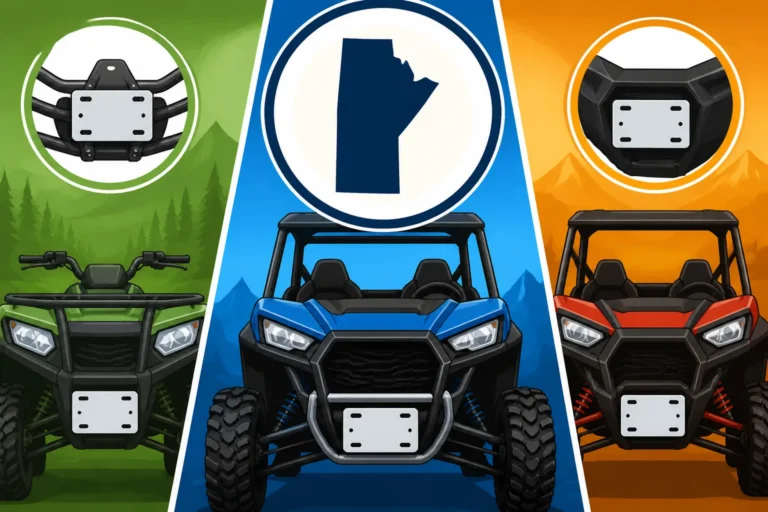
For ATVs (quads) and side-by-sides (UTVs), the plate must be securely fastened to the rear of the machine. This means no hiding it under a seat, in a storage compartment, or on the front bumper. It needs to be clearly visible from behind. For dirt bikes (two-wheelers), the plate is typically mounted on the front. Snowmobiles have their own rules, requiring the plate on the left side. Ensure the plate is kept clean and free from mud, snow, or debris that might obscure the numbers, especially when you're out in the bush. An unreadable plate is just as problematic as having no plate at all in the eyes of law enforcement. [Manitoba Plate Mounting by Machine Type] delves into these specific requirements, ensuring you avoid a preventable ticket.
Always carry your registration card with you when operating your registered machine. While the plate identifies the machine, the card proves you are the legal owner or authorized operator. Keep it in a waterproof bag or container, so it doesn't get damaged by the elements while you're out on the line.
Exemptions for Other Work-Related ORV Use
It’s worth noting that the trapper’s exemption isn’t the only one tied to work-related use of off-road vehicles in Manitoba. The province understands that ORVs are vital tools for a variety of industries and activities that are distinct from recreational riding. While these don't directly apply to trappers, they highlight the specific nature of these exemptions and why clarity is so important.
For instance, there's a specific exemption for commercial fishers who use ORVs for their licensed fishing operations. Similarly, farmers often use quads and side-by-sides for a multitude of tasks on their property, and while there isn't a blanket farmer exemption, many of their uses fall under the general "own property" exemption. Understanding these distinctions helps to illustrate why the trapper's exemption is so narrowly defined and what might (or might not) qualify under similar reasoning.
The underlying principle for most of these work-related exemptions is that the machine is an integral tool for a provincially licensed or recognized profession, being used in the direct conduct of that profession, often in remote or private settings. The moment the machine is used for non-professional, recreational, or public-access purposes, the need for registration typically arises.
Commercial Fisher Exemption Details
Similar to trappers, commercial fishers in Manitoba can also qualify for an ORV registration exemption. This exemption applies to machines that are "used by a person who holds a valid commercial fishing licence in the course of operating a commercial fishing operation." Again, the key elements are a valid licence, direct use in the business, and being within the scope of that operation. This might include using a quad to access fishing nets on a frozen lake, transport gear to a remote fishing camp, or haul catches from the shoreline. [Manitoba Commercial Fisher Exemption] provides a detailed look at this specific rule.
Just like the trapper's exemption, this is not a free pass for all ORV use by a commercial fisher. If that same fisher decides to take their quad out for a spin on a public trail on their day off, or if they lend it to a friend for recreational use, the machine would need to be registered. The intention behind these exemptions is to support Manitoba's resource-based industries by reducing bureaucratic hurdles for their essential work, not to exempt them from general safety and regulatory oversight when acting outside that professional scope.
Comparison Table: Trapper Exemption vs. General Registration
To help clarify when your trapline machine needs registration and when it might be exempt, here's a quick comparison:
| Feature | Trapper Exemption Applies | Registration Required |
|---|---|---|
| Operator | You hold a valid Manitoba trapper's licence | Anyone operating (including you), especially if not a licensed trapper |
| Location of Use | Strictly within your designated trapline boundaries | Any area outside your designated trapline (e.g., public trails, roadways, community roads) |
| Purpose of Use | Directly for trapping activities (checking traps, hauling furs) | Recreational riding, hunting/fishing (if not trapping), other work, general transport |
| Machine Status | Tool of trade, actively engaged in trapping | Any ORV used for general purposes, even if owned by a trapper |
| Proof Required | Valid trapper's licence readily available | Valid registration card and plate displayed |
This table highlights the narrow scope of the trapper's exemption. It's a very specific relief for a very specific set of circumstances. Any deviation from these conditions will likely mean you need to register your machine.
Disclaimer
This article is for general informational purposes only and does not constitute professional advice. Laws, prices and regulations vary by location and change over time. Consult a qualified professional for guidance on your specific situation.