How the Westman ATV Association Serves Brandon Riders
Brandon riders can spend more time planning a good day out and less time guessing where to ride, what is open, or whom to ask. The Westman ATV Association can help connect local riders with trail information, stewardship efforts, and a riding community. Here’s how to make the most of that local connection while still checking access, conditions, and rules yourself.
What a local ATV association can do for Brandon riders
Share local knowledge that is hard to get from a map
A map can show roads, tracks, and land boundaries, but it may not tell you whether a route is currently usable, whether a gate has changed, or whether a landowner’s permission is needed. Local association members may have practical knowledge about riding in the Westman area and can help point you toward the right questions to ask before unloading your machine.
That kind of advice matters when you are planning around Brandon. A route that looks straightforward on a screen may involve private land, a seasonal closure, soft ground, or a connection that is not open to off-road vehicles. A local conversation can help you avoid making a long haul based on an assumption.
Treat local tips as a starting point, not automatic permission to ride. Confirm who manages the land, whether access is currently allowed, and whether any municipal or provincial restrictions apply. For broader regional planning, Manitoba Westman Riding Areas and Manitoba Riding Near Brandon can help you explore what kinds of riding opportunities to investigate.
Help make riding more sustainable
Associations can bring riders together around trail stewardship. That may include volunteer days, sharing reports about damaged sections, encouraging considerate riding, or helping people understand why certain areas need extra care. The specific activities and schedule can change, so ask the association what is happening before planning to take part.
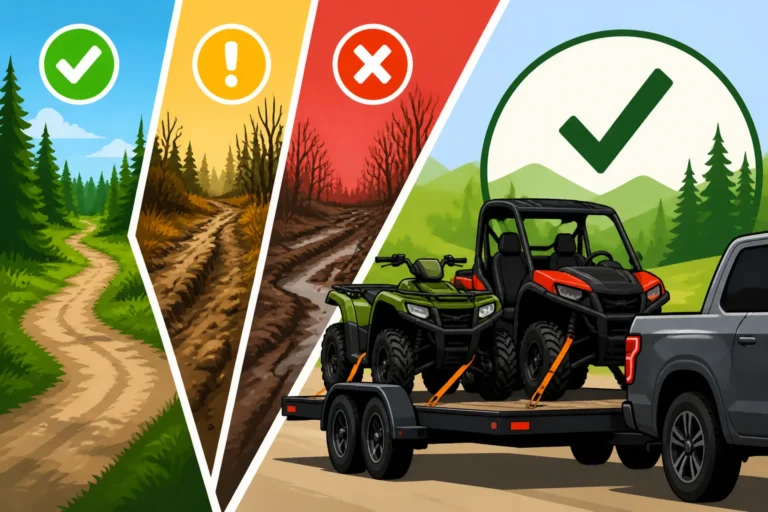
Stewardship is especially important where trails pass through sensitive ground. A muddy shortcut can leave deep ruts that take a long time to recover, while riding around a wet section can widen the damage. If a route is saturated, blocked, or visibly deteriorating, turning back is often the better choice—even when it means changing the day’s plan.
Local clubs and associations also help keep the conversation going between riders, land managers, and communities. That does not mean a club can open every road or grant access to every property. It does mean that a connected group of riders may be better positioned to share concerns, ask questions, and encourage responsible habits. Manitoba Trail Volunteer Days offers more context on how volunteer involvement can support riding areas.
Create a place for riders to connect
For a new rider, an association can make the local scene feel less intimidating. You can ask what equipment people bring, how they plan group rides, and what to check before towing a machine out of town. More experienced riders may value the chance to meet others, help with local projects, and pass on practical knowledge.
A club connection can also make it easier to learn what questions you should ask. For example, if you are unsure whether a route is suitable for a side-by-side, whether a trail is shared with other users, or whether a ride requires advance planning, someone familiar with the area may help you identify the right contact or source of information.
If you are considering joining, ask what participation involves and what benefits are available. Membership can be a good fit for riders who want to contribute regularly, while others may prefer to attend an open event or volunteer activity first. The useful choice is the one that matches how often you ride and how much time you can realistically give.
How to plan a ride with help from the association
Check access before you load the trailer
A common frustration is doing the preparation—fueling up, loading the quad, and driving out—only to find that the route is closed or access is unclear. Before leaving Brandon, confirm the ride area, the authorized access point, and any current restrictions with a reliable local contact. Do not assume that a visible track on a map is a legal ATV trail.
Ask clear questions rather than relying on a vague description such as “it’s open out there.” For instance: Is this specific route open to ATVs or UTVs? Is access allowed on the date we plan to ride? Are there gates, seasonal restrictions, or landowner permissions to arrange? Is the route appropriate for our machine and experience level?
A mapping app can help with preparation, but it cannot establish permission by itself. Riders sometimes use onX Offroad to review mapped routes and orient themselves, then confirm access and closures through local or land-management information. Keep a second navigation option available, especially if your planned route may pass through areas with unreliable cell service.
Get a practical picture of trail conditions
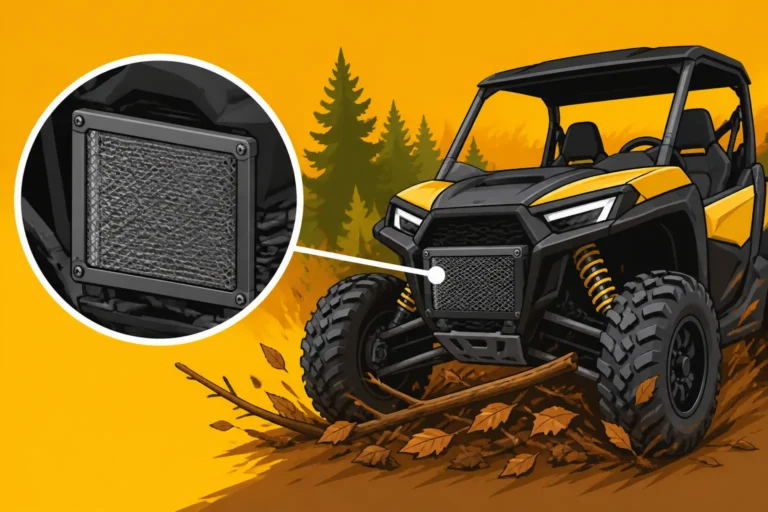
Conditions can change quickly. Recent rain may turn firm ground into deep mud, while wind or a storm can leave branches and debris across a trail. Before you haul, ask whether the route has been checked recently and whether there are known problem spots. Manitoba Trail Conditions Before You Haul is useful background for building this check into your routine.
When using onX Offroad or another mapping tool, treat the map as one piece of your plan rather than a live guarantee of trail conditions. Save or record the route details you need before leaving service, and carry a backup such as an offline map or a paper map. Let someone at home know where you expect to ride and when you plan to return.
| Before the ride | What to confirm | Why it matters |
|---|---|---|
| Access | Whether the route is open and permission is in place | A mapped track does not prove public access |
| Conditions | Mud, water, storm damage, or closures | Helps prevent getting stuck or damaging the trail |
| Machine fit | Whether your ATV or UTV suits the route | Narrow, rough, or wet sections may not suit every machine |
| Navigation | Offline map, backup route, and return plan | Cell service and app access may be limited |
| Group plan | Meeting point, pace, and communication method | Keeps the group together and reduces confusion |
Ride in a way that protects future access
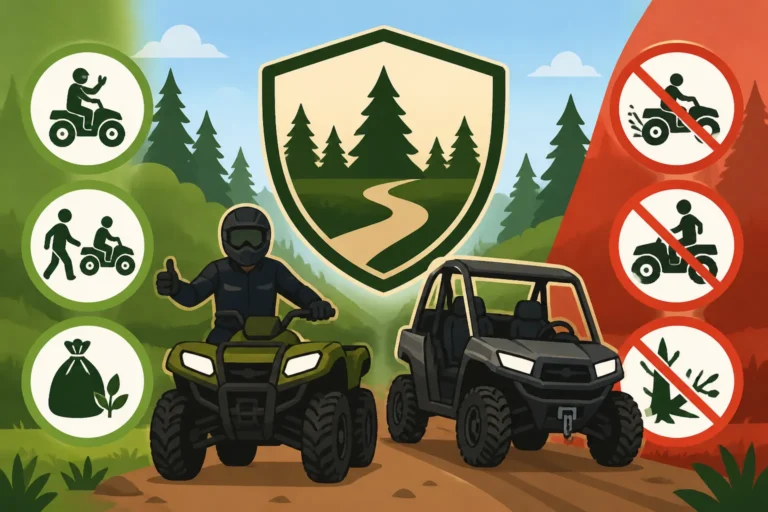
A local association’s work is easier to sustain when riders respect the places they use. Stay on routes where access is allowed, avoid cutting new tracks, and do not ride around a closure or barricade. If you encounter a sensitive area, a crop, a wetland, or a gate, stop and reassess rather than assuming a detour is acceptable.
It also helps to keep group rides predictable. Agree on a pace, identify a lead and a sweep rider, and decide in advance what the group will do if someone has a mechanical problem. Give other trail users room, slow down near homes and working areas, and leave gates as you find them unless the land manager has given different instructions. Manitoba Trail Etiquette Locals Expect covers the habits that help riders share space responsibly.
If you notice trail damage or a hazard, record the location as accurately as you can and report it through an appropriate local contact. A concise report is more useful than a general message: describe what happened, where it is, and whether it appears to block passage or pose a safety risk. Avoid posting sensitive access details publicly if doing so could encourage unauthorized riding.
Joining, volunteering, and getting the right information
Decide whether membership fits your riding
Membership can be worthwhile if you ride regularly, want to meet local riders, or would like to support organized stewardship. Before signing up, ask what the association does, how members participate, and whether activities are open to non-members. Check whether the association’s work aligns with what you want from the local riding community.
A rider who goes out a few times each season might first attend an event or ask about a volunteer opportunity. Someone who rides often may appreciate a more regular connection and a chance to contribute ideas or time. Neither approach is inherently better; the important thing is understanding what membership actually offers rather than assuming it includes access to a particular trail or property.
You can compare your priorities with the association’s activities and ask other local riders about their experience. Manitoba ATV Clubs Worth Joining and Manitoba Club Membership Benefits provide additional context for thinking through that decision. For information about the Westman ATV Association itself, contact the organization directly and ask about its current membership options and activities.
Volunteer in a way that fits your time
Volunteering does not have to mean committing every weekend. Ask whether the association needs help with a specific event, a cleanup, trail reporting, communications, or another task. A short, clearly defined contribution may be easier to fit around work, family, and riding plans than an open-ended promise.
If you join a work activity, follow the organizer’s instructions and use appropriate equipment. Trail work can involve uneven ground, tools, traffic near access points, or changing weather. Do not move signs, clear obstacles, or alter a route on your own unless the responsible organization or land manager has authorized the work.
The association may also be able to explain how riders can report concerns without taking matters into their own hands. This is useful when you find a blocked route, damaged sign, or unsafe condition. Sharing accurate information helps the people responsible decide what action is appropriate.
Know what the association cannot replace
A club is not a substitute for checking regulations, insurance, vehicle paperwork, or land access. Riders remain responsible for understanding the rules that apply to their machine and route. For example, an association’s trail advice does not override a municipal by-law or permission requirement. Manitoba ATV Trails: Club Ground and Crown Land and Manitoba Crown Land Access Rules can help clarify why access depends on the land and the route.
Likewise, a club map or a member’s recommendation should not be treated as proof that a route is open today. Closures, fire restrictions, land-use decisions, and local conditions may change. Check the relevant information before departure, and follow posted signs and instructions on site.
| The association can help with | You still need to confirm |
|---|---|
| Local riding knowledge and community connections | Legal access to the specific route |
| Advice on planning and preparing for a ride | Current closures, restrictions, and fire conditions |
| Opportunities to meet riders or volunteer | Whether your machine and paperwork meet applicable requirements |
| Reporting concerns through local channels | Permission from the responsible landholder where required |
For Brandon-area riders, the Westman ATV Association is most useful as a local connection: a place to learn, ask better questions, meet other riders, and contribute to responsible riding. Pair that community knowledge with current access checks, careful navigation, and respect for land and other trail users, and your day out is far more likely to go smoothly.
Disclaimer
This article is for general informational purposes only and does not constitute professional advice. Laws, prices and regulations vary by location and change over time. Consult a qualified professional for guidance on your specific situation.