Reporting Trail Damage to a Manitoba Club
A washed-out rut, fallen tree, or damaged bridge can turn a familiar Manitoba ride into a risky one, and it is frustrating when you are unsure who is responsible or what details to send. This guide explains how to report trail damage clearly, safely, and to the right people—so a club or land manager has useful information to assess what needs attention.
First, make the situation safe
Stop before the damaged section
When you spot damage, slow down and stop well before the hazard. A soft shoulder, deep rut, or missing section of trail can be harder to judge from the seat of a moving machine, especially in wet brush or low light. Give yourself enough room to assess what is ahead without putting your machine—or another rider—at risk.
Do not assume the safest route is to ride around the obstacle. A detour through brush, wet ground, a field, or a neighbouring track may create new damage or take you onto land where riding is not allowed. If the trail is blocked, turn around where you can do so safely and alert other riders in your group. On a narrow trail, leave space for people approaching from either direction.
If someone is injured, a machine is in immediate danger, or the situation creates an urgent threat to life or property, prioritize emergency help rather than a routine club report. For a non-urgent hazard, do not try to move a large tree, repair a bridge, dig out a rut, or operate equipment unless the responsible organization has asked you to do so. A well-meant repair can make a damaged crossing less stable or cause additional harm.
Avoid making the damage worse
Mud and muskeg can hide water depth, soft edges, and the shape of a rut. Turning around in a fragile area may widen the trail, while repeatedly driving through a muddy section can deepen it. If you can safely back away or retrace your route without causing more damage, do that. If you cannot, stop and consider the safest available option rather than forcing your machine through.
Keep people and machines away from visibly unstable structures. A bridge with a broken plank, loose railing, or washed-out approach should be treated cautiously; a photograph is not worth getting closer to an unsafe edge. Never stand beneath a hanging limb or climb onto a damaged structure to get a better view.
Use the same care when there are signs of fire, flooding, or a recent storm. Conditions can change quickly, and a route that was passable on the way in may not be safe on the way out. Before heading back, check any available local notices or club updates. Manitoba Trail Closures After a Storm and Manitoba Trail Conditions Before You Haul offer useful background for planning around changing trail conditions.
Work out who should receive the report
Identify the trail and its manager
A trail may be associated with a local ATV club, a broader riding network, a park, a municipality, or land managed under different arrangements. The nearest club is not automatically responsible for every track in the area. Start by identifying the trail name, trailhead, nearby road, or the riding area where you found the problem.
Check trailhead signs, posted maps, club materials, and any notices you used to plan the ride. A club may maintain or help manage one corridor while another organization oversees nearby land. The distinction matters: a club can often direct a report, but it may not have permission or authority to repair every damaged spot. Manitoba Club Trails and Who Maintains Them explains why trail responsibility can vary from place to place.
If you are not sure which organization is responsible, send a concise inquiry to the club or contact listed for the riding area and ask whether they manage that section. Include the nearest trail name or access point so the recipient can tell whether the report belongs with them or should be redirected. Avoid posting a precise location publicly if it could lead riders into a closed, private, or sensitive area.
Choose the most useful contact route
Use a contact method the club has identified for trail updates, maintenance concerns, or general questions. That could be a form, an email address, a club page, or another official channel. Check that it is a current contact route before sending sensitive information, and do not assume a social-media comment will reach the person coordinating trail work.
If the damage is on a designated route within a park or other managed area, the land manager may also need to know. A club can advise you about its own corridor, but park or municipal rules may affect whether anyone can close, mark, or repair a route. Manitoba Parks Allow Machines on Designated Routes Only is a helpful reminder to distinguish a designated route from nearby ground that may not be open to machines.
It can help to keep the message practical and neutral. You do not need to guess what caused the damage or assign blame. For example: “A tree is down across the marked trail east of the north trailhead. It blocks both directions. I turned around and did not attempt to move it.” That gives the recipient a clear starting point without overstating what you know.
Send a report someone can act on
Include location, description, and timing
The most useful report answers three questions: Where is the damage? What is damaged? When did you see it? Use the trail name and the nearest recognizable landmark, such as a trail junction, bridge, trailhead, or signed access point. If you have GPS coordinates, include them in a format the recipient can open or copy. If you do not, describe how someone could approach the spot from a known marker.
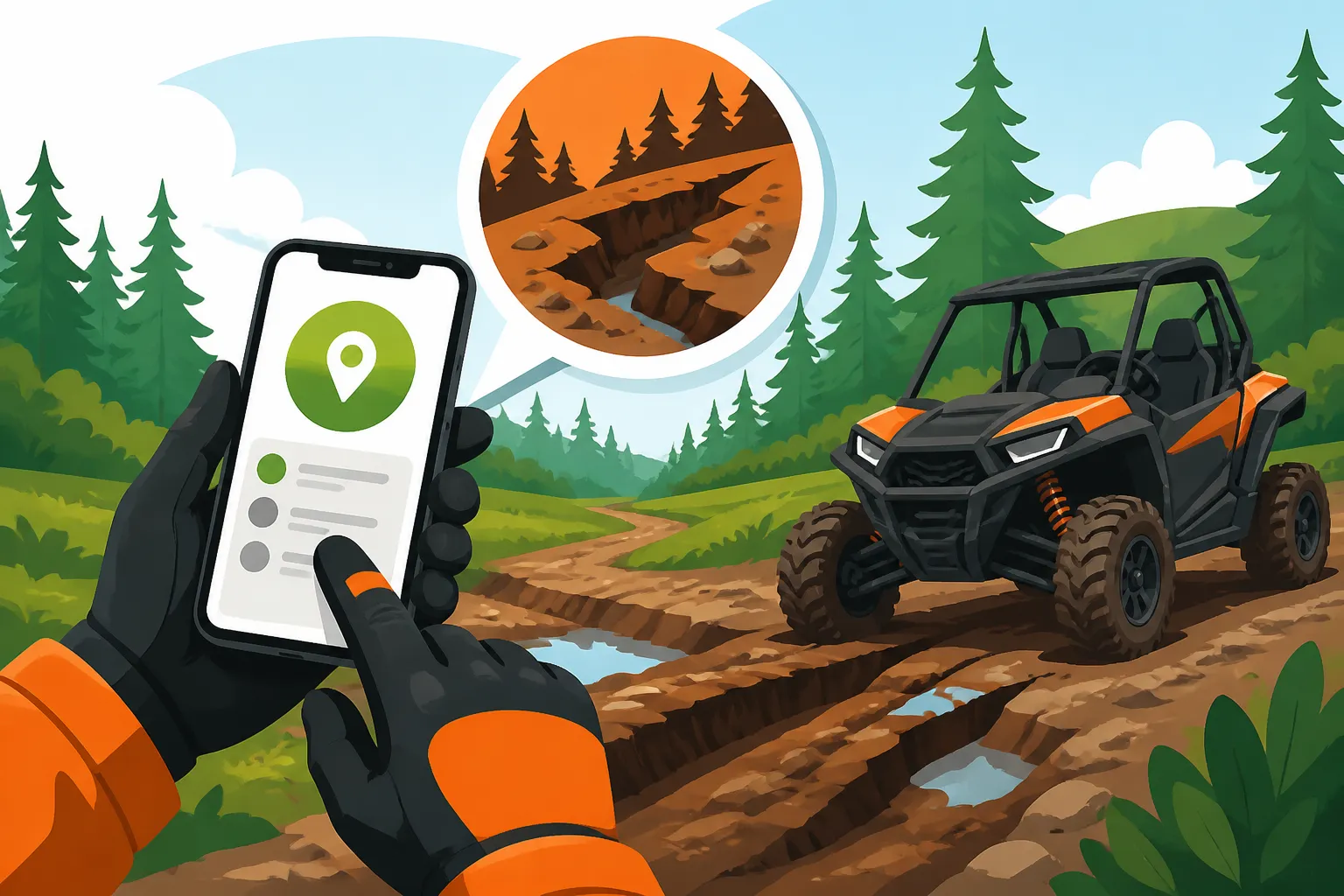
A mapping app can help you record a location while you are safely stopped. For instance, onX Offroad may be one option for marking or describing where you encountered a problem, alongside a phone’s built-in map. Do not rely on an app alone: include the trail or area name and a plain-language description, since people may use different maps or have limited signal.
Describe the problem in observable terms. “The bridge is unsafe” is less useful than “One plank is missing near the west end, and the approach is washed out.” Mention whether the hazard blocks the whole trail, narrows it, or appears passable only from one direction—but avoid telling others to ride through it. If you saw fresh water, a fallen tree, damaged signage, exposed roots, or a washout, say so without claiming a cause you cannot confirm.
Include when you saw it and whether conditions were changing. “Seen Saturday afternoon after heavy rain” is more helpful than “It has been like this for a while,” unless you know the damage was present on an earlier visit. If you return later and the situation has changed, send a follow-up rather than assuming the original report still describes the trail.
Add photos without taking unnecessary risks
A clear photo can help someone understand the scale and position of the damage. If it is safe, take one image that shows the hazard in its surroundings and another closer view that illustrates the detail. A photo of only a muddy patch may not show whether it is at a junction, beside a bridge, or on the edge of a marked route.
Keep your distance from unstable ground and structures. Do not walk onto a washed-out bridge, stand beneath a hanging tree, or enter deep water for a better angle. If photographing would require a risky approach, describe what you can see from a safe spot and say that you did not get closer.
A mapping tool such as onX Offroad can be useful for noting where a photo was taken, but include the location in the report itself as well. Some people receiving the message may not have access to the same app, and photo location data may not be available to them. If you share images in a club group, avoid exposing personal details or unrelated riders without a good reason.
Here is a simple checklist for a useful report:
| Detail | What to include |
|---|---|
| Trail location | Trail name, nearby junction, trailhead, or coordinates |
| Type of damage | Fallen tree, washout, rut, broken structure, missing sign, or other visible issue |
| Extent | Whether it blocks the route, narrows it, or affects a specific section |
| Time observed | Date or approximate time, plus relevant weather or changing conditions |
| Supporting evidence | Safe photographs or a clear location note |
| Immediate action | Whether you turned around, warned your group, or noticed a closure sign |
For a straightforward message, you could write:
I found a fallen tree across the marked trail near the junction with the north access route on Saturday afternoon. It appears to block the full width of the trail. I turned around and did not try to move it. I have attached a photo taken from a safe distance. Please let me know if this section is managed by your club or if I should contact another land manager.
Follow up responsibly and help prevent repeat problems
Give the club time to assess the report
Sending a clear report does not mean the obstacle will be removed immediately. A club may need to confirm the location, check access permissions, assess the hazard, arrange volunteers, or coordinate with a land manager. Trail work can also depend on weather, equipment, and whether the route is open for maintenance.
If the hazard presents a serious, immediate risk, make that clear in your first message and use any urgent reporting channel the responsible organization provides. For routine damage, avoid sending repeated messages through several channels in a short period. If you have not received an acknowledgment after a reasonable interval, a brief follow-up with the original details is more useful than starting over with a vague note.
When the club replies, follow its guidance. It may ask you to clarify a junction, send another photograph, or direct the report elsewhere. It may also decide that the damage is outside the club’s area or that the route should remain closed until the land manager assesses it. Manitoba Trail Volunteer Days can help riders understand how clubs organize volunteer work, but an invitation to volunteer is not permission to make repairs independently.
Share updates carefully and ride with local expectations
If you return to the area and see that conditions have changed, send a factual update. For example, note that the tree has been removed or that water has spread across the trail. Do not treat an old report or a social-media post as proof that a route is now safe or open; check the latest information from the organization responsible for it.
When telling other riders, share only what they need to avoid the hazard. A useful warning names the trail section and says to check current notices or turn around safely. Avoid encouraging riders to create a bypass or to test a questionable crossing. The way riders respond can either protect a damaged trail or make repairs harder. Manitoba Trail Etiquette Locals Expect offers broader guidance on considerate riding, while Manitoba Trail Apps and Maps can help riders plan and communicate locations more clearly.
If you ride regularly in one area, joining a local club can help you learn which trails it maintains and how it prefers to receive reports. Manitoba ATV Clubs Worth Joining is a place to start when you are looking for a club connected to a region or riding area. Whether or not you are a member, a precise, respectful report is valuable: it gives the people responsible for the trail a chance to assess the problem without adding risk or speculation.
A few simple habits make future reports easier. Save trail names and junctions while planning your ride, keep a small note of the date and location if you encounter a problem, and take photographs only when it is safe. If you use onX Offroad or another mapping app, check that the location you share is understandable to someone who may be using a different map. The goal is not to produce a perfect technical report. It is to help the right person find the issue and decide what to do next.
Disclaimer
This article is for general informational purposes only and does not constitute professional advice. Laws, prices and regulations vary by location and change over time. Consult a qualified professional for guidance on your specific situation.