Supervision by a Parent or an Adult
Riding ATVs and UTVs in Manitoba is an incredible experience, offering unmatched access to our province's beautiful wilderness and trails. But for families with younger riders, one of the biggest headaches and sources of confusion is understanding exactly when and how an adult needs to supervise them. It's not just about keeping an eye on them; there are specific rules and responsibilities that often get overlooked, leading to potential fines or, worse, accidents. This guide will meticulously break down Manitoba's regulations regarding adult supervision for young off-road vehicle operators, helping you ensure every family adventure is both fun and fully compliant with the law.
The Foundation of Age-Based Riding Rules in Manitoba
Navigating the rules for young off-road vehicle (ORV) riders in Manitoba can feel like trying to solve a puzzle with missing pieces. You want your kids to enjoy the freedom of the trails, but you also need to make sure you're keeping them safe and staying on the right side of the law. It’s a delicate balance, and often, the legal requirements for adult supervision are misunderstood.
Why Age Matters: Understanding the "Who" and "When"
Manitoba's Off-Road Vehicles Act isn't just a suggestion; it's a legal framework designed to protect riders of all ages, with a particular focus on minimizing risk for our youngest enthusiasts. The province understands that operating an ATV or UTV requires a certain level of judgment, physical coordination, and awareness that develops over time. That's why age isn't just a number when it comes to ORVs; it's a crucial factor that determines who can ride what, where, and most importantly for this discussion, under what conditions.
The law isn't designed to be a barrier to family fun, but rather a safeguard. It acknowledges that a 10-year-old simply doesn't have the same experience or hazard perception as a 20-year-old, regardless of how "good" they are on their quad. These rules create a standardized expectation across the province, ensuring that everyone involved in off-road activities, from parents to law enforcement, has a clear understanding of responsibilities. It's about more than just preventing tickets; it's about preventing tragedies. For a deeper dive into how age affects eligibility, check out [Manitoba Registration Age of 16].
Defining "Adult" and "Supervision" in the Eyes of the Law
When the law talks about an "adult" in the context of supervising young riders, it's generally referring to someone who is at least 18 years of age. This adult isn't just a passenger or someone vaguely in the area; they carry a significant legal responsibility. "Supervision" means more than just being present. It implies active oversight, being in a position to immediately intervene if necessary, and having the ability to communicate directly with the young rider.
Think of it this way: if your child is riding and you're half a kilometre away, out of sight, and unable to yell instructions or physically stop them, you are likely not providing adequate supervision as defined by the law. The supervising adult needs to be operating their own ORV, or in some cases, riding as a passenger in a multi-passenger ORV with the child, maintaining a clear line of sight and close proximity. This direct, active supervision ensures that the adult can guide the child through challenging terrain, warn them of hazards, or assist them if they get into trouble. It's a proactive role, not a passive one, and the adult must be competent and experienced enough to not only operate their own machine safely but also to effectively instruct and manage the younger rider.
Specific Scenarios: Who Needs Supervision and Where
Manitoba's regulations for supervising young ORV riders aren't a one-size-fits-all rule. They become more nuanced as riders get older, reflecting the gradual development of their skills and judgment. Understanding these specific age brackets is key to staying compliant and ensuring safety.
Riders Under 14: Constant and Direct Adult Presence
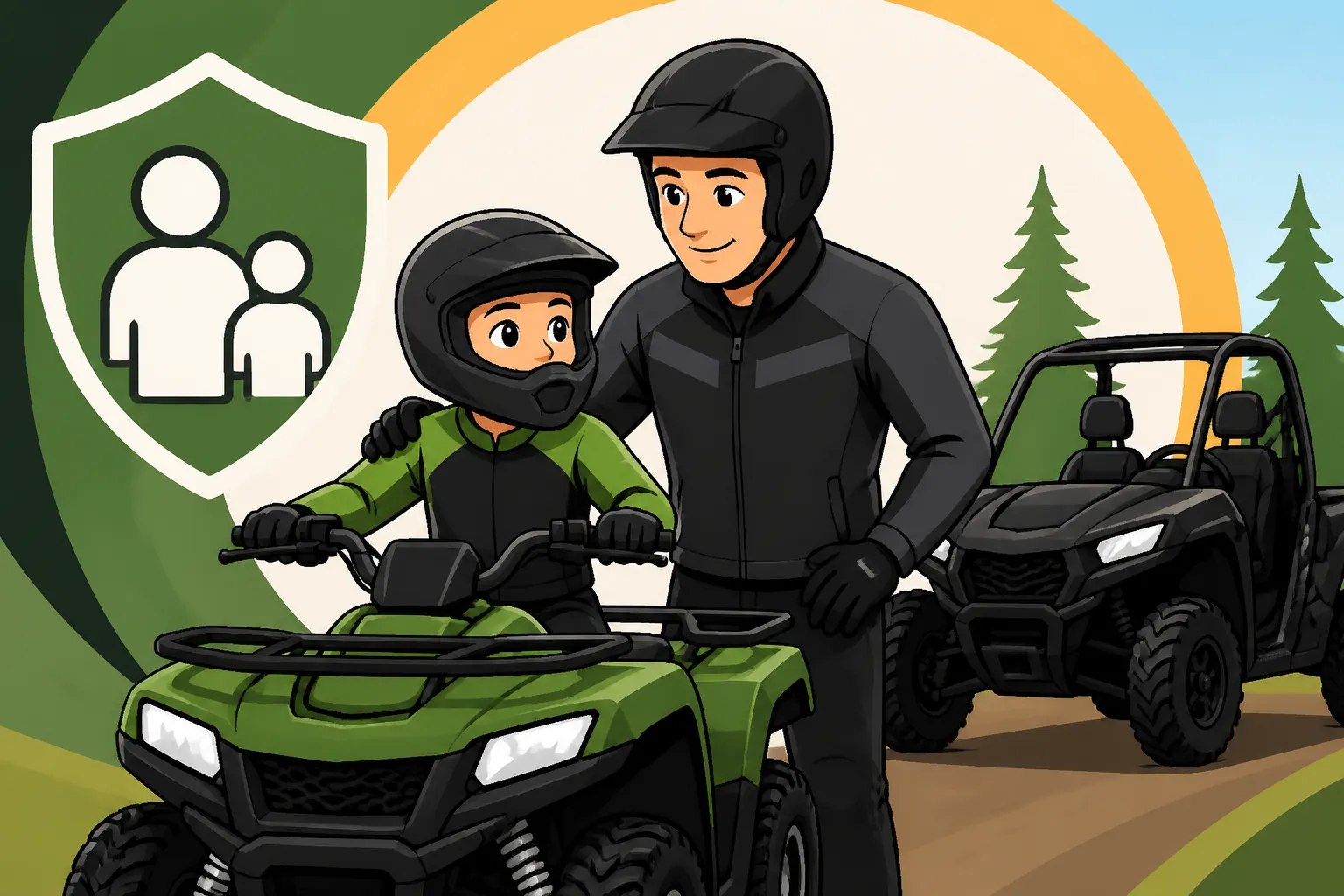
This is where the rules are the most stringent, and for good reason. Riders under the age of 14 are considered to be at a higher risk due due to their developmental stage. For this age group, adult supervision isn't just recommended; it's legally mandated and must be direct and constant. This means the supervising adult must be within clear view of the young rider at all times. They should be close enough to communicate instructions effectively and to intervene immediately if any hazardous situation arises. For example, if your 10-year-old is on a youth-sized quad, you should be riding just ahead or behind them, maintaining eye contact and monitoring their every move. Letting them disappear around a bend, even if you know the trail, can put you in a non-compliant situation and, more importantly, put your child at risk.
The rationale here is simple: these young riders often lack the physical strength, cognitive maturity, and hazard perception skills to react appropriately to unexpected situations. They might struggle with steep inclines, tight turns, or sudden obstacles. An adult's presence provides an immediate safety net. This rule applies regardless of whether you're on a designated trail, a private field, or even just exploring your own property. The safety and legal implications of allowing a rider under 14 to operate an ORV without this direct supervision are significant. You can learn more about specific rules for this age group in [Manitoba Rules for a 12-Year-Old Rider] and [Manitoba Riders Under 14 Need Supervision].
The 14 to 15-and-a-Half Age Bracket: Increased Freedom, But Still Supervised
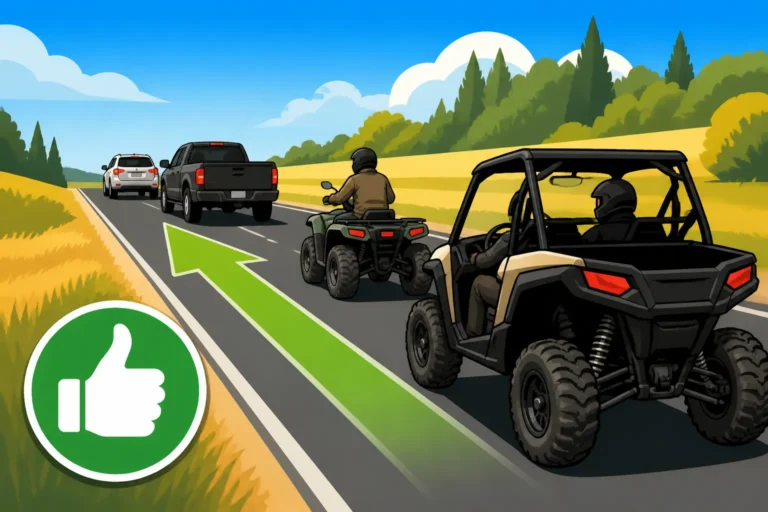
As riders move into the 14-year-old age bracket, Manitoba law recognizes a slight increase in their capabilities and allows for a bit more operational freedom, but supervision remains a critical component. A rider who is 14 years of age or older (but not yet 16) is permitted to operate an ORV in certain areas, such as ditches adjacent to a roadway, but only if they are supervised by an adult who is at least 18 years old. This adult must hold a valid driver's license.
This represents a transition period. While they might be gaining more confidence and skill, they are still developing the full judgment needed for independent operation in potentially more complex environments like ditches where they are sharing space with traffic (even if separated). The supervising adult doesn't necessarily need to be riding directly beside them in every instance, but must be in a position to observe and direct, ensuring the young rider understands and adheres to all the rules of the road, particularly regarding speed, signaling, and yielding. This stage is crucial for building responsible riding habits under guidance. More details on this age group's specific permissions can be found in [Manitoba Rules for a 14-Year-Old Rider] and [Manitoba Riders 14 and Over in Ditches].
The Learner Stage (15.5+ with a Learner's Permit): Supervision for Specific Maneuvers
Things get a little more intricate when a rider reaches 15 and a half and obtains a Class 6 (motorcycle) or Class 5 (passenger vehicle) Learner's permit. At this point, the rider is demonstrating a legal commitment to learning safe vehicle operation, and this reflects in some ORV regulations. A rider with a valid Learner's permit is allowed to operate an ORV without direct adult supervision in most approved riding areas, such as designated trails or private land. However, a significant exception exists: when crossing a public roadway or operating in ditches adjacent to roadways where permitted, they must still be accompanied by a fully licensed adult (at least 18 years old) who is themselves operating an ORV or is a passenger in a multi-passenger ORV with the learner.
This distinction highlights the elevated risk associated with interacting with public roads and traffic. While a 15.5-year-old with a Learner's permit might have developed sufficient skills for trail riding, the complexities of road crossings—understanding traffic flow, judging distances, and reacting to unexpected vehicles—still require the immediate oversight of an experienced, fully licensed adult. It's about protecting both the young rider and other road users. This specific requirement ensures that these critical maneuvers are performed under the watchful eye of someone with full driving privileges and experience. For additional context on this stage, see [Manitoba Learner Stage Riders at 15 and a Half].
Practical Advice for Supervising Adults
Being a supervising adult for a young ORV rider isn't just about fulfilling a legal requirement; it's about being a mentor, a safety advocate, and a responsible guide. This role requires proactive engagement and a commitment to teaching safe practices that will last a lifetime.
Setting the Ground Rules Before the Ride
Before any wheel turns, a thorough pre-ride briefing is absolutely essential. This isn't just a quick chat; it's a critical safety moment. As a supervising adult, you need to cover several key areas with your young rider:
- Safety Gear Check: Ensure they have and are properly wearing all required safety gear, especially a helmet that meets accepted standards. Even if they are riding a utility vehicle with a roll cage, the [Manitoba Helmet Law and Its Exemptions] applies in most situations. Make sure their gloves, boots, and eye protection are also up to snuff. This is also a good time to remind them about checking the machine itself—are the tires properly inflated? Are the brakes working? Is there enough fuel? A well-maintained machine is a safer machine.
- Trail Etiquette and Rules: Discuss the specific rules of the trail or area you'll be riding in. This includes speed limits, staying on marked trails, respecting private property, and being aware of other trail users like hikers, cyclists, or equestrians. Emphasize the importance of hand signals and proper spacing between machines.
- Machine Limits: Help them understand the capabilities and limitations of their specific ORV. A youth quad designed for entry-level riders will handle differently than a powerful utility machine. Discuss how to manage throttle control, braking, and steering on varying terrain.
- Emergency Procedures: What if they get stuck? What if they fall off? What if you get separated? Have a clear plan for these scenarios. Talk about carrying a first-aid kit, a communication device, and knowing how to signal for help. Some riders even carry a winch from a brand like SuperATV for self-recovery, but even then, knowing how to use it safely is paramount.
Ultimately, your role here is to teach by example. Show them how to conduct a pre-ride inspection, how to yield to others, and how to maintain a safe distance. Consistency in these lessons builds strong, safe riding habits.
Navigating Different Riding Environments Safely
The environment you're riding in significantly impacts the level and type of supervision required.
- Private Land vs. Public Trails: While the legal requirements for supervision might be more relaxed on private land (e.g., your own farm), the safety concerns remain. Children can still encounter unexpected obstacles, lose control, or get injured. On public trails, like those maintained by ATV clubs, the rules are generally stricter, and you're more likely to encounter other riders, wildlife, or varying terrain. Always check local bylaws, as some municipalities may have their own rules regarding ORV use and age restrictions within their limits.
- Challenging Terrain: If you're heading into areas with steep hills, water crossings, or rocky paths, your supervision needs to be even more vigilant. Guide your young rider through these sections, demonstrating proper technique and spotting potential hazards. This is where upgrades can sometimes aid safety; for instance, robust skid plates or A-arm guards from SuperATV can protect a machine from impacts, reducing the chance of a mechanical failure in a remote area, which is especially important when supervising. However, no accessory replaces good judgment and direct guidance.
- Road Crossings and Ditches: As discussed earlier, these are high-risk areas. Even if a 14-year-old is allowed in a ditch with supervision, the adult must be acutely aware of traffic and guide the young rider on proper procedures for stopping, looking, and crossing safely. Remind them of rules like [Manitoba Crossing Rules at 5 Metres and 3 Kilometres].
Always remember that your eyes and ears are the best safety tools. Stay engaged, anticipate potential issues, and adjust your riding pace to match the young rider's skill level and the demands of the terrain.
The Legal and Ethical Responsibilities of a Supervisor
Being a supervising adult carries significant legal and ethical weight. If a young rider under your supervision causes an accident or is found to be operating an ORV unlawfully, you, as the supervisor, could face serious consequences.
- Fines and Penalties: Inadequate supervision can lead to fines for the adult. These aren't minor tickets; they reflect the seriousness with which Manitoba views the safety of young riders.
- Liability in Case of Accident: Should an accident occur, and it's determined that the supervision was negligent or insufficient, the supervising adult could be held legally liable for any damages or injuries. This extends beyond just the young rider's injuries to any third parties involved. It's a stark reminder that your responsibility goes far beyond just getting them on the machine.
- Fostering Safe Habits: Beyond the legal aspects, there's an ethical imperative. As an experienced rider, you have the opportunity and responsibility to instill a strong sense of safety, respect for the environment, and adherence to rules in the next generation of riders. This includes carrying all necessary documentation like [Manitoba Registration Cards Carried at All Times] and ensuring the machine itself is properly registered and insured. Showing them what "right" looks like every single time is the best way to teach.
Common Misconceptions and Proactive Measures
Even with clear rules, misconceptions about supervising young ORV riders persist. Addressing these and taking proactive steps can make a huge difference in ensuring a safe and compliant riding experience for everyone.
"My Kid is a Good Rider": Why Skill Doesn't Override Law
This is perhaps one of the most common refrains heard from parents, and while it's wonderful to see your child develop confidence and skill on their machine, it's absolutely crucial to understand that their individual proficiency does not exempt them or you from Manitoba's Off-Road Vehicles Act. The laws are set for universal application, not based on an individual's perceived skill level. A child might be an exceptional rider for their age, but if they are under 14 and riding out of your direct line of sight, or a 15-year-old with a learner's permit crosses a highway without an adult present, they (and you) are in violation of the law.
The law considers the general developmental stage of children and sets minimum standards for supervision to ensure a baseline of safety for all. It's easy for parents to overestimate their child's judgment in real-world, dynamic situations, especially when the child is excited or distracted. The rules are there to provide an objective measure of safety, guarding against the inherent risks that even the most skilled young riders face. Ignoring these rules because you believe your child is "good enough" is a dangerous gamble, risking not only fines but also the safety of your child and others. It's one of the [Manitoba Rules Riders Get Wrong] most often.
Resources for Further Training and Information
While Manitoba doesn't currently mandate an ORV safety course for all riders, taking proactive steps to educate yourself and your young riders is highly recommended. These resources can significantly enhance safety and enjoyment:
- Voluntary Safety Courses: Several organizations offer voluntary ATV and UTV safety courses. These courses teach fundamental operating techniques, hazard awareness, and responsible riding practices. While not legally required, the knowledge gained is invaluable, particularly for young riders who can benefit immensely from professional instruction in a controlled environment. Even as a supervising adult, refreshing your own knowledge can be beneficial.
- Local ATV Clubs: Joining a local ATV club is a fantastic way to connect with experienced riders, learn about local trails, and stay updated on rule changes or safety initiatives. Clubs often organize group rides, which can be an excellent supervised setting for younger riders to gain experience in a social context. Many clubs are actively involved in trail maintenance and promoting responsible riding.
- Manufacturer Information: The owner's manual for your ATV or UTV is a treasure trove of information, including age recommendations, safe operating procedures, and maintenance schedules. Many manufacturers, including those like SuperATV, also provide online resources and safety tips for their products. Remember, a manufacturer's age recommendation is often a minimum for operation and should be paired with the legal requirements of the province.
- Provincial Government Resources: The Manitoba government's official websites for Sustainable Development and Manitoba Public Insurance (MPI) are primary sources for the most up-to-date regulations regarding ORV operation, registration, and safety. Regularly checking these sources ensures you're always operating with the most current information.
By combining legal compliance with ongoing education and practical safety measures, we can ensure that off-road riding remains a thrilling, yet safe, activity for Manitoba families for years to come.
Age-Based Supervision Requirements in Manitoba
Here's a quick overview of the key supervision requirements for young ORV riders in Manitoba:
| Age Group | General Riding | Ditches & Roadways | Highway Crossings | Supervising Adult Requirements |
|---|---|---|---|---|
| Under 14 | Supervised | Not Permitted | Not Permitted | At least 18, in clear view, direct oversight |
| 14 – 15.5 (no Learner's Permit) | Supervised | Permitted with supervision by adult (18+, valid DL) | Permitted with supervision by adult (18+, valid DL) | At least 18, valid DL, providing oversight |
| 15.5+ (with Learner's Permit) | Independent | Permitted without direct supervision | Requires supervision by adult (18+, full DL) | At least 18, full DL, present for crossings |
| 16+ (with Full Licence or Parental Consent) | Independent | Permitted without supervision (if licensed) | Permitted without supervision (if licensed) | No supervision legally required (for operating) |
Note: While a 16-year-old may operate independently, [Manitoba Parental Consent From 16 to 18] is still required for the legal registration of the machine if they are the owner.
Disclaimer
This article is for general informational purposes only and does not constitute professional advice. Laws, prices and regulations vary by location and change over time. Consult a qualified professional for guidance on your specific situation.