Travelling the Same Way as Traffic
It's easy to feel a bit lost when you first start exploring Manitoba's ditches and off-road areas with your ATV or UTV. One of the most common head-scratchers for new and even some seasoned riders is figuring out which direction you're actually allowed to travel in a ditch relative to the road. Do you go with traffic, or against it? This question causes a lot of confusion, but getting it wrong can lead to serious safety issues and hefty fines. This guide is here to clear up that very specific headache, ensuring you understand exactly how to travel the same way as traffic when you're riding your off-road vehicle in Manitoba's ditches.
The Cardinal Rule: Always Ride With Traffic in the Ditch
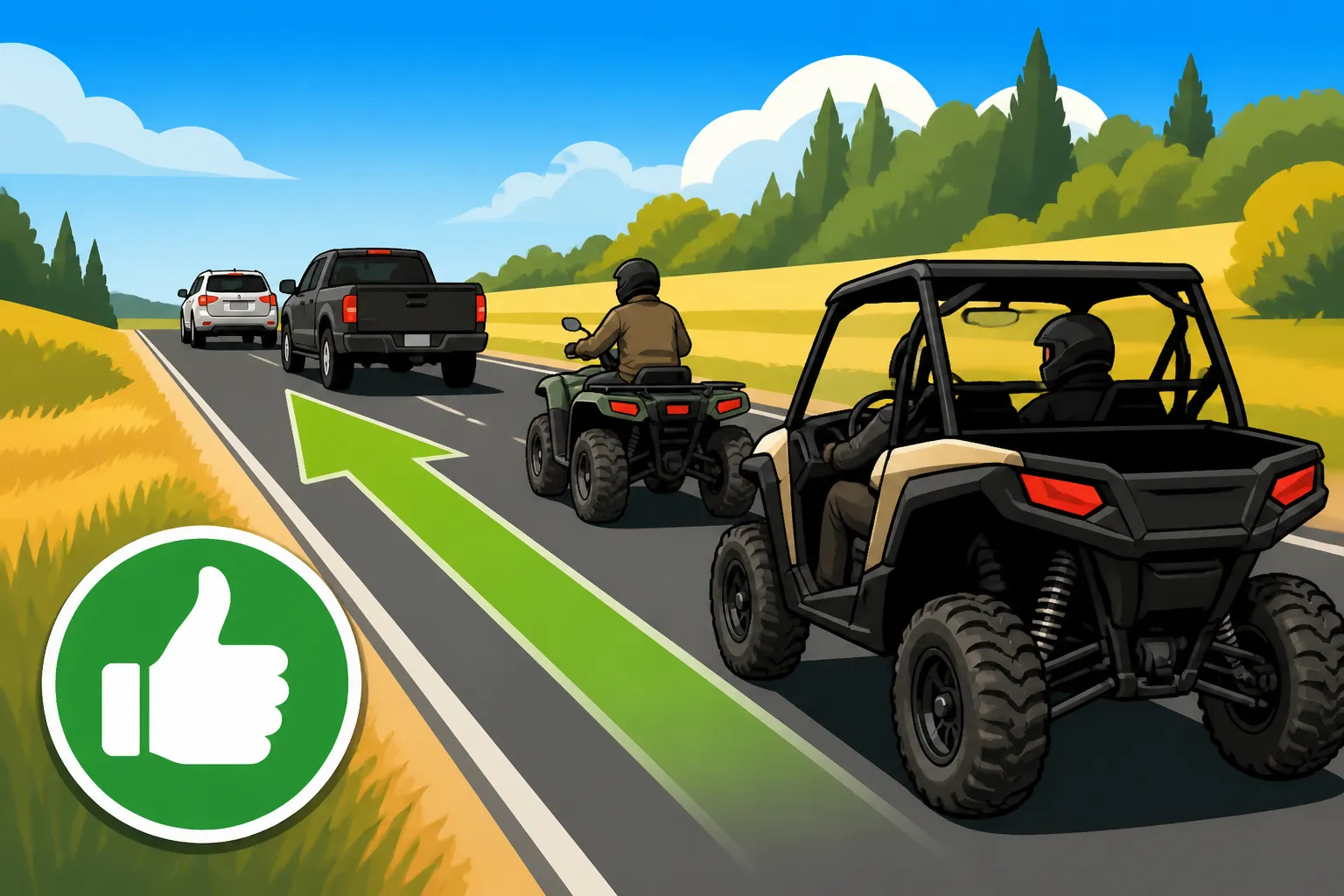
When you're out there enjoying the vastness of Manitoba with your off-road machine, whether it's for work, recreation, or just getting from A to B, understanding the basic rules of the road – or rather, the ditch – is absolutely paramount. And when it comes to ditch riding, there's one golden rule that you simply cannot ignore: you must always travel in the same direction as the vehicular traffic on the adjacent roadway. This isn't just a guideline; it's a critical safety regulation.
Why the Right-Hand Ditch is Your Only Legal Option
Let's break down what "travelling the same way as traffic" actually means in practice. It comes down to identifying the "right-hand ditch." Imagine you're driving your truck down a provincial road. The ditch to your immediate right, the one running parallel to your direction of travel, that's the one that's legally open to off-road vehicles. If you were to cross the road and ride in the ditch that would be on the left side of traffic, you'd be going against the flow, and that's a big no-no.
This rule about the right-hand ditch isn't arbitrary. It's designed to minimize the risk of accidents by creating a predictable pattern of travel for everyone. Think about it: if ORVs were allowed to crisscross ditches and travel in opposing directions, it would create chaos and significantly increase the chance of collisions, both with other ORVs and with road-going vehicles. It’s all about maintaining order and ensuring that everyone, from truck drivers to off-road enthusiasts, knows what to expect.
The Critical Importance of Matching Traffic Direction
The reason this rule is so fiercely enforced boils down to simple physics and human reaction time. When you're riding your ATV or UTV in the ditch, you're not entirely isolated from the road traffic. There's dust, noise, and the potential for vehicles to turn, pull over, or simply not see you. If you're travelling against the flow of traffic, the closing speed between your ORV and an oncoming car or truck is significantly higher. This drastically reduces the time either driver has to react if something unexpected happens – a child running into the ditch, an animal darting out, or even just misjudging a turn.
Riding with traffic, however, means that vehicles approaching you from behind are going in the same general direction. While they still need to be aware of you, the speed differential is much lower, giving everyone more time to react. Similarly, vehicles approaching you from the front will be on the opposite side of the road, hopefully giving you both ample space. It's about maximizing visibility and predictability, making you a less surprising element in the driving environment. It's a fundamental aspect of [Manitoba Ditch Travel With Traffic] that every rider needs to internalize for their own safety and the safety of others.
Navigating Intersections, Crossings, and Special Circumstances
While the "travel with traffic in the right-hand ditch" rule is clear for continuous travel, the real world isn't always a straight line. There will be times when you need to interact with roadways in different ways, like crossing them or, in specific scenarios, even using a shoulder. These situations have their own set of rules that deviate from standard ditch riding, and it's crucial to understand them to avoid common pitfalls.
Safe Practices for Crossing Roadways
You're out on a ride, happily cruising along the right-hand ditch, and suddenly, you need to cross the road to reach a trail on the other side or access private property. This is where things can get a little tricky, but the rules are designed for your safety. When crossing a roadway, you must do so as directly and perpendicularly as possible. This means no diagonal cutting across the highway. You need to come to a complete stop, yield to all traffic on the roadway, and make sure your view is clear in both directions before proceeding.
Furthermore, these crossings must be done one machine at a time if you're riding in a group. You're also typically restricted from crossing within a certain distance of an intersection or another crossing point, as detailed in [Manitoba Crossing Rules at 5 Metres and 3 Kilometres]. The key here is to think of yourself as a pedestrian with a powerful machine: you must be extra cautious, make yourself visible, and only proceed when it is unequivocally safe to do so. This is a very different manoeuvre than continuously riding in the ditch.
Agricultural Shoulder Use: A Distinct Exception
Now, let's talk about an exception to the strict ditch rule: the agricultural shoulder. For those involved in farming, there's a specific provision that allows certain off-road vehicles (typically multi-wheeled like ATVs and UTVs, not two-wheelers) to use the shoulder of a provincial road for agricultural purposes. This isn't a free pass for recreational riding. This exception is strictly for farmers moving equipment or accessing fields for their livelihood.
If you're operating a farm machine on the shoulder, you must adhere to specific speed limits, usually quite low, and display appropriate signage, like a slow-moving vehicle sign. It's a very narrow exception, designed to facilitate agricultural work efficiently and safely. For the vast majority of recreational riders, this rule simply won't apply to your situation. Don't confuse this specific farm-related shoulder use with a general right to ride on road shoulders; for most ORV operators, [Manitoba's Agricultural Shoulder Exception] doesn't permit such activity.
When Ditches Aren't Available or Appropriate
Sometimes, you'll encounter areas where ditch riding simply isn't an option, or it's explicitly prohibited. This can happen in urban or residential areas, where municipal by-laws might restrict ORV access on or near roadways. You might also find yourself in sections where the ditch is simply impassable due to water, terrain, or dense vegetation. In such cases, your options become limited.
The crucial takeaway here is that if the ditch isn't a viable or legal path, you generally cannot move onto the paved or gravel roadway itself. [Manitoba Bans Riding on Roadways] for off-road vehicles, with very few, highly specific exceptions (like crossing). So, if you hit a section where the ditch isn't working, it usually means you need to find an alternative route – perhaps a designated trail, another road with accessible ditches, or even trailer your machine past the tricky section. Don't be tempted to "just quickly" ride on the road; it's illegal and highly dangerous.
Enhancing Your Safety and Visibility for Compliant Ditch Riding
Riding an ATV or UTV in Manitoba's ditches, even when following all the rules, means you're operating in an environment that puts you in proximity to faster-moving road traffic. This inherently requires a proactive approach to safety, with a strong emphasis on making yourself as visible as possible. It's not enough to simply follow the direction rules; you need to equip your machine and yourself to be seen.
Essential Lighting and Signage for Day and Night Operation
Proper lighting isn't just a recommendation; it's a legal requirement, especially if you're riding during low-light conditions like dawn, dusk, or at night. Your ATV or UTV must have a functioning headlight that illuminates the path ahead and a taillight that is clearly visible from the rear. These lights aren't just for you to see; they're for others to see you. Always ensure your lights are clean, unobstructed, and in good working order before you head out.
For those who frequently ride in varied conditions, or just want an extra layer of safety, upgrading your lighting can make a huge difference. Aftermarket options, like those from SuperATV, can offer brighter, wider beams that cut through dust and fog, and make your machine stand out more vividly to drivers. Beyond the lights, consider reflective tape on your machine or gear, which can dramatically increase your visibility, especially from the sides. Keeping your lights bright and well-maintained is a critical part of [Manitoba Lighting Requirements on a Machine].
Mirrors, Flags, and Other Visibility Aids
While headlights and taillights cover your front and back, situational awareness from all angles is crucial. Mirrors, particularly on UTVs and some ATVs, provide invaluable rearward visibility, allowing you to monitor traffic behind you before making a crossing or pulling into a new section of ditch. Companies like SuperATV offer robust mirror kits designed to withstand the vibrations and bumps of off-road riding, ensuring they stay put and give you a clear view.
In areas with tall grasses, dense brush, or rolling terrain, a whip flag can be an absolute lifesaver. These tall, brightly coloured flags extend high above your machine, making you visible even when your machine itself is obscured by vegetation or a dip in the ditch. This is particularly important on blind corners or when riding in areas frequented by other ORVs or slow-moving farm equipment. Think of these aids as extensions of your own senses, helping you to "see" and "be seen" more effectively.
Staying Informed About Local Regulations and Enforcement
Manitoba's provincial rules provide the foundational framework for ORV operation, but local governments – municipalities, Local Government Districts, and even Northern Community Councils – have the power to enact their own by-laws. This means that while provincial rules dictate how you ride in ditches generally, specific towns or rural areas might have additional restrictions or prohibitions on ORV use within their boundaries.
It's your responsibility as a rider to be aware of these local rules. Before heading out on a ride that crosses through different jurisdictions, a quick check of local municipal websites or a call to the relevant office can save you a lot of trouble. Officers are out there, and they conduct [Manitoba Equipment Checks by Officers] and will certainly enforce both provincial laws and local by-laws. Being informed and compliant isn't just about avoiding a ticket; it's about respecting the communities you ride near and contributing to a positive image for all off-road enthusiasts.
The Consequences of Non-Compliance and Avoiding Mistakes
Ignoring the rules for riding in ditches can lead to more than just a stern talking-to. The provincial government and local authorities take these regulations seriously because they are designed to protect lives. Understanding the potential repercussions and common misunderstandings can help you, and your riding group, avoid unnecessary trouble and keep the trails open for everyone.
Understanding Penalties for Improper Operation
Operating your ATV or UTV against the flow of traffic in a ditch, or worse, on the roadway itself, can result in significant penalties. These aren't minor infractions. Fines can range from moderate to substantial, and they often come with additional court costs. Beyond the immediate financial hit, there's the possibility of your machine being impounded, which adds another layer of expense and inconvenience to retrieve it.
In more severe cases, especially if your actions are deemed reckless or put others at risk, you could face charges for [Manitoba Careless Operation Penalties]. These are far more serious and can carry much higher fines, potential points on your driver's license (if you hold one), and even more severe legal consequences. An officer pulling you over for improper ditch travel isn't just being difficult; they're addressing a genuine safety hazard.
Common Misconceptions About Ditch Riding
One of the most persistent myths among riders is the idea that it's "safer" to ride against traffic in the ditch because you can see oncoming vehicles. While it's true you'd see them, this completely misunderstands the dynamics of interaction between a slow-moving ORV in a ditch and fast-moving traffic on the road. As we discussed, the closing speed is much higher, and drivers on the road are not expecting to encounter head-on traffic in the ditch. This misconception is precisely why [Manitoba Rules Riders Get Wrong] so often.
Another common mistake is assuming that if the ditch on one side of the road is impassable, you can simply use the ditch on the other side, even if it means going against traffic. This is incorrect. If the legal ditch (the one on your right, going with traffic) is impassable, you must find an alternative legal route or transport your machine past that section. The rules are designed for consistency and predictability, and circumventing them for convenience undermines safety. Always remember, the general rule is [The Only Legal Ditch Is on Your Right].
The Shared Responsibility of Safe Riding
Ultimately, the responsibility for safe and compliant riding falls on every single operator. Each time you head out on your ATV or UTV, you're not just representing yourself; you're representing the entire off-road community. Adhering to rules like "travel with traffic in the right-hand ditch" helps build trust with landowners, local communities, and law enforcement. When riders consistently follow the rules, it reinforces the idea that off-road vehicles can share the landscape responsibly.
Conversely, widespread non-compliance can lead to stricter regulations, closures of popular riding areas, and increased enforcement, making it harder for everyone to enjoy the sport. Educate your riding buddies, share accurate information, and always be a role model for responsible ORV use. Your actions contribute to the future of off-roading in Manitoba, and following this fundamental rule is a big part of that.
| Aspect | Legal Ditch Riding in Manitoba | Illegal Ditch Riding in Manitoba |
|---|---|---|
| Location | Ditch immediately to the right of the roadway | Ditch to the left of the roadway |
| Direction of Travel | Same direction as vehicular traffic on the adjacent roadway | Opposite direction to vehicular traffic (against traffic) |
| Traffic Flow | With the flow of traffic | Against the flow of traffic |
| Primary Use | Travel to access trails, properties, or cross roads (under rules) | Recreational cruising, shortcutting (unless specific by-law allows) |
| Visibility | Enhances visibility for both ORV operator and oncoming motorists | Creates blind spots and reduces reaction time for drivers |
| Equipment | Properly registered, insured, and equipped with lights/reflectors | Operating unregistered, uninsured, or inadequately lit machines |
| Roadway Use | Only for crossings (under strict rules); never for continuous travel | Continuous travel on the paved or gravel roadway itself |
| Common Error | Misinterpreting "right side of the road" as facing traffic | Believing it's safer to see oncoming traffic in the ditch |
Disclaimer
This article is for general informational purposes only and does not constitute professional advice. Laws, prices and regulations vary by location and change over time. Consult a qualified professional for guidance on your specific situation.