Manitoba Noise Complaints About Quads
Many off-road vehicle enthusiasts in Manitoba have faced the awkward, and sometimes frustrating, situation of receiving a noise complaint about their quad or UTV. It's a real buzzkill when you're just trying to enjoy a ride, but it's also a legitimate concern for residents and landowners. This guide will help you understand the common causes of ORV noise complaints, navigate the regulations, and explore proactive steps to keep the peace while still enjoying your machine.
Understanding Why ORV Noise Becomes a Problem
Noise from off-road vehicles isn't just a minor annoyance for some people; it can genuinely disrupt daily life and create tension within communities. While we all love the thrill of hitting the trails, it's crucial to understand why our machines' sounds can sometimes be perceived as problematic, and how those perceptions can quickly turn into official complaints.
The Subjectivity of "Loud"
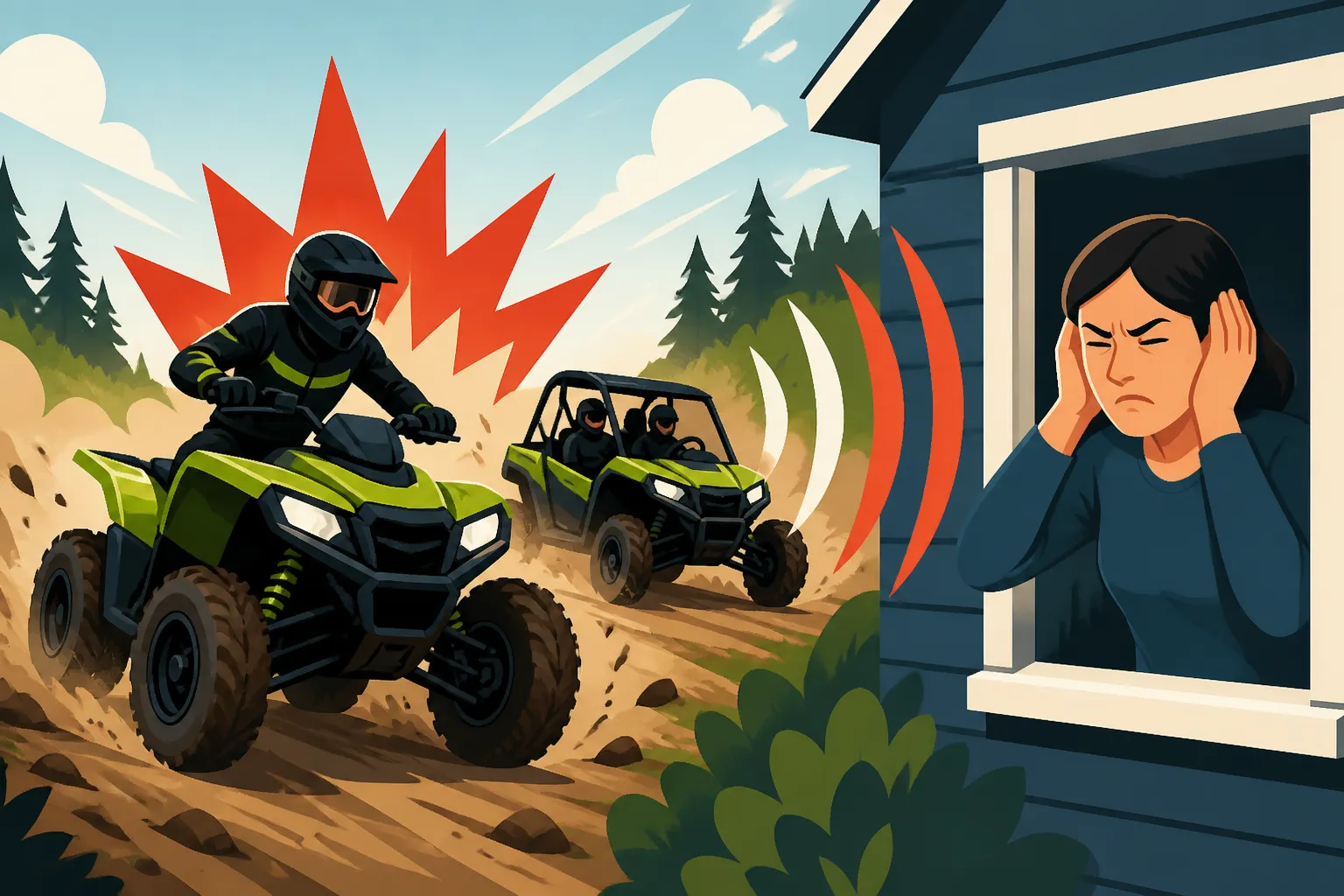
What one rider considers a "sporty exhaust note," a homeowner nearby might interpret as an intolerable racket. This difference in perception is at the heart of many noise complaints. For folks living near popular riding areas, the constant drone, revving, or sudden bursts of sound from ORVs can feel relentless, especially during peak riding seasons. Imagine trying to enjoy a quiet afternoon in your backyard, or put your kids down for a nap, only to have it repeatedly interrupted by the distinct sound of engines. It's not always about the decibel level itself, but the type of noise, its frequency, and its duration that truly grates on people. This subjective experience means that even a machine that meets all legal sound limits might still be considered a nuisance by those around it.
It's easy for us, as riders, to get used to the sounds of our own machines and perhaps tune out their louder aspects. After all, it's the soundtrack to our adventure! But from an outsider's perspective, especially if they didn't choose to be near a riding area, it's a different story. They don't share the same connection to the sound, and for them, it's an intrusion. This is why empathy is so important. Recognizing that "loud" is in the ear of the beholder is the first step toward preventing complaints.
Common Culprits: What Makes ORVs Noisy?
Several factors contribute to the overall sound signature of an off-road vehicle, and some are more likely to lead to complaints than others. The primary culprit is often the exhaust system. Stock mufflers are designed to meet certain noise regulations, but aftermarket exhausts, while sometimes offering performance gains or a "cooler" sound, can often push machines far beyond acceptable limits. Even small modifications or a damaged stock muffler can drastically increase noise output. Think of a tiny pinhole in your exhaust pipe – it might not seem like much, but the high-pressure gas escaping can create a surprisingly piercing sound.
Beyond the exhaust, the engine itself contributes a lot, especially when revved high. The mechanical sounds of the drivetrain, the roar of the air intake, and even the aggressive tread of knobby tires on hard surfaces can add to the perceived noise. For UTVs, the sound can be amplified by their larger size and more enclosed cabins, which can reverberate sound. Older machines, or those not well-maintained, might also develop rattles and squeaks from loose body panels, worn bearings, or other components that, while not engine noise, contribute to an overall noisy impression. A machine with a poorly maintained engine that's backfiring, for instance, is far more likely to draw attention than one running smoothly. Some riders might even modify their air intakes for a louder "growl," unknowingly creating more of a disturbance.
Beyond Decibels: The Impact of Noise on Communities and Wildlife
While we often focus on decibel levels, the impact of ORV noise extends far beyond a simple measurement. For communities, persistent noise pollution can lead to increased stress, sleep disturbances, and a reduced quality of life. It can make outdoor activities less enjoyable, affect property values, and even create feelings of hostility towards riders. When residents feel their peace is constantly being invaded, it can breed resentment, making future access to riding areas more difficult. Imagine living next to a trail system where machines are frequently riding late into the evening or early in the morning – that constant interruption makes it hard to relax at home. This is why the [Manitoba Rules for Riding Near a Dwelling] are so important; they try to create a buffer of quiet time.
Wildlife also suffers from excessive noise. Animals rely on sound for communication, hunting, and avoiding predators. Constant or sudden loud noises can disrupt their natural behaviours, stress them, and even displace them from their habitats. This is particularly true for sensitive species or in protected areas. A loud group ride through a quiet forest might scatter animals, disrupt mating calls, or scare off birds. This isn't just an ecological concern; it can also affect hunting seasons or wildlife viewing opportunities that others in the community value. Respecting the natural environment means being mindful of our sound footprint, not just our physical one.
Navigating Manitoba's Rules on ORV Noise
When it comes to ORV noise, it's not always as straightforward as you might think. While there isn't a single, explicit provincial law dictating maximum decibel levels for every off-road vehicle, there are certainly rules and legal frameworks that can be applied to address noise complaints. It's a patchwork of regulations that requires careful understanding.
Provincial Framework: What Does the ORV Act Say (or Not Say)?
The Off-Road Vehicles Act in Manitoba, while comprehensive in many areas regarding registration, operation, and safety, doesn't actually set specific decibel limits for ORVs like some other jurisdictions do for on-road vehicles. This can sometimes lead to confusion, as riders might assume that if there's no number, there's no rule. However, the Act does address "careless operation," and excessive or unnecessary noise could potentially fall under this umbrella if it's deemed to be disturbing the public peace or operating in a way that endangers others or causes a nuisance. If an officer determines your operation is careless due to excessive noise, you could face [Manitoba Careless Operation Penalties].
Furthermore, the Act emphasizes responsible operation and the protection of the environment. While not directly a noise regulation, continuous, disruptive noise could be interpreted as contrary to the spirit of respectful land use. The Act requires all ORVs to have a muffler in good working order, which is a key component in controlling noise. It also mandates a [Manitoba Spark Arrester Requirements] for every machine, which, while primarily for fire prevention, also typically includes a muffler to reduce exhaust noise. So, while no specific decibel limit is stated, operating a machine with a damaged, modified, or missing muffler is a clear violation of the Act.
The Power of Local By-Laws: Your Municipality's Role
This is where the rubber truly meets the road for noise complaints. Many municipalities in Manitoba have their own by-laws that regulate noise within their jurisdictions. These by-laws can be far more specific than provincial legislation, often setting quiet hours, prohibiting excessive noise at certain times of day, or even defining what constitutes a "nuisance noise." A municipality might have a by-law specifically banning ORV use on certain streets or in certain areas to mitigate noise and other disturbances. [Manitoba Municipal By-Law Powers] are quite broad when it comes to regulating activities within their borders, and noise is a common target.
For instance, a rural municipality might have rules about how early or late you can operate noisy equipment, which could easily extend to ORVs. Urban areas, particularly those with higher population density, are even more likely to have strict noise ordinances. It's not uncommon for these by-laws to be enforced by local by-law officers or the RCMP. If you're riding through a town or even on municipal land, you absolutely need to be aware of the specific rules in place. What's perfectly fine on a remote trail might be a serious violation just a few kilometres away within a town's limits. Always check with the local government office of the area you plan to ride in to avoid an unpleasant surprise.
General Nuisance Laws: When Sound Becomes a Legal Issue
Beyond specific ORV acts or municipal by-laws, there are general nuisance laws that can come into play. A "nuisance" in legal terms refers to an unreasonable interference with the use and enjoyment of someone else's property. Persistent, excessive noise from an ORV, even if it doesn't violate a specific decibel limit, could still be considered a private or public nuisance. If your riding habits are consistently disturbing neighbours or community members, they could potentially pursue legal action based on nuisance laws, even if no direct ORV-specific or noise by-law has been broken.
This might involve civil action, where neighbours seek an injunction to stop the noise, or, in more severe cases, it could involve authorities intervening if the noise is disrupting public order. While less common for a single incident, a pattern of egregious noise complaints can escalate to this level. Consider a situation where a rider repeatedly operates a very loud machine late at night near a residential area, despite polite requests to stop. This pattern of behaviour moves beyond a simple inconvenience and could very well be seen as an unreasonable interference with the neighbours' right to quiet enjoyment of their homes, leading to more serious legal implications under general nuisance principles. This is why simply knowing the letter of the law isn't enough; being a good neighbour and a responsible rider goes a long way.
Proactive Strategies for Quieter Riding and Fewer Complaints
Nobody wants to be the target of a noise complaint. It's embarrassing, can lead to fines, and often damages the reputation of all ORV riders. The good news is that there are many proactive steps you can take to significantly reduce the noise your machine makes and ensure you're a good neighbour, whether you're out on the trails or just moving your machine around your property.
Equipment Checks and Maintenance for Sound Reduction
A well-maintained machine is often a quieter machine. Start by regularly checking your exhaust system. Look for cracks, rust holes, or loose connections in your muffler and exhaust pipe. Even small leaks can make a huge difference in noise level. Gaskets can wear out, allowing exhaust to escape before the muffler has done its job. Replacing a cracked pipe or a blown-out muffler can drastically cut down on noise. If you've opted for aftermarket parts, ensure they're designed with noise reduction in mind and that they're installed correctly. Some performance parts, while exciting, are inherently louder.
Beyond the exhaust, pay attention to rattles and vibrations. Loose skid plates, worn suspension components, or even just poorly secured body panels can create surprising amounts of clatter and noise, especially on rough terrain. Regularly inspect and tighten all fasteners. Consider adding rubber dampers or foam insulation in areas where panels might rub together. Your engine itself also contributes to overall sound. Keeping it well-tuned, with proper oil levels and spark plugs, ensures it runs smoothly rather than sputtering and backfiring, which are both noisy and inefficient. Companies like SuperATV offer a range of quality parts, and while they are known for performance, choosing the right components and ensuring they are properly installed can also help maintain your machine's overall sound profile within reasonable limits.
Smart Riding Habits and Trail Etiquette
How you ride is just as important as the machine you ride. Aggressive riding, such as rapid acceleration, high-revving engine use, and sudden braking, generates significantly more noise than smooth, controlled operation. When you're near residential areas, campgrounds, or any place where people or wildlife might be sensitive to noise, ease off the throttle. Maintain a lower speed and keep your RPMs down. This not only reduces noise but also conserves fuel and is generally safer. Think about when you're riding through a small town on your way to the trails; a slow, steady pace is far more respectful than roaring through. [Manitoba Riding Quietly Past Manitoba Cottages] isn't just a suggestion; it's a way to foster good relations.
Be mindful of the time of day. Avoid early morning or late-night riding in areas where noise could disturb residents. Many municipal by-laws have explicit quiet hours, and even if they don't, common courtesy dictates that you shouldn't be making excessive noise when people are sleeping. If you're approaching an intersection or a blind corner, use caution, but avoid unnecessary horn honking or engine revving. [Manitoba Trespass Law for Riders] also plays a role here; even if you're technically not trespassing, riding too close to private property with excessive noise can feel like an invasion. Always be aware of your surroundings and adapt your riding style to the environment.
Community Engagement and Awareness
Being a good ambassador for the ORV community can go a long way in preventing complaints. If you frequently ride in an area, consider connecting with local residents or community groups. Understanding their concerns and letting them know you're committed to responsible riding can build goodwill. Some clubs host "quiet riding" events or educational sessions that promote best practices. Simply displaying a sticker that says "Quiet Rider" or "Respect the Land" can send a positive message.
Furthermore, educate yourself and your riding buddies about local regulations. Share information about [Manitoba Municipal By-Law Powers] and general etiquette. If you're part of an ORV club, advocate for responsible noise practices within the club. When issues do arise, try to address them constructively rather than defensively. If a neighbour approaches you with a concern, listen respectfully and genuinely try to find a solution. Sometimes, a simple conversation can defuse a potential complaint before it even gets to the authorities. Being proactive in this way helps ensure that everyone can enjoy Manitoba's beautiful outdoors, whether they're on an ORV or just enjoying the peace and quiet.
What Happens When a Noise Complaint is Filed?
Receiving a noise complaint can be unsettling, but knowing the typical process and potential outcomes can help you navigate the situation more effectively. It's usually not an immediate "gotcha" moment, but a series of steps that can escalate if not addressed.
The Complaint Process: Who Responds?
When a noise complaint is filed in Manitoba, the response typically depends on where the incident occurred and who lodged the complaint. If it's related to riding on a road or in a ditch within a municipality, the local police (RCMP or municipal force) or a municipal by-law officer would likely be the first responders. For issues on Crown land, a conservation officer might get involved, especially if the noise is disturbing wildlife or causing an environmental concern. On private land, it would usually be a civil matter unless other laws (like trespass) were broken.
Often, the initial response is an investigation. An officer might visit the scene, speak to the complainant, and potentially observe the ORV's operation. They might not immediately issue a ticket but instead offer a warning or advise you of the by-laws you're suspected of violating. For example, if someone complains about you riding too close to their home at night, an officer might reference [Manitoba's 30-Metre Dwelling Rule]. It's crucial to cooperate and be respectful if approached by an officer. Being belligerent won't help your case and could lead to additional charges. They might also perform [Manitoba Equipment Checks by Officers] to ensure your machine is legally equipped, including checking the muffler and spark arrester.
Potential Consequences and Penalties
If a complaint is substantiated and an officer determines a by-law or provincial regulation has been violated, the consequences can vary. The most common outcome is a ticket or a fine. The amount of the fine will depend on the specific by-law or section of the Off-Road Vehicles Act that was violated. For general infractions under the ORV Act, fines can be substantial. For example, [Manitoba Ticket Costs for Riders] can quickly add up, and if the operation is deemed "careless" due to extreme noise and reckless behaviour, penalties can reach [Manitoba Careless Operation Penalties]. These fines are often designed to be a deterrent and can include additional court costs.
Beyond fines, repeat offenses or severe violations could lead to more serious repercussions. This might include impoundment of your machine, especially if it's found to be dangerously loud or modified illegally. In extreme cases, continued disregard for noise regulations could even impact your ability to register your vehicle or operate it in certain areas. It's not just about the monetary cost; it's also about the hassle of dealing with legal processes and the potential loss of riding privileges. The message is clear: operating your ORV responsibly, including managing its noise output, is a legal obligation, not just a suggestion.
Resolving Disputes and Moving Forward
If you receive a complaint, whether it's from a neighbour or an official, the best approach is to address it promptly and constructively. First, try to understand the nature of the complaint. Was it the time of day? The duration? The type of noise? Sometimes, an informal conversation with a neighbour can resolve the issue before it escalates. Listen to their concerns and offer solutions, such as agreeing to ride quieter in certain areas or during specific hours. You might even offer to show them your muffler to demonstrate it's stock, or explain steps you've taken to reduce noise.
If an official fine is issued, you have the right to contest it in court if you believe it was issued unfairly or mistakenly. However, if you know you were in violation, it's often better to pay the fine and take immediate steps to rectify the problem. This might involve repairing or replacing a faulty muffler, choosing different riding routes, or altering your riding habits. Learning from the incident and demonstrating a commitment to responsible riding will not only prevent future complaints but also contribute to a more positive perception of the entire ORV community in Manitoba. Being a good neighbour and a responsible rider helps ensure everyone can continue to enjoy the beautiful landscapes our province has to offer.
Disclaimer
This article is for general informational purposes only and does not constitute professional advice. Laws, prices and regulations vary by location and change over time. Consult a qualified professional for guidance on your specific situation.