Riders Under 14 Must Stay in Clear View
Riding off-road vehicles like ATVs and UTVs in Manitoba is a fantastic way to experience our beautiful province, offering incredible adventures for families. However, if you're a parent or guardian planning to bring younger riders along, you've likely felt that knot of worry about keeping them safe and, just as importantly, staying on the right side of the law. One of the most common questions, and often a source of confusion, revolves around the requirement for riders under 14 to remain in "clear view" of their adult supervisor. This guide is here to untangle those rules, explain exactly what "clear view" means, and equip you with the knowledge to ensure your young ones have a safe and legal ride every time.
Understanding Manitoba's Age Restrictions for ORV Operators
Navigating the rules for off-road vehicles (ORVs) in Manitoba can sometimes feel like trying to read a map in the dark, especially when it comes to bringing children along. The province has put specific regulations in place, not to dampen your family fun, but to safeguard our younger riders who might not yet have the judgment, strength, or experience to handle every situation that arises on a trail. These rules aim to create a protective framework, ensuring that when kids are operating an ORV, they are doing so under appropriate conditions.
The Core Principle: Age and Supervision
At its heart, Manitoba's ORV legislation regarding young operators is built on the principle that operating these powerful machines requires a certain level of maturity and skill. For anyone under the age of 16, direct adult oversight isn't just a good idea; it's a legal necessity. The province recognizes that a 10-year-old simply doesn't possess the same cognitive abilities or physical coordination as a seasoned adult rider. Therefore, the law steps in to mandate supervision, acting as an extra layer of protection against the inherent risks of off-road riding. This isn't about stifling their independence, but rather about fostering it within a safe and controlled environment. The goal is to allow young people to develop their riding skills gradually, under the watchful eye of someone who can intervene if needed, preventing potential accidents before they happen.
Think about it from a common-sense perspective: you wouldn't let a young child drive a car on a public road, and the same rationale applies to the less predictable terrain of off-road trails. The responsibility falls squarely on the supervising adult to ensure the child is not only safe but also adhering to all operating rules. It's a significant commitment, one that requires your full attention and understanding of the rules. [Manitoba ATV Age Requirements] is a great resource if you want a deeper dive into the age rules.
Differentiating Age Tiers for Riders
Manitoba’s ORV Act cleverly breaks down youth riders into different age categories, each with its own set of guidelines. This tiered approach acknowledges the developmental stages of children and teenagers, understanding that what's appropriate for a 12-year-old might not be for a 15-year-old. For example, riders under 14 face the most stringent supervision requirements, including the "clear view" rule we’re exploring today. This is because their reaction times, hazard perception, and decision-making skills are still very much under development. They need constant, immediate oversight to ensure their safety and the safety of others around them.
As riders get older, typically into their mid-teens, the rules begin to ease slightly, reflecting their increasing capabilities and experience. For instance, a 14-year-old, while still requiring supervision, might have slightly more latitude in certain situations than a younger child, though the "clear view" might still apply in some contexts or be strongly advised. Once a rider reaches 16 and obtains a full driver's license (or an ORV-specific permit if applicable), they are generally afforded the same operating privileges as an adult, assuming they meet all other legal requirements. This progression is designed to allow young people to gain confidence and competence responsibly. Understanding these different age tiers is crucial because it directly influences how and where your child can legally operate an ORV. [Manitoba Riders Under 14 Need Supervision] provides more detail on the specific requirements for different ages.
Deciphering the "Clear View" Requirement
The phrase "riders under 14 must stay in clear view" can sound straightforward, but like many legal stipulations, its practical application often raises questions. It’s not just about glancing back occasionally; it implies a constant, unobstructed visual connection that allows for immediate reaction in case of an incident. This rule is designed to be a proactive safety measure, giving the supervising adult the best possible chance to prevent an accident or to respond instantly if one occurs.
What "Clear View" Actually Means on the Trail
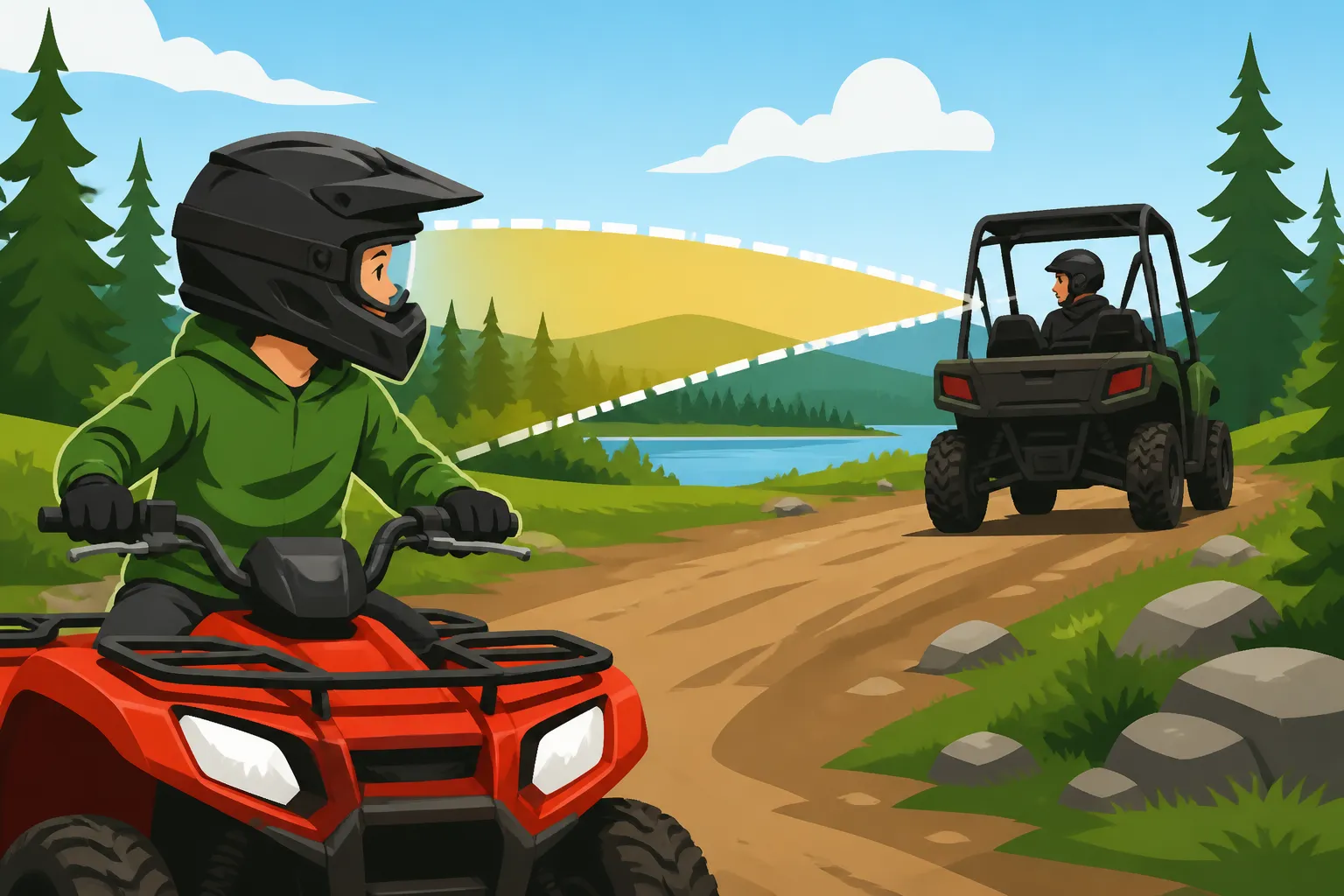
When the law states "clear view," it's picturing a scenario where the supervising adult has an unimpeded line of sight to the young rider at all times. This means no dense bush, no winding turns that break the view, and certainly no riding so far ahead that the child becomes a distant speck. Imagine you're riding a wide, open field; it's easy to maintain clear view. Now, picture a narrow, twisting trail through thick woods with elevation changes. Suddenly, maintaining that constant, immediate visual contact becomes a significant challenge, if not impossible. In such an environment, even if you can vaguely see the child's helmet peeking through the trees a hundred yards ahead, that likely doesn't constitute "clear view" because you can't assess their immediate situation or react quickly.
The intent is for the adult to be able to see exactly what the child is doing, how they're handling their machine, and what hazards they might be approaching. This isn't a passive observation; it's an active form of vigilance. If the child gets into trouble – a stall, a tip-over, encountering an unexpected obstacle – the adult must be close enough and have a clear enough view to immediately stop, dismount, and render assistance. This might mean the adult rider needs to adjust their own speed or positioning, perhaps even riding slightly behind the child on certain terrain, to ensure that visual link is never broken.
The Role of the Supervising Adult
The onus of maintaining "clear view" falls squarely on the supervising adult. This isn't a suggestion; it's a legal responsibility. The adult must not only be a competent and experienced ORV operator themselves but also hold a valid driver's license (or equivalent, as permitted by law). Their role goes beyond simply being present on the same trail; it requires active engagement and constant assessment of the riding environment relative to the child's position. This often means the adult must ride at a slower pace, tailor the route to suit the child's skill level, and prioritize visibility over personal riding preference.
Consider a scenario where you're leading a young rider. If you come to a sharp bend in the trail or a rise in the terrain, you need to slow down or even stop at the obstacle until the child has navigated it and you regain that clear line of sight. It might feel like it slows down the ride, but that momentary pause is crucial for safety and compliance. Furthermore, the adult should be equipped to communicate effectively, whether through hand signals, two-way radios, or simply by being close enough to shout instructions or warnings. This constant attention, and the willingness to adjust your own ride for the child's safety, is what defines the responsible supervising adult under this rule. [Manitoba Parent Riding With a Child] outlines more of these responsibilities.
Practical Considerations for Riding with Youngsters
Taking young riders out on the trails is a fantastic bonding experience and a great way to introduce them to the joys of the outdoors. However, to make these experiences safe and enjoyable for everyone, there are several practical considerations that go hand-in-hand with adhering to the "clear view" rule. These involve choosing the right equipment and selecting environments that are conducive to learning and safety.
Choosing the Right Machine for Young Riders
It’s tempting to think that any small ATV will do for a child, but the reality is that matching the machine to the rider’s size, age, and skill level is paramount. Many manufacturers offer dedicated youth models, specifically designed with features like speed restrictors, smaller chassis, and throttles that are easier for smaller hands to operate. These aren't just scaled-down adult machines; they are engineered with young riders in mind. Pushing a child onto an ORV that’s too powerful, too large, or too heavy for them to control effectively is a recipe for disaster, regardless of how closely you're supervising. Even if you maintain clear view, if the child loses control because the machine is too much for them, your ability to intervene might be limited.
When looking at youth machines, consider accessories that enhance safety and control. Companies like SuperATV offer a range of products that can make a youth ORV even safer, from smaller, more ergonomic handlebars for better grip to advanced speed limiting devices that give parents more control over top speed. Some youth models even come with remote shut-off switches, providing an invaluable safety net for parents to stop the machine immediately if the child encounters trouble. Always check the manufacturer's age and weight recommendations, and remember, these are guidelines, not just arbitrary numbers; they're based on extensive safety testing and development. [Manitoba Rules for a Youth Quad] can give you some more specific information on what to look for.
Selecting Safe Riding Environments
Not all trails are created equal, especially when you're riding with children who are still developing their skills. While the "clear view" rule applies everywhere, some environments naturally make it easier to comply than others. Wide, open fields or designated training areas with clear sightlines are ideal for beginners, allowing the supervising adult to maintain constant visual contact without obstruction. These types of areas also provide ample space for learning turns, braking, and throttle control without the added pressure of complex terrain or tight spaces.
Conversely, narrow, winding trails through dense forest, trails with steep inclines or declines, or areas with significant water crossings can quickly become unsafe for young riders, even with close supervision. The varied terrain can make it impossible to keep the child in clear view, and the added challenge might overwhelm their developing skills. If you're exploring new areas, consider scouting them first without the young rider, or choose well-maintained, designated multi-use trails that are known for their accessibility and clear sightlines. Private property, with the landowner's explicit permission, can also be an excellent place for young riders to practice, as you can control the environment completely.
Beyond Clear View: Other Essential Safety Measures for Young Riders
While maintaining "clear view" is a critical legal and safety requirement for young ORV riders in Manitoba, it's just one piece of a larger puzzle. A truly comprehensive approach to ensuring a child's safety on an ATV or UTV involves much more than just visual contact. It encompasses proper gear, sound riding habits, and a proactive approach to education and preparedness. Overlooking these additional elements can undermine even the most diligent supervision.
Mandatory Safety Gear and Its Importance
Let's be blunt: wearing the right safety gear isn't optional; it's absolutely non-negotiable for all ORV riders in Manitoba, and especially for children. The helmet law applies to everyone, regardless of age, and for good reason. A proper helmet, certified by recognized standards like Snell or FMVSS, is your child's first line of defense against serious head injuries, which are tragically common in ORV accidents. It doesn't matter how slow you're going or how "safe" the trail seems; an unexpected bump, a loss of balance, or an unforeseen obstacle can lead to a fall in an instant.
Beyond the helmet, think about full body protection. Goggles are essential for protecting eyes from dust, debris, and low-hanging branches. Sturdy gloves protect hands from abrasions and improve grip. Long-sleeved shirts and pants, preferably made of durable material, shield against scrapes, cuts, and sun exposure. Over-the-ankle boots provide crucial support and protection for feet. While you're focusing on keeping your child in clear view, remember that this gear is protecting them from hazards you can't see or react to in time, such as a rock flying up or a branch scraping their arm. Companies like SuperATV offer robust protective gear, from helmets to riding suits, designed to keep riders safe in various conditions. Investing in quality gear is just as important as the machine itself. [Manitoba ATV Helmet Law] offers more information on specific helmet requirements.
Responsible Riding Habits and Education
Teaching good riding habits from a young age is an investment in a lifetime of safe enjoyment. It's not enough to simply hand them the keys and tell them to "be careful." Young riders need to be taught proper riding techniques, including how to turn, brake safely, shift their weight, and navigate different types of terrain. They should understand the importance of riding within their limits, never exceeding a speed they are comfortable with, and always being aware of their surroundings. This foundational knowledge empowers them to react appropriately to changing trail conditions and potential hazards.
Furthermore, instilling good trail etiquette is vital. Teach them to respect the environment, stay on designated trails, and yield to other trail users like hikers or horseback riders. While not mandatory in Manitoba, enrolling your child in a voluntary ORV safety course can provide invaluable structured learning. These courses, often offered by organizations dedicated to rider safety, cover everything from machine basics and maintenance to advanced riding techniques and emergency procedures. They help build confidence and competence beyond what an adult supervisor might be able to teach on the trail. Regular practice, coupled with ongoing education and reinforcement of safety principles, builds a responsible and skilled rider. [Manitoba Safety Course Providers] can give you options for training.
Navigating Legalities and Avoiding Penalties
Understanding the spirit of the "clear view" rule is one thing, but fully grasping the legal ramifications of non-compliance is another. As a supervising adult, you're not just a guide; you're legally responsible for ensuring the young rider adheres to all regulations. Ignoring these rules, whether intentionally or out of ignorance, can lead to serious consequences, ranging from fines to potential legal liabilities in the event of an accident.
Consequences of Non-Compliance
Let's not sugarcoat it: failing to maintain clear view of a rider under 14, or violating other age-related operating rules, can lead to direct penalties for the supervising adult. Conservation Officers, RCMP, and other enforcement personnel regularly patrol ORV trails and recreation areas, and they are well-versed in the provincial statutes. If an officer observes a young rider operating an ORV without adequate supervision or if the supervising adult is not maintaining clear view, you could be issued a ticket. These fines are not trivial; they are designed to be a deterrent and reflect the seriousness of endangering a child through negligent supervision.
Beyond immediate financial penalties, the more severe consequence lies in the risk of injury. If a child is involved in an accident while not under clear view supervision, the legal and emotional fallout can be devastating. As the supervising adult, you could face civil liability lawsuits if the child is injured or causes injury to another person or property. This can result in significant financial burdens from medical expenses, damages, and legal fees. Furthermore, repeat offenses or particularly egregious violations could lead to more severe legal action, including potential charges for careless operation. It’s a sobering thought, but one that underscores the absolute importance of adhering to every aspect of the law. [Manitoba Ticket Costs for Riders] and [Manitoba Careless Operation Penalties] illustrate the potential financial impact.
Best Practices for Proving Compliance
Should you encounter an enforcement officer on the trail, they have the authority to ask questions and request to see documents related to ORV operation. They might inquire about the age of the young rider, your relationship to them, and how you are maintaining supervision. To demonstrate compliance, it's wise to carry proof of age for the child (e.g., a birth certificate copy or Manitoba ID card) if there's any doubt about their age. You'll also need to produce your own valid driver's license, as well as the ORV's registration certificate. [What an Officer Can Ask to See in Manitoba] is a valuable read.
Being prepared also means being able to articulate how you are actively maintaining clear view. Explaining your riding strategy – for example, that you intentionally ride at a slower pace, choose specific sections of the trail, or use communication devices – can help demonstrate your commitment to safety and compliance. Furthermore, ensuring that the child’s ORV is appropriately sized and equipped, and that they are wearing all mandatory safety gear, adds to the evidence of responsible supervision. The key is to not only follow the rules but to be able to clearly demonstrate that you are doing so. Being knowledgeable, prepared, and operating responsibly makes for a much smoother and safer interaction with enforcement.
Here's a quick overview of some of Manitoba's age-based riding rules for minors:
| Age Category | Supervision Requirement | Licence/Permit Requirement | Helmet Law | General Riding Environment Guidelines | "Clear View" Rule |
|---|---|---|---|---|---|
| Under 14 | Direct adult supervision at all times, including clear view. | None (for ORV operation) | Mandatory | Private land, designated youth areas. | STRICTLY APPLIES |
| 14 & 15 | Direct adult supervision. | None (for ORV operation) | Mandatory | Wider range of trails, but supervision still key. | Recommended, often implied by supervision. |
| 15.5+ | Supervision required if they have a Learner's licence (Class 7L). | Learner's Licence (Class 7L) with ORV restriction or Full Licence. | Mandatory | Can operate in ditches if supervised and other conditions met. | Varies by specific operating context and licence. |
| 16+ | None (if holding a Full Licence). | Full Driver's Licence (Class 1-6). | Mandatory | Most ORV operation rules apply as for adults. | No specific "clear view" rule, but general safety applies. |
Disclaimer
This article is for general informational purposes only and does not constitute professional advice. Laws, prices and regulations vary by location and change over time. Consult a qualified professional for guidance on your specific situation.