Manitoba Slow-Moving Vehicle Signs
Riding an ATV or UTV in Manitoba offers an incredible sense of freedom, whether you're working on the farm, heading out to the hunt camp, or simply enjoying the vast network of trails. However, that freedom comes with responsibility, especially when your machine needs to share space with other vehicles on public roadways. One area that often causes a lot of head-scratching for riders is the requirement for slow-moving vehicle signs. Many assume these are just for tractors or combines, but depending on how and where you're operating your off-road vehicle, you might be surprised to learn that your quad or side-by-side needs one too. This guide is here to cut through the confusion and explain exactly when, why, and how your ATV or UTV needs a slow-moving vehicle sign in Manitoba, ensuring you stay safe and compliant.
Understanding the Purpose of Slow-Moving Vehicle Signs
When you think about a slow-moving vehicle (SMV) sign, images of large farm equipment often come to mind, lumbering down a rural road. And you'd be right – that's their primary association. But the core purpose of these distinctive signs extends to any vehicle that operates significantly slower than the flow of typical traffic, especially on roads with higher speed limits. For ATV and UTV riders in Manitoba, this becomes incredibly important because while our machines are fantastic off-road, their road-legal capabilities are often limited in speed and scope, creating a very real safety concern when mixing with cars and trucks.
The problem, plain and simple, is speed. Or rather, the lack of it, relative to other vehicles. Imagine you're on a country road with a 90 km/h speed limit. A car approaching you from behind, also doing 90 km/h, expects any vehicle ahead to be travelling at a similar pace. If your ORV is only capable of 40 km/h or less, that speed difference creates a closing distance that can be incredibly dangerous if the driver behind you isn't warned in advance. This is where the SMV sign steps in, acting as a crucial visual alarm, indicating "Hey, I'm moving slower than you expect, so be ready to slow down or pass carefully."
Enhancing Visibility for Other Drivers
The primary function of the slow-moving vehicle sign is to give approaching drivers an early and unmistakable warning that they are coming up on a vehicle traveling at 40 km/h or less. Without such a warning, a driver might not recognize the speed differential until it's too late to react safely, especially at dusk, dawn, or in poor weather conditions. This is not just a theoretical risk; it's a very real one, backed by countless accident statistics involving agricultural equipment and other slow vehicles.
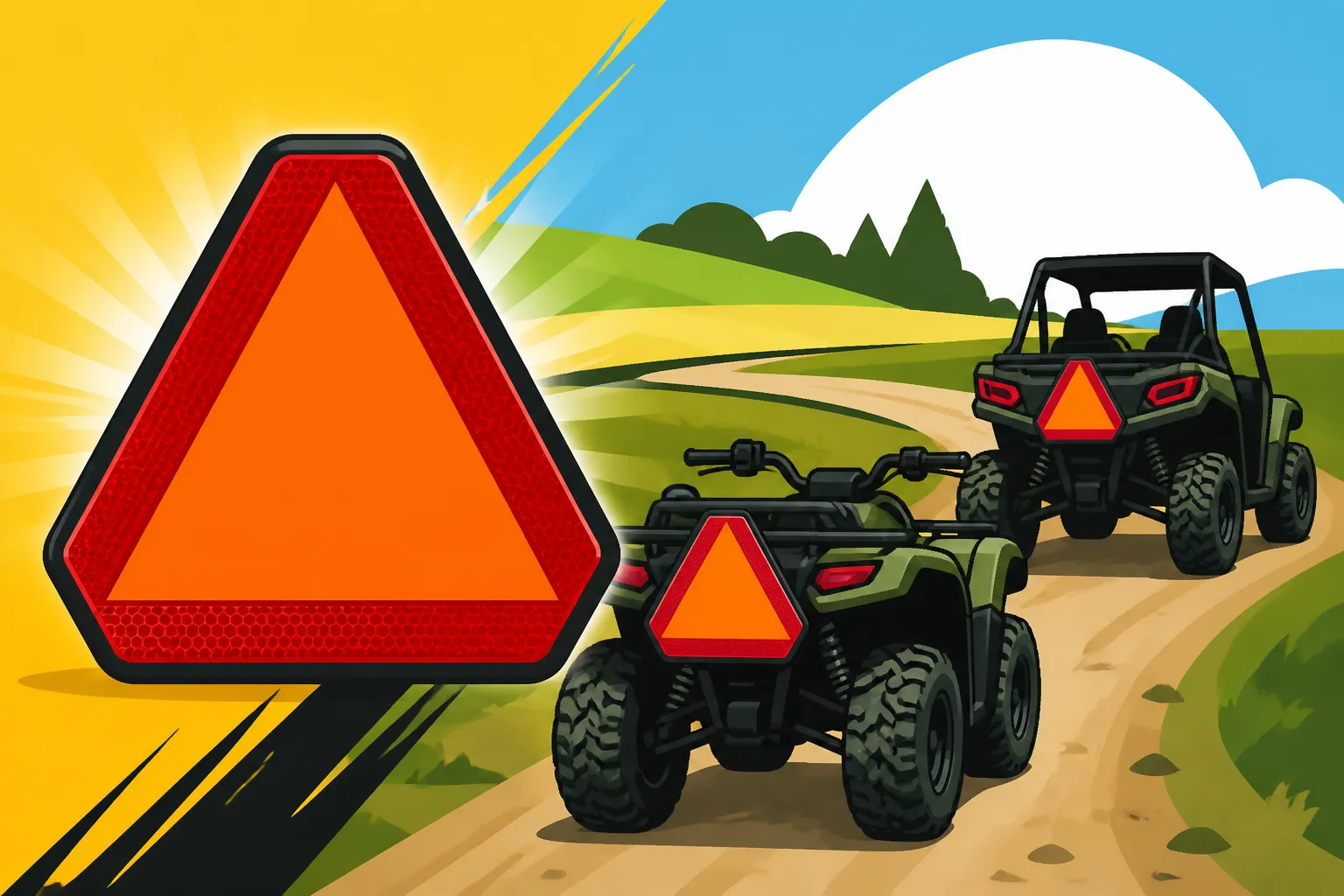
The unique design of the SMV sign – a fluorescent orange triangle with a reflective red border – is specifically chosen for maximum visibility. The fluorescent orange is designed to be highly visible during daylight hours, even in bright sunshine, while the red reflective border ensures it stands out clearly in low light conditions or at night when illuminated by headlights. This dual-purpose design means the sign works effectively around the clock, giving drivers ample time to adjust their speed and avoid potential collisions. For an ATV or UTV, which might be smaller and less imposing than a large tractor, this enhanced visibility is even more critical to prevent them from being overlooked by faster-moving traffic.
Legal Requirement for Specific Situations
While the safety aspect is paramount, the requirement to display a slow-moving vehicle sign isn't just a suggestion; it's a legal obligation in specific circumstances under Manitoba law. For off-road vehicles, this usually ties into the limited allowances for using highways, particularly when operating on shoulders for agricultural purposes. It's not about making your ORV "street legal" in the same way a car is, but rather about meeting specific safety requirements for the brief periods it might share certain public spaces.
The law is clear: if your ORV is permitted to use the shoulder of a highway for specific reasons, and its maximum speed is 40 km/h or less, then an SMV sign must be displayed. This isn't a blanket rule for every time your tires touch pavement, but it's crucial for those specific, legally sanctioned uses. Ignoring this requirement isn't just a safety oversight; it's a non-compliance that could lead to fines and other legal consequences. Riders often wonder if ditch riding requires it, but generally, the SMV sign is explicitly tied to shoulder use where vehicle interaction is more direct. You can dive deeper into specific rules for ditch riding in [Manitoba Ditch Riding Rules].
When Your ATV or UTV Needs a Slow-Moving Vehicle Sign in Manitoba
Alright, let's get down to brass tacks: when does your quad or side-by-side absolutely, positively need one of these orange triangles affixed to its rear? In Manitoba, the rules around ORV use on public roadways are quite specific and generally restrictive. Most of the time, your off-road machine should be, well, off-road. However, there are a few key exceptions where you might find yourself needing to share some road space, and it's in these instances that the slow-moving vehicle sign becomes a non-negotiable accessory. The primary scenario for ATVs and UTVs revolves around agricultural use, but it’s worth understanding the nuances.
It’s easy to assume that because your machine can hit 80 km/h on a trail, you’re exempt. But the "slow-moving" designation often applies to the context of its use on a specific road, and the legal speed limits for ORVs on those particular stretches. So, even if your SuperATV-equipped side-by-side can go faster, if you're restricted to 40 km/h or less by law in a certain area, the sign is still relevant.
Riding the Shoulder for Agricultural Purposes
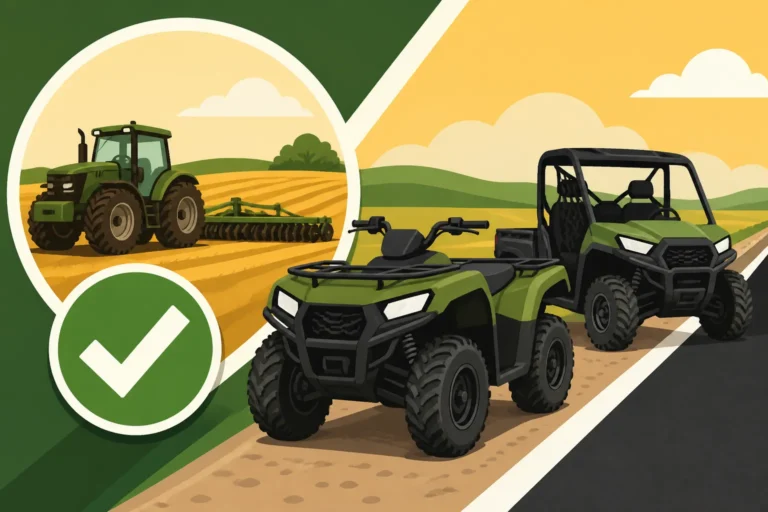
This is the big one for many Manitoba riders, especially those living in rural areas or involved in farming. The Off-Road Vehicles Act (ORVA) in Manitoba has specific provisions that allow ATVs and UTVs to operate on the shoulder of certain highways, but only for agricultural purposes. This isn't a free pass to cruise down the shoulder to the general store; it's strictly for farm-related tasks.
What does "agricultural purposes" actually mean here? It refers to using the ORV for things like moving between fields, checking crops, transporting tools or small equipment related to farm operations, or monitoring livestock. It's about efficiency and necessity for the farm operation. When you are using your machine for these specific tasks, and you are operating on the shoulder of a highway, Manitoba law stipulates that you must display a slow-moving vehicle sign. This is because even if you're only going a short distance, you are still sharing a highway corridor with faster-moving vehicles. The sign ensures you are visible and that other drivers are alerted to your lower speed. For a comprehensive look at this, check out [Manitoba's Agricultural Shoulder Exception] and [Manitoba Shoulder Riding for Farming Only]. The sign is a critical component of this specific exemption, clearly stating "The Slow-Moving Vehicle Sign a Farm Quad Needs."
Crossing Roadways and Intersections
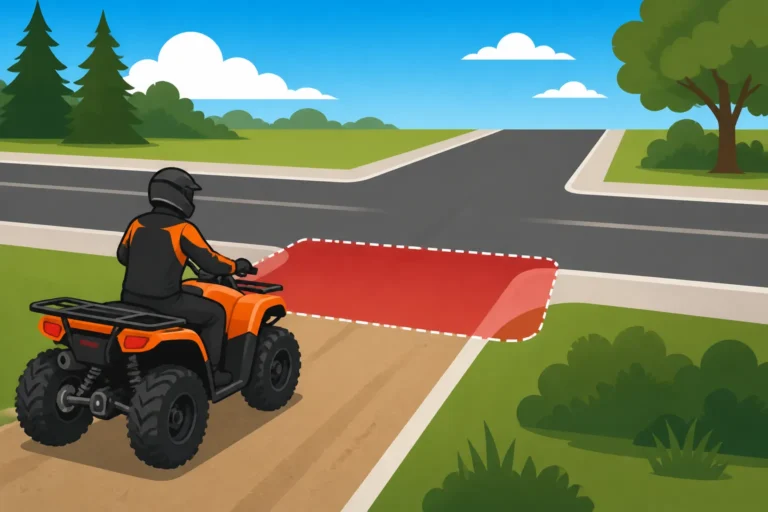
While the main requirement for an SMV sign focuses on prolonged travel on a highway shoulder, the topic of crossing roadways often comes up. Manitoba law permits ORVs to cross public highways at intersections or other designated points, provided certain conditions are met, such as having a clear view and crossing at a 90-degree angle. These crossings are meant to be quick and direct, minimizing exposure to other traffic. You can learn more about these rules in [Manitoba Crossing Rules at 5 Metres and 3 Kilometres].
It's important to note that Manitoba legislation doesn't explicitly mandate an SMV sign solely for the act of crossing a highway. The primary requirement for the sign is linked to the agricultural shoulder use. However, practicing defensive riding and maximizing visibility during any interaction with roadways is always a good idea. While not legally required for a brief crossing, a visible SMV sign, along with proper lighting and hand signals, certainly adds an extra layer of safety. Always remember that when crossing, you must yield to all other traffic. Your focus should be on making yourself as seen and predictable as possible to prevent accidents, whether a sign is legally required for that specific moment or not.
The Specifications of a Manitoba-Compliant SMV Sign
So, you've figured out that your ATV or UTV needs a slow-moving vehicle sign for certain situations. Great! But just grabbing any old orange triangle might not cut it. Like most safety equipment, these signs have specific design and mounting requirements to ensure they do their job effectively and meet legal standards. It’s not just about having a sign; it's about having the right sign, properly displayed. Think of it like your license plate; it needs to be clearly visible and in good condition.
Ensuring your sign meets these specifications is crucial for both safety and compliance. You don't want to find yourself explaining to an officer that your faded, homemade sign should count. A proper SMV sign is an investment in your safety and a reflection of your commitment to responsible riding, especially when sharing the road with others.
Design and Material Requirements
A Manitoba-compliant slow-moving vehicle sign is instantly recognizable. It's a specific equilateral triangle, with a fluorescent orange center and a reflective red border. The materials used are also important:
- Shape: Always an equilateral triangle. No squares, circles, or other shapes will do.
- Color Scheme: The inner triangle must be fluorescent orange, designed for high daytime visibility. The outer border must be reflective red, ensuring it catches headlights at night or in low light.
- Material Durability: These signs are designed to withstand outdoor conditions – sun, rain, snow, and road grime. They are typically made from sturdy aluminum or plastic, with durable reflective coatings that won't fade or peel quickly. Aftermarket options from reputable brands are widely available; for instance, you might find suitable options for your SuperATV accessories.
When you're shopping for one, you'll typically find them at farm supply stores, automotive parts retailers, or online. Don't settle for anything less than a sign that clearly meets these visual and material standards. A sign that is faded, cracked, or missing its reflective border will not provide the necessary visibility and may not be considered compliant by law enforcement. Always ensure it's clean and in good repair before heading out.
Proper Placement and Mounting on Your Machine
Even the perfect sign is useless if it's not mounted correctly. The goal is maximum visibility to following traffic. Here are the key considerations for placement and mounting:
- Location: The sign must be mounted on the rear of your ATV or UTV. It should be centered as much as possible, or at least clearly visible from the rear without obstruction. It’s exactly the same principle as the guidance for [Mounting Your Plate Where It Can Be Seen].
- Height: While there isn't an exact "foot off the ground" rule for ORVs, the sign should be mounted as high as practical to be visible over any cargo or other parts of the machine, but not so high that it's difficult for car drivers to see. The general guideline for vehicles is usually between 0.6 metres (2 feet) and 1.8 metres (6 feet) from the ground, so aim for that range on your ORV.
- Orientation: The triangle must be mounted with one point facing upwards. This is its standard and recognizable orientation.
- Secure Attachment: The sign must be securely attached to the machine. Vibrations, bumps, and wind can easily dislodge a poorly mounted sign. Use sturdy bolts, clamps, or a dedicated mounting bracket. You don't want it flapping around, or worse, falling off while you're on the road.
Before any trip that requires an SMV sign, take a moment to ensure it's clean, properly oriented, and securely fastened. A quick visual check can prevent a ticket and, more importantly, contribute to safer travels for everyone on the road.
Common Misconceptions and Best Practices
Navigating the rules for off-road vehicles can sometimes feel like walking a tightrope – there's the letter of the law, and then there's the spirit of safe operation. Slow-moving vehicle signs are a perfect example where simply meeting the legal minimum isn't always enough to ensure maximum safety. Many riders hold onto misconceptions about these signs or overlook common-sense practices that could prevent an accident. Let's clear up some of that confusion and talk about how to be not just compliant, but truly safe.
It's easy to get caught up in what you must do, but sometimes stepping back and considering what's smart to do can make all the difference. Remember, the road is a shared space, and everyone benefits when we all take extra steps to be predictable and visible.
The 40 km/h Shoulder Limit and SMV Signs
One common point of confusion revolves around the interplay between the SMV sign and the actual speed limit for ORVs on highway shoulders. The presence of a slow-moving vehicle sign indicates that the vehicle is designed or operating at a speed of 40 km/h or less. However, it does not automatically grant permission to travel at 40 km/h on every shoulder. Manitoba law explicitly sets a speed limit when using the shoulder for agricultural purposes.
The rule states: when using the shoulder for agricultural purposes, an ORV must not exceed [40 km/h at Most]. This is a hard limit. So, even if your machine could go faster, and even with a shiny new SMV sign, you are legally bound to that 40 km/h ceiling on the shoulder. The sign is a warning about slow speed, while the law dictates what that slow speed must be. They work hand-in-hand: the sign warns others of your slow speed, and you ensure your actual speed doesn't exceed the legal maximum for that particular roadway use. Understanding this distinction is key to staying compliant and safe, as detailed in [Manitoba's 40 km/h Shoulder Limit].
Beyond the Law: General Safety Advice
While the law tells us the minimum requirements, real-world safety often demands a bit more. When operating your ATV or UTV in any situation that brings you into contact with regular road traffic, even if an SMV sign isn't strictly mandated by law, consider going the extra mile for visibility.
Here are some best practices:
- Enhanced Visibility: Combine your SMV sign with other visibility tools. Ensure your machine's lights are on, even during the day, if you're near a road. Consider adding a bright safety flag, especially for quads that might be less visible than a UTV. Wearing high-visibility clothing, like a bright orange or yellow vest, also significantly increases your presence on the road.
- Defensive Riding: Always assume other drivers might not see you, even with all your precautions. Stay alert, anticipate potential hazards, and be prepared to react. Avoid riding during peak traffic hours if possible, and choose routes that minimize your time on or near high-speed roads.
- Predictability: Make your intentions clear. Use hand signals if your machine doesn't have turn signals, or even if it does, as an extra layer of communication. Maintain a consistent speed and lane position. Sudden, unpredictable movements can catch other drivers off guard.
- Machine Maintenance: Ensure your brakes, tires, and steering are in top condition. A breakdown on the side of a highway is dangerous for everyone. Regular maintenance, including checking all lights, is crucial.
Remember, the goal isn't just to avoid a ticket, but to avoid an accident. These extra steps, while not always legally required, contribute significantly to a safer experience for you and everyone else sharing the road.
Penalties for Non-Compliance and Enforcement
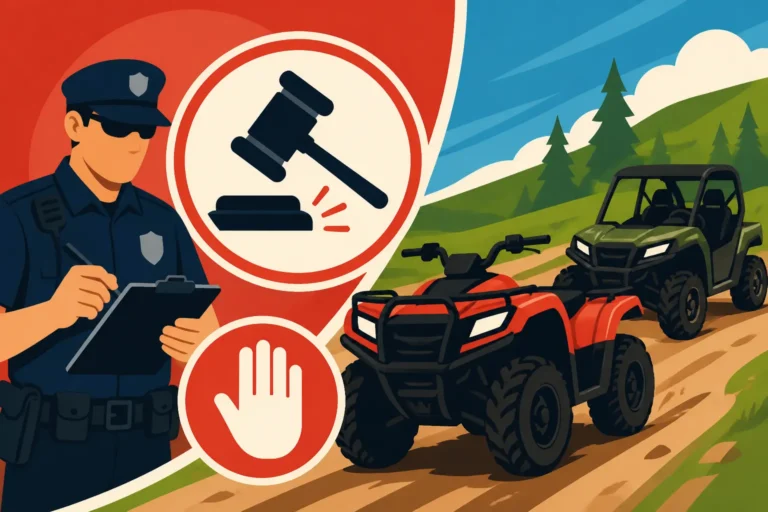
No one wants to get a ticket, especially when you're just trying to enjoy your machine or get some work done. But ignoring the requirements for slow-moving vehicle signs in Manitoba isn't just a minor oversight; it can lead to tangible penalties. Law enforcement officers, particularly those patrolling rural areas, are well-versed in the specific regulations governing off-road vehicles on or near public roadways. They are not just looking for speeding; they're looking for compliance with all safety equipment, and the slow-moving vehicle sign falls squarely into that category.
It's about more than just a fine, too. Non-compliance can have broader implications for your safety and even your insurance coverage if an accident were to occur. So, understanding the consequences of not having a required SMV sign is as important as knowing when you need one.
Fines and Legal Consequences
If you're caught operating your ATV or UTV on a highway shoulder for agricultural purposes without the required slow-moving vehicle sign, you can expect to face fines. These penalties are typically outlined in the Off-Road Vehicles Act or potentially the Highway Traffic Act, depending on the specific charge. An officer performing [Manitoba Equipment Checks by Officers] will certainly be looking for this, among other safety items.
The exact cost of a ticket can vary, but it's important to remember that it's rarely just the fine itself. You might also incur administrative fees, and repeated offenses could lead to more serious consequences. The underlying principle is that by not displaying the sign, you're creating a safety hazard by failing to adequately warn other road users of your presence and slower speed. This isn't taken lightly, as the potential for serious accidents is very real. Always assume that if a sign is required, an officer has the authority to issue a citation for its absence or improper display. Taking the time to properly equip your machine is far less costly and stressful than dealing with a roadside stop and subsequent fine.
The Broader Impact on Safety and Insurance
Beyond the immediate financial hit of a fine, operating without a required slow-moving vehicle sign can have much more significant, long-term consequences, particularly in the event of an accident. Insurance companies look very closely at compliance with safety regulations when assessing claims. If you are involved in a collision while operating on a highway shoulder without a legally required SMV sign, your actions could be deemed negligent.
This negligence could affect several aspects:
- Liability: Your degree of fault in an accident could increase if you weren't displaying a required safety device. This means you might be held more responsible for damages and injuries.
- Insurance Coverage: While basic [Manitoba Insurance Included With Registration] covers third-party liability, an insurance provider might scrutinize your claim if you were not compliant with vehicle safety laws. In extreme cases, a finding of gross negligence could impact your coverage, leaving you personally liable for significant costs.
- Personal Injury: Most importantly, the absence of the sign increases the risk of a serious rear-end collision, which can lead to severe injuries or even fatalities for the ORV operator and passengers. The signs are there for a reason: to save lives and prevent devastating accidents.
Ultimately, complying with the SMV sign requirement is a small step that yields huge returns in terms of safety, legal protection, and peace of mind. It’s a foundational piece of responsible ORV operation when sharing space with public roadways.
Manitoba Slow-Moving Vehicle Sign Requirements: A Quick Guide
To help you keep track of when and where these signs are needed, here's a quick reference table. Remember, this applies specifically to ATVs and UTVs in Manitoba.
| Scenario | SMV Sign Required? | Speed Limit (ORV) | Additional Considerations |
|---|---|---|---|
| Agricultural Shoulder Use | Yes | 40 km/h maximum | Only for specific agricultural purposes. |
| Ditch Riding | No | As per local by-laws / safety | ORVs must travel in the same direction as traffic. |
| Crossing a Highway | No (not explicitly) | Safe crossing speed | Yield to all traffic, cross at 90 degrees. |
| Designated ORV Trail | No | As per trail rules | No interaction with road traffic. |
| Private Land | No | As per landowner rules | No interaction with road traffic. |
| Roadway (Non-Agricultural) | No | N/A (generally prohibited) | Most ORVs are banned from roadways outside specific exemptions. |
Disclaimer
This article is for general informational purposes only and does not constitute professional advice. Laws, prices and regulations vary by location and change over time. Consult a qualified professional for guidance on your specific situation.