Manitoba’s Agricultural Shoulder Exception
It can be incredibly frustrating when you rely on your ATV or UTV for daily farm operations, moving between fields or checking livestock, only to feel like you're constantly navigating a maze of road rules that weren't designed for your needs. This comprehensive guide is here to unravel the specific provisions in Manitoba's Off-Road Vehicles Act that carve out a much-needed exception for agricultural use, helping you understand exactly where and how you can legally operate your machine on the shoulders of certain roadways.
Understanding the Agricultural Shoulder Exception
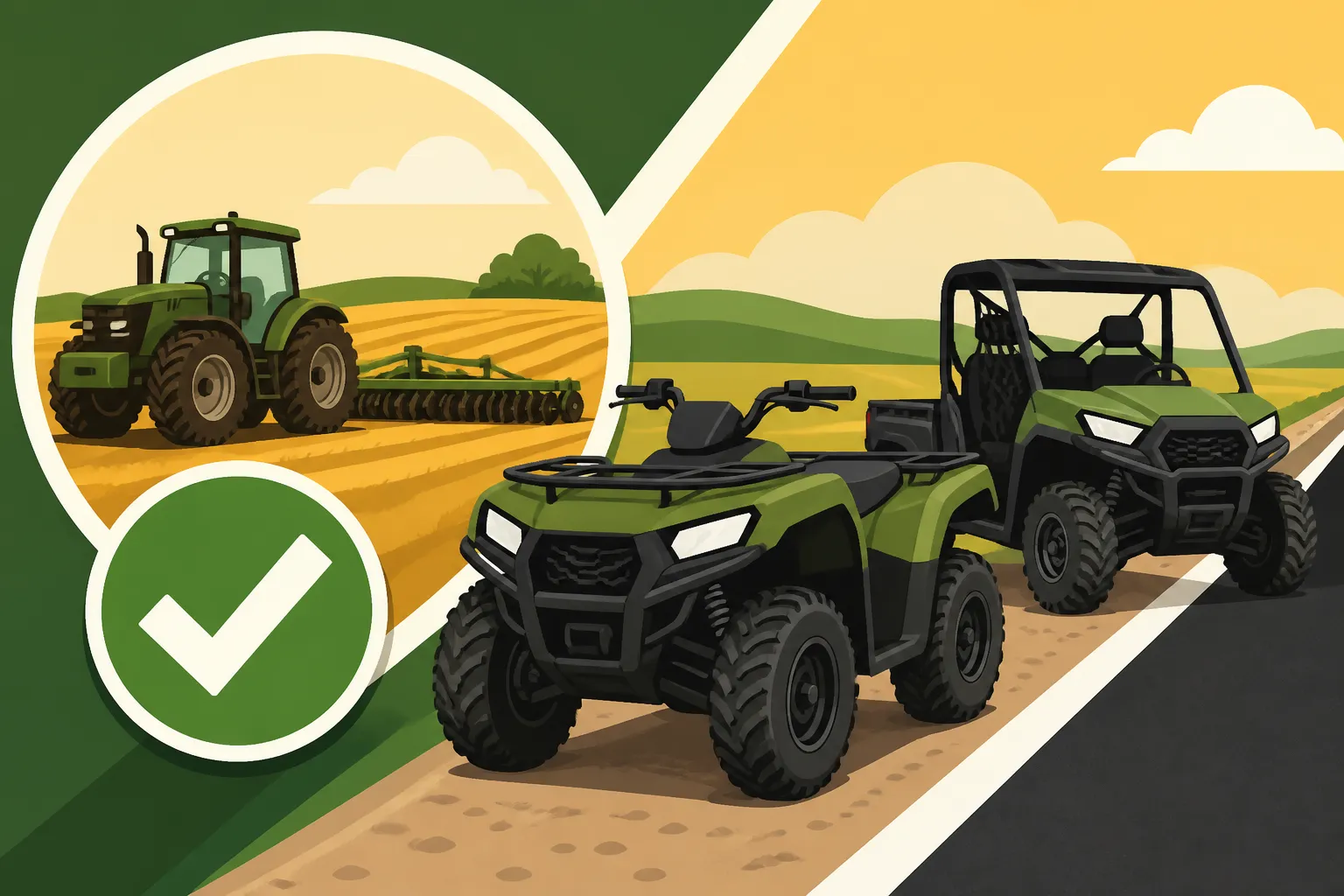
Let's face it, farm life in Manitoba often means moving machinery across distances that aren't exclusively on your own land. For years, farmers have grappled with the challenge of using their indispensable off-road vehicles (ORVs) for legitimate agricultural purposes without running afoul of regulations primarily designed for recreational riders or highway traffic. The provincial government recognized this unique need, creating a specific allowance that permits ORVs used for farming to operate on the shoulders of certain provincial roadways. This isn't a blanket permission to joyride down the highway, but a carefully defined exception that acknowledges the practical realities of agricultural operations.
This exception is rooted in the understanding that an ATV or UTV can be far more efficient for specific farm tasks than constantly loading and unloading it onto a trailer, or using a full-sized truck or tractor for quick hops between adjacent parcels of land. It’s about practicality, efficiency, and reducing unnecessary burdens on our hard-working agricultural community. However, with this freedom comes responsibility, and knowing the precise boundaries of this exception is absolutely critical to avoid fines or accidents.
What the Exception Allows
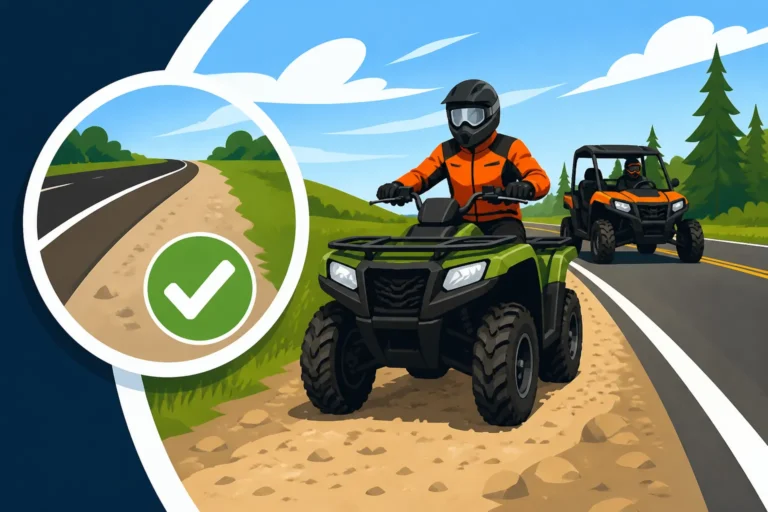
At its core, the agricultural shoulder exception permits a qualifying off-road vehicle to be operated on the shoulder of certain highways. Think of it as a designated pathway specifically for those engaged in farming activities. This means you aren't stuck to just fields or private roads when you need to get your quad or side-by-side from one property line to another, or to access an implement stored across a grid road. It's a pragmatic solution for rural connectivity, allowing you to bridge those short gaps of public land that separate your operational areas.
The key here is "shoulder." This isn't about ditch riding, which has its own set of rules and limitations. Instead, it’s about that strip of paved or gravelled ground immediately adjacent to the main travel lanes, traditionally used for emergencies or parking. For a farmer, it becomes a crucial conduit. This exception specifically addresses situations where the ditch might be impassable, too narrow, or simply impractical for the type of machine or task at hand. It's about providing a safer, more predictable route than attempting to navigate unpredictable terrain or always resorting to highway travel in a larger, less agile farm vehicle.
Why This Exception Exists
The creation of this specific rule reflects a deep understanding of the agricultural sector's operational needs in Manitoba. Farming is a demanding profession that often requires efficient movement of equipment, tools, and even personnel across various land parcels that might be bisected by public roads. Without this exception, farmers would face significant logistical hurdles, increasing their travel time, fuel consumption, and overall operational costs. Imagine having to load your side-by-side onto a trailer every time you needed to check a fence line across a road, or drive it several miles down the road in a less suitable vehicle. It just wouldn't make sense.
This exception is designed to support the livelihoods of Manitoba's farmers by providing a legal and practical means to integrate ORV use into their daily routines. It acknowledges that an ATV or UTV is often an essential tool, not just a recreational toy, and as such, needs specific provisions to facilitate its use in an agricultural context. It's a nod to common sense, ensuring that regulations don't inadvertently hinder essential economic activities. Furthermore, by defining clear rules for shoulder use, it also aims to enhance safety by providing a structured framework for farmers to operate their machines off the main flow of high-speed traffic, rather than risking illegal or unsafe movements out of necessity.
Who Qualifies for the Agricultural Shoulder Exception
Not just anyone can hop on their quad and cruise down the shoulder of a highway in Manitoba, even if they live in a rural area. This specific exception is tightly defined to ensure it serves its intended purpose: facilitating legitimate agricultural operations. It's about who you are, what your machine is being used for, and the specific circumstances surrounding that use. The legislation is clear that this isn't a loophole for general off-road travel, but a focused allowance for those directly involved in farming.
This means that if you're a weekend warrior taking your side-by-side out for a spin, or someone who simply lives on acreage but isn't actively engaged in farming as a primary occupation, this particular exception doesn't apply to you. It's critical to understand these distinctions because misinterpreting the rules can lead to serious consequences, including fines and potential safety hazards for yourself and others on the road.
Defining "Agricultural Purposes"
So, what exactly constitutes "agricultural purposes" in the eyes of the law when it comes to ORV use on a shoulder? This is perhaps the most crucial element to grasp. Generally, it refers to activities directly related to the cultivation of land, raising livestock, or the production of agricultural commodities. This could include, but isn't limited to, checking crops, inspecting fences, herding cattle, transporting small tools or supplies between fields, or accessing machinery that is part of a farming operation.
The key phrase is "directly related." If you're driving your quad to pick up groceries in town, even if you're a farmer, that wouldn't fall under "agricultural purposes" for the shoulder exception. However, if you're using your ATV to monitor a pivot irrigation system that spans across a public road, or to move equipment to a different field for seeding, those are clear examples of legitimate agricultural use. It's all about the immediate objective of your journey. An officer stopping you would likely inquire about your destination and the purpose of your travel to determine if it aligns with the spirit and letter of the exception.
Eligible Operators and Machines
The operator of the ORV must be someone actively engaged in agriculture. This typically means the farm owner, operator, or an employee directly involved in the farming operation. Family members assisting with farm work would also generally fall under this umbrella, provided their use of the ORV is for a legitimate agricultural purpose. Proof of engagement in farming activities, such as farm registration or land ownership documents, might be relevant if questioned.
As for the machines, the exception applies to off-road vehicles as defined by Manitoba's Off-Road Vehicles Act. This includes ATVs, UTVs, side-by-sides, and even some smaller agricultural vehicles that meet the definition. It's usually the utility-focused models, like a robust SuperATV Defender or Ranger, that are most commonly seen utilizing this exception, as they are often equipped with cargo beds, hitches, and other features ideal for farm work. However, any ORV fitting the legal definition could potentially qualify, as long as it's being used for agricultural purposes by an eligible operator. What's paramount is the function and purpose of the ride, not necessarily the specific make or model of the machine itself, although utility models are undeniably the most practical choice.
Where the Agricultural Shoulder Exception Applies
Understanding where you can actually exercise this exception is just as important as knowing who qualifies and why it exists. The agricultural shoulder exception isn't a free pass to drive your ORV on the shoulder of every road in Manitoba. There are specific types of roadways and locations where it applies, and clear restrictions on others. This ensures safety for both the ORV operator and other motorists, and prevents the misuse of the exception.
Manitoba's road network is vast and varied, ranging from bustling multi-lane highways to quiet rural grid roads. The rules are designed to be practical for the rural landscape while maintaining the integrity of major transportation corridors. Getting this wrong could land you in a dangerous situation or result in a ticket, even if your intentions were purely agricultural.
Provincial Roads and Highways
The primary application of the agricultural shoulder exception is on provincial roads and highways. These are the main arteries connecting communities and farm operations across Manitoba. However, it's vital to differentiate between the shoulder of these roads and the main traffic lanes. You are strictly confined to the shoulder, which is the paved or unpaved strip immediately adjacent to the edge of the roadway. This area is typically separated from the main travel lane by a solid white line or simply by the edge of the pavement.
It’s crucial to understand that even on these provincial roads, the exception doesn't grant you permission to travel significant distances. It's generally intended for short stretches – moving from one field to another, crossing a road to access property, or getting to a nearby piece of farm equipment. You should always aim to minimize your time on the shoulder and use the most direct route possible. Riding for long, continuous stretches, especially if alternative routes (like private access roads or legal ditch routes) are available, could be seen as an abuse of the exception. Always be aware of your surroundings and the traffic conditions, as the shoulder is not an exclusive ORV zone.
Exclusions: Interchanges, Medians, and Controlled-Access Highways
While many provincial roads and highways are open to the agricultural shoulder exception, there are critical exclusions you absolutely need to know. You cannot, under any circumstances, use an ORV on the shoulders of controlled-access highways (like some stretches of the Trans-Canada Highway where entrance and exit ramps are strictly regulated). These are high-speed environments designed for fast-moving traffic, and an ORV, even on the shoulder, poses a significant safety risk. The same goes for interchanges and medians of divided highways; these areas are incredibly dangerous for slow-moving off-road vehicles due to complex traffic patterns and high speeds.
Similarly, riding on sidewalks or within the built-up areas of cities, towns, or villages (unless a local by-law specifically permits it, which is rare for agricultural shoulder use) is generally prohibited. The exception is specifically for rural, agricultural contexts. The intent is to allow farmers to navigate the agricultural landscape, not to integrate ORVs into urban or semi-urban traffic flows. Always check local municipal by-laws if you're operating near or within community boundaries, as they can sometimes impose additional restrictions or, in rare cases, specific allowances for agricultural movement. [Manitoba Municipal By-Law Powers] covers this in more detail.
Conditions for Safe and Legal Shoulder Operation
Even when you've confirmed that you qualify as an agricultural operator and are on an eligible shoulder, simply driving your ORV isn't enough. The agricultural shoulder exception comes with a strict set of conditions designed to ensure safety for everyone on the road. These aren't suggestions; they are legal requirements that must be met every single time you utilize this exception. Failing to adhere to these conditions can not only result in serious penalties but also put yourself and others at significant risk.
Think of these conditions as the fine print of your permission slip. You've been granted a special privilege, but that privilege is contingent on you operating your machine responsibly and visibly. This means preparing your machine, being aware of your surroundings, and ensuring you meet all legal requirements before you even think about putting a tire on that shoulder.
Speed Limits and Visibility
One of the most critical conditions is speed. When operating an ORV on the shoulder for agricultural purposes, you are typically restricted to a reduced speed limit. While specific numbers can vary and you should always check the current regulations, a common limit found in such exceptions is around 40 km/h [Manitoba's 40 km/h Shoulder Limit]. This lower speed is essential because ORVs are not designed for highway speeds, and moving too fast on a shoulder, especially with varying surfaces, can be incredibly dangerous. It also accounts for the fact that you'll be sharing space with potential hazards like debris, potholes, or parked vehicles.
Visibility is also paramount. You must operate your ORV in a manner that ensures you are clearly visible to other traffic. This means making sure your headlights and taillights are functioning and turned on, even during daylight hours, if visibility is anything less than perfect. If you're riding from half an hour before sunset until half an hour after sunrise, or in conditions of reduced visibility (fog, heavy rain, snow), proper lighting is not just a good idea, it's absolutely mandatory. [Manitoba Lighting Requirements on a Machine] provides more detail on this. Remember, a driver in a car might not expect an ORV on the shoulder, so anything you can do to enhance your visibility is a life-saving measure.
Equipment Requirements: Slow-Moving Vehicle Sign
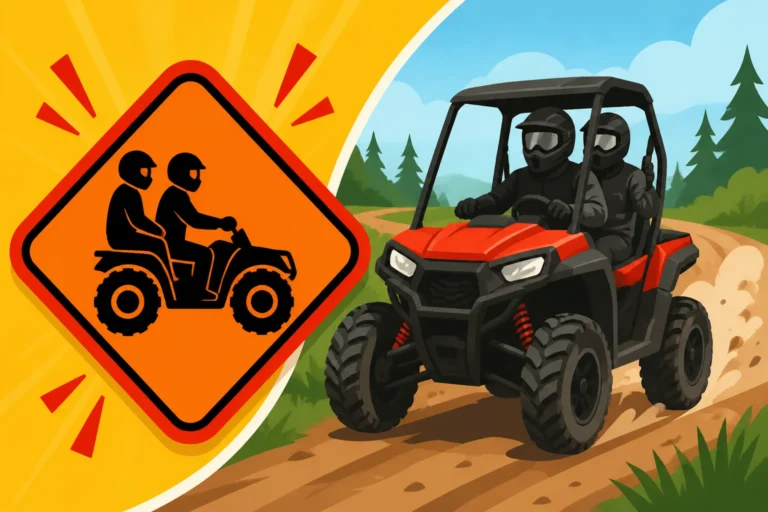
Perhaps the most distinctive and non-negotiable requirement for using the agricultural shoulder exception is the display of a slow-moving vehicle (SMV) sign. This bright orange triangle with a red reflective border is not just a suggestion; it's a legal mandate for any vehicle, including an ORV, that operates on a highway at speeds below a certain threshold (often around 40 km/h). This sign serves as an immediate visual warning to other motorists that you are operating at a significantly reduced speed, giving them ample time to react and adjust their driving.
The SMV sign must be securely mounted on the rear of your ORV, clearly visible to traffic approaching from behind. It should be clean, unobstructed, and in good condition to ensure maximum reflectivity. Think of it as your ORV's loudest statement to the world that you're moving slowly and they need to be cautious. Many agricultural-focused UTVs, like a SuperATV model equipped for farm work, might even have designated mounting points for these signs or come with them pre-installed. Do not operate on the shoulder for agricultural purposes without this sign displayed correctly. [Manitoba Slow-Moving Vehicle Signs] offers more specific guidance on this critical piece of equipment.
Operator Responsibilities and Licensing
Riding an off-road vehicle, even for agricultural purposes, comes with a set of responsibilities, not least of which involves proper licensing and ensuring you're operating the machine safely and legally. Just because you're using your ORV for farm work doesn't mean you can skip basic operating requirements. The rules are there to protect you, your passengers, and other road users. Understanding your duties as an operator under this exception is essential for compliance and safety.
This isn't about arbitrary rules; it's about making sure that anyone operating a machine that can interact with public roadways has the necessary skills and legal standing to do so. The agricultural exception modifies where you can ride, but not who can ride or how they must ride.
Driver's Licence Requirements
Here's where many people get confused. While you might not always need a full Class 5 driver's licence to operate an ORV off-road in Manitoba, if you're going to use the agricultural shoulder exception, you will need an appropriate driver's licence. The Off-Road Vehicles Act specifies that when an ORV is operated on the shoulder of a highway, the operator must hold a valid driver's licence that is not restricted from operating an off-road vehicle. This generally means a valid Class 5 (or equivalent) licence.
This requirement makes perfect sense. Operating on a highway shoulder, even at reduced speeds, means you are interacting with public traffic and need to understand the rules of the road, possess defensive driving skills, and be capable of making safe decisions in a dynamic environment. A learner's permit, or a licence with specific ORV restrictions, might not qualify you for this particular use. Always confirm your licence class permits this type of operation. [Do You Need a Licence for an ATV in Manitoba?] provides broader context on ORV licensing.
Helmet Law and Exceptions
Manitoba has a mandatory helmet law for ORV operators and passengers. Generally, if you're on an ORV, you need to wear an approved helmet. However, the agricultural shoulder exception is one of those specific scenarios where an exemption to the helmet law might apply. The Act provides exemptions for individuals engaged in farming, fishing, hunting, or trapping activities, under certain conditions. For farming, this often means that if you are actively engaged in agricultural operations, you might not be required to wear a helmet while operating your ORV on the shoulder.
It's absolutely crucial to confirm the exact wording and conditions of this exemption, as they can be very specific. For instance, the exemption might only apply if the ORV is equipped with a rollover protective structure (ROPS) and seatbelts, and those seatbelts are being worn. If your machine, like many utility side-by-sides, has a roll cage and seatbelts, this could be a qualifying factor. If you're on a traditional ATV without a ROPS, the helmet rule generally applies. When in doubt, wear your helmet. Safety should always come first, regardless of exemptions. [Manitoba Helmet Law and Its Exemptions] details the various scenarios.
Navigating Adjacent Land and Crossings
The agricultural shoulder exception doesn't exist in isolation; it's often a piece of a larger journey that involves accessing private land or crossing roadways. Understanding how to legally and safely navigate these transitions is paramount. It’s not just about getting onto the shoulder, but also about getting off it and making necessary crossings without violating other parts of the ORV Act.
Many farmers operate land parcels on both sides of a road, or need to cross a highway to reach another field. The rules governing these movements are designed to minimize conflict with other traffic and ensure predictable behavior from ORV operators. These are high-risk manoeuvres, and precision in adherence to the rules is key.
Private Property Access
When using the agricultural shoulder exception, your goal is often to access private agricultural property that abuts the roadway. This is where the shoulder becomes your pathway. Once you reach your field or farm access point, you should transition directly from the shoulder onto your private land. You shouldn't be using the shoulder to travel parallel to private land if you have direct access to it further down. The exception is for bridging gaps, not for avoiding your own access routes.
Remember that permission is always required for private land. If you're accessing land that isn't your own, even for agricultural purposes, you must have the landowner's explicit consent. While this isn't directly tied to the shoulder exception, it's an important consideration for any off-road travel, especially when moving between properties. Ensure your access points from the shoulder are safe, clearly visible, and do not impede other traffic. [Consent From a Landowner in Manitoba] elaborates on this broader requirement.
Roadway Crossing Rules
Crossing a roadway, especially a provincial highway, is one of the most hazardous operations an ORV operator can undertake. When you're using the agricultural shoulder exception, you might need to cross the main lanes of traffic to access a field on the opposite side. Manitoba has very specific and stringent rules for crossing highways with an ORV. These are not to be taken lightly.
Generally, you must approach the crossing at a right angle (90 degrees) to the roadway, yielding to all traffic. You must stop completely before crossing, ensuring a clear view in both directions, and only proceed when it is safe to do so. You cannot make diagonal crossings, and you should always minimize the time spent in the active traffic lanes. The rule about crossing at least 3 kilometres from the nearest intersection and within 5 metres of another, are crucial for safety. [Manitoba Crossing Rules at 5 Metres and 3 Kilometres] spells out these distances. This is a moment where patience and extreme caution are your best allies. Group crossings must be done one machine at a time. Never assume a motorist sees you or will yield; always assume they don't and be prepared to wait.
Common Mistakes and Staying Compliant
Even with the best intentions, it's easy to make mistakes when navigating complex regulations like the agricultural shoulder exception. Many farmers, eager to get their work done efficiently, might inadvertently misinterpret a rule or overlook a small but crucial detail. These errors, however, can lead to tickets, fines, and even dangerous situations. Being aware of the most common pitfalls can help you avoid them and ensure you stay compliant.
The goal is to empower farmers to use their ORVs effectively and legally, not to create additional headaches. By understanding these frequent slip-ups, you can build a more robust routine for safe and lawful operation. It’s about being proactive, not reactive, when it comes to the rules.
Misinterpreting "Agricultural Use"
One of the most frequent mistakes is a broad interpretation of "agricultural purposes." As we discussed, this exception is not for personal errands or recreational rides, even if you are a farmer. Using your UTV to run into the nearest town for a coffee, or to visit a neighbour for a social call, does not qualify, even if you’re driving on the shoulder. The journey must be directly and demonstrably related to your farming operation. If an officer stops you and asks about your purpose, you need to have a clear, agricultural reason for being on that shoulder.
This isn't about being overly strict, but about maintaining the integrity of the exception. If the rules were too loose, the exception could be abused, potentially leading to more restrictions down the line for legitimate users. Always ask yourself: "Is this journey absolutely necessary for my farm work right now?" If the answer is no, then find an alternative way to travel or stick to private land.
Neglecting Equipment or Licensing Rules
Another common pitfall is overlooking the mandatory equipment or licensing requirements. It's easy to forget to attach the slow-moving vehicle sign for a quick trip, or to assume your agricultural use negates the need for a driver's licence. However, these are non-negotiable conditions. An ORV on the shoulder without a valid SMV sign is a serious hazard and a clear violation. Similarly, operating without the appropriate driver's licence can lead to significant penalties, just as it would in a car.
Sometimes, it's the small details that get overlooked, like ensuring your lights are actually working and clean, or that your registration card is on hand. [Carrying Your Registration Card on Every Ride] is a good reminder. A quick pre-ride check of your machine and your paperwork can prevent a lot of headaches. SuperATV, for example, offers a range of durable lighting and safety accessories that can enhance your machine's visibility and compliance, making it easier to meet these requirements.
Table: Agricultural Shoulder Exception vs. General Ditch Riding Rules
To help clarify some of the distinctions and prevent common mistakes, here's a comparison between the specific agricultural shoulder exception rules and the more general rules for ditch riding in Manitoba. It highlights why the "shoulder exception" is unique and has its own set of requirements.
| Feature | Agricultural Shoulder Exception (ORV for Farm Use) | General Ditch Riding Rules (Recreational/Other) |
|---|---|---|
| Location | Shoulder of provincial roads/highways | Ditch to the right of the roadway |
| Purpose | Direct agricultural operations | General travel, recreation, access |
| Speed Limit | Often 40 km/h or less (check current regs) | Varies, often restricted to lower speeds |
| Slow-Moving Vehicle Sign | MANDATORY | Not generally required |
| Driver's Licence | MANDATORY (valid, non-restricted) | Varies, often required for road crossings |
| Helmet Requirement | Potential exemption if ROPS/seatbelts used (check specific conditions) | Generally MANDATORY for operator/passenger |
| Exclusions | Controlled-access highways, interchanges, medians | Roadways, medians, interchanges, sidewalks |
| Crossing Roads | Strict rules (stop, yield, right angle, distance) | Strict rules (stop, yield, right angle, distance) |
| Visibility | Enhanced visibility (lights on) highly encouraged | Lights on at night/reduced visibility |
| Machine Type | Any ORV for farm use | Any ORV |
This table clearly illustrates that the agricultural shoulder exception is a distinct pathway with its own set of critical obligations. It's not just "ditch riding" on a different surface; it's a specific allowance with tailored requirements.
Resources and Further Information
Navigating the intricacies of ORV legislation can sometimes feel overwhelming, but you don't have to figure it all out on your own. There are resources available, both online and in person, that can help clarify any lingering questions you might have about Manitoba's agricultural shoulder exception and other ORV rules. Staying informed is the best way to stay safe and avoid unnecessary penalties.
Knowledge is power, especially when it comes to legal compliance. Don't hesitate to reach out to official channels if you're unsure about a particular aspect of the rules, especially before you head out with your machine.
Official Government Resources
Your first stop for accurate and up-to-date information should always be official government sources. Manitoba Public Insurance (MPI) is heavily involved in ORV registration and often provides information on operating rules. The provincial government website, particularly sections related to transportation, agriculture, and natural resources, will host the most current version of the Off-Road Vehicles Act and its associated regulations. While I can provide general guidance, the official legislation is the definitive source.
Look for specific guides or FAQs published by the province regarding ORV use, especially those pertaining to agricultural exemptions. These documents are designed to interpret the legal jargon into more understandable language for the public. They can often provide specific figures, like current speed limits or exact distance requirements for crossings, which are subject to change.
Speaking with an Autopac Agent or Local Law Enforcement
For personalized advice, especially regarding registration or insurance, your local Autopac agent is an excellent resource. They are well-versed in ORV regulations, as they handle the registration process, and can often answer questions about specific scenarios. Don't be shy about asking them about the nuances of the agricultural shoulder exception. [Manitoba Autopac Agents and ORV Registration] highlights their role.
If you have questions about enforcement or specific interpretations of the operating rules in your area, reaching out to your local RCMP detachment or other provincial law enforcement (like Conservation Officers if you're operating near Crown lands) can be very helpful. They are the ones who enforce these rules on the ground and can provide practical insights into what they look for when determining compliance. Just remember to be clear and concise with your questions, and understand that their primary role is enforcement, not legal advice.
Disclaimer
This article is for general informational purposes only and does not constitute professional advice. Laws, prices and regulations vary by location and change over time. Consult a qualified professional for guidance on your specific situation.