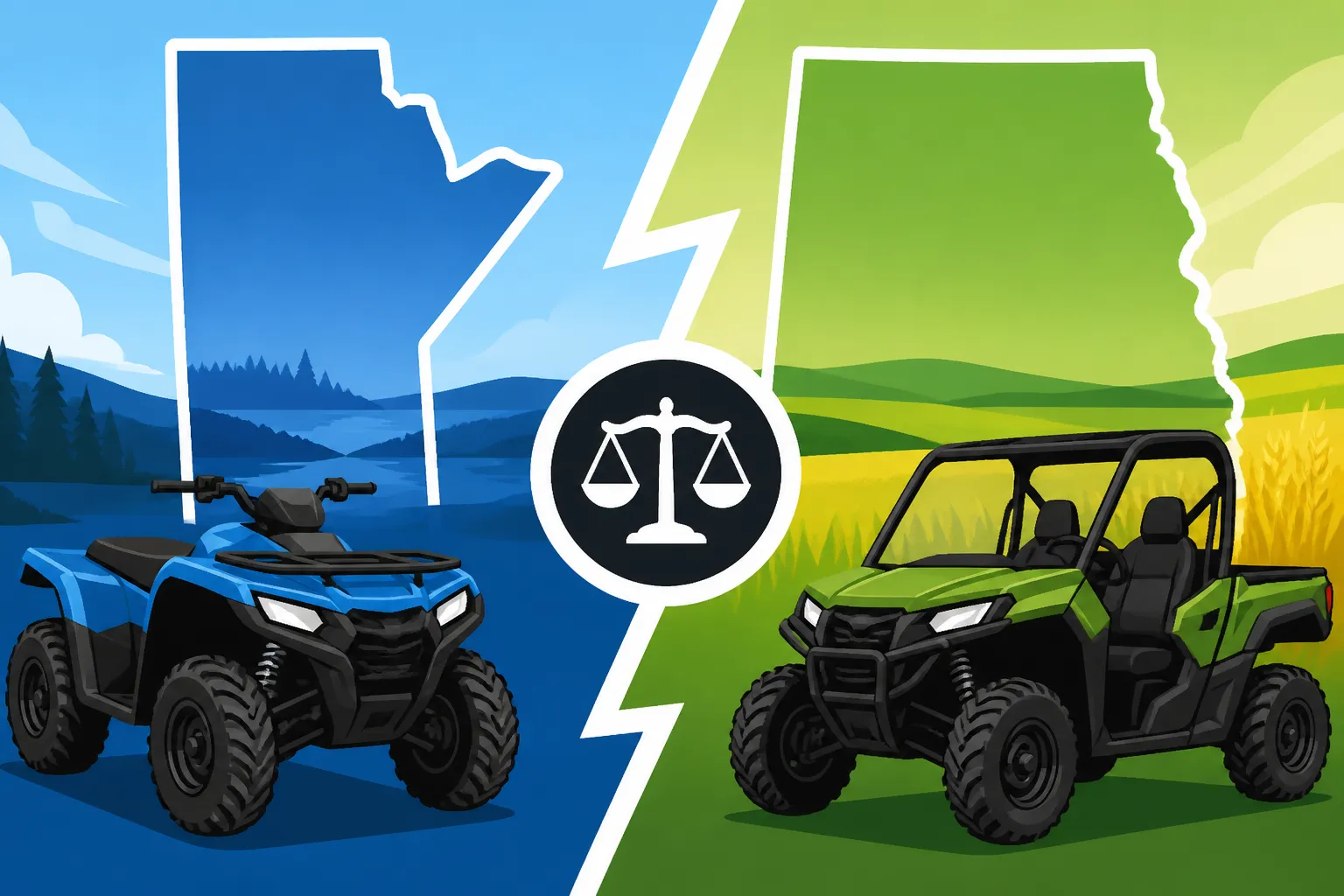
Manitoba Registration Compared to Saskatchewan
It's incredibly common for off-road enthusiasts to feel a little lost when planning a trip or even a move between provinces, especially when it comes to something as crucial as ATV or UTV registration. You've gotten used to one set of rules, and suddenly, you're faced with another, wondering if your plate from Manitoba is even valid in Saskatchewan, or vice versa. This guide aims to clear up that confusion by comparing the registration requirements, fees, and operational nuances between Manitoba and Saskatchewan, so you can ride with confidence, no matter which side of the border you're on.
The Fundamental Approach to ORV Registration in Each Province
It's easy to assume that if you've got your ATV or UTV registered in one province, you're good to go everywhere. But that's where many riders hit a snag, especially when crossing borders into a neighbouring province like Saskatchewan. The truth is, while both Manitoba and Saskatchewan require registration for off-road vehicles, their philosophies and specific rules can differ in ways that might surprise you. Understanding these fundamental differences is key to avoiding fines and ensuring your machine is legally ready for adventure, whether you're sticking to the local trails or planning a cross-provincial tour.
In Manitoba, the registration system is quite comprehensive, handled by Manitoba Public Insurance (MPI) through their Autopac agents. This means when you register your off-road vehicle, you're not just getting a plate; you're also enrolling in a basic insurance scheme and paying provincial sales tax (RST) if applicable, all in one go. It's a "one-stop shop" approach that streamlines a lot of the process. The core idea is that if you're riding an ORV anywhere that isn't your own private property, it needs to be registered. This includes most public lands, designated trails, and even road allowances. The provincial government sees registration as a vital tool for identifying machines, ensuring a minimum level of liability coverage, and collecting funds for trail maintenance.
Saskatchewan, on the other hand, operates its ORV registration primarily through Saskatchewan Government Insurance (SGI). Like Manitoba, SGI is the provincial insurer, so there are similarities in the integration of insurance. However, the scope of what requires registration can feel a bit different. In Saskatchewan, if your ORV is going to be operated on public roads, highways, or even in ditches that run alongside them, registration is mandatory. If you're strictly riding on private land that you own or have permission for, and never touching public roadways or provincial trails, the requirement for SGI registration might not apply in the same way. This can sometimes lead to confusion for riders used to Manitoba's broader "almost anywhere" registration requirement. The key distinction often boils down to whether your use case involves public infrastructure.
One major difference that riders often inquire about is the "trails fee." Manitoba includes a specific, non-refundable [The $25 Trails Fee Added to Every Registration] as part of its annual ORV registration. This fee is earmarked for the Off-Road Vehicle Trail Management Fund, which directly supports the development, maintenance, and safe operation of ORV trails across the province. It's a mandatory part of every registration, regardless of whether you intend to use designated trails or not. Saskatchewan does not have an equivalent, explicitly named "trails fee" collected with general registration. While trail user fees might exist for specific club trails or privately managed areas in Saskatchewan, it's not a blanket provincial charge applied to every registered ORV by SGI. This financial difference can sometimes surprise Manitoba riders looking at Saskatchewan's system, or vice-versa.
What Constitutes an Off-Road Vehicle in Each Province
Before diving deeper into the rules, it's worth briefly touching on what each province generally considers an "off-road vehicle" for registration purposes. While there's a lot of overlap, slight variations can sometimes catch people off guard. Both provinces generally include ATVs (All-Terrain Vehicles) and UTVs (Utility Terrain Vehicles, often called side-by-sides) under their ORV definitions. Snowmobiles also fall under similar registration requirements, though often with their own specific seasonal considerations.
Manitoba's Off-Road Vehicles Act broadly defines an ORV as any motorized vehicle manufactured for off-road use, including ATVs, UTVs, dirt bikes, and snowmobiles. The emphasis is on the "manufactured for off-road use" aspect. This means even a modified golf cart, if it's primarily used off paved surfaces and meets certain criteria, might fall under the umbrella. It’s a wide net designed to capture most recreational and utility machines that operate beyond public roads. The intent is to ensure identification and basic coverage for nearly all power sport vehicles operating in public spaces. [Manitoba Classes Covered by the Act] provides more specific details on this.
Saskatchewan's Traffic Safety Act and its associated regulations also define ORVs similarly, encompassing ATVs, UTVs, and snowmobiles. The crucial difference often lies in the context of operation. While both provinces acknowledge these machines, Saskatchewan tends to focus more on their interaction with public roads and highways when mandating registration. If your machine is only ever on private property in Saskatchewan, its registration status might be different than if you were in Manitoba under similar circumstances, where [Manitoba Machines Used Only on Your Own Land] is still generally expected to be registered unless specifically exempted. It highlights the provincial nuances that make cross-border riding complex.
Who Handles Your Registration and Insurance?
The administrative bodies are central to understanding the differences. In Manitoba, as mentioned, MPI is your one and only stop. They handle the registration, issue the plate, collect the provincial sales tax on the purchase (if applicable), and provide the mandatory basic third-party liability insurance. This integration is a huge convenience, as you don't need to juggle separate appointments or paperwork for different aspects of compliance. All Autopac agents across the province are equipped to assist with ORV registrations, making it fairly accessible. [Manitoba Autopac Agents and ORV Registration] explains this further.
In Saskatchewan, SGI also handles the registration and the basic insurance. The process is quite similar in terms of visiting an SGI issuing agent. However, the extent of the basic insurance coverage can differ. Both provinces provide liability coverage, which protects you if you cause damage or injury to others. What's often overlooked is the personal injury coverage for the operator. In Manitoba, the basic registration typically does not include personal injury coverage for the operator in the event of an ORV collision; that's usually something riders need to purchase separately or have through other means. In Saskatchewan, SGI's no-fault personal injury coverage is a significant feature of their auto and ORV insurance system, providing benefits regardless of who is at fault. This is a critical distinction that impacts rider safety nets.
Registration Essentials: What You Need and What You'll Pay
When it comes to getting your machine registered, both provinces require certain documents and fees, but the specifics can vary. Having your ducks in a row before you head to the counter can save you a lot of time and frustration. It's not just about showing up; it's about showing up with the right paperwork to prove ownership, identity, and the machine's details.
Required Documents for Registration
Whether you're in Manitoba or Saskatchewan, you'll generally need proof of ownership, proof of identity, and details about the machine itself.
For Manitoba registration, you'll need:
- Proof of ownership: This is usually a bill of sale, a transfer of ownership document from a previous owner, or a New Vehicle Information Statement (NVIS) if it's a brand-new machine. It must clearly state the Vehicle Identification Number (VIN) or serial number, the seller's and buyer's information, and the sale price.
- Proof of identity: A valid driver's licence or other government-issued photo ID. You'll also need to prove your age; for example, if you're 16, parental consent is required. [Manitoba Proof of Age at Registration] is a good resource for this.
- Machine details: The VIN is paramount. Ensure it matches your ownership documents. If you’re importing a machine, additional customs paperwork will be necessary.
In Saskatchewan, the requirements are very similar:
- Proof of ownership: Again, a bill of sale is standard, especially for private sales. For new machines, an NVIS is used. The VIN must be clear and match the documents.
- Proof of identity: A valid driver's licence or other SGI-accepted photo identification.
- Machine details: The VIN is crucial for SGI to track the vehicle's history and ensure it meets provincial standards.
A common pain point for riders is when they buy a machine privately and the bill of sale isn't quite up to snuff. It's often just a scrap of paper with minimal info. This can lead to delays or even rejection at the registration counter. Whether you're buying in Manitoba or Saskatchewan, consider using a standardized form. Resources like LawDepot can help you create a comprehensive bill of sale that includes all the necessary legal clauses and details, preventing headaches down the line.
Understanding the Costs: Fees, Taxes, and Insurance
This is where the financial differences become most apparent. While exact figures fluctuate and should always be confirmed with the respective provincial insurer, the structure of the costs differs.
In Manitoba, when you register your ORV:
- Registration Fee: This is the base fee for getting your machine on the system.
- Trails Fee: As mentioned, a mandatory $25 [Manitoba's Off-Road Trails Fee Explained] is added to every ORV registration. This is a non-refundable charge that goes directly to trail maintenance and development.
- Provincial Sales Tax (RST): If you're purchasing a machine, especially from a dealer or privately if the value is above a certain threshold, you'll pay 7% RST on the purchase price. This is collected by MPI at the time of registration.
- Basic Insurance Premium: A component of your registration covers basic third-party liability insurance. The cost varies based on the machine type and your driving record. Additional collision, comprehensive, and accident benefits are optional and cost extra. [Manitoba Insurance Included With Registration] outlines what's covered.
For Saskatchewan registration, you'll encounter:
- Registration Fee: A base fee for getting your ORV registered with SGI.
- No Explicit Trails Fee: While you might pay club fees or specific trail access fees, there isn't a mandatory, provincial "trails fee" collected with your general SGI registration.
- Provincial Sales Tax (PST): Saskatchewan has a 6% PST. Similar to Manitoba's RST, this is collected on the purchase price of the machine, usually at the time of registration if bought privately or by the dealer if new.
- Basic Insurance Premium: This includes third-party liability coverage and SGI's no-fault personal injury coverage. The premium is determined by factors like the vehicle type, intended use, and your driving history. Just like in Manitoba, you can opt for additional coverage for theft, collision, and other perils.
The takeaway here is that while both provinces collect tax and charge a registration fee with basic insurance, Manitoba's mandatory trails fee is a unique element that directly contributes to its provincial trail system. Riders often forget about the tax component when buying privately, leading to an unexpected cost at the registration counter. Remember to budget for this, as it's typically based on the fair market value or purchase price, whichever is higher.
Plates, Ownership Transfers, and Out-of-Province Riders
Beyond the initial registration, there are practical considerations like where to put your plate, how to handle selling or buying a machine, and what rules apply when you're just visiting. These aspects can vary and are crucial for legal compliance and smooth operations.
Understanding ORV Plates and Their Placement
A visible plate is your proof of registration and is mandatory in both provinces. However, the specifics of plate issuance and mounting can have subtle differences.
In Manitoba:
- One Plate: You only receive one plate for your ORV. [Manitoba Issues One Plate, Not Two]
- Placement: The rules are quite specific about where this single plate must be mounted. For quads (ATVs) and side-by-sides (UTVs), the plate must be affixed to the rear of the machine, clearly visible. For two-wheeled dirt bikes, it goes on the front. Snowmobiles require it on the left side of the machine. The key is visibility and security. [Manitoba Plate Mounting by Machine Type] offers a detailed breakdown.
- Carrying Your Card: While the plate identifies the machine, you are required to [Carrying Your Registration Card on Every Ride] or carry a copy of your registration certificate with you on the trail.
In Saskatchewan:
- One Plate: Similar to Manitoba, Saskatchewan generally issues one plate for an ORV.
- Placement: For ATVs and UTVs, the plate must be securely attached to the rear of the machine, ensuring it's clearly visible. For snowmobiles, it goes on the front. The general principle is that the plate must be easily seen and not obscured by mud, snow, or accessories.
- Carrying Your Card: SGI also requires operators to carry their registration and insurance papers while operating their ORV. This is important for verification by law enforcement.
The difference in plate placement for dirt bikes and snowmobiles is a small but critical detail that could lead to a ticket if you're not aware and accustomed to the other province's rules. Always double-check the specific mounting requirements if you're visiting or recently moved.
Transferring Ownership Between Provinces
Buying or selling an ORV across provincial lines adds a layer of complexity. The goal is always to ensure clear transfer of ownership and proper registration in the new owner's province.
When selling a Manitoba-registered ORV to a Saskatchewan buyer:
- Manitoba Seller's Responsibilities: As the seller, you'll need to properly sign off the transfer portion of your Manitoba registration certificate. It’s also wise to provide a clear bill of sale, especially to a buyer unfamiliar with Manitoba’s paperwork. [Selling a Registered Machine in Manitoba] outlines this. You'll also need to remove your plate and surrender it to MPI to stop your insurance and potentially get a refund on any unused portion. [Surrendering a Plate at an Autopac Agent]
- Saskatchewan Buyer's Responsibilities: The buyer will take the bill of sale and signed Manitoba transfer document to an SGI issuing agent in Saskatchewan. They will then register the machine in Saskatchewan, pay PST (if applicable), and obtain a new Saskatchewan plate and insurance. The VIN check is crucial here to ensure the machine is not stolen and that all details are correct.
When selling a Saskatchewan-registered ORV to a Manitoba buyer:
- Saskatchewan Seller's Responsibilities: The seller will need to cancel their SGI registration and insurance. A properly completed bill of sale is essential.
- Manitoba Buyer's Responsibilities: The buyer will present the bill of sale and their proof of identity to an MPI Autopac agent in Manitoba. They will register the machine, pay RST (if applicable), the Manitoba registration fee, the trails fee, and obtain a new Manitoba plate and basic insurance. MPI will verify the VIN. It's important for the buyer to ensure the bill of sale is comprehensive; again, a template from a service like LawDepot can be invaluable to ensure all legal requirements for both provinces are considered. [Manitoba Transfer of Ownership Rules] provides steps for the Manitoba side.
The key takeaway for any cross-provincial sale is the importance of a clear, detailed bill of sale and the proper cancellation of registration by the seller in their home province. Without these, the buyer in the new province can face significant hurdles.
Rules for Visiting Riders (Non-Residents)
If you're planning a trip with your ORV across the provincial border, you're probably wondering if your home province's registration will suffice.
For Manitoba riders visiting Saskatchewan:
- Your Manitoba registration and insurance are generally recognized and accepted in Saskatchewan, provided they are current and valid.
- You must abide by Saskatchewan's operating rules, including speed limits, age restrictions, helmet laws, and where you can legally operate your ORV (e.g., rules about road use, ditch riding, etc.).
- While your Manitoba plate is valid, it should still be mounted according to Saskatchewan's rules for visibility if you want to avoid potential scrutiny.
For Saskatchewan riders visiting Manitoba:
- Your Saskatchewan registration and insurance are typically recognized in Manitoba as long as they are current and valid.
- You are not required to pay Manitoba’s trails fee or register your machine with MPI just for visiting. [Manitoba Non-Resident Registration Exemption] confirms this.
- Crucially, you must adhere to all of Manitoba’s Off-Road Vehicles Act regulations, including helmet laws, passenger rules, age restrictions, and where you can ride. This includes the stringent rules about operating on or near roadways, as Manitoba has specific [Manitoba Ditch Riding Rules] and [Manitoba Bans Riding on Roadways] that might differ significantly from what you're used to in Saskatchewan.
- Ensure your Saskatchewan plate is mounted in a visible and secure manner, ideally following Manitoba's rear-for-quads, front-for-bikes, left-for-sleds guidelines to prevent any confusion.
It’s always a good practice to carry proof of your home province’s registration and insurance with you when riding out-of-province. A quick check of the destination province's ORV regulations before you leave can prevent unwanted surprises.
Key Takeaways for Manitoba and Saskatchewan Riders
Navigating the world of off-road vehicle registration and operation between Manitoba and Saskatchewan can feel a bit like learning two different dialects of the same language. While many similarities exist, the nuances in how each province approaches fees, insurance coverage, and specific operating rules can have a real impact on your riding experience. It's not about one province being "better" than the other, but rather understanding and respecting the individual frameworks in place.
Ultimately, both provinces aim to ensure responsible ORV use, contribute to rider safety, and maintain access to valuable riding areas. The mandatory trails fee in Manitoba is a clear investment in its trail infrastructure, which many riders appreciate, even if it adds to the upfront cost. Saskatchewan's focus on integrating no-fault personal injury coverage with registration is also a significant benefit for its riders.
For any rider, whether you’re a lifelong resident or planning a trip across the border, being informed is your best defence against legal woes and ensures a more enjoyable ride. Always double-check the latest regulations on the respective provincial websites (MPI for Manitoba, SGI for Saskatchewan) before embarking on a new adventure or making a purchase. Being prepared ensures your focus remains on the joy of the ride, not on bureaucratic headaches.
| Feature / Province | Manitoba (MPI) | Saskatchewan (SGI) |
|---|---|---|
| Administering Body | Manitoba Public Insurance (MPI) | Saskatchewan Government Insurance (SGI) |
| Registration Required | Generally, for all ORVs unless on owner's private property (some exemptions apply) | For ORVs operating on public roads/ditches; less emphasis on strict private land only use |
| Basic Insurance Included | Third-Party Liability (no personal injury coverage for operator) | Third-Party Liability + No-Fault Personal Injury Coverage |
| Mandatory Trails Fee | Yes, $25 collected with registration, non-refundable | No, not collected with general registration |
| Provincial Sales Tax | 7% RST collected by MPI (if applicable) | 6% PST collected by SGI (if applicable) |
| Number of Plates | One | One |
| Plate Placement (ATV/UTV) | Rear | Rear |
| Plate Placement (Dirt Bike) | Front | Rear (typically) |
| Plate Placement (Snowmobile) | Left side | Front |
| Non-Resident Registration | Not required for visitors with valid home province registration | Not required for visitors with valid home province registration |
| Operating Rules | Must follow Manitoba's specific ORV Act rules (e.g., strict road/ditch rules) | Must follow Saskatchewan's Traffic Safety Act rules (e.g., specific road/ditch rules) |
Disclaimer
This article is for general informational purposes only and does not constitute professional advice. Laws, prices and regulations vary by location and change over time. Consult a qualified professional for guidance on your specific situation.