Buying From a Private Seller in Manitoba
Buying an ATV or UTV from a private seller can feel like stepping into a bit of a minefield. You're trying to get a good deal on a machine you've set your heart on, but the whole process can be riddled with anxiety about what paperwork you need, if the machine is truly "clean," or if you're going to accidentally miss something crucial. This guide is here to walk you through every essential step of purchasing a pre-owned off-road vehicle from a private seller here in Manitoba, ensuring you navigate the process with confidence and avoid common pitfalls.
Understanding the Unique Aspects of Private Sales
When you're eyeing that shiny (or perhaps slightly muddy) ATV or UTV from a private ad, it's a completely different ballgame than buying from a dealership. Dealerships handle most of the grunt work, from ensuring the title is clear to dealing with the sales tax. With a private sale, all that responsibility falls squarely on your shoulders. It's exhilarating to find a great deal, but it also means you need to be extra diligent.
Why Private Sales Can Be Tricky
The biggest difference is the "as-is" nature of private transactions. When you buy from a dealer, there might be some form of warranty, even if it's just a limited one, and a certain expectation of quality or disclosure. With a private seller, once you hand over the cash and take possession, the machine is typically yours with all its quirks, known or unknown. This means you need to do your homework on the machine's condition, its history, and, most importantly, the seller's legitimacy. You're not just buying a machine; you're taking on its entire past. This can be especially daunting if you're new to the ORV world and aren't sure what red flags to look for.
Another common pitfall is the lack of formal documentation. Dealers use standardized forms and processes. A private seller might just offer a handwritten note or nothing at all, which can cause significant headaches down the line when you try to register your new ride. Missing signatures, incorrect vehicle identification numbers (VINs), or incomplete transfer information can turn a dream purchase into a bureaucratic nightmare. It's a prime example of why getting it right at the point of sale saves you immense stress later.
Legal Requirements for Buyers and Sellers
Manitoba has specific expectations for both parties in a private sale, even if they aren't always explicitly communicated between individuals. As the buyer, you need to ensure the seller has the legal right to sell the machine. This means they must be the registered owner, and the machine shouldn't have any outstanding liens or be reported stolen. Without clear proof of ownership from the seller, you could end up with a machine you can't legally register or use.
For instance, imagine you find a fantastic deal on a side-by-side that seems almost too good to be true. You meet the seller, everything looks great, and they give you a bill of sale. But if it turns out they weren't the actual registered owner, or there's a financing company still holding a lien on the machine, you could lose your money and the machine. It's a scenario that plays out more often than you'd think, making due diligence absolutely critical. The province also expects you to register the machine within a specific timeframe and pay any applicable retail sales tax (RST). [Manitoba RST Collected at Registration] delves into this process in more detail.
Before You Hand Over Any Money: Due Diligence
Before you even think about making an offer, there's a lot you need to investigate. This isn't just about kicking the tires; it's about checking the machine's history and verifying the seller's claims. Skipping these steps is like buying a lottery ticket where the prize is potentially endless frustration.
Verifying the Machine's History and VIN
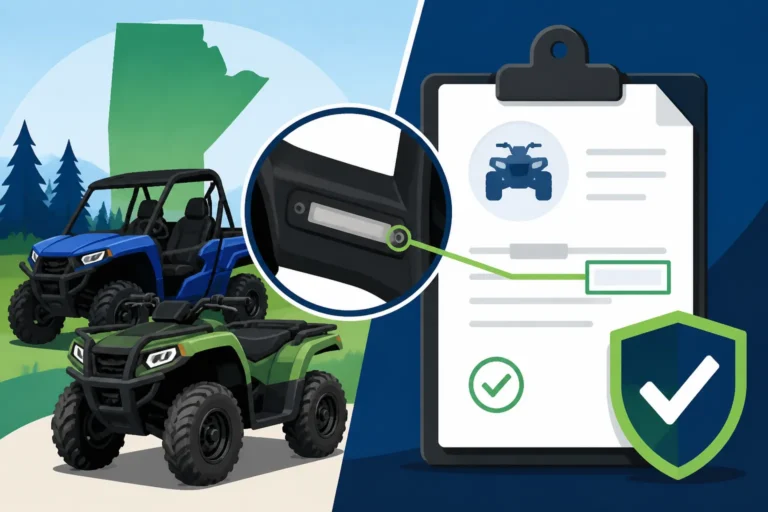
The Vehicle Identification Number (VIN) is your machine's unique fingerprint, and it’s the first thing you need to verify. Always check that the VIN on the machine matches the one on any paperwork the seller provides, like a previous registration or bill of sale. A mismatch is a huge red flag and should make you walk away. If the VIN looks altered or tampered with, that's another critical sign to back out. You can find the VIN typically stamped on the frame or chassis, often near the front wheels, on the steering column, or under the seat.
Once you have the VIN, you can perform a lien search. While Manitoba Public Insurance (MPI) doesn't typically run lien checks for ORVs during registration, it’s a smart move for you to do independently. Services exist that can run a VIN check to see if there are any outstanding loans or judgments against the machine. If a lien exists, it means a lender has a claim on the machine until the debt is paid off. If you buy a machine with a lien, that debt could become your problem. Imagine buying a quad, only to have it repossessed because the previous owner never paid their loan – it happens. This step is non-negotiable for your protection.
Inspecting the Machine's Condition Thoroughly
This is where your inner mechanic, or a trusted friend's, comes out. You need to do a comprehensive inspection. Don't just look at it; touch it, shake it, start it up, and ideally, ride it (safely, and with the owner's permission). Look for obvious signs of damage, like bent frames, cracked plastics, or unusual welds, which could indicate a major accident. Check the tires for wear, the suspension for leaks or looseness, and the brakes for responsiveness.
Pay close attention to the engine. Does it start easily? Are there any strange noises, smoke, or leaks? How does it shift? Consider its overall maintenance history. Ask the seller if they have any service records. A seller who can provide a stack of oil change receipts and maintenance logs is usually a more reliable seller. If they claim it's been meticulously maintained but can't show any proof, that's a point of concern. For example, a machine used for heavy bush work might have extensive wear and tear on the drivetrain, bearings, and suspension components that aren't immediately obvious but will lead to costly repairs down the road.
Confirming the Seller's Ownership
This is a crucial step that many buyers overlook. The seller must be the person who is legally entitled to sell the machine. Ask to see their current MPI registration certificate for the ORV. The name on the certificate should match the seller's government-issued ID. If they claim to be selling for a friend or family member, proceed with extreme caution, or insist that the registered owner be present for the transaction. Without the registered owner's signature on the transfer documents, you won't be able to register the machine in your name.
Think of it like buying a house. You wouldn't buy a house from someone who isn't on the deed, right? The same principle applies here. If the seller just has a bill of sale from a previous transaction, there needs to be a clear "chain of custody" demonstrating how the machine passed from the registered owner to them, and then to you. This might involve multiple bills of sale, and you'd need copies of all of them. The more complex the chain, the more careful you need to be.
The Paperwork: Making It Official
Once you've done your due diligence and decided to proceed, the paperwork is the absolute most critical part of the transaction. This is where you protect yourself legally and ensure you can actually register your new off-road vehicle.
The Bill of Sale: Your Proof of Purchase
A proper bill of sale is your legal proof that you purchased the machine from the seller. It doesn't have to be a fancy document, but it must include certain key pieces of information:
- Buyer's Full Name and Address: Your information.
- Seller's Full Name and Address: The seller's information, matching their ID.
- Date of Sale: The exact date the transaction takes place.
- Machine Description: Year, make, model, and crucially, the full VIN.
- Purchase Price: The agreed-upon price. This is what MPI will use to calculate your retail sales tax (RST).
- Signatures: Both your signature and the seller's signature. This confirms agreement.
You can find templates for a bill of sale online from reputable sources like LawDepot, which can help ensure you don't miss any critical details. A well-drafted bill of sale is your first line of defense if any disputes arise later. Without it, it can be your word against theirs.
Here's a quick look at essential items on a bill of sale:
| Item | Description | Importance |
|---|---|---|
| Buyer's Info | Full Name, Address, Phone | Identifies you as the new owner |
| Seller's Info | Full Name, Address, Phone | Identifies the previous owner |
| Date of Sale | Day, Month, Year of Transaction | Establishes ownership transfer timeline |
| Vehicle Details | Year, Make, Model, Colour, Engine Size | Specific machine identification |
| VIN | Full 17-digit Vehicle Identification Number | Unique identifier; crucial for registration & lien checks |
| Odometer Reading | Current mileage/hours (if applicable) | Records condition at sale; important for value and disputes |
| Purchase Price | Agreed-upon monetary value | Basis for tax calculation; financial record |
| Signatures | Both Buyer and Seller | Legal agreement of terms |
| "As-Is" Clause | States vehicle is sold without warranty | Protects seller from post-sale claims (and informs buyer) |
| Witness Signatures | Optional, but adds legal weight | Extra layer of verification |
Transfer of Ownership on the Registration Certificate
This is arguably the most important document for registering your newly acquired ORV. The seller's current Manitoba Public Insurance (MPI) registration certificate has a specific section on the back for transferring ownership. The seller must complete this section, including:
- Your Full Name and Address: As the buyer.
- Date of Sale: Matching the bill of sale.
- Seller's Signature: This is non-negotiable. Without it, MPI cannot transfer the registration.
- Odometer Reading: While not always strictly enforced for older ORVs, it's good practice to record the mileage or hours.
Make sure you get the physical registration certificate from the seller with this section properly filled out and signed. Sometimes, sellers might forget or think a simple bill of sale is enough. It's not. The signed transfer section on the MPI certificate is what tells MPI that the machine has officially changed hands. If you receive a machine without this, you'll have to track down the seller, which can be a huge hassle. Remember, [Manitoba Transfer of Ownership Rules] clearly outlines these requirements.
Retail Sales Tax (RST) Considerations
When you purchase an ORV from a private seller in Manitoba, you are responsible for paying the provincial Retail Sales Tax (RST). This tax is collected by MPI when you register the machine in your name. The tax is typically calculated based on the purchase price listed on your bill of sale. However, if the declared purchase price is significantly lower than the machine's market value (often determined by MPI using appraisal guides like the "Blue Book" for ORVs), MPI may assess the tax based on the higher market value.
This is a common point of confusion and frustration for buyers. You might think you got a great deal for a low price, but then find out you still have to pay RST on a higher "book value" at MPI. It’s important to be realistic about this. MPI's goal is to prevent tax evasion through under-declaration. Make sure you understand [Manitoba's 7 Percent RST on a Machine] and how it applies to your purchase. Don't be surprised if the tax amount at the Autopac agent is higher than you anticipated if you bought the machine for a steal.
After the Sale: Getting Your Machine Registered and Insured
Congratulations! You've successfully purchased your new-to-you ATV or UTV. Now, the final, crucial step is to get it legally registered and insured so you can hit those Manitoba trails without worry.
Registering Your ORV at an Autopac Agent
Once you have the machine and all your paperwork (especially the signed-over registration certificate and the bill of sale), you need to visit a Manitoba Public Insurance (MPI) Autopac agent. This is where you'll formally transfer the registration into your name, pay the retail sales tax, and get your ORV plate.
You will need to bring:
- Your valid driver's license or other government-issued ID.
- The signed-over registration certificate from the previous owner.
- A completed bill of sale.
- Proof of your age, especially if you're under 18. [Manitoba Parental Consent From 16 to 18] outlines specific rules for younger riders.
- Payment for the registration fee and RST.
The Autopac agent will process the transfer, calculate the RST, and issue you a new registration certificate and an ORV plate. This process typically doesn't take long if all your documents are in order. Remember, you have a limited window to register the machine after purchase, usually within seven days if you intend to move the previous owner's plate, or immediately if you're getting a new one. [Manitoba Registration Through MPI] details the overall registration process.
Understanding Manitoba's ORV Insurance
When you register your ATV or UTV with MPI, basic third-party liability insurance is included. This basic coverage protects you if you cause damage to someone else's property or injure another person while operating your ORV. However, it's crucial to understand that this basic coverage typically does not cover damage to your own machine, nor does it cover your own personal injuries in an accident. Many new owners are surprised to learn this.
For comprehensive protection, including coverage for theft, fire, collision damage to your own machine, or additional medical benefits for yourself, you'll need to purchase optional coverage. You can discuss these options with your Autopac agent. They can help you determine what additional coverage makes sense for your riding habits and the value of your machine. Considering the investment you've just made, adding optional coverage is a wise decision for peace of mind. [Manitoba Insurance Included With Registration] discusses the base coverage, and [Manitoba ATV Insurance Options] provides a deeper dive into what you can add.
Attaching Your New ORV Plate
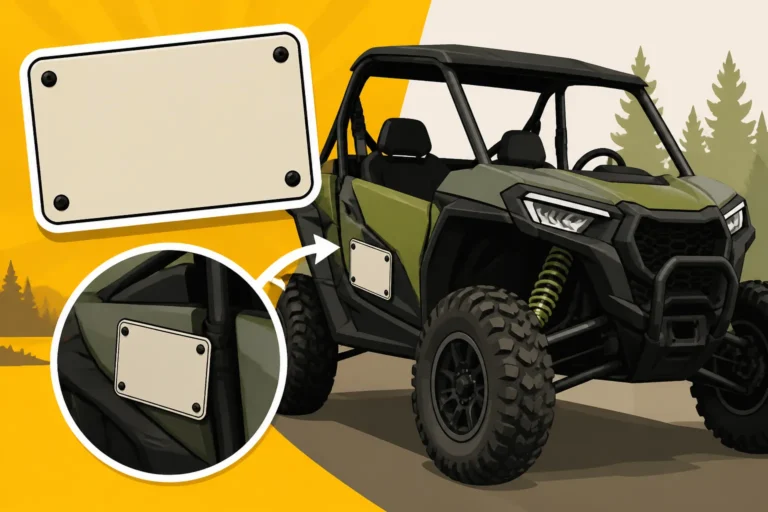
Once you've completed the registration, you'll be issued a single ORV plate. Unlike cars, ORVs in Manitoba only get one plate. The placement of this plate depends on your machine type. For ATVs and side-by-sides, the plate should generally be mounted on the rear of the machine, clearly visible. For dirt bikes or snowmobiles, the rules are slightly different, often requiring placement on the front or left side.
Make sure your plate is securely attached and visible from behind. Riding without a properly displayed plate can lead to fines. It's a small detail, but an important one for staying legal on the trails. [Manitoba Plate Mounting by Machine Type] has all the specifics on how to properly display your new plate. You're almost ready to hit the trails!
Disclaimer
This article is for general informational purposes only and does not constitute professional advice. Laws, prices and regulations vary by location and change over time. Consult a qualified professional for guidance on your specific situation.