Licensed Trappers Skip Registration in Their Trapline District
Oh, the Manitoba wilderness calls, and with it, the question of what paperwork you really need for your off-road vehicle. For many of us, the idea of trekking to an Autopac agent is just part of the routine, but for licensed trappers working deep within their territory, the rules offer a welcome, and often necessary, reprieve. This guide will clarify the specific exemption that allows licensed trappers to skip the usual ORV registration process when operating within their registered trapline district, giving you peace of mind and one less hoop to jump through as you manage your valuable lines.
Understanding Manitoba's General ORV Registration Rules
Before we dive into the specifics of the trapper exemption, it’s really important to understand the baseline. Most of us, when we buy an ATV or UTV in Manitoba, know we're heading to MPI for registration. It’s just how it is, and for good reason, though sometimes it feels like just another piece of red tape.
The Universal Need for Registration
Let's be honest, getting your machine registered can feel like a chore, but for the vast majority of riders, it’s a non-negotiable step. Whether you've just picked up a shiny new side-by-side from a dealer in Steinbach or inherited an old, trusty quad from a family member, the expectation is that it will be registered. This isn't just about collecting fees; it’s about making sure every machine operating on Manitoba's varied terrain can be identified. Imagine an incident on a trail, or a stolen machine; registration provides that crucial link back to an owner. It covers everything from recreational trail rides in the Whiteshell to utility use on your farm. Unless a specific exemption applies, like the one we'll discuss for trappers, your machine needs to be officially on the books. You can find more details on the general requirements in [Manitoba Requires Registration in Any Location].
What Registration Accomplishes for All Riders
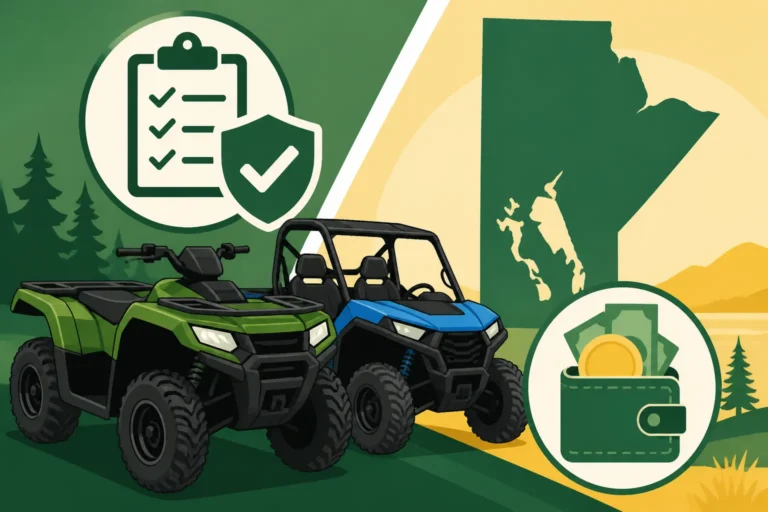
Beyond simple identification, ORV registration in Manitoba serves a few vital purposes that benefit the riding community as a whole, even if we don't always think about it when we're writing the cheque. First, it helps to track the number of machines in operation, which can be useful for planning trail development and resource allocation. Second, a portion of that registration fee, specifically the dedicated trails fee, goes directly towards maintaining and developing the trails we all love to ride. It's a way for all riders to contribute to the infrastructure that makes our passion possible. Third, it ensures a basic level of liability coverage, protecting others in case of an accident. While this basic coverage isn't exhaustive, it's a foundation that comes with every registration.
Consequences of Unregistered Operation (When Not Exempt)
Now, if you don't qualify for an exemption and choose to operate an unregistered ORV, you're really putting yourself at risk. An officer stopping you, whether it’s a conservation officer deep in the bush or an RCMP officer on a rural road, will certainly ask for proof of registration. Without it, you could face fines, and your machine could even be impounded. It’s a significant penalty for what might seem like a small oversight. Beyond the legal ramifications, operating an unregistered machine means you don't have that basic liability coverage, leaving you personally exposed in the event of an accident involving another person or property. It’s a risk that's just not worth taking for recreational riders or those using their machines outside of very specific, recognized exemptions.
The Specifics of the Licensed Trapper Exemption
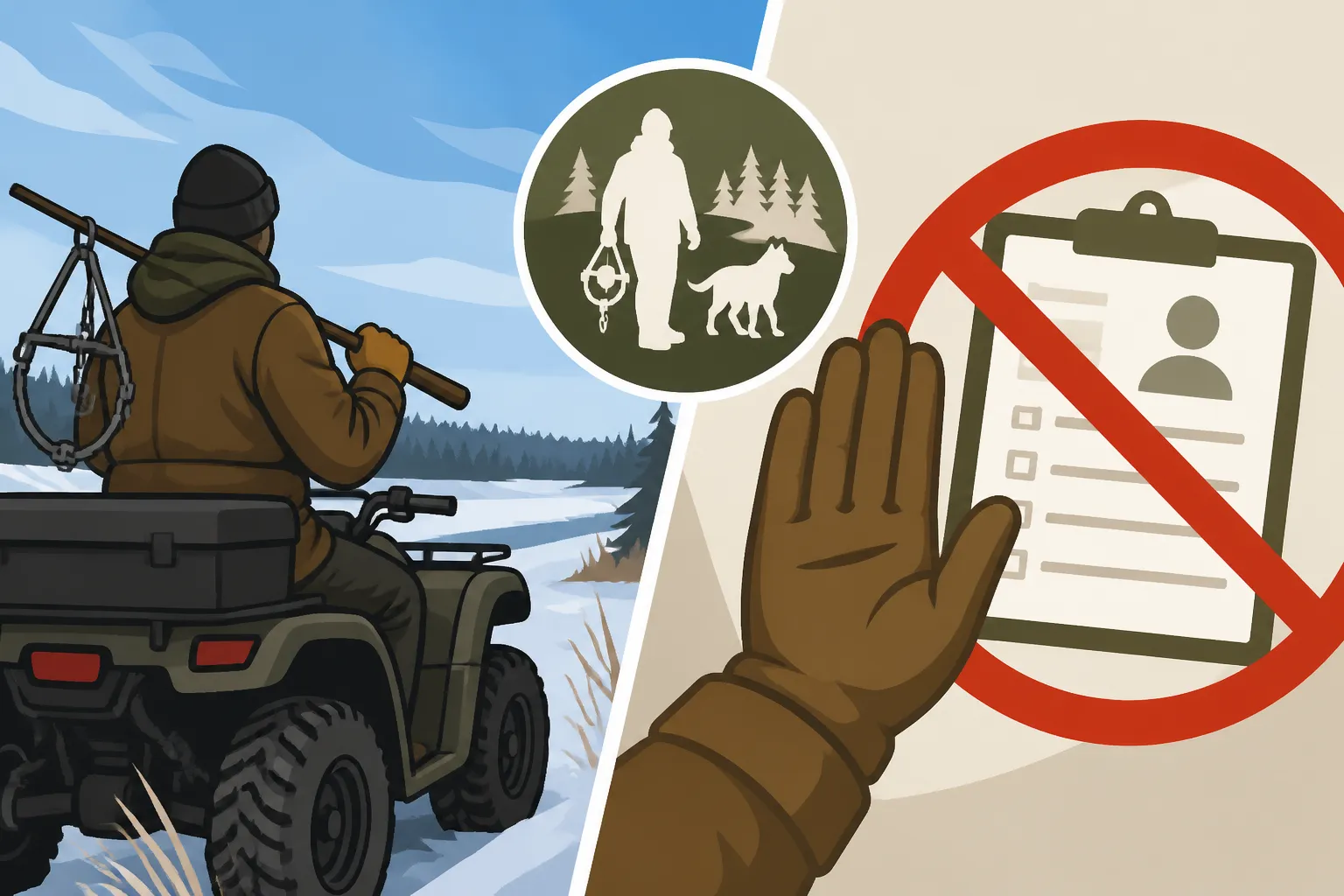
This is where things get interesting for those of you who work the land. Manitoba's ORV Act recognizes the unique needs of licensed trappers, offering a specific exemption from registration. It's a practical acknowledgment of the vital role trappers play and the environments they operate in.
Defining "Licensed Trapper" for ORV Exemption
So, what exactly constitutes a "licensed trapper" in the eyes of the law when it comes to this exemption? Simply put, you must hold a valid, current trapping license issued by the Province of Manitoba. This isn't just a casual weekend activity; it's a recognized livelihood or dedicated pursuit requiring official authorization. The exemption is specifically designed for individuals who are actively engaged in their licensed trapping activities. It's not for your cousin who "helps out sometimes" or someone who used to trap years ago. It's about current, active, and licensed operation. Your license is your proof, so always keep it handy. For broader information on who might be exempt from registration, see [Manitoba Registration Exemptions Explained].
The "Within Their Trapline District" Clause: A Geographical Limit
Here's the absolutely crucial part of this exemption: it only applies when you are operating your ORV within your registered trapline district. This isn't a blanket pass to ride your unregistered quad wherever you please. Your trapline district is a specific, geographically defined area that is officially assigned to you by Manitoba Sustainable Development. When you're using your ORV to check traps, transport gear, or move between lines within that designated district, you're covered by the exemption. The moment you step outside those boundaries – perhaps you're heading to the nearest community for supplies, or you're taking a joyride on a provincial trail – that exemption evaporates. If you're caught outside your district without registration, you're then subject to the same penalties as any other unregistered operator. It's a very specific "where and why" rule.
Essential Documents to Carry for Proof of Exemption
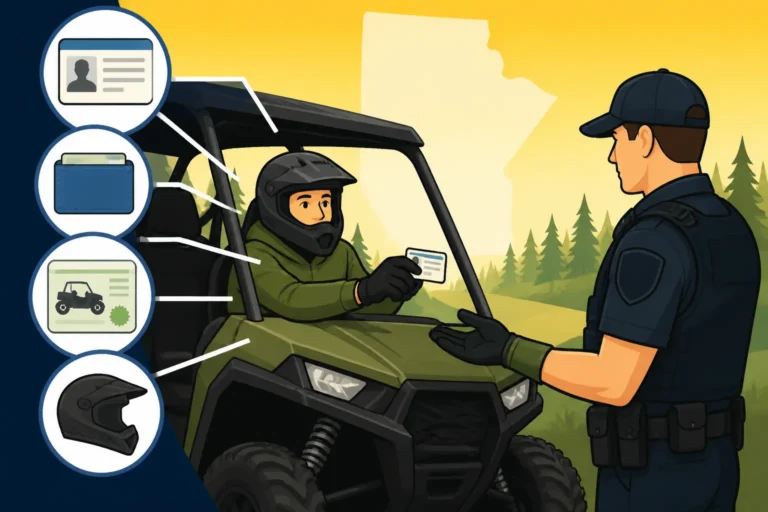
Even when you're exempt from registration, that doesn't mean you can just hop on your machine with nothing but the clothes on your back. You absolutely must carry specific documents that prove you qualify for this exemption. Think of it as your portable proof.
First and foremost, your valid Manitoba trapping license is your golden ticket. This demonstrates your official status. An officer will expect to see it. Second, you should carry proof of ownership for the ORV itself. This could be a bill of sale, a previous registration certificate in your name from before the exemption was utilized, or any other document that clearly shows you are the rightful owner. Even if you're not registering the machine, having clear, undeniable proof that it belongs to you is critical. Sometimes, especially with private sales, generating a solid bill of sale might require a bit of thought. Services like LawDepot can be incredibly useful for quickly generating professional, legally sound bills of sale, ensuring all the necessary details are captured. This protects you in disputes and confirms your ownership should it ever be questioned. Finally, it's wise to carry some form of personal identification, like your driver's license or Manitoba ID card, to confirm your identity matches the name on your trapping license and ownership documents. Always remember: if you can't prove your exemption on the spot, you might be treated as if you're operating an unregistered vehicle. This guidance also ties into [Carrying Your Registration Card on Every Ride] for those who do register.
When Trappers Still Need to Register Their ORV
It’s easy to get confused and think that being a licensed trapper means you never have to register your ORV. But that's not the case. The exemption is very specific, and there are several common scenarios where a trapper absolutely needs to go through the standard registration process, just like any other rider. It's about the purpose and location of your ride.
Riding Outside Your Designated Trapline District
This is perhaps the most common situation where a trapper's exemption ends. As we touched on earlier, the "within their trapline district" clause is not just a suggestion; it's a hard boundary. If you're loading your quad onto a trailer and heading to a friend's cabin an hour away for a weekend ride, or if you're taking a quick trip to the general store in a nearby community that falls outside your district, your machine needs to be registered.
Think about it this way: the exemption is tied to your work on your specific trapline. It's not a general "trapper discount" on registration. If you decide to join a group ride on a designated ATV trail, or simply use your machine for errands in a nearby town, you are no longer operating within the scope of the exemption. In these cases, your ORV must be fully registered with MPI, complete with a license plate. Failing to do so could result in fines and the inconvenience of dealing with law enforcement far from your remote trapline.
Using Your Machine for Recreational or Other Purposes
Even within your trapline district, the purpose of your ride matters. The exemption is specifically for activities related to your licensed trapping. This covers checking traps, setting snares, transporting furs, or hauling supplies essential for your trapping operations. However, if you decide to take a break from work and go for a joyride just for fun, or if you're using your ORV to transport friends for a casual camp outing that isn't directly related to trapping, that's generally considered recreational use.
While it might be a grey area in the deep bush where no one else is around, technically, the exemption's intent is for commercial or professional trapping activities. To be safe, if your usage deviates from strictly trapline-related tasks, especially if it involves non-trapping passengers or extended recreational excursions, it's prudent to have your machine registered. It’s better to be overly cautious than to find yourself explaining the nuances of the ORV Act to an officer who might interpret "recreational" differently.
Selling or Transferring a Trapline Machine
Let's say you've used an ORV for years on your trapline, never needing to register it due to your exemption. Now, you're upgrading, or perhaps you're selling the machine to someone who isn't a trapper, or even to another trapper whose district is different. In this scenario, the machine needs to be handled properly for transfer of ownership.
When a machine is sold, especially from an exempt trapper to a non-exempt individual, it will need to be registered by the new owner. This often involves ensuring you have a clear bill of sale for the new owner to present at MPI. You'll want to ensure all the necessary paperwork for proof of ownership is available. Even though you never registered it, you'll still need documentation to prove you owned it and can legally transfer it. This is another situation where a service like LawDepot can be invaluable for creating a legitimate bill of sale, protecting both you and the buyer. The buyer will then take that documentation to an Autopac agent for [Manitoba Transfer of Ownership Rules] and subsequent registration.
Key Operating Rules That Always Apply, Even When Exempt
It’s really important to understand that while a licensed trapper might be exempt from registration in their district, they are absolutely not exempt from the general operating rules of Manitoba's ORV Act. The rules about safety, conduct, and basic legal operation apply to everyone, regardless of their registration status. It's about responsible riding and safety for all.
Helmets, Age, and Passenger Restrictions
No matter if your machine is registered or not, safety rules are paramount. This means that [Manitoba Helmet Law and Its Exemptions] still apply. Generally, if you're operating an ORV in Manitoba, you must wear an approved helmet. There are very specific exemptions for certain situations, like when operating machines equipped with roll-over protective structures and seatbelts, or when actively involved in specific agricultural activities, but the general rule is to wear a helmet. As a trapper, you're not automatically excused from this.
Age restrictions also remain in full effect. There are rules about how old a person must be to operate an ORV, and if they are under 16, specific supervision requirements come into play, potentially involving [Manitoba Parental Consent From 16 to 18]. Similarly, passenger limits, which dictate how many people can safely and legally ride on your machine, are determined by the manufacturer's design. If your quad is designed for one person, you can’t legally carry two, even if you’re a trapper on your own land. These rules are in place for everyone's safety, not just those with license plates.
Navigating Roadways and Ditches Safely
Even on or near your trapline, you might encounter situations where you need to cross a public roadway or ride in a ditch. It’s critical to remember that [Manitoba ORV Road Rules Explained] apply universally. Generally, ORVs are not permitted on roadways themselves. If you need to cross a highway, there are strict rules to follow, such as crossing at a 90-degree angle, only when safe to do so, and often requiring a clear view for a certain distance.
Ditch riding also has its own set of regulations. You can often ride in the ditch to the right of a roadway, travelling in the same direction as vehicle traffic. However, there are limitations, such as not riding within a certain distance of an intersection or dwelling. Even on a remote trapline, if your path intersects with public access roads or rights-of-way, you need to be acutely aware of and adhere to these rules. An officer will still enforce them, regardless of your registration exemption.
Liability, Insurance, and Good Stewardship
While the basic registration for ORVs in Manitoba typically includes some third-party liability coverage through Autopac, an exempt trapper won't have this automatically. This means you need to be extra diligent about your own [Manitoba's Liability Coverage Requirement]. If you cause an accident that results in injury or property damage to another party, you could be personally liable. Many trappers opt for separate private insurance coverage to protect themselves, even if their machine isn't registered. It's a smart move for peace of mind.
Beyond legal requirements, good stewardship of the land is always expected. This means respecting private property, preventing environmental damage, and following all applicable hunting, fishing, and trapping regulations. Remember that even if you're exempt from ORV registration, you're still a land user, and operating responsibly is a shared expectation for everyone in the bush. Understanding [Manitoba Crown Land Access Rules] is also vital, as many traplines are on Crown land.
Practical Advice for Trappers and Their Machines
Beyond the legalities, there are practical considerations for trappers operating ORVs in Manitoba's often challenging terrain. Your machine is a tool for your livelihood, and ensuring it's fit for purpose and that you're prepared for anything is just good common sense.
Equipping Your Machine for Trapline Use
Your ORV isn't just a recreational toy; it's a workhorse. Outfitting it properly for the trapline is crucial for efficiency, safety, and durability. Consider heavy-duty tires that can handle muskeg, rock, and rough terrain. Skid plates are a must to protect the underside from stumps and rocks common in the Manitoba bush. A winch can be an absolute lifesaver when you get stuck far from help. Cargo racks, gun boots, and durable storage boxes are essential for hauling traps, supplies, and harvested furs.
Reliability is paramount. Regular maintenance is non-negotiable. Breakdowns far from civilization can turn a productive day into a dangerous situation. Carry spare parts like belts, spark plugs, and a basic tool kit. Fuel economy is also a consideration; planning your routes and carrying extra fuel when necessary ensures you don't run out miles from your truck. Think about your specific trapline conditions – do you cross water frequently? A snorkel kit might be a wise investment.
Safety Best Practices on the Trapline
Working alone in remote areas carries inherent risks, and operating an ORV adds another layer to that. Always prioritize personal safety. Let someone know your route and your estimated return time, and check in regularly if possible. Carry a satellite communication device or a reliable two-way radio if cell service is non-existent (which it often is in the deep bush). A comprehensive first-aid kit, emergency shelter, fire-starting materials, and extra food and water are not luxuries, but necessities.
Be mindful of wildlife encounters. While most animals will avoid you, knowing how to react to bears or moose is critical. Always operate your ORV within your limits and the machine's capabilities. Don't take unnecessary risks, especially when hauling heavy loads or navigating treacherous terrain. Remember that operating under the influence of alcohol or cannabis is just as illegal and dangerous on the trapline as it is on public roads. You could face serious penalties, including those outlined in [Manitoba Impaired Riding Penalties].
Navigating Multiple-Use Areas
While your trapline district might feel like your own private domain, it often overlaps with areas used by others – hunters, hikers, campers, or even other recreational ORV riders. Respect for other land users is key to avoiding conflicts. Be courteous, slow down when passing others, and minimize noise pollution where appropriate.
Understand that some areas within or adjacent to your trapline might have specific restrictions, such as designated wildlife management areas, provincial parks, or sensitive ecological zones. Even with your trapper exemption, these specific land-use rules still apply. Ignorance of the rules is no excuse. Always be aware of your surroundings and adhere to any posted signage or local regulations. Good relations with your neighbours, whether human or wildlife, make for a more peaceful and productive trapping season.
Here’s a quick overview of the differences:
| Feature | Most Manitoba ORV Riders | Licensed Trapper (Within District) |
|---|---|---|
| Registration Required? | Yes, through MPI | No, if operating within registered trapline district |
| Plate Required? | Yes, one plate displayed | No |
| Trails Fee ($25)? | Yes, included with registration | No, as no registration is needed |
| Liability Coverage? | Basic included with registration | Not included; private insurance recommended |
| Proof on Hand? | Registration card, ID | Valid Trapping License, Proof of Ownership, ID |
| Helmet Law? | Yes, generally (with specific exemptions) | Yes, generally (with specific exemptions) |
| Age & Passenger Rules? | Yes | Yes |
| Road & Ditch Rules? | Yes | Yes |
| Used for Recreation? | Yes (with registration) | Requires registration |
| Used for Trapping? | Possible (with registration) | Exempt (within district) |
Disclaimer
This article is for general informational purposes only and does not constitute professional advice. Laws, prices and regulations vary by location and change over time. Consult a qualified professional for guidance on your specific situation.