Manitoba Registration Cards Carried at All Times
We've all been there: you're out enjoying a fantastic ride on your ATV or UTV, soaking in the Manitoba scenery, when suddenly you remember that little nagging thought about your paperwork. It's a common worry for many riders – what if you're stopped and don't have your registration card with you? This guide is here to clarify exactly why carrying your Manitoba off-road vehicle registration card at all times isn't just a suggestion, but a crucial part of being a responsible rider, and what you need to know to stay compliant and stress-free on the trails and beyond.
The Mandate to Carry Your Registration Card
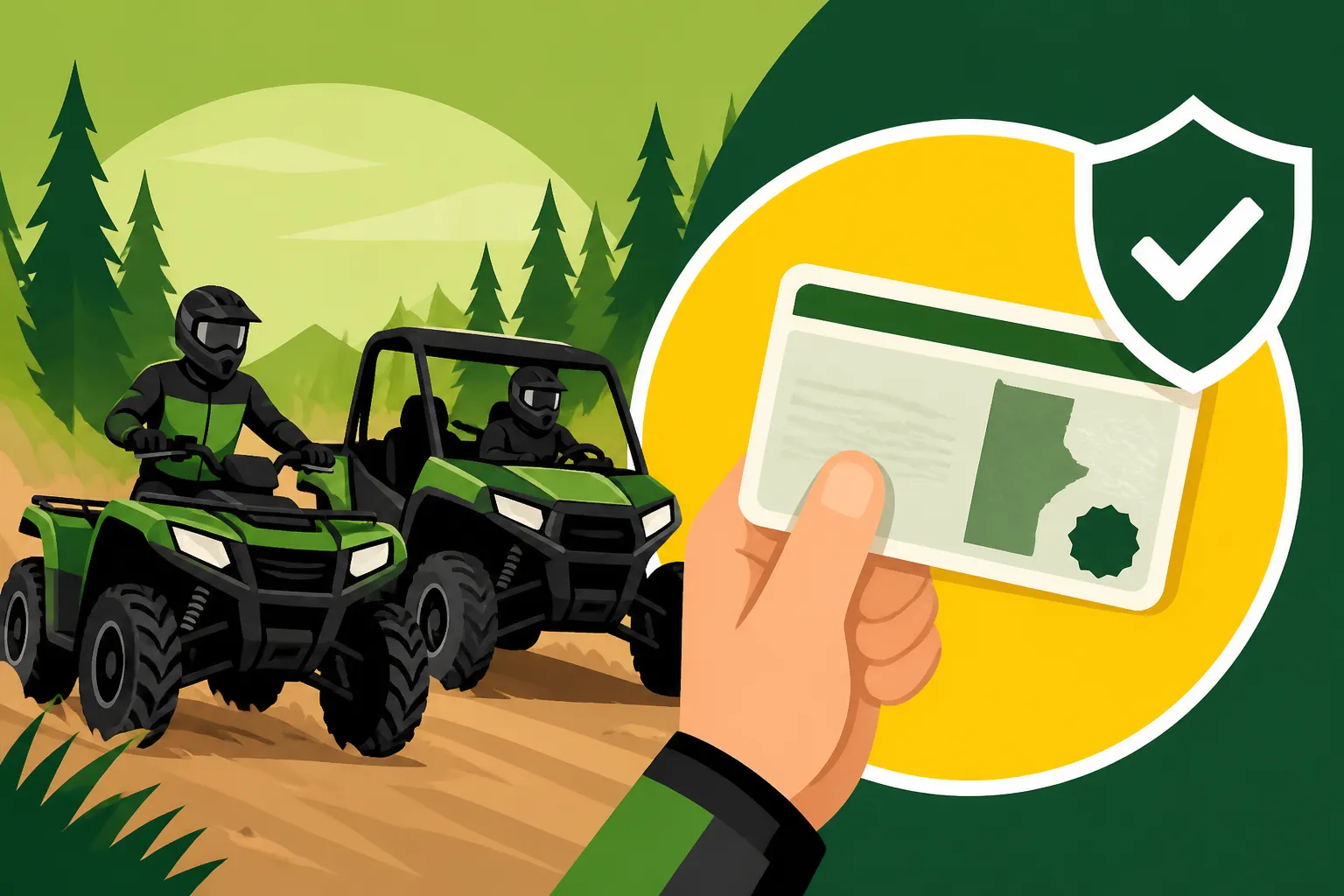
It might feel like just another piece of paper to keep track of, but your ORV registration card is a really important document in Manitoba. It's more than just a formality; it's a legal requirement designed to ensure accountability and safety for everyone enjoying our province's beautiful outdoor spaces.
What the Law Actually Says
The Off-Road Vehicles Act in Manitoba is pretty clear on this. When you're operating an off-road vehicle, you are legally obligated to have your registration card with you. This isn't just about showing goodwill; it's about proving that your machine is properly registered and that you, as the operator, are authorized to be using it. I know, it's a bit of a hassle to keep track of yet another document, especially when you're geared up for an adventure, but the law really does require it. Think of it like carrying your driver's license when you're driving your car – it's just expected. This rule helps ensure that all machines on our trails and public lands are identifiable and that their owners are accountable.
The intention behind this rule is to maintain order and traceability. If there's an incident, or if an enforcement officer needs to verify your machine's status, that card is the primary piece of evidence. Without it, you could find yourself in a tricky situation, even if everything else about your registration is perfectly in order. It’s all about immediate verification, right there on the spot.
When and Where This Rule Applies
Here’s where it gets really important: the requirement to carry your registration card isn't limited to just designated trails or specific riding areas. It applies whenever and wherever you are operating your ORV in Manitoba. This means whether you're cruising on a maintained club trail, navigating a logging road, or even just crossing a ditch to get to a field, that card needs to be with you. [Manitoba Requires Registration in Any Location]
This broad application can sometimes catch riders off guard. You might think, "Oh, I'm just on private land, so it doesn't matter," but if you're operating it anywhere off your own property and the machine is subject to registration, the card needs to be accessible. Even if you're just taking a quick spin down the road shoulder for a permitted agricultural purpose, the expectation is that you have your documents. The law is quite comprehensive, so it's best to always assume you need it, regardless of your immediate riding environment. This rule is particularly relevant if you're riding on Crown land or public access areas, where enforcement officers are more likely to conduct checks. Remember, [Carrying Your Registration Card on Every Ride] is the safest bet to avoid any issues.
Why Carrying Your Card is So Important (Beyond Just the Law)
Beyond simply fulfilling a legal obligation, having your registration card handy offers several practical benefits that can save you a lot of headache and potential trouble out on the trails. It's really about being prepared for any eventuality that might come up during your ride.
Proving Ownership and Compliance
Imagine this: you're stopped by a conservation officer or local law enforcement. Their first question, after a friendly greeting, will often be about your registration and proof of ownership. Your physical registration card is the quickest and most definitive way to show that your machine is legally registered with Manitoba Public Insurance (MPI) and that you are the rightful owner. It provides instant verification, confirming that your ATV or UTV isn't stolen and that it meets the basic requirements for operation in the province.
Without that card, proving compliance can become a drawn-out process. You might have to provide other forms of identification, and the officer may need to call it in to verify your status, which can significantly delay your ride. It’s not that they don’t trust you, it’s just that they need to do their job, and a physical card makes their job, and your life, much easier. It's also a clear signal that you're a responsible rider who understands and adheres to the regulations. If you've just bought a machine, ensure you understand the [Manitoba Transfer of Ownership Rules] to get that card in your name as quickly as possible.
The Role of Your Registration in Accidents or Incidents
Nobody wants to think about an accident, but they can happen. In the unfortunate event of a mishap, whether it's a minor fender-bender with another ORV or something more serious, your registration card becomes an indispensable document. It contains vital information about your machine, including its Vehicle Identification Number (VIN) and the details of its registration with MPI. This information is critical for filing an accident report, exchanging details with other parties involved, and initiating an insurance claim.
Remember that basic third-party liability insurance is included with your ORV registration in Manitoba. [Manitoba Insurance Included With Registration] This coverage is crucial if you accidentally cause damage to someone else's property or injure another person. Your registration card acts as proof of this insurance coverage. Without it, you could face difficulties proving you have the required liability coverage, which could complicate matters significantly during an accident investigation. Having all your paperwork in order, including your card, ensures a smoother process during what can already be a very stressful situation.
Best Practices for Carrying and Protecting Your Card
Okay, so we know we have to carry it. The next logical step is figuring out the best way to carry it so it stays safe, dry, and easily accessible. There’s nothing worse than pulling out a soggy, illegible card when you need it most!
Physical vs. Digital Copies
The legal requirement in Manitoba is generally for the physical registration card. While many of us live in a digital world and have photos of everything on our phones, relying solely on a digital copy can sometimes be problematic. An officer may request to see the physical card, and a phone battery dying or a poor signal in the backcountry could leave you unable to produce it. Always prioritize carrying the original physical card.
That said, having a digital backup on your phone or even a laminated photocopy stored separately can be a smart secondary measure in case the original is lost or damaged. Just don't rely on it as your primary compliance method. When you receive your card from MPI, make sure to keep it somewhere safe at home, perhaps with other important documents. If you ever need to create formal documents for your ORV, like a bill of sale if you're selling it, services like LawDepot can help you generate legally sound forms quickly and easily, ensuring you have all your paperwork organized.
Secure Storage on Your Machine or Person
This is where practicality meets necessity. Your registration card needs to be protected from the elements – mud, water, dust, and even the vibrations of riding can take a toll. A crumpled, wet card isn't going to do you much good.
Here are some excellent ways to keep it safe:
- Waterproof Pouch: This is probably the most recommended method. A small, durable, waterproof pouch (like those designed for boating or camping) can fit snugly into a jacket pocket, a fanny pack, or a secure compartment on your machine. Look for one with a roll-top seal or a heavy-duty zip-lock style closure.
- Saddlebag or Storage Compartment: Many ATVs and UTVs come with built-in storage. Utilize a small, sealable container within these compartments. Just make sure it’s securely fastened so it doesn’t bounce out on a bumpy trail.
- Helmet Bag/Container: Some riders keep a small, hard-shell case in their helmet bag, which is usually with them when they dismount.
- Riding Jacket/Pants: Choose a pocket that is easily accessible but also secure. An internal zippered pocket is ideal. Avoid outer pockets where it could easily fall out unnoticed.
The key is to make it easily retrievable for an officer, but also completely protected from the rigors of your ride. I've heard too many stories of riders pulling out a registration card that's turned into papier-mâché after a muddy ride. Don't let that be you! [Keeping Your Registration Certificate Dry on the Trail] is absolutely essential.
What Happens If You Don't Have Your Registration Card
It’s easy to forget things, especially when you’re excited for a day of riding. But forgetting your registration card can lead to some inconvenient, and sometimes costly, situations. It’s always better to be prepared.
Potential Consequences and Penalties
If you're stopped by an enforcement officer and you don't have your physical registration card, even if your machine is legitimately registered, you could face consequences. At best, you might receive a warning, with the officer asking you to produce the document at an MPI office or police station within a certain timeframe. However, depending on the circumstances, the officer's discretion, and local regulations, you could also be issued a ticket.
The penalties can vary, but generally, not producing required documents can result in a fine. [Manitoba Ticket Costs for Riders] can add up, and what started as a fun day out could turn into an unexpected expense. Beyond the financial aspect, there's the inconvenience and stress of dealing with the situation. You might be delayed on your ride, or even instructed to cease operation until you can prove compliance. It’s just not worth the gamble when a little preparation can prevent all of it. Remember, officers are there to ensure everyone's safety and compliance, and providing your documents promptly helps them do their job efficiently.
Scenarios Where It Might Be Forgiven (or Not)
This is a common question, and honestly, it’s best not to count on leniency. While an officer might exercise discretion in certain situations, such as if you genuinely just left it in another jacket and can verbally provide all the correct details, the law is pretty clear. The burden of proof is on you, the operator, to present the required documents.
There aren't really any official "forgiveness" scenarios built into the regulations for not carrying your card. It's not like you get a pass because you were "just around the corner" or "only on a friend's property." The requirement applies broadly. While you might encounter an understanding officer who gives you a warning, it's far from guaranteed. Don't put yourself in that position. Always double-check your gear before you head out, just like you'd check your fuel or tire pressure. Making sure you have your card can save you a lot of hassle and potential fines.
What to Do If Your Card is Lost, Stolen, or Damaged
Life happens, and sometimes, despite our best efforts, important documents go missing or get ruined. If your Manitoba ORV registration card is lost, stolen, or damaged, it’s important to take action right away to ensure you remain compliant.
Steps to Obtain a Replacement Card
If you find yourself without a valid registration card, the good news is that replacing it is a straightforward process through Manitoba Public Insurance (MPI). You'll need to visit an Autopac agent. [Manitoba Autopac Agents and ORV Registration] are your go-to places for anything related to your ORV registration and insurance.
Here’s a general outline of what you’ll likely need to do:
- Contact an Autopac Agent: You can find a list of agents on the MPI website or by calling their general inquiries line.
- Provide Identification: You'll need to confirm your identity as the registered owner of the off-road vehicle. This typically involves presenting a valid driver's license or other government-issued photo ID.
- Provide Vehicle Information: Be prepared to provide details about your ORV, such as the VIN, make, model, and year. Having a copy of your previous registration or even a bill of sale can be helpful, though often the agent can look up your record in the system.
- Pay Any Applicable Fees: There is usually a nominal fee for issuing a replacement registration card. The agent will inform you of the exact cost.
- Receive Your Replacement: In many cases, a replacement card can be printed for you on the spot.
It's a pretty painless process, but it does require a trip to an Autopac agent. Make sure to get it done before your next ride to avoid any potential issues.
Interim Solutions for Continued Riding
While you're waiting for a replacement card (though often they are issued immediately), or if you just realized you've forgotten it at home, what are your options for riding? Strictly speaking, the law requires you to carry the physical card. There isn't an official "temporary" document or grace period that allows you to ride without it once it's lost or damaged.
However, if you've reported it lost or stolen and are actively in the process of getting a replacement, you might be able to show proof of that process to an understanding officer. This is not a guarantee and relies entirely on their discretion. Some people will print out a confirmation of a replacement request or even carry a previous year's card along with proof that the current year's registration has been paid. Again, these are not legal substitutes for the current, valid card. Your best bet is always to obtain the official replacement as quickly as possible. To ensure all your official documents are in order for any legal or ownership needs, even beyond your registration card, services like LawDepot can be invaluable for creating clear, legally sound contracts or agreements, helping you stay organized.
Summary of Registration Card Best Practices
To help keep everything straight, here's a quick table summarizing the do's and don'ts of carrying your Manitoba ORV registration card:
| Action | Best Practice | What to Avoid | Potential Consequence of Failure |
|---|---|---|---|
| Carrying the Card | Always carry the original physical registration card. | Relying solely on a digital photo on your phone. | Warning, ticket, delay, or being told to cease riding. |
| Protecting the Card | Store in a waterproof, secure pouch or container. | Sticking it loosely in a pocket; exposing it to elements. | Damaged/illegible card, making it invalid. |
| Knowing When to Carry | Carry it on every ride, on any terrain. | Assuming it's not needed on private land or specific areas. | Non-compliance fine, officer questioning. |
| If Lost/Damaged | Visit an Autopac agent for immediate replacement. | Delaying replacement; attempting to ride without a valid card. | Prolonged non-compliance, potential fines. |
| Proving Ownership/Insurance | Present the card readily when requested by an officer. | Fumbling for it, being unable to locate it quickly. | Doubts about ownership, questions about insurance. |
Disclaimer
This article is for general informational purposes only and does not constitute professional advice. Laws, prices and regulations vary by location and change over time. Consult a qualified professional for guidance on your specific situation.