Wildfire Season Starts the First of April
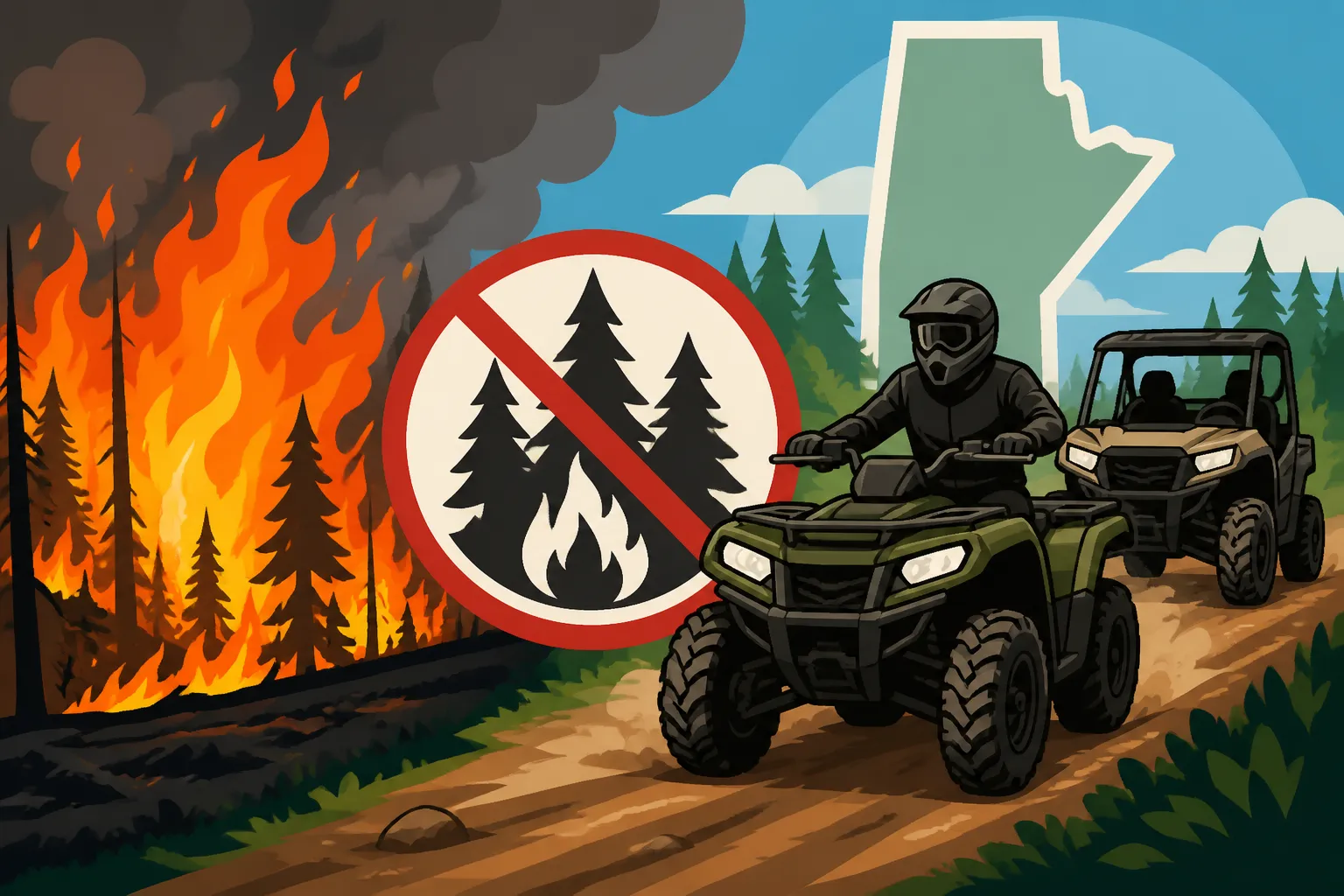
Manitoba’s wildfire season begins on April 1, which can affect where and how you ride an ATV or UTV. The date is not an automatic provincewide riding ban, but it is a cue to check for local fire restrictions, trail closures and equipment requirements before you head out. Here’s how to plan a ride without mistaking a permit for permission to travel anywhere.
What April 1 means for ATV and UTV riders
April 1 marks the start of Manitoba’s designated wildfire season. The season is commonly described as running through November 15, but dates and restrictions can change, so check current official notices before a ride. The start date signals the period when wildfire conditions and fire-related rules deserve particular attention. It does not, by itself, mean every trail or riding area closes.
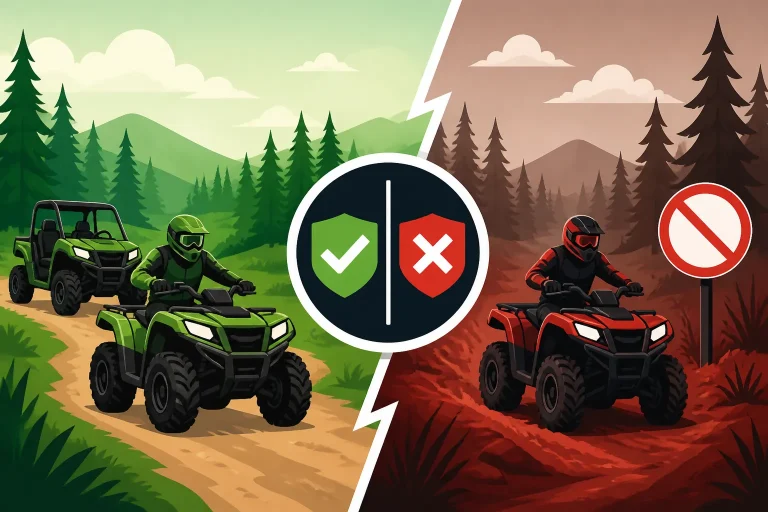
Restrictions are applied according to conditions and location. An area may have limits on access or activities while another area remains open. A restriction can also change after weather, fire behaviour or other local conditions change. Don’t assume a trail you rode recently is still open, or that a route is available simply because it appears on a map.
A useful distinction is that a permit, registration or trail arrangement deals with one part of your ride. It does not cancel a fire restriction or area closure. A provincial park vehicle permit, for example, should not be treated as approval to travel on a route that is closed. Likewise, club access or permission from a landholder does not overrule an official closure.
The same caution applies if you’re visiting from outside Manitoba. Your home registration may be relevant to whether your machine can be operated in the province, but it does not exempt you from Manitoba restrictions at your destination. Visitors need to follow local operating rules as well as applicable closures. See Manitoba Visitors and Operating Rules and Manitoba Rules for an Out-of-Province Machine if you’re bringing a registered machine across the provincial boundary.
| Before the ride | What to confirm | Why it matters |
|---|---|---|
| Your destination | Current fire restrictions and area closures | Conditions and rules can vary by location |
| Your route | Trail status, land access and local notices | A mapped route may be closed or unavailable |
| Your machine | Required equipment and safe operating condition | Some equipment obligations apply independently of closures |
| Your paperwork | Registration and any applicable park or event permit | Paperwork does not override a restriction |
| Your return plan | Alternate route or a decision to postpone | A closure may affect access after you arrive |
For a broader overview of the seasonal rules that can affect riders, see Manitoba Wildfire Season Rules for Riders. If a notice is unclear, don’t guess based on what a neighbouring municipality or riding area is doing. Restrictions can be specific to the area named in the notice.
Check restrictions and closures before you unload
Make checking current notices part of the trip-planning routine, not something to do only when a fire is visible. A closure or restriction may be in place because of risk, response activity or other conditions, even when smoke is not obvious from the trailhead. Conversely, the arrival of wildfire season does not automatically make every area off limits.
Before leaving, check Manitoba’s official fire-restrictions information and look for notices that apply to your destination and the route you intend to use. Confirm that you have the right area: a restriction may apply to a particular region, park, forest or other defined location rather than to all of Manitoba. If you’re unsure whether a trail falls inside a described area, contact the relevant office or land manager rather than relying on a rough map estimate.
Then check the trail or site itself. A fire notice and a trail status update answer different questions. The first may describe fire-related rules or a travel closure; the second may show whether a particular route is open, damaged or otherwise unavailable. Park and club updates can help with route conditions, but the official restriction still takes priority. Manitoba Park Trail Closures explains why checking a park’s route status is a separate step from confirming that you may enter the area.
Use this sequence before you travel:
- Choose the exact trailhead, riding area and route, rather than checking only the general region.
- Look up current fire restrictions and any area closure orders that cover those places.
- Check the park, club or land manager’s updates for trail-specific closures or conditions.
- Confirm access rights, including any needed landholder permission or permit.
- Recheck notices before you unload, especially if weather or fire conditions have changed.
- If the rules are unclear, ask the responsible office or choose another destination.
An area closure is not the same thing as an ordinary trail closure. A particular trail may be unavailable while other routes in the wider area remain open. A closure order may restrict access to a larger area, including routes that appear usable. Read the notice for its boundaries, activities covered and dates or conditions. Do not use an unofficial track as a workaround around a closed area.
Keep an eye on changes during a multi-day trip, too. A route that was open when you arrived may become restricted later. Make sure someone in the group knows how to receive current notices, and agree in advance that the group will turn around or reroute if a closure affects the plan. Manitoba Area Closure Orders and Manitoba Fire Ban Lookups are useful topics to review when you need to understand the difference between an area closure and a fire-related restriction.
Check your machine, permit and access separately
Fire-season preparation is not just about looking at a map. Riders should also consider whether their machine meets applicable equipment requirements and whether their planned access is lawful.
Manitoba has spark-arrester requirements for off-road machines. Do not assume this requirement begins only on April 1; equipment rules can apply independently of the seasonal date. Check the requirements for your machine and make sure its exhaust equipment is present, suitable and in good condition. A damaged or modified exhaust system may not meet the standard, even if the machine sounds normal. For more detail, see Manitoba Spark Arrester Requirements.
Before a ride, inspect the machine for problems that could create avoidable risk. Check for fuel leaks, loose or damaged wiring, overheated components and debris around hot parts. Keep the machine maintained according to its manufacturer’s instructions. Avoid parking over dry grass or other readily ignited material, and follow any local instructions about where machines may travel or be parked. These are sensible precautions, not a substitute for the specific rules in a restriction notice.
Next, sort out access. Registration identifies the machine for road or off-road requirements where applicable, but it does not automatically grant access to every trail, parcel of Crown land, park or private property. Confirm that the route is open and that you have the required permission or permit. Crown land access can have its own limits, and a Crown lease may involve the rights of the leaseholder. See [Manitoba Crown Land Access Rules] before planning a route that crosses Crown land.
| Item | What it does | What it does not do |
|---|---|---|
| Machine registration | Addresses registration obligations for the machine | Provide permission to enter a closed area |
| Park vehicle permit | Covers applicable park vehicle requirements | Guarantee every route in the park is open |
| Club trail access | Helps riders understand access to that club’s routes | Override an official restriction or land-access limit |
| Landholder permission | Allows access where that permission is required | Cancel a closure imposed by an authority |
| Fire-restriction check | Helps identify current fire-related rules | Replace trail-status or access checks |
This separation matters most when you’re using several kinds of land in one ride. A route may begin on a club trail, cross Crown land and approach a park boundary. Permissions and restrictions can differ along the way. Confirm each part of the route rather than assuming that permission at the trailhead covers the entire loop.
If you’re organizing a group, share the relevant restrictions and route details before departure. Agree on a turnaround point and a backup destination. Large groups may have separate event or park-permit requirements, but those requirements are distinct from wildfire restrictions. A group permit is not a reason to enter an area that is closed. If permit questions are part of your plan, Manitoba Permit Questions Riders Ask can help you identify what to verify.
A practical plan for a wildfire-season ride
A safe plan is flexible. Choose a primary destination and an alternate that is not affected by the same restriction. Check the notices for both before you leave; an alternative is only useful if it is open and you have permission to ride there. Build in enough time to turn around rather than trying to squeeze a ride into a closing window or pushing through a route you’re unsure about.
Use a simple go-or-no-go check:
- Go when the route is open, access is allowed, your machine meets applicable requirements and you can follow all current restrictions.
- Reroute when one trail or site is closed but another confirmed-open route is available and lawful.
- Postpone when a closure covers your destination, a restriction makes your intended activity unlawful, or you can’t establish whether access is allowed.
Do not treat the absence of a sign at the trailhead as proof that no restrictions apply. Notices may be posted online, at another access point or through the relevant land manager. Likewise, a map downloaded before the season may show a route but not reflect a current closure. Verify the latest information as close to departure as practical.
If you encounter a closure sign or an official direction while riding, stop and follow it. Don’t ride around barriers, enter from a different access point to avoid a restriction, or assume that a narrow side route is excluded. If the boundary is unclear, turn back and contact the responsible authority or land manager for clarification.
After your ride, report trail damage or access issues to the organization or manager responsible for the route. Avoid creating new tracks around muddy or damaged sections; doing so can widen impacts and may take you onto land where access is not permitted. In dry or fire-restricted conditions, stick to confirmed routes and follow any instructions about vehicle use, parking or other activities.
The practical takeaway is straightforward: April 1 is a reminder to check, not a blanket signal that riding has stopped. Verify the current restriction for your destination, confirm trail access and equipment requirements, and keep a backup plan. A valid registration or permit may be necessary for part of a trip, but it never replaces checking whether the route is open today.
Disclaimer
This article is for general informational purposes only and does not constitute professional advice. Laws, prices and regulations vary by location and change over time. Consult a qualified professional for guidance on your specific situation.