Manitoba Spark Arrester Checks
A spark arrester is easy to overlook when you are getting an ATV or UTV ready for a Manitoba ride, but an exhaust system that can throw sparks may create a fire risk and put you out of compliance. Here’s how to check whether your machine has one, what to inspect before riding, and what visiting riders should confirm.
What a spark arrester does and why it matters
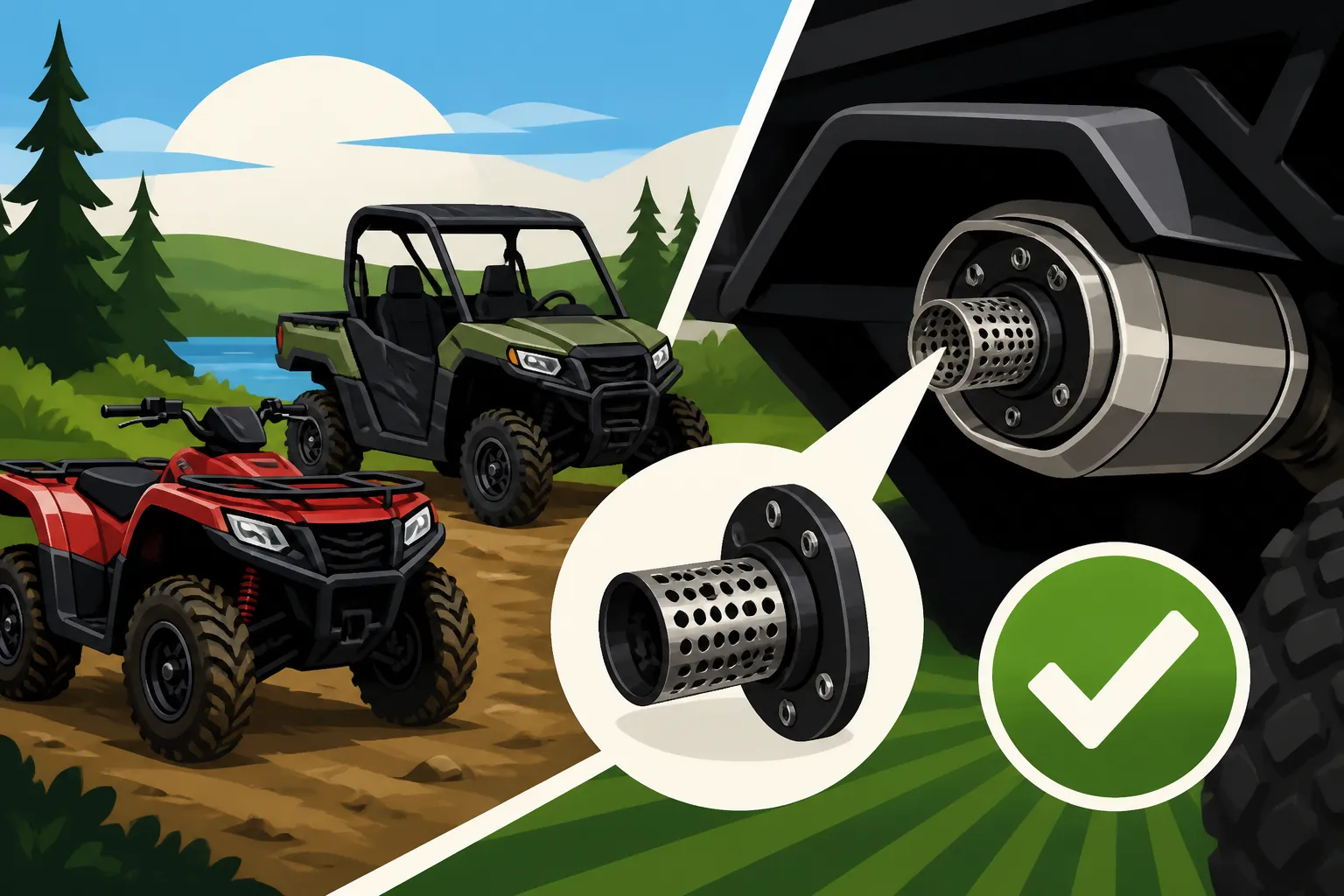
A spark arrester is a device in the exhaust system that helps stop hot particles from escaping and igniting dry grass, leaves or other material. It may be built into the muffler or fitted as a separate part. The muffler reduces exhaust noise; the arrester addresses sparks. One component can do both jobs, but a muffler alone does not necessarily mean the machine has an effective arrester.
Manitoba’s off-road vehicle rules include an equipment requirement aimed at preventing machines from throwing sparks. Treat it as a year-round requirement, not something that only matters during a fire ban or the driest part of summer. Manitoba Spark Arrester Requirements offers a useful overview of the rule, while Equipment That Must Not Throw Sparks explains the broader fire-prevention concern.
This is separate from temporary wildfire restrictions. A machine with a working spark arrester is not automatically permitted into an area that has been closed to travel, and an open area does not excuse an unsafe or non-compliant exhaust system. Before a trip, check both the machine and the route: Manitoba Wildfire Season Rules for Riders and Manitoba Fire Season Riding Restrictions cover restrictions that may apply independently of equipment requirements.
Spark arresters matter even when the trail seems damp or the ride is short. A spark can land in dry material well away from the machine, and fire conditions can change between a trailhead and the far end of a route. A maintained arrester is a basic prevention measure, not a substitute for paying attention to local fire notices.
How to check an ATV or UTV spark arrester
Start with the owner’s manual and the exhaust-system information for your exact make, model and year. Look for language such as “spark arrester,” “spark arrestor,” or an identified exhaust component that performs that function. Do not assume that every factory muffler contains one, or that a replacement muffler is equivalent to the original system.
If the arrester is a removable screen or insert, the manual may show where it sits and how to inspect it. Some designs are not meant to be removed or serviced by the owner. If the component is not obvious, ask a dealer or qualified repair shop to identify it rather than taking the exhaust apart based on a guess.
Use this practical check before riding:
- Identify the system. Confirm from the manual, parts information or a knowledgeable service provider that the exhaust includes a spark arrester appropriate for the machine.
- Look for damage or changes. Check for missing parts, loose joints, holes, cracks, heavy corrosion or signs that someone has modified or removed an exhaust component.
- Check the outlet and serviceable parts. If the manual describes a screen or clean-out procedure, follow those instructions. A blocked or damaged part may not work as intended.
- Reassemble it correctly. Refit covers, fasteners and exhaust parts as specified. Do not ride with a loose insert or an improvised repair.
- Check after repairs. If the muffler or exhaust has been replaced, confirm the new system includes the required spark-control function before taking the machine out.
| Check | What to look for | What to do if it is uncertain |
|---|---|---|
| Owner’s manual | Whether the exhaust includes a spark arrester and whether it is serviceable | Ask a dealer or repair shop to identify the correct component |
| Exhaust parts | Missing screen, insert, fastener or other specified part | Do not ride until the system is repaired |
| Exhaust condition | Holes, cracks, loose joints, corrosion or unauthorized changes | Have the system inspected and repaired |
| Replacement parts | Compatibility with the exact machine and exhaust | Verify fit and function before installation |
| Fire restrictions | Current closures or restrictions for the planned area | Check the relevant official notices before travelling |
A visual check is useful, but it cannot prove that an unknown exhaust part meets the applicable requirement. A screen that looks intact may still be the wrong component, and a branded aftermarket muffler is not automatically compliant just because it fits. Keep the manual or parts details available when you are sorting out an unfamiliar setup; do not rely on appearance alone.
If you are considering a replacement, compare the part number and fitment details with the manufacturer’s information. Listings on Amazon or other marketplaces can help you locate parts, but confirm that the specific item is made for your machine and includes the required arrester function. A generic screen or a part advertised only as a muffler is not a safe substitute for a verified component.
Common problems and when to get help
The most important warning sign is a missing or altered exhaust component. Previous owners may have removed an insert, installed a different muffler, or changed the exhaust to alter sound or performance. If you bought a used ATV or UTV, check the exhaust instead of assuming it is still in factory condition. For other checks that matter when buying, see What Manitoba Buyers Inspect First.
Carbon buildup and debris can also affect a serviceable arrester. Follow the manufacturer’s cleaning instructions and service interval; avoid scraping, drilling or enlarging a screen to improve exhaust flow. Those changes can defeat the part’s purpose and may create additional mechanical or safety problems. If the manual does not explain a cleaning method, ask a qualified shop rather than improvising.
Heat damage, rust-through, a loose mounting point or a poor-quality repair are reasons to stop and get the exhaust inspected. A patch that closes a visible hole may not restore the system’s correct operation. Exhaust components become extremely hot, so inspect only when the machine is shut off and fully cool. Keep hands, clothing and cleaning materials away from hot parts.
Be especially cautious with modifications. A performance exhaust may change the original setup, and a removed or modified insert may leave the machine unable to control sparks as designed. If a previous owner made changes, ask a service provider to verify the complete system—not just the muffler’s name or appearance—before riding.
A spark arrester is not the only equipment concern in fire-prone conditions. Keep the machine maintained, avoid riding through highly flammable vegetation where access is prohibited, and follow active closure orders. Manitoba Area Closure Orders explains why access can be restricted even when a route appears passable. If you are travelling in the backcountry, check the route and carry a way to receive updates; a closure can change your plan after you have unloaded.
Visiting riders and checks on the trail
If you bring an ATV or UTV into Manitoba from another province or state, do not assume that a different home requirement settles the Manitoba equipment question. Visiting riders need to follow Manitoba’s operating rules while riding here, alongside the registration and insurance conditions that apply to their machine. See Manitoba Rules for an Out-of-Province Machine and Manitoba Visitors and Operating Rules for the visitor-specific basics.
Before hauling across the border, inspect the exhaust at home. That gives you time to find the correct part or book a repair instead of discovering a problem at a trailhead. If your machine has an aftermarket exhaust, an older system, or unclear paperwork, contact the manufacturer, a dealer or a qualified repair shop and ask specifically whether the exhaust has a spark arrester suitable for that model.
An officer may check a machine’s equipment during an enforcement stop. A clean, complete exhaust system is easier to assess than one with missing parts or unexplained modifications. Keep any relevant manual or part information accessible, but remember that paperwork does not make damaged or missing equipment compliant. Manitoba Equipment Checks by Officers and Manitoba Spark Arrester Requirements provide context for equipment checks and the rule.
A sensible pre-ride routine is simple: verify the correct arrester, inspect the exhaust for damage, follow the maker’s maintenance instructions, and check current fire restrictions for the riding area. If you cannot confirm that the system is complete and working as intended, postpone the ride until it has been checked. That is a practical choice for protecting the trail, surrounding land and your machine.
Disclaimer
This article is for general informational purposes only and does not constitute professional advice. Laws, prices and regulations vary by location and change over time. Consult a qualified professional for guidance on your specific situation.