Manitoba Issues One Plate, Not Two
It's a common moment of confusion for many new off-road vehicle (ORV) owners in Manitoba, or even seasoned riders moving here from another province: you've gone through the process, paid your fees, and the Autopac agent hands you… one license plate. Just one. For years, folks have been conditioned to think of vehicles and their two plates, one for the front and one for the back. But when it comes to your quad, side-by-side, dirt bike, or snowmobile in Manitoba, the rules are distinctly different, and understanding this single-plate system is crucial for staying legal and avoiding unnecessary headaches on the trails or during your travels. This guide will walk you through everything you need to know about Manitoba's one-plate policy for ORVs.
The Essentials of Off-Road Vehicle Registration in Manitoba
Before we dive deep into the single plate, it’s really important to grasp the broader context of why we even register these machines in the first place. Many riders, especially those who plan to stick to private land or very remote areas, sometimes wonder if it's truly necessary. Spoiler alert: it almost always is.
Why Registration Matters Even for One Plate
Think of your ORV's registration, and that single plate it comes with, as its legal identity. It's not just a bureaucratic hoop to jump through; it's what connects your specific machine to you, the legal owner. This connection is vital for several reasons, not least of which is accountability. If your machine is involved in an incident, whether it's an accident, a noise complaint, or something more serious, that plate is the first point of identification. Without it, or with an improperly displayed plate, enforcement becomes a real challenge, and it can land you in hot water.
A common misconception is that if you only ride on private property, or "way out in the bush," you don't need to register. However, Manitoba law is quite clear: [Manitoba Requires Registration in Any Location] unless a very specific exemption applies. Even if you only ever ride on your own land, the machine still needs to be registered. The act of simply owning it, unless you meet one of the rare exemptions, means it needs a plate. This ensures that every ORV operating in the province is accounted for, creating a safer and more orderly environment for everyone who enjoys the outdoors. This registration also ties into your basic liability insurance, which is included, ensuring there's a baseline of protection in case of an accident.
The Role of MPI and Autopac Agents
In Manitoba, the organization responsible for vehicle registration, including ORVs, is Manitoba Public Insurance (MPI). While MPI sets the rules and administers the system, you won't typically go directly to an MPI office to register your quad. Instead, you'll visit one of their many authorized Autopac agents located throughout the province. These agents are your local experts; they handle the day-to-day transactions, collect the necessary fees, process your paperwork, and ultimately, issue you that lone ORV plate.
Autopac agents are equipped to guide you through the entire registration process, whether you're registering a brand-new machine, transferring ownership of a used one, or just renewing your existing registration. They're also the people you'll talk to if you need to make changes to your registration, such as updating your address or reporting a lost plate. [Manitoba Autopac Agents and ORV Registration] are integral to the system, acting as the front line for all ORV owners. Don't hesitate to ask them any questions you have, as they deal with these queries daily and can often clarify nuances that might seem confusing.
What Gets Registered: Defining an ORV
The term "Off-Road Vehicle" or "ORV" is quite broad, and understanding what machines fall under this classification is important because it dictates whether you need that single plate. In Manitoba, the Off-Road Vehicles Act covers a range of machines designed for use off paved roads. This primarily includes All-Terrain Vehicles (ATVs), Utility Terrain Vehicles (UTVs), also commonly known as side-by-sides, dirt bikes, and snowmobiles. If it's got an engine and it's built to tackle varied terrain or snow, chances are it's an ORV in Manitoba's eyes.
There are certain distinctions to be aware of. For instance, while a motorcycle generally needs a standard road vehicle plate, a "dirt bike" that is primarily designed for off-road use falls under the ORV act and requires an ORV plate. Conversely, machines like lawnmowers, golf carts, or electric wheelchairs are generally excluded from the ORV definition, meaning they don't require registration or an ORV plate, though their operation might be subject to other local bylaws. Knowing which category your machine falls into is the first step in understanding your registration obligations. You can always refer to [Manitoba Classes Covered by the Act] for a definitive list.
Understanding the Single Plate System
Now, for the core of our discussion: the single plate. It might seem like a small detail, but it’s one that often catches people off guard, especially if they’re accustomed to driving cars, trucks, or even motorcycles in other provinces where two plates are standard. In Manitoba, for your ORV, it’s always one plate, one machine.
The One Plate Rule: A Manitoba Distinctive
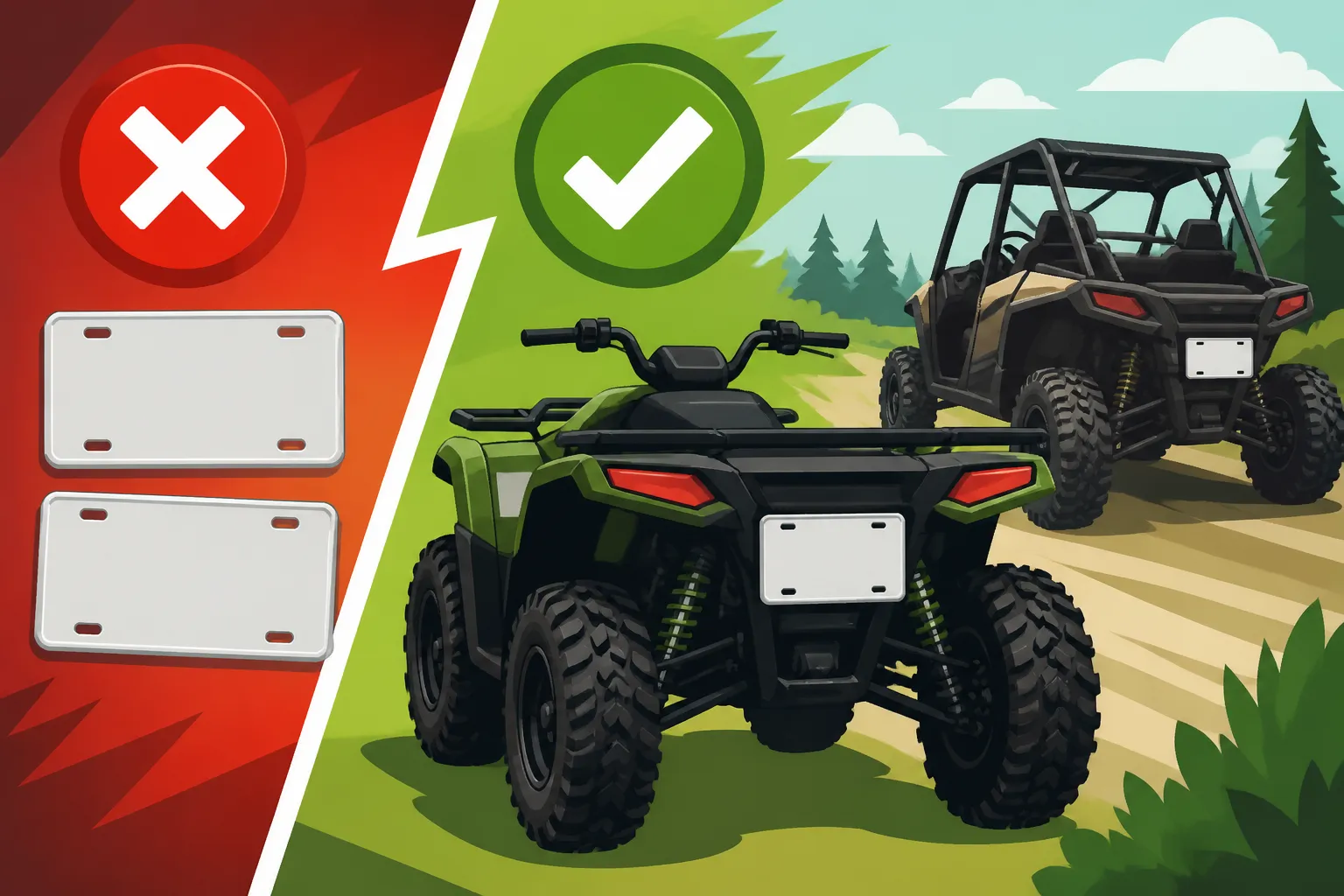
When you successfully register your ATV, UTV, dirt bike, or snowmobile in Manitoba, you will receive exactly one metal license plate. This is a deliberate policy and a distinguishing feature of ORV registration in the province. There's no front plate; there's no option for a second plate; you get one, and that's it. This can be a point of confusion for new residents moving from places like Ontario, where passenger vehicles and even some commercial trucks carry two plates, or for those who simply assume all motorized vehicles operate under the same plate regulations.
The single-plate system simplifies things in some ways, but it also places a greater emphasis on the correct placement and visibility of that one plate. Since there's no backup, ensuring your sole plate is always clearly displayed and legible is paramount. It means that if that one plate is obscured, lost, or improperly mounted, your machine is effectively operating without a visible registration, which can lead to complications with enforcement officers. Understanding that you only get one plate sets the stage for knowing how to properly equip your ORV for legal operation. For more detail, you can consult [One Plate Per Machine, Front or Rear].
Where to Mount That Single Plate By Machine Type
Receiving your single ORV plate is only half the battle; knowing where to properly affix it to your machine is equally, if not more, important. Unlike a car where it’s usually front and back, the placement on an ORV depends specifically on the type of machine you own. These rules are in place for clear visibility, which aids enforcement officers in identifying machines and their owners when necessary. Getting this wrong isn't just a minor oversight; it can result in a ticket.
- ATVs (Quads): For ATVs, the single plate must be securely mounted on the rear of the machine. This typically means on the rear rack, fender, or a specially designed plate bracket. It needs to be clearly visible from behind, unobstructed by cargo, mud, or aftermarket accessories.
- Side-by-Sides (UTVs): Similar to ATVs, side-by-sides also require their plate to be displayed on the rear. This could be on the tailgate, the rear bumper, or a dedicated mounting point. Again, visibility is key, ensuring it's not hidden by gear, spare tires, or a muddy ride.
- Dirt Bikes (Two-Wheelers): For dirt bikes, the rule flips. The single plate must be mounted on the front of the machine. This is usually on the front fender or a special plate holder, positioned so it’s clearly visible from the front. This makes sense given the common riding posture and the potential for a rear plate to become very quickly obscured by mud or rider position. You can read more about this in [Manitoba Plates on the Front of a Two-Wheeler].
- Snowmobiles: Snowmobiles have a unique requirement. Their single plate must be mounted on the left side of the machine. This placement is typically on the tunnel or cowling, ensuring it's visible as the machine passes, even in snowy conditions where a front or rear plate might be quickly covered. Check out [Manitoba Plates on the Left of a Snowmobile] for more context.
These specific mounting instructions are not suggestions; they are regulations designed to ensure that the plate is readily identifiable by authorities. Always double-check [Manitoba Plate Mounting by Machine Type] to ensure you're in compliance.
Consequences of Incorrect Plate Display or Missing Plate
Operating your ORV with an improperly displayed or missing plate isn't just a minor infraction; it can lead to direct consequences, from warnings to fines. Enforcement officers need to be able to quickly and clearly identify your machine. If your single plate is hidden by a gear bag, caked in mud, or simply detached and lost somewhere on the trail, it essentially renders your registration invisible, which is akin to not being registered at all in the eyes of the law.
Imagine you're enjoying a beautiful day on the [Mossberry Trail's 30 Kilometres in Manitoba], and a conservation officer or RCMP officer stops you for a routine check. If they can't easily see your plate because it's obscured by your cooler or covered in an impressive layer of mud, they will likely ask you to rectify the situation. In some cases, depending on the severity and whether it appears to be intentional, they may issue a warning or even a ticket. A missing plate, of course, is a more serious issue altogether, indicating a failure to meet registration requirements. This is why securing your plate properly with robust fasteners, and ensuring it's kept clean, is just as important as having it in the first place. You only have one, so make sure it's always working for you.
The Registration Process: Getting Your Single Plate
So, you’ve bought a new-to-you quad or a shiny new side-by-side, and you’re ready to hit the trails or tackle some work around the property. The very next step, before you even think about firing it up off your trailer, is to get that machine registered and secure your single plate. The process is fairly straightforward, but knowing what to expect can save you time and potential frustration.
Required Documents for New Registration
Whether you're buying a brand-new ORV from a dealer or picking up a used machine from a private seller, you’ll need specific documents to register it in your name and get your plate. Gathering these beforehand will make your visit to the Autopac agent much smoother.
- Bill of Sale: This is paramount. If you bought from a dealer, they'll provide a detailed bill of sale. For a private sale, a clear, dated, and signed bill of sale from the previous owner (or a chain of bills of sale if it’s changed hands multiple times without being registered) is essential. It should include the machine's year, make, model, Vehicle Identification Number (VIN), the purchase price, and the full names and addresses of both buyer and seller. LawDepot offers excellent customizable bill of sale templates that can ensure all necessary information is included for a private sale, making the process much clearer for both parties.
- Proof of Ownership: In many cases, the bill of sale serves as this. If the machine was previously registered in Manitoba, the seller should have signed over the transfer of ownership section on the back of their existing registration certificate. This signed-over certificate, along with your bill of sale, confirms the legal transfer. If you're coming from out of province, you might need additional documentation from that jurisdiction. [How to Register an ATV in Manitoba] provides a good overview.
- Personal Identification: You’ll need valid government-issued photo ID (like a driver's license or passport) to confirm your identity.
- Proof of Age: If you’re a younger rider (under 18 but at least 16), you might need additional proof of age, such as a birth certificate, and potentially parental consent. [Manitoba Registration Age of 16] is the minimum, and [Manitoba Parental Consent From 16 to 18] is required.
- VIN Verification: For machines imported from outside Manitoba (especially from other countries), you might need a VIN verification or an inspection to confirm the machine's identity before it can be registered.
It's always a good idea to call your Autopac agent ahead of time to confirm exactly what documents they’ll need for your specific situation. This can prevent a wasted trip.
Fees and the Mandatory Trails Surcharge
Registering your ORV in Manitoba involves more than just a single plate; it also comes with a few fees. These costs ensure the system runs smoothly and, importantly, contribute to the maintenance and development of the trails we all enjoy. When you visit your Autopac agent, expect to pay two primary components for your initial registration:
- The Registration Fee: This is the base cost for the administration of your ORV's registration and the issuance of your license plate. This fee covers the administrative effort of keeping your machine on record and ensuring it's properly identified. This also includes your basic third-party liability insurance coverage, which is mandatory in Manitoba.
- The Mandatory Off-Road Trails Fee: This is often a point of discussion among riders. Since April 2024, every ORV registration in Manitoba includes a mandatory [Manitoba's Off-Road Trails Fee Explained]. This fee is currently set at $25. What's crucial to understand is that this fee is collected with every ORV registration, regardless of whether you plan to ride on designated trails or not. Even if you only ever ride on your own private land or within a remote community, you will still pay this $25 surcharge.
This trails fee isn't just an arbitrary charge; it’s a dedicated fund that goes directly back into the ORV community. The money collected from this fee is used to support the maintenance and development of ORV trails across the province, provide grants to volunteer trail clubs, and fund rider education programs. So, while you might not think you're using "the trails," your contribution helps sustain the broader ORV infrastructure and experience for everyone. [Why Manitoba Adds $25 to Every ORV Registration] delves deeper into the purpose of this fee. All these costs contribute to the [Manitoba ORV Registration Cost].
What You Receive: Plate, Card, and Decals
Once you've presented all your documents and paid the necessary fees, your Autopac agent will finalize your registration. This is when you finally get your tangible proof of legal operation. You'll walk away with three key items:
- Your Single Metal License Plate: This is the physical plate that must be mounted on your machine according to its type (rear for ATVs/UTVs, front for dirt bikes, left side for snowmobiles). It's typically a standard size, with a combination of letters and numbers that uniquely identify your ORV within the provincial system. Remember, secure it well, and keep it clean!
- Your Registration Certificate: This is a paper document, often referred to as your "registration card." It contains all the vital information about your ORV (make, model, VIN, year), your details as the owner, the expiry date of the registration, and proof of your basic insurance coverage. This certificate is incredibly important, as [Manitoba Registration Cards Carried at All Times] is a legal requirement. You must have this document on you or with your machine every single time you operate it. Many riders choose to laminate it or keep it in a waterproof pouch to protect it from the elements while out on the trails.
- Yearly Decals (if applicable): While not all registrations come with separate decals anymore, some might still be issued to affix to your plate, indicating the current registration year. Your Autopac agent will clarify if any decals are required and where they should be placed.
Together, these items form your complete proof of registration. Ensure you understand what each piece is for and your responsibilities regarding their display and carriage.
Ownership Changes and Plate Transfers
Life happens, and machines change hands. Whether you're upgrading to a newer model, selling off an old one, or buying a used ORV from a friend, understanding how ownership changes and plate transfers work is crucial. It’s not as simple as handing over the keys; there’s a specific process to ensure both the seller and buyer are legally protected and compliant.
Transferring Ownership When Selling Your Machine
When you decide to sell your registered ORV, the responsibility doesn't end when the money changes hands. You, as the seller, have a critical role in ensuring the transfer of ownership is properly documented with MPI. Failure to do so can leave you liable for tickets, accidents, or other incidents involving the machine even after you no longer own it. This is a mistake many private sellers make, assuming a simple handshake and cash transaction is enough.
The most important document for this process is your existing registration certificate. On the back of this certificate, there’s a dedicated section for "transfer of ownership." You must accurately fill out this section, including the date of sale, the buyer's name and address, and the selling price. Both you (the seller) and the buyer should sign this section. This document, along with a separate bill of sale, provides legal proof that the machine has officially changed hands. For private sales, a robust bill of sale is highly recommended. Tools like LawDepot can help you generate a comprehensive bill of sale that protects both parties, clearly stating the terms, condition of the machine, and the transfer of liability. [Selling a Registered Machine in Manitoba] details these steps. It’s in your best interest to keep a copy of this signed transfer document and the bill of sale for your own records.
What Happens to the Plate When You Sell?
This is another common point of confusion. Unlike the ORV itself, the license plate generally stays with the seller, not the machine. When you sell your ORV, you remove your single license plate from it. You then have a couple of options:
- Transfer to a New Machine: If you’re purchasing another ORV within a certain timeframe, you can often transfer that plate (and any remaining registration credit) to your new machine. Manitoba allows a [Manitoba's Seven-Day Replacement Window] to move a plate from one registered ORV to another you acquire. This is a convenient way to keep your plate active and avoid a new registration fee.
- Surrender the Plate: If you’re not immediately replacing your ORV, or if you simply no longer plan to own an ORV, you should surrender your plate to an Autopac agent. When you surrender the plate, MPI will calculate any potential refund for the unused portion of your registration and basic insurance premium. This ensures you’re not paying for coverage you no longer need. [What MPI Refunds When You Sell an ORV] can help explain how this process works. Surrendering the plate also formally takes that specific plate number out of active circulation under your name, preventing any future confusion or liability.
Never simply discard a plate or leave it on a machine you’ve sold. Proper surrender or transfer is essential for closing out your responsibilities as the previous owner.
Registering a Machine You've Just Bought
So, you’ve found your perfect ORV and completed the purchase. Now it’s your turn to register it and get your own single plate. This step is mandatory before you can legally operate the machine anywhere, even on private land unless a specific exemption applies. The process is the mirror image of selling.
You'll need to visit an Autopac agent as soon as possible after purchasing the machine. Bring with you:
- The Bill of Sale: This is your proof of purchase and the agreed-upon price. As mentioned, for private sales, a properly completed LawDepot bill of sale can be very helpful.
- The Signed Transfer of Ownership: If the machine was previously registered in Manitoba, the seller should have signed the back of their registration certificate over to you. This is crucial for establishing the chain of ownership.
- Your Identification: As the new owner, you’ll need to provide valid ID.
The Autopac agent will process these documents, calculate any applicable sales tax (Manitoba Retail Sales Tax or RST), and issue a new registration certificate in your name. If you’re transferring an existing plate from a machine you previously owned, they’ll link that plate to your newly acquired ORV. If you don’t have a plate to transfer, they’ll issue you a brand-new single ORV plate. Once this is all complete, you’ll have your own legal registration and the right to mount that plate and start riding responsibly. For more details on this process, see [Buying From a Private Seller in Manitoba].
Exemptions and Special Considerations for Plates
While the general rule is that every ORV in Manitoba needs to be registered and display that single plate, there are a few very specific situations where an exemption applies. It’s important to understand these carefully, as they are not broad permissions to ride anywhere without a plate, but rather narrow allowances for particular circumstances. Misinterpreting an exemption can lead to serious legal trouble.
When a Plate Isn't Required: True Exemptions
Manitoba's Off-Road Vehicles Act outlines a handful of specific scenarios where an ORV may be operated without being registered and consequently, without a plate. These are not open invitations for everyone, everywhere; they are narrowly defined:
- Riding Solely on Your Own Property: This is perhaps the most commonly misunderstood exemption. If you only ever operate your ORV exclusively on land you own, and it never touches any public land, road, or another person's property, then it does not require registration. However, the moment that machine's tires leave your property and enter a road allowance, a neighbour's field, or a public trail, it needs to be registered. [Manitoba Own-Property Registration Exemption] clarifies this further. Many riders assume "my property and my friend's property" counts, but it doesn't; if it crosses property lines, it needs a plate.
- Specific Occupational Exemptions: Certain professionals operating ORVs directly related to their licensed work may be exempt within their designated areas. This includes [Manitoba Licensed Trapper Exemption] when operating within their registered trapline district, and [Manitoba Commercial Fisher Exemption] when engaged in their fishing business. These exemptions are very specific to the activity and location.
- Remote Communities: There’s an exemption for ORVs operated exclusively within certain designated [Manitoba Remote Community Exemption]. These are typically communities without all-weather roads connecting them to the provincial highway network. The intent is to facilitate essential travel where ORVs are the primary mode of transport.
- Government and Military Vehicles: ORVs owned and operated by the federal Department of National Defence or specific provincial government departments are generally exempt from registration.
It's absolutely critical to remember that if you claim an exemption, you must be able to prove that you fit the specific criteria if stopped by an enforcement officer. These are not loopholes; they are targeted provisions for unique situations.
Temporary Plates and Dealer Considerations
When you purchase a brand-new ORV from a licensed dealer in Manitoba, you won't immediately drive away with your permanent single plate attached. Dealers have their own specific rules for managing inventory and customer deliveries:
- Dealer Plates: Dealers operate under a [Manitoba Dealer Plate Exemption] for their inventory. This means the ORVs on their lot, intended for sale, do not require individual registration plates. They often have special "dealer plates" that can be affixed to machines for demonstration rides or for moving inventory.
- Temporary Tags/Permits: When you complete your purchase, the dealer will typically handle the initial registration paperwork with MPI on your behalf. They might provide you with a temporary operating permit or tag that allows you to transport your newly purchased ORV directly home, or to your desired storage location, while your permanent single plate is being processed and mailed to you or picked up at an Autopac agent. Always confirm with your dealer exactly what documentation you will have to allow for legal transit immediately after purchase.
- Delivery and Your Plate: Once your registration is processed, you will either receive your new plate in the mail or be instructed to pick it up at an Autopac agent. It's crucial not to operate your ORV beyond the scope of any temporary permit until your permanent single plate is properly affixed.
Understanding these dealer-specific procedures prevents any misunderstanding or illegal operation during that initial period after buying a new machine.
Lost, Stolen, or Damaged Plates
Because you only get one plate for your ORV, losing it or having it become unreadable is a bigger deal than if you had a second one. Your single plate is your machine's primary identifier, and operating without a visible, legible plate is illegal. If your plate goes missing, is stolen, or becomes so damaged it's unreadable, you need to act quickly.
- Report to MPI/Autopac: Your first step should be to contact an Autopac agent as soon as you realize your plate is lost, stolen, or damaged. They will guide you through the process of obtaining a replacement. If your plate was stolen, it's also advisable to report it to the police, as a stolen plate could potentially be used illegally by someone else.
- Replacement Process: You will typically need to fill out a declaration stating the circumstances of the missing or damaged plate. There will usually be a fee associated with issuing a replacement plate. MPI will then issue you a new single plate, which will have a different combination of letters and numbers than your previous one. [Manitoba Plate Replacement If Lost] outlines the steps.
- Temporary Operation: While you're waiting for your replacement plate, you generally cannot operate your ORV legally on any public land or trail where a plate is required. Ask your Autopac agent if there's any temporary documentation they can provide to cover you during the replacement period, but usually, the machine must remain off public access points until the new plate is affixed.
Don't procrastinate if your plate is compromised. A small inconvenience now can prevent a significant fine or legal issue down the trail.
Beyond the Plate: Operating Rules and Your Registration Card
The single license plate gets your ORV identified, but it’s only one piece of the puzzle for legal and responsible operation. Just as important is your registration card, and understanding various other operating rules that go hand-in-hand with being a registered ORV owner in Manitoba. Compliance goes far beyond just having a sticker on your machine.
Always Carry Your Registration Card
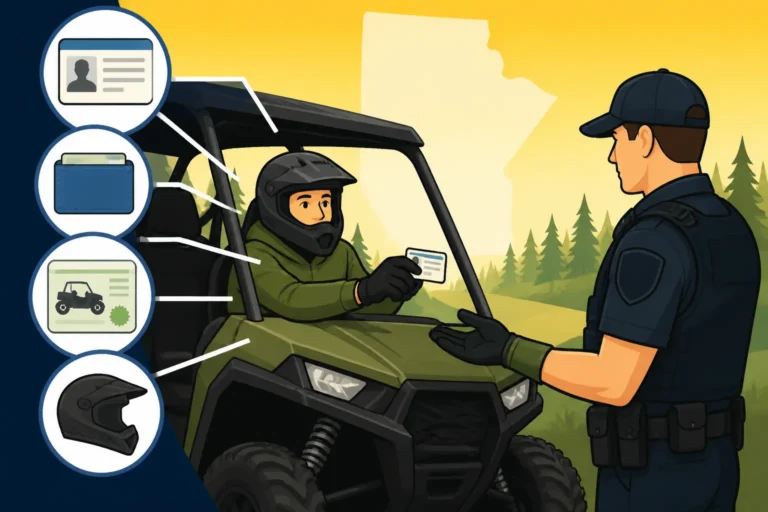
We've talked extensively about the single plate, but your physical registration certificate (often called your "registration card") is equally critical. In Manitoba, it is a legal requirement to carry this document with you, or have it with your ORV, every single time you operate the machine. This isn't a suggestion; it's a rule designed to ensure that if you're stopped by an enforcement officer, you can immediately provide proof of legal ownership and registration.
Imagine you're out for a ride in the [Belair Forest Riding] area, and a conservation officer or RCMP officer approaches you. The first thing they'll likely ask for, after perhaps checking your plate, is your driver's license (if you have one) and your ORV's registration card. If you can't produce it, even if your machine is registered, it can lead to a fine. The card confirms that the plate belongs to your machine and that you are the registered owner. To protect it from the elements while riding, many experienced riders keep their laminated registration card in a waterproof pouch, perhaps in a glove box, a small fanny pack, or even a ziplock bag tucked safely away. [Manitoba Registration Cards Carried at All Times] is a rule that every ORV operator must take seriously.
Other Key Documents to Have on Hand
While the registration card is paramount, there are other documents that are wise, and sometimes legally required, to have accessible when operating your ORV:
- Driver's License or Proof of Age: While a standard driver's license isn't always required to operate an ORV (depending on your age and the specific location of operation), you must always be able to provide proof of age. This is especially important for younger riders, as [Manitoba Age Tiers for Young Riders] dictate where and when they can ride, and with what level of supervision. If you’re 16 or older and operating an ORV where a driver's license is required (e.g., crossing a highway), you must have it on you. [Manitoba Proof of Age at Registration] is a step you took initially, but carrying personal ID is for ongoing enforcement checks.
- Permits for Specific Areas: While Manitoba doesn't have a province-wide ORV trail pass, certain areas, like provincial parks, might require a [Manitoba Park Vehicle Permits] for your tow vehicle, and sometimes for the ORV itself if it's considered a "vehicle." Always check the rules for any specific area you plan to ride in. For example, some parts of [Duck Mountain's Mossberry Trail in Manitoba] might have unique requirements for accessing remote campsites.
- Proof of Insurance: Your basic third-party liability insurance is included with your ORV registration and is noted on your registration card. However, if you've purchased additional private insurance (e.g., for collision, theft, or increased liability), it's a good idea to have proof of that coverage with you, or at least easily accessible (e.g., a photo on your phone).
Being prepared with these documents demonstrates responsible riding and can help avoid delays or issues if you encounter an enforcement officer.
The Importance of Up-to-Date Information
Your registration is a living document, and it's your responsibility as the ORV owner to ensure the information on file with MPI is always current. Changes in your personal circumstances need to be reflected in your registration details.
- Address Changes: If you move to a new residence, you are legally required to update your address with MPI within 15 days. This isn't just about getting your mail; it ensures that MPI can reach you regarding your registration, insurance, and any other important notices. [Manitoba Address Changes Within 15 Days] is a crucial timeline to remember. You can update your address easily by visiting an Autopac agent.
- Name Changes: Similarly, if your name legally changes (e.g., due to marriage or other reasons), you must update this information on your ORV registration. This ensures accurate records and prevents discrepancies if you need to make a claim or transfer ownership later.
- Machine Modifications: While most minor modifications don't require updating your registration, significant changes (e.g., engine swaps that alter the classification of the machine) might. If you're ever unsure, a quick call to an Autopac agent can clarify whether an update is necessary.
Keeping your information up-to-date helps maintain the integrity of the registration system and ensures that you remain in good standing as an ORV owner in Manitoba. It’s all part of being a responsible member of the riding community.
ORV Plate Placement Guide
Here's a quick reference for where to mount your single Manitoba ORV plate, depending on your machine type.
| Machine Type | Plate Placement | Rationale | Key Consideration |
|---|---|---|---|
| ATV (Quad) | Rear | Visible from behind on trails/roads. | Unobstructed by cargo, clean for legibility. |
| Side-by-Side | Rear | Clear visibility for following traffic or patrols. | Securely mounted on tailgate/bumper, clear of mud. |
| Dirt Bike | Front | Best visibility from front, especially on narrow trails. | Positioned to avoid obstruction by handlebars/rider. |
| Snowmobile | Left Side | Visible as machine passes; less prone to snow buildup. | Securely mounted to the tunnel or cowling. |
Disclaimer
This article is for general informational purposes only and does not constitute professional advice. Laws, prices and regulations vary by location and change over time. Consult a qualified professional for guidance on your specific situation.