Riding in a Community No All-Weather Road Reaches
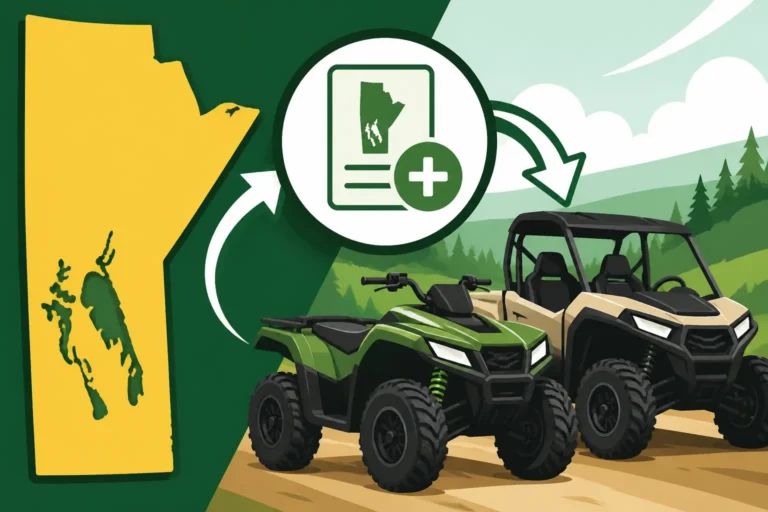
Living in Manitoba, especially in our beautiful northern regions or remote settlements, often means a very different relationship with transportation. For many, an ATV or UTV isn't just a recreational toy; it's a vital tool for daily life, whether for hunting, fishing, trapping, or simply getting around when paved roads are a distant luxury. Navigating the rules for off-road vehicle registration can feel like a maze, especially when your community isn't connected by an all-weather road. This guide is here to untangle those specific rules, helping you understand when and why you might be exempt from registration, and what that truly means for you and your machine.
Understanding the Remote Community Exemption
It's easy to assume that every single off-road vehicle in Manitoba needs to be registered with Manitoba Public Insurance (MPI), just like cars and trucks. And for the vast majority of us, that's absolutely true. However, the province recognizes that some communities operate under unique circumstances, making traditional vehicle registration less practical or even necessary for local use. This is where the remote community exemption comes into play. It's a specific carve-out in the legislation designed to accommodate the realities of life in areas truly off the beaten path.
What Defines a "Remote Community" in Manitoba?
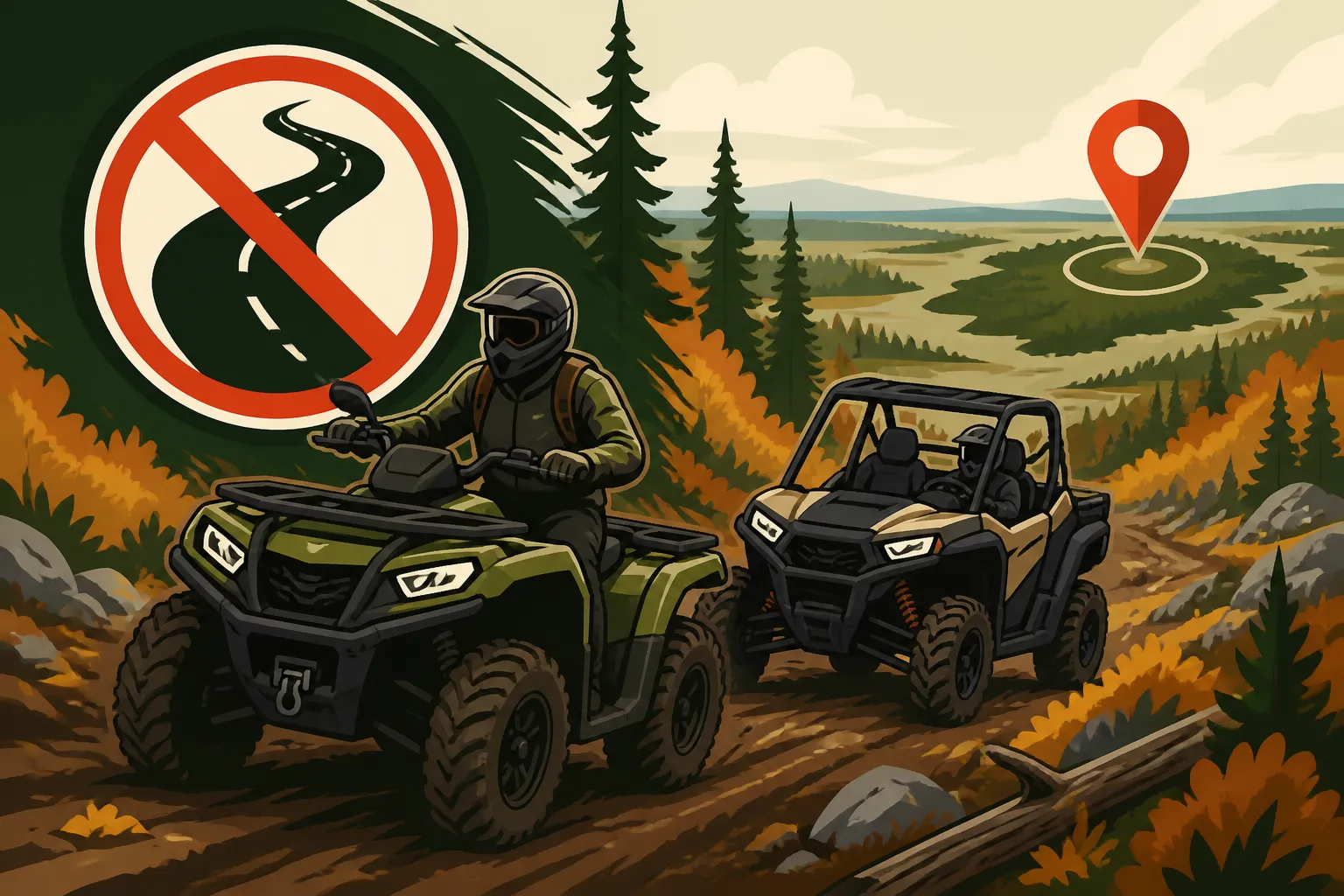
When we talk about a "remote community" in the context of ORV registration, we're not just talking about a quiet town that feels a bit isolated. The key legal differentiator is the absence of an "all-weather road" connecting it to the rest of the provincial highway network. Think about that for a moment: it means no paved road, no gravel highway maintained year-round, which allows vehicles to travel reliably regardless of the season. These are communities where access might primarily be by air, winter road (ice roads that are only usable for a few months of the year), or even by boat during open water season.
For residents in these areas, an ORV isn't a luxury item used for weekend trail rides; it's often the only reliable way to get to the store, visit neighbours, access hunting grounds, or perform essential tasks. Without a consistent road link, these communities often develop their own internal networks of trails and tracks, where ORVs are the primary mode of transportation. This is why the province has made this special consideration. It's about acknowledging the unique infrastructure challenges and transportation needs that exist for our northern and truly isolated residents. You can find more details on this general topic in our guide [Manitoba Registration Exemptions Explained].
The Rationale Behind This Specific Exemption
The logic behind the remote community exemption is rooted in practicality and fairness. Imagine living in a community like Shamattawa, Poplar River, or Island Lake, where your primary connection to the outside world is an ice road in winter or a flight year-round. While you might use your quad daily for local travel, asking you to register it with MPI and potentially incur costs associated with an infrastructure you don't use (like provincial roads and most developed trails) wouldn't make much sense.
The Manitoba government, through its legislation, recognizes that an off-road vehicle's role in these areas is fundamentally different from its role in, say, Winnipeg or Brandon. In urban and most rural areas, ORVs are primarily recreational or farm equipment used on land or designated trails. In remote communities, they are the local transportation system. This exemption is a pragmatic approach to ensure that essential transportation isn't burdened by regulations designed for a different context. It reflects an understanding that in these unique settings, an ORV is a necessity, and its operation is typically confined to the community's immediate vicinity and its own informal network. This also helps reduce administrative hurdles for residents who might already face challenges accessing government services readily available in more populated areas.
Who Qualifies for This Exemption and How It Works
This exemption is a lifesaver for many, but it's crucial to understand who it applies to and, just as importantly, where its limits lie. It's not a blanket pass for anyone who feels "remote," but a specific provision for residents of designated communities under very particular circumstances.
Eligibility for Residents of Remote Communities
To qualify for this exemption, you must be a resident of a community that genuinely lacks all-weather road access. The exemption applies specifically to ORVs operated within the boundaries of that designated remote community. This means if your permanent home is in a place like Red Sucker Lake, where the only road access is seasonal, you generally do not need to register your ATV or UTV with MPI as long as you are using it only within Red Sucker Lake and its immediate, unserviced environs.
Proving residency might involve showing a driver's license, utility bills, or other official documents that confirm your address within that community. While you won't get a registration card from MPI for an exempt machine, it's still good practice to have proof that you indeed live in an exempt community. This helps confirm your eligibility if ever questioned by a local authority. The intent is to support those for whom the ORV is an essential part of local transport, not to provide a loophole for general unregistered riding. We delve deeper into what exactly constitutes such a community in [What Counts as a Remote Community for Registration].
Limitations and What Happens if You Leave the Community
This is perhaps the most critical part of understanding the remote community exemption: it has strict geographical limits. The exemption applies only when the ORV is operated within the designated remote community. The moment you remove that ORV from the community, whether by trailering it out or riding it to a nearby location that does have all-weather road access, the exemption immediately ceases. At that point, your off-road vehicle must be registered with MPI, just like any other.
Consider a hypothetical situation: you live in a remote community and use your unregistered side-by-side for daily chores. If you decide to take your machine to The Pas for repairs, or even just for a recreational ride on a managed trail system near a community with road access, you absolutely must have it registered. This means undergoing the full registration process with MPI before you load it onto your trailer or venture beyond your community's boundaries. Failing to do so would mean operating an unregistered vehicle, which carries penalties. This highlights the provincial rule that [Manitoba Requires Registration in Any Location] that isn't specifically exempted. It's also distinct from something like [Manitoba Non-Resident Registration Exemption], which applies to visitors, not residents.
Practical Considerations and Potential Pitfalls
Even with an exemption in place, living in a remote community and using an ORV comes with its own set of practicalities. You want to ensure you're always operating safely and legally, and that means being prepared, even if you don't have a physical registration card to carry.
What to Carry Even When Exempt
While you won't be carrying an MPI registration card if your ORV is exempt, it's incredibly smart to carry other forms of documentation. Think about it: if an authority figure approaches you, they'll want to verify that you are the legitimate owner and that your machine is indeed eligible for the exemption. This means having proof of ownership readily available.
A bill of sale from when you acquired the machine is paramount. This document proves that you legally own the ORV. If you bought it privately, especially from another community member, ensure you have a clear, signed bill of sale that includes the VIN (Vehicle Identification Number) or serial number, the date of sale, and the names and signatures of both buyer and seller. If you're drawing up a private sale agreement, resources like LawDepot can be incredibly helpful for creating legally sound documents, even for transactions in remote areas. This simple step can save you a world of trouble down the line, whether it's proving ownership or resolving a dispute. Think of it as your substitute for the registration card when you're technically exempt – it's crucial for establishing your legitimate right to the machine. Even if you don't have a card, understanding [Carrying Your Registration Card on Every Ride] means understanding the importance of having some proof of your right to the machine.
Avoiding Misunderstandings with Authorities
Navigating the nuances of an exemption can sometimes lead to confusion, not just for riders but potentially for enforcement officers who might not be intimately familiar with every specific clause of the ORV Act, especially in isolated areas. If you're stopped by a Conservation Officer, RCMP, or local police, it's essential to calmly and clearly explain your situation.
Having your proof of residency (like a driver's license with your community address) and your bill of sale for the ORV can go a long way in clearing up any initial questions. Be prepared to explain that you reside in a community without all-weather road access and that you are operating the ORV within that community's boundaries, where the registration exemption applies. Knowing the precise definition of your community's exempt area is also key. While it might seem obvious to you, the official boundary might be less clear to someone unfamiliar with the local geography. Understanding how these interactions might go can answer many [Manitoba Registration Questions Riders Ask] before they even arise. Remember, transparency and documentation are your best tools during any [Manitoba Equipment Checks by Officers].
When Registration Becomes Necessary (Even for Remote Residents)
Despite the convenience of the remote community exemption, there are very clear circumstances when even a resident of an exempt community will need to register their ORV. It’s important to plan ahead for these situations to avoid any legal issues.
Transporting Your ORV Outside the Community
Let's be absolutely clear: the moment your ORV leaves the defined boundaries of your remote community, it needs to be registered with Manitoba Public Insurance. This isn't just about riding it on a main highway; it applies even if you're trailering it on a provincial road or using it on a managed trail system that lies outside your exemption zone. Common scenarios include:
- Repairs: If you need to take your quad or side-by-side to a dealer or mechanic in a larger town for servicing.
- Recreational Trips: Planning a weekend ride on designated trails in areas like the Eastman or Agassiz forests.
- Visiting Family/Friends: Using your ORV to travel to another community, even if it's just a short distance, that does have all-weather road access.
- Selling Your Machine: If you're selling your ORV to someone outside your remote community, it will need to be registered for the transfer of ownership to happen legally through MPI, and the new owner will certainly need it registered for their use.
In all these cases, you'll need to go through the standard [Manitoba ORV Registration Through MPI] process. This means visiting an Autopac agent, providing proof of ownership (your bill of sale will be essential here), and paying the necessary fees. For more on where to go, check out [Manitoba Autopac Agents and ORV Registration]. It's always best to complete this process before you transport your machine, not after you've already left your community.
The Benefits of Registration, Even if Exempt
While the exemption offers relief from a legal requirement, it's worth considering the benefits of registering your ORV even if you technically don't have to for local use. When you register an ORV with MPI, it typically comes with basic third-party liability coverage. This is a huge benefit that many riders overlook until it's too late.
This liability coverage protects you financially if you cause damage to someone else's property or injure another person while operating your ORV. Imagine accidentally hitting a parked vehicle, or worse, causing an accident that injures a pedestrian. Without liability coverage, you would be personally responsible for those costs, which can be astronomical. Even in a remote community, accidents can happen. Registering your ORV gives you that peace of mind, knowing you have a safety net in place, regardless of where or how you're riding. While this basic coverage does not cover your own injuries or theft, it's a vital starting point for financial protection. Our article [Manitoba Insurance Included With Registration] explains more about the basic coverage. However, it's also crucial to understand the limitations, particularly that [Manitoba Basic Manitoba ORV Coverage Skips Injuries] to yourself, so additional personal accident coverage might be something to look into.
Here's a quick comparison of registered vs. exempt ORV use:
| Feature | Registered ORV (Anywhere in Manitoba) | Exempt ORV (Within Remote Community) |
|---|---|---|
| Legal Operation | Everywhere in Manitoba (per ORV Act) | Only within designated remote community |
| MPI Registration Card | Yes | No (Proof of ownership still key) |
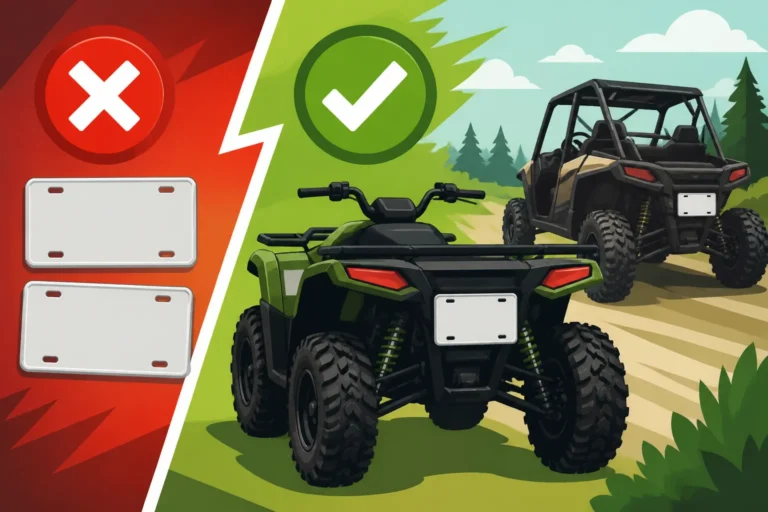
| MPI Plate Required | Yes | No |
| Liability Insurance | Basic third-party included | None automatically included |
| Trails Fee ($25) | Yes, part of registration | No |
| Ownership Proof | MPI registration certificate | Bill of sale / other documents |
| MPI Services Access | Full access (transfers, claims etc.) | Limited (only if later registered) |
This table clearly illustrates the differences and the inherent risks that come with operating an exempt machine without any form of liability coverage. It's a personal choice, but one worth making with all the information at hand.
Disclaimer
This article is for general informational purposes only and does not constitute professional advice. Laws, prices and regulations vary by location and change over time. Consult a qualified professional for guidance on your specific situation.