Manitoba Insurance Proof at a Park Gate
Manitoba ATV and UTV riders may need to show more than one kind of document when entering or riding in a provincial park. Insurance proof, registration and a park vehicle permit serve different purposes, and a gate check is not the same as a roadside enforcement stop. Knowing what to keep handy helps prevent delays and makes it easier to answer questions about your coverage.
What insurance proof at a park gate means
There are two separate questions to keep straight: whether your ATV or UTV has the insurance required for it to be operated, and whether the vehicle entering the park has the park permit required for access. One document does not automatically answer both questions.
Manitoba requires off-road vehicles to meet applicable insurance requirements. Riders should be able to show proof of coverage when asked during a compliance check. The insurance document relates to the machine and its coverage; it is not a park entry permit. For details about what coverage is required, see Manitoba’s Liability Coverage Requirement and Manitoba Insurance Proof on the Trail.
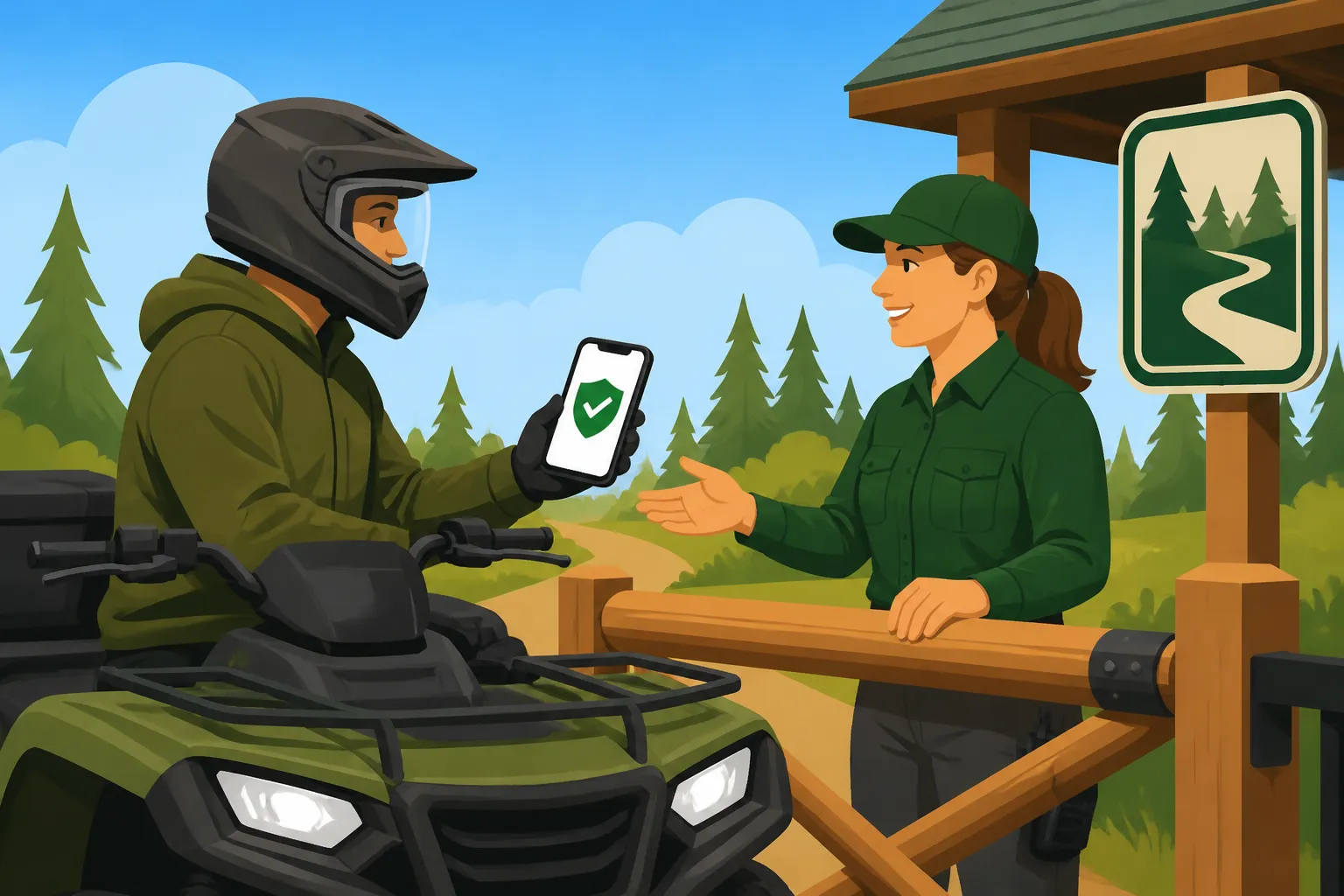
At a park entrance, staff may be checking for a valid park vehicle permit, answering questions about access, or directing visitors. They do not necessarily ask every rider for ATV or UTV insurance documents at the gate. But not being asked at entry does not remove the obligation to carry or produce proof if an authorized officer asks for it later.
A park vehicle permit and your machine’s registration are also different documents. Registration identifies the off-road vehicle and is associated with its legal use and insurance. A park permit concerns access to the park. Check Manitoba Park Vehicle Permit for how the park permit fits into a visit, and do not assume that registration alone covers every park-access requirement.
For a practical pre-ride check, ask yourself:
- Is the ATV or UTV currently registered where required?
- Can you show current proof of the machine’s insurance?
- Does your planned route allow off-road vehicles?
- Does the park require a vehicle permit for the vehicle you are bringing in?
- Are there seasonal closures, local restrictions or other park rules that apply?
A gate attendant may not be responsible for deciding every question about your insurance or whether a particular trail is open to your machine. If you are unsure about access, check with the park before unloading. If you are unsure about coverage, ask your insurer or registration provider.
What to have ready for your ride
Keep the machine’s documents together, and keep park-access documents easy to show separately. The goal is not to carry every piece of paperwork you own; it is to be able to produce the documents relevant to the question being asked.
| Item | What it helps establish | When it may matter |
|---|---|---|
| Proof of insurance for the ATV or UTV | That the machine has applicable coverage | During a compliance check or if an officer asks |
| Registration certificate | The machine’s registration details | During a ride, ownership or registration check |
| Park vehicle permit, if required | That the vehicle entering the park has the required park access permit | At a gate or during a park visit |
| Identification and ownership records | Who is operating or owns the machine, and how it was acquired | If there is a question about the registration or transfer |
| Park map or route information | Whether the intended route is designated for the machine | Before and during the ride |
The registration certificate is not a substitute for proof of insurance, even where registration and insurance are connected. Keep both available, and follow the requirement to carry the registration certificate while riding. The details are covered in The Certificate Manitoba Riders Must Carry at All Times.
Likewise, an insurance card or policy document does not prove that your machine is registered, and neither document proves that you have permission to ride a particular route. Park access and route permissions are separate issues. A registered, insured ATV can still be prohibited from a trail that is closed or not designated for off-road use.
If you are entering a park with a truck and trailer, think through which vehicle the permit applies to and where the permit must be displayed. Do not assume that the permit for the tow vehicle automatically authorizes the ATV to use every park road or trail. Read Displaying a Park Permit in Your Windshield and verify the current instructions for the park you plan to visit.
Keep documents readable and accessible
A paper insurance document can be kept in a waterproof sleeve or pouch. If your provider makes documents available electronically, keep a usable copy on your phone, but do not rely on a phone as your only option if you expect weak reception, a dead battery or wet conditions. A paper backup can save time when a device is unavailable.
Before riding, check that the information is legible and that the document corresponds to the machine you are taking. This matters if a household has more than one ATV or UTV: grabbing paperwork for the wrong machine can create unnecessary confusion during a check.
For documents carried on the trail, see Carrying Your Registration Card on Every Ride. For ideas on keeping paper records protected from water and mud, Keeping Your Registration Certificate Dry on the Trail is also useful.
Before you arrive at the park
Confirm the park’s entry and riding rules before loading the machine. A park may have designated routes, seasonal closures, or restrictions that affect where an ATV or UTV can go. A permit to enter a park does not necessarily mean every route is open to off-road vehicles. Check the relevant park information and read signs at the entrance and trailhead.
Make the checks in this order:
- Confirm the route is open to your machine. Look for park-specific rules and current closure information. Do not treat a road, campsite access lane or trail shown on a general map as permission to ride it.
- Check park-vehicle permit requirements. Work out which vehicle needs the permit and how it must be displayed. If the details are unclear, contact the park before the trip.
- Confirm the machine’s registration and insurance. Make sure the documents match the ATV or UTV you are bringing and are current.
- Prepare to carry the documents while riding. Keep registration and insurance proof accessible after you leave the gate; they may be requested during a ride.
- Check for changes on the day of travel. Closures and access directions can change, so review current information before driving a long distance.
If you are riding a machine registered outside Manitoba, do not assume that the gate’s permit check settles whether its registration and insurance are acceptable for use in the province. Visiting riders must meet applicable Manitoba operating rules as well as relevant requirements tied to their home registration and insurance. Review Manitoba Insurance Rules for Visitors and Manitoba Visitors and Operating Rules before crossing the provincial boundary.
A visiting rider should be especially careful not to confuse home-province registration with park permission. The machine may be properly registered at home and still need to meet Manitoba operating requirements, while the vehicle bringing it into the park may have a separate permit requirement.
If someone asks to see your documents
Stay calm, stop safely and provide the document that answers the question. If a staff member is asking about park entry, show the park permit or ask which vehicle it needs to cover. If an officer asks about the ATV’s registration or insurance, provide the relevant machine documents.
If you are unsure what is being requested, ask politely whether the person needs the park permit, registration certificate or insurance proof. Keeping these documents separate makes it easier to respond without handing over unrelated paperwork or searching through a phone gallery at the roadside.
A gate conversation may not be an insurance inspection. Conversely, a rider who passed through the gate without being asked for insurance should not assume that the paperwork is unnecessary for the rest of the trip. Park staff and enforcement officers may have different responsibilities. For what may be requested during an enforcement interaction, see What an Officer Can Ask to See in Manitoba.
If your insurance document is missing, expired or appears to list a different machine, do not guess that registration paperwork resolves the problem. Contact your insurer or registration provider and confirm coverage before operating. If a park permit is missing or its display instructions are unclear, check with the park office or official park information before proceeding.
The safest routine is straightforward: verify access before the trip, keep park and machine documents distinct, carry the required papers while riding, and be prepared to show them when asked. That avoids treating a gate receipt, registration certificate or insurance document as if it covered every requirement.
Disclaimer
This article is for general informational purposes only and does not constitute professional advice. Laws, prices and regulations vary by location and change over time. Consult a qualified professional for guidance on your specific situation.