Riding Etiquette on a Manitoba Club Trail
A Manitoba club trail can change from firm, easy riding to deep mud or a narrow shared corridor in a short distance. That makes etiquette more than good manners: it helps prevent collisions, protects the trail, and keeps clubs welcome on the land they maintain. This guide explains how to ride considerately around other users, respond to changing conditions, and leave a trail in good shape.
Before You Ride a Manitoba Club Trail
Check access, conditions, and trail information
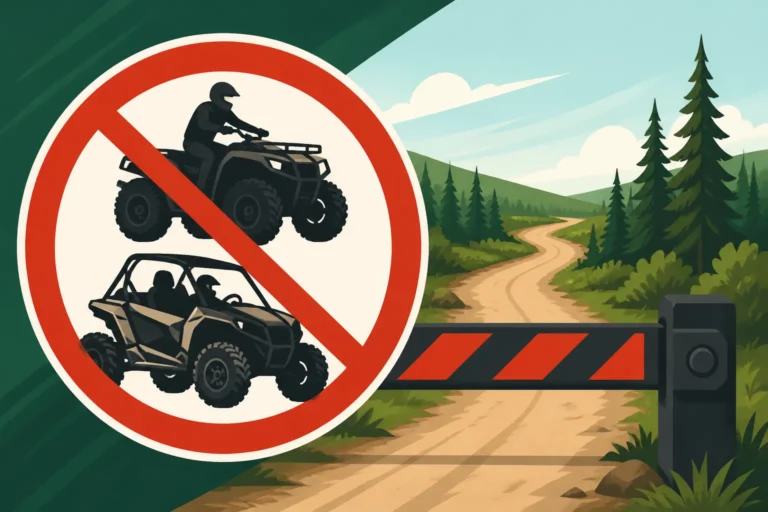
A trail shown on a map is not automatically open today. Club routes may cross land where access depends on permission, seasonal conditions, maintenance work, or a temporary closure. Before unloading, check current club information and read the signs at the trailhead. If a gate is closed or a notice says a section is off limits, don’t go around it, even if the track looks passable.
Maps are useful for planning, but treat them as a guide rather than permission to ride anywhere the line appears. onX Offroad can help you review a route and understand where you are, but check the relevant Manitoba club’s information and local trailhead notices as well. A route line does not tell you whether a trail has washed out, whether work is underway, or whether a landowner has changed access.
It also helps to know what kind of ground and traffic to expect. A route may include narrow bush sections, sandy stretches, muddy low spots, or shared-use areas. For examples of different regional riding options, explore Manitoba ATV Trails: Club Ground and Crown Land and Manitoba Trail Difficulty Ratings. Planning around the likely terrain gives you a better chance of choosing a route that suits the least experienced rider in your group.
Prepare your group before leaving the staging area
Agree on simple group habits before the engines start. Decide who will lead, who will ride at the back, where you will stop, and what everyone should do if the group gets separated. Keep the group small enough that riders can respond to each other without bunching up. If a larger group is riding together, split into manageable groups where appropriate and avoid blocking the trail while waiting.
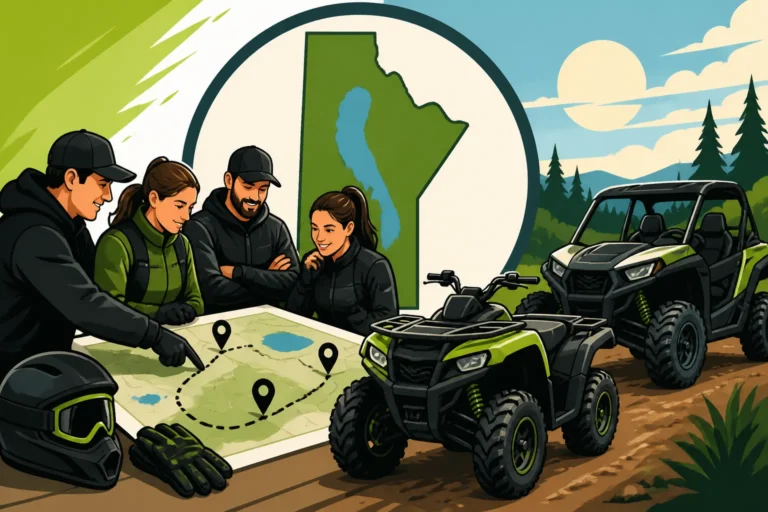
Make sure every rider understands the route, knows how to communicate a stop or hazard, and has the equipment needed for the day. A basic plan can prevent the familiar trailhead confusion where one person wants to take the loop clockwise, another is following a phone map in reverse, and the rest are waiting with engines running. For more planning help, see Manitoba Group Ride Planning and Manitoba Trail Etiquette Locals Expect.
Leave enough room between machines to see what is ahead and react if the rider in front slows suddenly. Dust, brush, corners, and uneven ground can all reduce visibility. Following too closely also makes it harder to stop gently and avoid throwing mud or gravel at the person behind you. Before setting off, check that everyone knows where the group will regroup if someone needs to stop.
Sharing the Trail With Other People
Yield calmly and make your presence clear
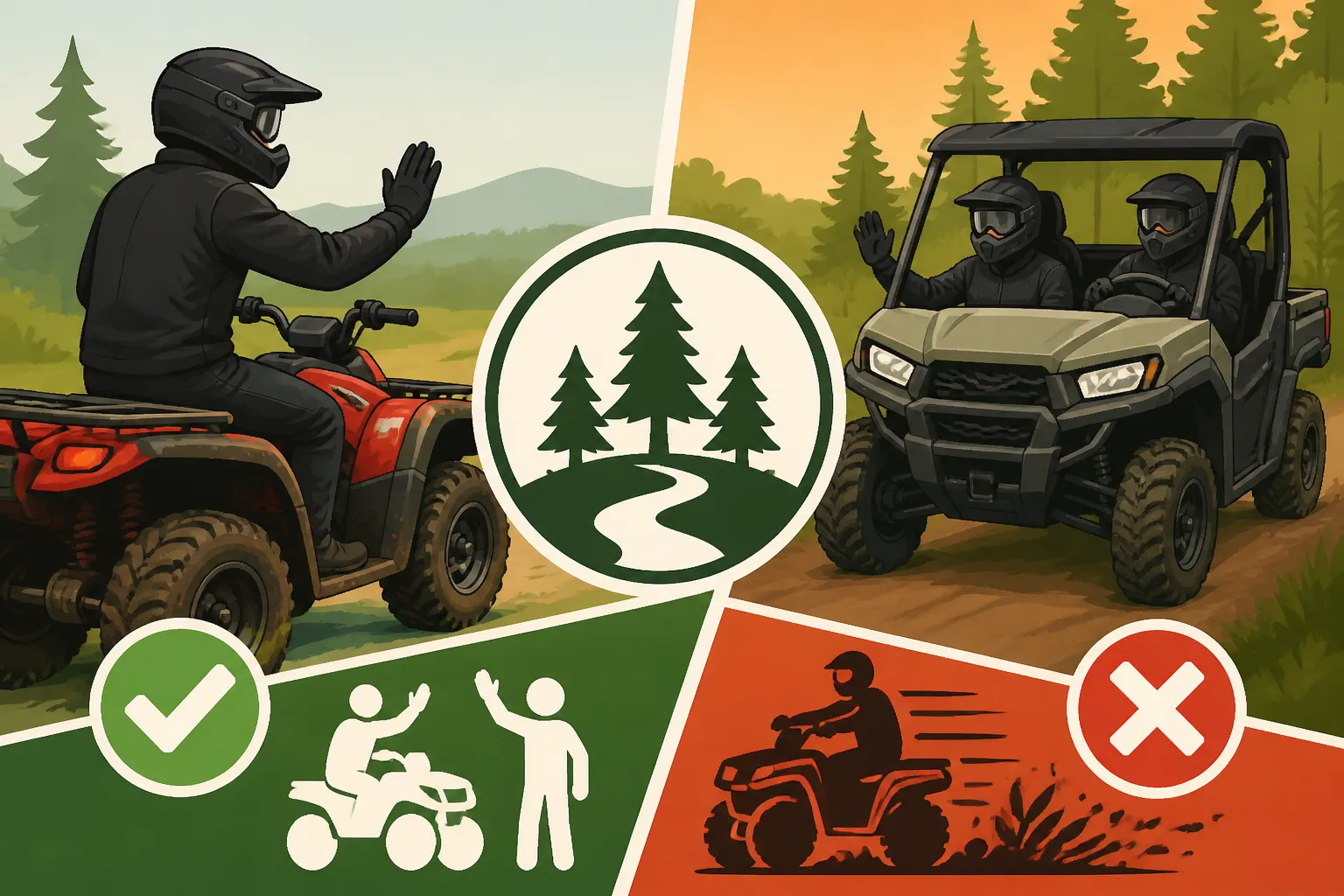
Club trails can be shared with hikers, horseback riders, snowmobilers, or other trail users, depending on the route and conditions. Slow down early when you see someone ahead. Give them space, avoid sudden acceleration, and follow any posted trail guidance about passing. A person on foot or a horse may be startled by an unexpected approach, especially on a tight corner or in thick brush.
When approaching horses, reduce speed well before reaching them and give the rider time to decide how to manage the encounter. Avoid revving, honking, or trying to squeeze past. If the trail is narrow, stop at a safe distance and ask calmly what would work best. Waiting a minute is far better than spooking an animal or forcing another trail user into an unsafe position.
The same basic courtesy applies to hikers and cyclists: slow down, leave room, and pass only when there is enough space to do so safely. On a blind corner or crest, assume someone may be coming the other way. More advice on mixed-use corridors is available in Manitoba Trails Shared With Hikers and Manitoba Trails Shared With Horses.
Keep the trail clear and ride predictably
A stopped machine can become an obstacle quickly, especially on a narrow trail or near a hill. If you need to check a map, adjust gear, take a break, or wait for a rider, move well off the travelled path where it is safe and permitted. Don’t park across a trail entrance or block a junction while the group decides which direction to take.
Predictable riding helps everyone. Avoid weaving, sudden stops, and unnecessary passing within your group. If you are approaching another group, slow down and make your intentions clear rather than racing to get past. On a narrow section, the safest choice may be for one group to pull over at a suitable wider spot and let the other pass.
Some trail encounters happen in places with poor visibility or little room to manoeuvre. Give other riders a moment to assess the situation instead of assuming they have seen you. Keep your machine under control, stay alert for people entering from side paths, and avoid blocking access roads or emergency routes. For a broader look at sharing a corridor, read Sharing a Corridor With Snowmobiles in Manitoba and Yielding on a Narrow Manitoba Trail.
Protecting the Trail and the Land
Match your riding to the conditions
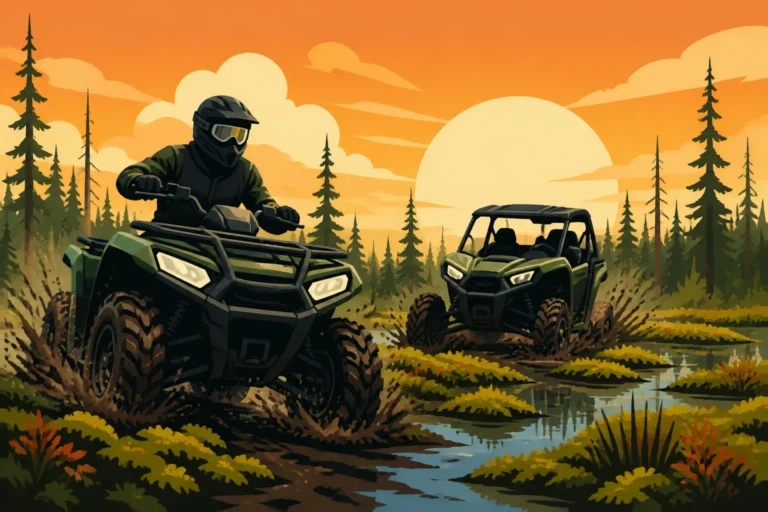
Wet ground is especially vulnerable. Spinning tires can deepen ruts, widen muddy sections, and turn a short soft patch into a damaged stretch that takes a club time and effort to repair. If a section is too wet to cross without excessive wheelspin, stop and consider turning back rather than forcing your way through. A route that looks manageable at the start may be very different after heavy rain or spring thaw.
Stay on the established trail, even when the main track is muddy or rough. Riding around a puddle often creates a second track that grows wider as more machines follow it. Cutting through brush, crossing vegetation, or taking an unofficial shortcut can damage the area and create confusion about where the route is supposed to go. If you’re unsure whether a line is part of the trail, don’t assume it is.
Ride at a pace that gives you time to respond to ruts, roots, loose gravel, wildlife, and other users. The goal is not to avoid every bump; it is to avoid turning a difficult patch into a larger problem through aggressive throttle or repeated attempts. For practical preparation and condition awareness, see Manitoba Riding After Heavy Rain and Manitoba Muskeg and Machines.
| Trail situation | Considerate response | What to avoid |
|---|---|---|
| A muddy or soft section | Slow down, assess it, and turn back if you would need to spin or widen the route | Repeated high-throttle attempts or riding around the mud into vegetation |
| A closed gate or trail notice | Stop and follow the posted direction | Going around the gate or assuming the closure is optional |
| A horse or hiker ahead | Reduce speed early and give them room to pass safely | Revving, crowding, or squeezing by without enough space |
| A group stopping to check directions | Move off the travelled path where safe | Waiting across a junction or trail entrance |
| Fresh damage or a hazard | Make a note of the location and report it to the club when possible | Expanding the damage or moving signs and barriers |
Respect closures, land users, and local communities
Club access depends on ongoing relationships with landowners, lease holders, and communities. Respect signs, gates, and instructions, even if the reason for a closure is not obvious from the trail. A closed section might be vulnerable to damage, under repair, or unavailable because permission has changed. Riding around a barrier can put future access at risk for everyone.
Keep noise under control, particularly near homes, cabins, campsites, and other places where people expect a quieter setting. Avoid unnecessary revving and don’t linger with engines running close to buildings. Be thoughtful when loading and unloading too: a staging area can be busy, and considerate parking and conversation help keep the experience pleasant for nearby residents and other riders.
Take all garbage with you, including food wrappers, broken straps, and small pieces of equipment. Don’t leave a machine’s fluids, damaged parts, or a campfire behind. If you come across a closure, a damaged sign, or fresh trail damage, make a note of the location and pass the information to the local club. Volunteers can only respond to problems they know about. The background on who maintains club corridors is covered in Manitoba Club Trails and Who Maintains Them.
Building Good Habits for Every Ride
Use maps as a support, not a substitute for judgment
Navigation tools can be helpful when a junction is easy to miss or the group needs to confirm its location. onX Offroad may help riders review mapped routes and keep track of their position, but it should not replace posted signs, club guidance, or permission to access a trail. Download or prepare the information you need before leaving areas with reliable cell service, and don’t assume your phone will work throughout a remote ride.
Keep the group’s navigation simple. Make sure the leader knows the intended route and that the riders behind understand the plan. If someone is using a phone, stop in a safe place to check it instead of looking down while moving. A paper map can also be a useful backup, especially where cell service is limited or a device battery runs low. See Manitoba Trail Apps and Maps for more route-planning context.
If a digital route appears to lead onto a road, private property, or an unfamiliar track, don’t follow it automatically. Stop, check the surroundings, and confirm the route against club information and signs. When the route is uncertain, turning back to a known junction is usually less stressful than trying to improvise through an unfamiliar area.
Leave the next rider a better trail
Good etiquette is visible in small choices: easing off the throttle for a hiker, waiting for a horse to pass, turning back from ground that is too soft, and packing out every bit of garbage. Those actions may feel minor on one ride, but they help preserve the route and support the clubs and landholders who make access possible.
Before leaving the trailhead, take a moment to check that nothing has fallen off your machine or trailer and that the group has picked up its belongings. If you noticed a damaged sign, blocked corridor, or spot where the trail is deteriorating, report it through the appropriate club channel. Include a clear location and a practical description instead of trying to repair infrastructure yourself.
Most of all, ride in a way that makes other people comfortable sharing the same space. Keep a controlled pace, give others room, follow the marked route, and make patience the default when an encounter is uncertain. These habits make a Manitoba club trail safer and more enjoyable for your group while helping keep it open for the riders who come after you.
Disclaimer
This article is for general informational purposes only and does not constitute professional advice. Laws, prices and regulations vary by location and change over time. Consult a qualified professional for guidance on your specific situation.