Snorkels for a Manitoba Creek
A creek that looks shallow from the bank can hide a soft bottom, a sudden drop, or a current strong enough to push an ATV or UTV off line. A snorkel can help protect certain engine and belt-system openings, but it does not make a machine waterproof or make every crossing safe. This guide explains what a snorkel changes, what it cannot do, and how to plan creek rides responsibly in Manitoba.
What a snorkel does on an ATV or UTV
How raised intakes and vents help
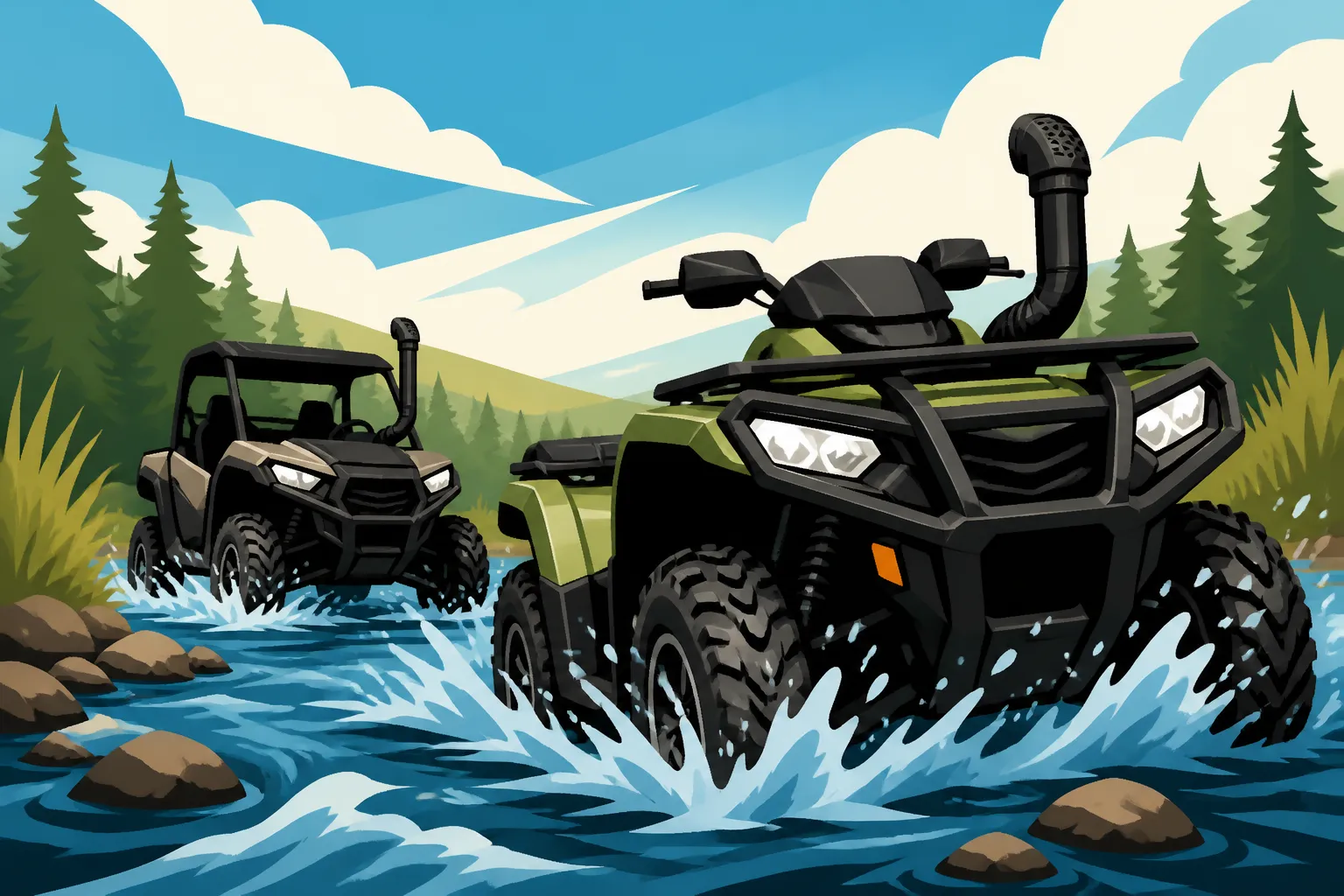
A snorkel kit generally moves an engine’s air intake higher on the machine. Many kits also raise or reroute the intake and exhaust vents for the continuously variable transmission, or CVT. Those changes can reduce the chance of water or mud entering through openings that sit low on a standard machine.
That can matter on a muddy trail, in a shallow puddle, or when a crossing sends splashes over the floorboards. The benefit depends on the specific kit and installation: a snorkel only helps protect the openings that have actually been routed and sealed correctly. A kit designed for one ATV or UTV model may not suit another, even if the machines look similar.
For a rider heading through wet bush country, it is tempting to think of the snorkel as a simple upgrade that turns a machine into an amphibious vehicle. That is not what it does. The machine still has electrical connections, bearings, seals, lubricants, brakes, and other components that can be damaged by water, grit, or prolonged submersion.
What a snorkel cannot protect
A snorkel is not a guarantee against water entering the engine. If a connection leaks, a clamp loosens, or the system is installed incorrectly, the raised intake may not protect the engine as intended. Water can also reach the engine through other routes, including a damaged intake boot or a poorly sealed airbox.
The CVT deserves particular attention. Water in the belt housing can affect belt grip and performance, and mud or grit can add wear. Raising the CVT intake and outlet may help in some conditions, but it does not make the housing impervious to water. After a wet ride, follow the machine maker’s inspection and service guidance rather than assuming that the snorkel did all the work.
A snorkel also does not raise the safe crossing depth by itself. The practical limit is shaped by the whole machine, the crossing conditions, the rider’s skill, and the manufacturer’s instructions. A creek can become hazardous well before water reaches a raised intake: tires can lose traction, the current can shift the machine, and a hidden rut can leave the wheels in deeper water than expected.
Choosing and maintaining a snorkel kit
Match the kit to the machine and riding conditions
Start with the owner’s manual and the exact make, model, and year of the ATV or UTV. Ask a qualified dealer or mechanic whether the kit is compatible and which openings it protects. If the machine is still under warranty, check the warranty terms before modifying the intake, exhaust, or CVT system. A modification can affect service decisions, and the details depend on the machine and the work performed.
Think about your actual riding, too. A snorkel may make sense for frequent muddy rides or wet trail conditions, but it is not a substitute for choosing a suitable route. If your rides mostly involve dry, maintained trails, other maintenance and protection priorities may matter more. Riders dealing with boggy ground may also want to review Manitoba Muskeg and Machines before choosing equipment for soft, wet terrain.
Consider where the snorkel outlets will sit and whether they could interfere with visibility, cargo, or other accessories. A poorly planned installation can create new annoyances, such as awkward routing or a setup that is difficult to inspect. If you use the machine for work as well as recreation, tell the installer what attachments and cargo you typically carry.
Inspect the installation before relying on it
After installation, inspect the routing and connections according to the kit maker’s directions. Look for loose clamps, cracked hoses, rubbing points, and openings that may be exposed to spray or debris. If you are not comfortable assessing the system, have the installer show you the key connections and explain what to check before a ride.
Make a habit of checking the machine before and after wet outings. Before riding, confirm that the intake is clear and that the snorkel components have not shifted. Afterward, inspect the airbox, CVT area, fluids, electrical connections, and other components as directed in the owner’s manual. If the engine sputters, stalls, or behaves unusually after water exposure, stop rather than repeatedly trying to restart it; water inside an engine can cause severe damage.
| Riding condition | What a snorkel may help with | What it does not solve |
|---|---|---|
| Mud splashes on a trail | Reduces exposure at properly raised and routed openings | Protects every seal or electrical component |
| Shallow puddles | May reduce the chance of water entering a raised intake | Make the puddle’s depth or bottom predictable |
| A creek crossing | May help protect selected intake and CVT openings | Make a crossing safe in current, deep water, or soft mud |
| Post-ride cleanup | Can be part of a setup for wet riding | Replace inspection, cleaning, or scheduled maintenance |
Planning a Manitoba creek ride safely
Assess the crossing before approaching the water
Stop well back from the water and look for signs that the crossing may be unsafe: fast-moving water, a steep or undercut bank, floating debris, a soft-looking approach, or a bottom you cannot see. Do not assume a familiar crossing is unchanged. Rain, snowmelt, erosion, and trail damage can alter depth and footing.
If you cannot assess the bottom and exit, the cautious choice is to turn around. A snorkel does not reduce the risk of getting stuck, being swept sideways, damaging the machine, or needing a difficult recovery. Never enter water simply because another rider crossed it. Their machine, line, timing, and experience may be different from yours.
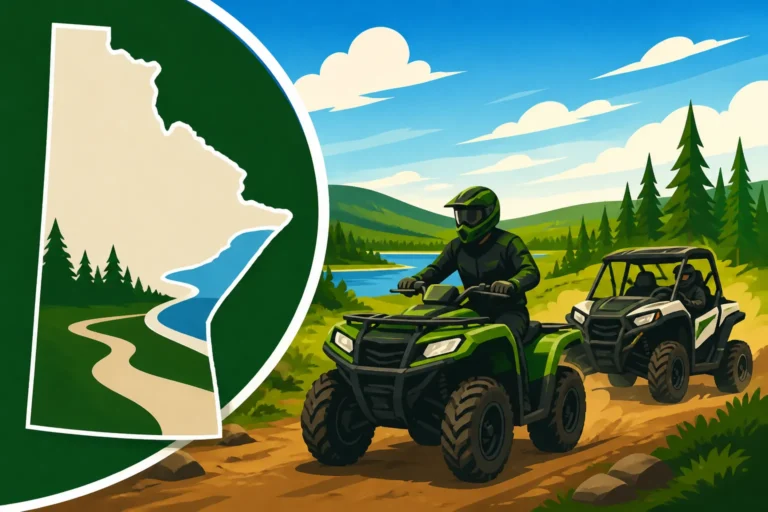
Check whether riding is permitted before planning a route. Access rules can vary by land type, local restrictions, and trail conditions. For a broader starting point, read Manitoba Crown Land Riding Explained and Manitoba Sensitive Areas to Avoid. A mapped line does not necessarily mean a route is open or that a water crossing is authorized.
Protect trails, waterways, and your group
Creek banks and wet ground can be easily damaged by repeated wheel spins. If a machine gets bogged down, aggressive throttle can dig deeper ruts and send sediment into the water. Avoid riding through vegetation or around a marked closure to bypass a difficult section. Riding After Heavy Rain is worth reviewing when the ground is saturated and a trail may be especially vulnerable.
When riding with others, agree on a turnaround point and a communication plan before leaving the trailhead. Keep enough space between machines to avoid crowding a crossing, and do not let pressure from the group push someone into water they have not assessed. Carry recovery equipment suited to your machine and know how to use it without placing anyone in the current or under tensioned gear.
For navigation, onX Offroad can be one tool for reviewing mapped routes and planning where to ride. Use it as a planning aid, not proof that a crossing is safe or that access is allowed. Check current trail information and confirm permissions with the appropriate land manager, club, or local authority. Before a longer trip, review Manitoba Trail Conditions Before You Haul and Manitoba Crown Land Access Rules.
After a wet ride and before the next trip
Check the machine instead of assuming it stayed dry
Once you are back on firm ground, follow the owner’s manual for post-water inspection and maintenance. Check for water or debris in the airbox and CVT area, and look for changes in engine sound, belt behaviour, braking, or electrical function. If the machine was submerged or began running poorly, get qualified service advice before riding again.
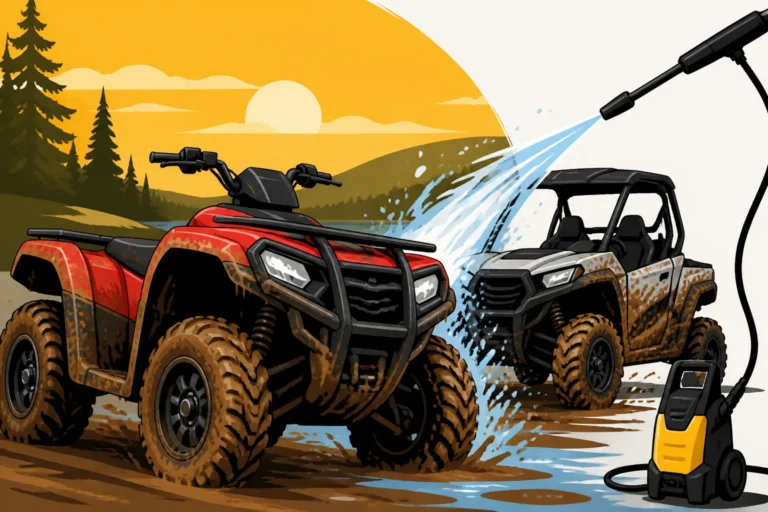
Pay attention to parts that can be affected even when the intake stays clear. Water and grit can work into bearings, joints, connectors, and other vulnerable areas. Washing mud off promptly can help with inspection, but avoid directing high-pressure water at seals, bearings, electrical connectors, or intake openings. Washing Mud Off a Manitoba Machine offers more practical context for cleaning up after a messy ride.
Keep a simple record of unusual symptoms and maintenance. If a belt slips after a creek ride or the engine runs differently, noting when it happened can help a technician diagnose the issue. Do not treat a snorkel as a reason to delay service: it is one part of a setup, not a replacement for routine maintenance.
Prepare for changing conditions
Before hauling to a riding area, check for closures, fire-related restrictions, and local trail updates. A route that was open on your last visit may be affected by weather, maintenance, landowner decisions, or seasonal restrictions. onX Offroad can help you orient yourself while planning, but verify access and conditions through relevant local sources before setting out.
Also prepare for conditions beyond water. Bring suitable recovery gear, communication equipment, basic first aid supplies, and a way to navigate if phone service is unreliable. Leave a trip plan with someone who is not riding with you, especially when heading into a remote area. For seasonal planning, consult Manitoba Fire Season Riding Restrictions and Manitoba Trail Etiquette Locals Expect.
The most useful question is not simply, “Do I have a snorkel?” It is, “Can I safely assess this route, and am I prepared to turn back?” A properly selected and maintained snorkel can reduce exposure at specific machine openings, but good judgment, legal access, and careful riding remain essential.
Disclaimer
This article is for general informational purposes only and does not constitute professional advice. Laws, prices and regulations vary by location and change over time. Consult a qualified professional for guidance on your specific situation.