Summer Riding in the Interlake
A summer ATV or UTV ride in Manitoba’s Interlake can take you from sandy forest tracks to wet, rutted bush trails—but a route shown on a map is not automatically open to motorized use. This guide explains how to choose a legal riding area, check conditions before towing, prepare for summer weather, and ride considerately around communities, wildlife, and other trail users.
Choosing an Interlake Riding Area
Match the ride to your group and machine
The Interlake is a large region, so “riding in the Interlake” can mean very different things depending on where you start. Riders may be planning around communities such as Gimli, Arborg, Riverton, or Ashern, or looking farther east toward Belair Forest. Start by identifying the specific riding area and trail system you intend to use rather than choosing a destination based on a broad regional label. [Manitoba Interlake Riding Areas]
Think about the kind of day your group wants. A newer rider may be more comfortable on a straightforward, well-marked route with room to turn around. An experienced group might want a longer bush ride, but should still plan around fuel, daylight, recovery gear, and the least experienced person in the group. A trail that looks short on a map can take much longer when it is muddy, sandy, rutted, or shared with other users.
Your machine matters, too. A narrow ATV and a wide side-by-side may not fit the same corridors comfortably, and a route suitable for one machine is not necessarily suitable for every machine in a group. Check the trail system’s rules and local restrictions before you haul. For more background on where machines may be permitted, see [Manitoba ATV Trails: Club Ground and Crown Land].
Confirm access instead of assuming a map pin means permission
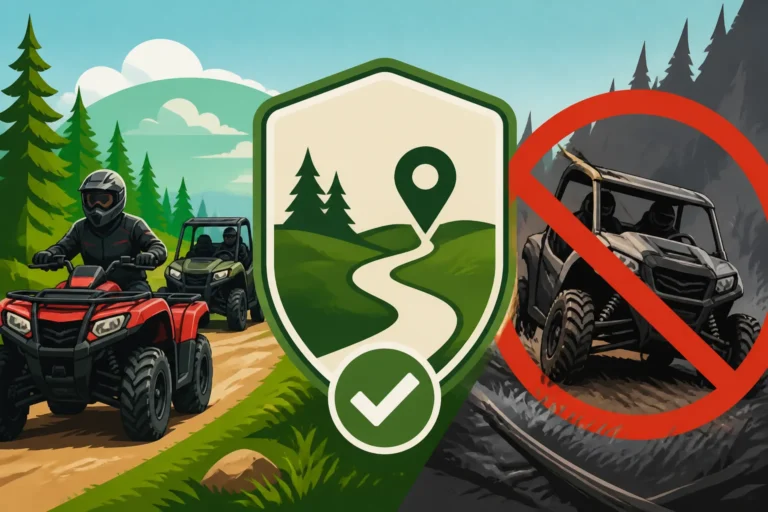
A visible track, old road, fire guard, or line on a mapping app does not by itself establish that you have permission to ride there. Land may be private, leased, restricted, or subject to local rules. A route may also cross different land types, each with its own access requirements. On Crown leases, for example, permission from the lease holder may be needed before entering. [Manitoba Crown Land Riding Explained]
Before unloading, check the rules for the particular trail or property, including any municipal by-laws, seasonal closures, and signs at the trailhead. Provincial parks are not a general invitation to ride wherever a map shows a track; motorized use is limited to designated routes where permitted. When you cannot confirm access, choose a route whose permissions and operating rules are clear rather than treating uncertainty as a green light.
If you use a digital mapping tool such as onX Offroad to plan or review a route, treat it as one planning aid—not proof that a trail is open or that you have permission to use it. Compare the route with current trail-system information, land access rules, signs, and local guidance. A downloaded map can be useful when reception is poor, but it cannot tell you whether a closure was posted after you saved it.
Planning a Safe Summer Ride
Check trail conditions before towing
Summer conditions can change quickly in the Interlake. Recent rain may leave a trail soft, deeply rutted, or difficult to pass without widening the damage. A dry stretch can bring dust, loose sand, and reduced visibility behind the machine ahead. Storms can drop branches or make a previously manageable crossing unsafe. Check local trail information close to departure, and be prepared to change the plan if conditions have shifted. [Manitoba Trail Conditions Before You Haul]
When possible, check with the club or organization responsible for the route. Ask whether the trail is open, whether any section is temporarily closed, and whether the trailhead is suitable for your trailer and machine. An app such as onX Offroad can help you keep a planned route organized, but it should not replace checking notices from the people responsible for the trail or the land.
Use a simple go-or-change checklist before you load:
| Check | What to confirm | Why it matters |
|---|---|---|
| Access | The route is open and riding is allowed | A mapped track may cross land where riding is restricted |
| Conditions | Recent rain, storm damage, or closures | Mud and washouts can turn an easy ride into a recovery job |
| Route length | Fuel, daylight, and turnaround options | Slow terrain can stretch a short-looking ride |
| Group | Machine fit, rider experience, and communication | The pace should work for everyone, not just the fastest rider |
| Trailhead | Parking, unloading space, and posted rules | A crowded or unsuitable launch point can disrupt others |
| Backup plan | Alternate route or place to stop | Conditions may be different once you arrive |
For current route details, [Manitoba Trail Closures After a Storm] and [Manitoba Riding After Heavy Rain] are useful topics to review before setting out. If you arrive and find a closure sign or an unsafe section, respect it. Do not ride around a barrier or create a new path through the bush to get past a problem.
Pack for heat, bugs, rain, and poor reception
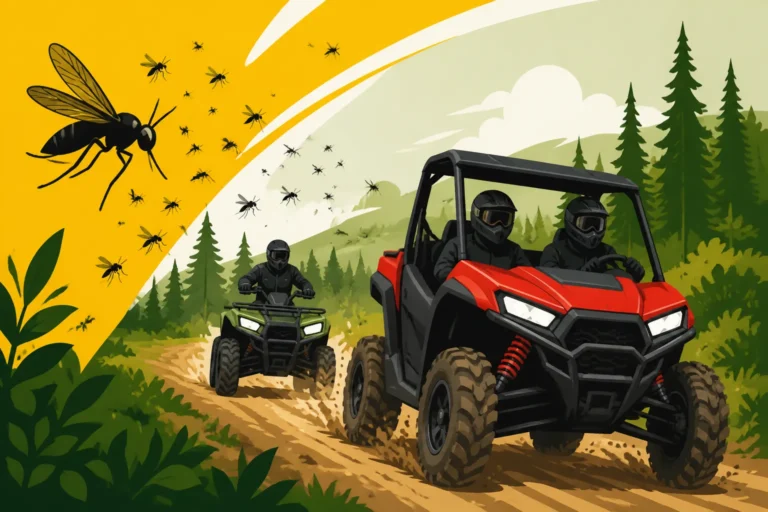
A sunny forecast does not guarantee an easy day outdoors. Summer rides can bring heat, sudden showers, black flies, wet brush, and a chilly return ride after the sun drops. Pack water for the full group, food, a basic first-aid kit, rain layers, insect protection, and clothing that covers skin without restricting movement. Bring more drinking water than you expect to need if the route is long or exposed.
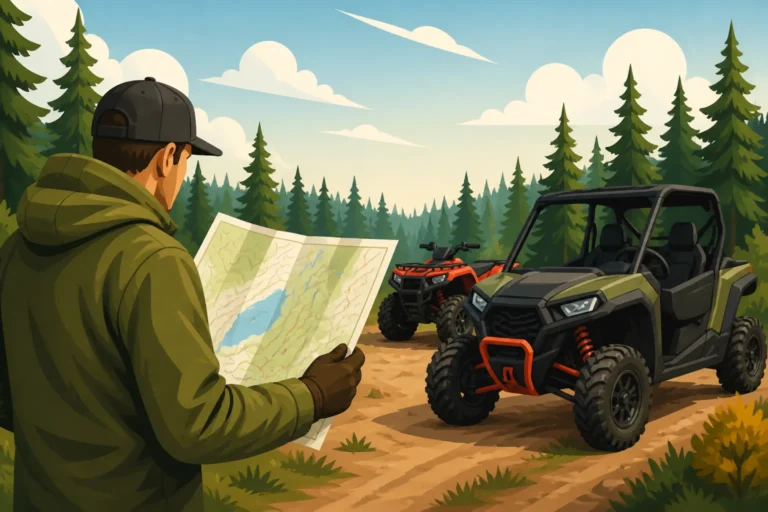
Plan for navigation and communication before leaving. Tell someone where you intend to ride and when you expect to return. Save route information for offline use, carry a paper map as a backup, and agree on what the group will do if machines become separated. Cell service can be unreliable in some bush areas, so do not build the plan around everyone being able to call for help at any moment. [Manitoba Trail Apps and Maps]
A compact recovery kit should suit your machine and the route. Depending on the ride, that may include a tow strap, basic tools, tire repair supplies, gloves, and a way to secure loose cargo. Check tires, brakes, lights, fluids, and the condition of any winch or recovery equipment before loading. It is much easier to notice a worn strap or low tire at home than beside a muddy trail.
Riding Considerately on Shared Trails
Keep the trail narrow and the pace sensible
On a tight bush trail, riding around a puddle can start a chain reaction: the next rider follows the new line, then the next person goes wider still. Before long, a narrow route has become a broad patch of churned ground. If a wet section is open and safe to cross, stay on the established trail rather than cutting a new bypass. If it is too deep or unsafe, turn back or use a clearly authorized alternate route.
Slow down where visibility is limited, near trail intersections, and when passing people on foot or horseback. Give other users room, avoid sudden acceleration that throws dust or debris, and follow posted direction or speed signs. A quiet, controlled pass near a cottage, yard, or campground is more neighborly—and safer—than charging through with a group spread out across the corridor. [Manitoba Trail Etiquette Locals Expect]
Keep noise in mind even when your machine is operating normally. Residential areas, lakeside properties, and campsites can be close to a route. Avoid unnecessary revving, especially when stopping, regrouping, or starting early. Pack out everything you bring in, including food wrappers, drink containers, broken straps, and disposable repair items. A clean trailhead helps keep access welcome for the next group.
Watch for wildlife and changing trail users
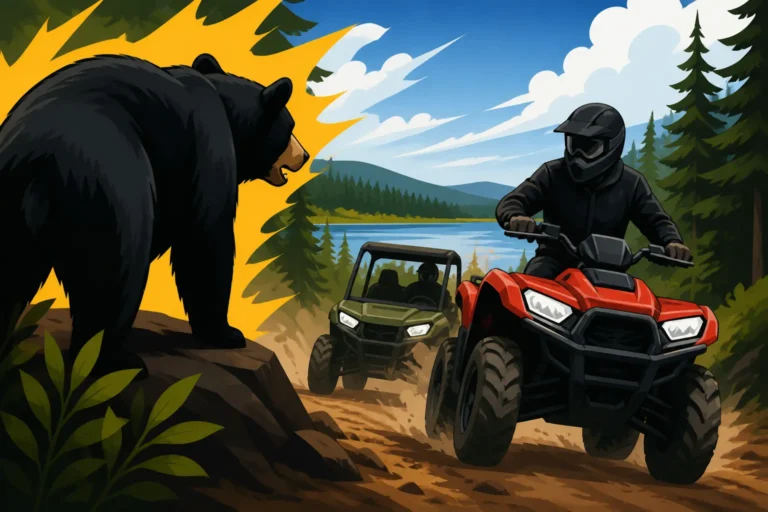
Summer brings wildlife activity, and an encounter can happen around a bend, beside a wetland, or near dense vegetation. Ride at a speed that gives you time to react. If you spot an animal, slow down, give it space, and do not chase it or crowd it for a photograph. If the animal is blocking the trail, wait at a safe distance or turn around rather than pressing forward. [Manitoba Wildlife on the Trail]
You may also meet hikers, cyclists, horses, or other motorized riders. Reduce speed early, make your presence known calmly, and give people enough room to feel safe. Horses can react unpredictably to a machine they do not expect, so stop well back and follow the rider’s directions. On a narrow trail, let the other user pass where there is stable, clear ground rather than forcing them into brush or a ditch.
Group leaders can make these encounters less stressful by keeping the group together without crowding. Agree on a regrouping point before departure, and avoid stopping where a bend or hill hides your machines from approaching users. [Manitoba Trail Etiquette Locals Expect]
Making the Most of a Summer Interlake Ride
Build a realistic route with room to turn around
A satisfying ride does not have to mean covering the maximum distance. Choose a route that leaves time for breaks, mechanical checks, and a slower pace if the trail is rough. Mark a few decision points before leaving: places where the group can shorten the ride, return to the trailhead, or stop if weather changes. This is especially helpful when riders have different comfort levels or machines with different fuel ranges.
Use a mapping app such as onX Offroad to help organize your intended route, then cross-check it with current access information and trail notices. Save the map for offline use if that feature is available to you, and carry a backup navigation option. Keep the route simple enough that everyone can follow it, including the person at the back of the group. A route that only the lead rider understands is not a good group plan.
If you are towing from Winnipeg or another distant starting point, check the trailhead details before you commit to the drive. Confirm where parking and unloading are allowed, whether there is room for your trailer, and whether any posted rules affect staging. For practical planning, see [Manitoba Trailheads With Trailer Parking]. Do not block a gate, access road, or space that other visitors need.
Leave with a plan for changing conditions
Before starting the machines, do a quick group check: everyone has water, the route is understood, and the lead and tail riders know their roles. Agree on a stopping signal and a simple response if someone has a problem. Keep the group size manageable on narrow trails, and do not leave a slower rider behind while the rest press on.
Reassess as the day unfolds. If rain begins, a trail becomes badly rutted, a machine develops a problem, or the group is running behind, shorten the ride. Turning around is not a failed outing; it is often the decision that keeps a manageable problem from becoming a difficult recovery or a late return. Tell someone when you are back, particularly if your original plan included a specific return time.
The most enjoyable Interlake rides are usually the ones that respect both the trail and the people who share it. Check access, prepare for summer conditions, ride within your group’s ability, and follow closures and posted instructions. For a broader look at seasonal preparation, [Manitoba Riding Season Month by Month] can help you plan beyond the summer months.
Disclaimer
This article is for general informational purposes only and does not constitute professional advice. Laws, prices and regulations vary by location and change over time. Consult a qualified professional for guidance on your specific situation.