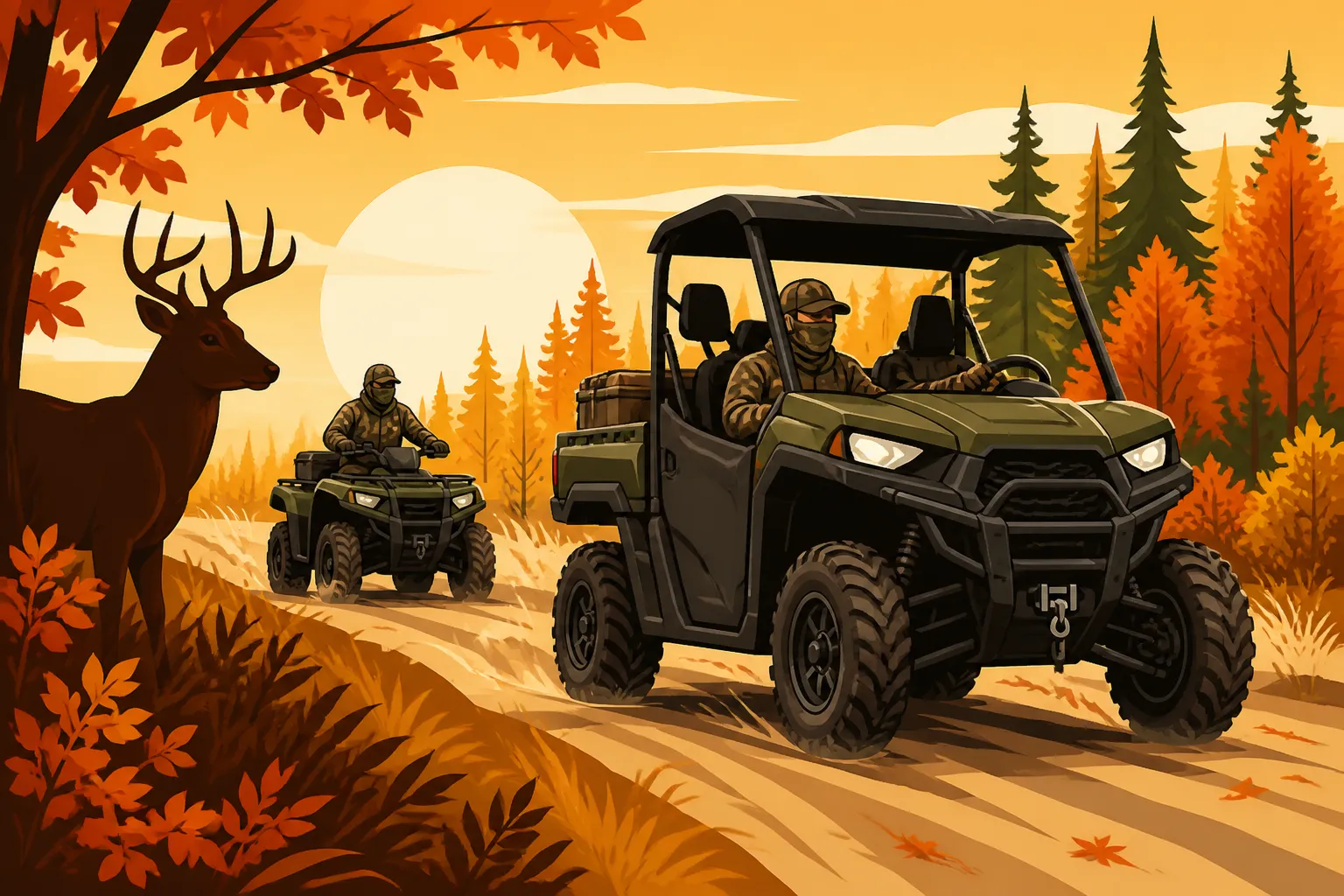
Fall Hunting Season on a Sandilands Club Trail
Fall hunting season can make a Sandilands ride feel less predictable: hunters may be using the same forest, access roads can be busy, and a familiar route may have a closure or local restriction. This guide explains how to plan an ATV or UTV trip carefully, check access before unloading, and share the area respectfully without assuming every trail is open.
Plan the Sandilands ride around hunting activity
Check trail access before you leave home
A route that was open on your last visit is not automatically open now. Trail access can depend on the club’s current information, land access, weather, local restrictions, and temporary closures. Hunting activity adds another reason to confirm the route before towing your machine to the Sandilands area.
Start with the club or trail organization responsible for the route you intend to use. Look for recent trail notices, ask whether the route is open to recreational riders, and check whether any sections are temporarily restricted. If you cannot get a clear answer, choose a different ride rather than treating silence as permission. The guide to [Manitoba Club Trails and Who Maintains Them] explains why confirming who manages a route can help you find the right person to ask.
Also check local rules and land access. A route crossing private property or a Crown lease may require permission, and permission to hunt does not necessarily mean permission to ride. Likewise, a trail shown on a map is not proof that riding is allowed there. For a broader explanation of access questions, see [Manitoba Crown Land Access Rules].
Mapping apps can help you understand where a route appears to go, but do not treat an app as an official trail-status notice or a substitute for permission. onX Offroad may be useful for reviewing mapped routes and planning navigation, especially when you are comparing a planned loop with the roads and trails around it. Check any app data against current club information and posted signs before riding.
Expect changes in traffic and trail conditions
During hunting season, you may encounter parked trucks, trailers, hunters walking to a location, or vehicles moving slowly along access roads. A trailhead that is quiet on a summer weekday can feel crowded when people are heading out early or returning with equipment. Build extra time into your plan, and do not assume a parked vehicle is abandoned or that its occupants are finished using the area.
Autumn conditions can also change quickly. Rain may soften the trail surface, leaves can hide ruts and rocks, and shorter daylight reduces the time available to finish a route. Before you haul, review [Manitoba Trail Conditions Before You Haul] and check for local reports about recent rain, storm damage, or closures. If a route looks wet or is beginning to rut, turning around is often the better choice for both your machine and the trail.
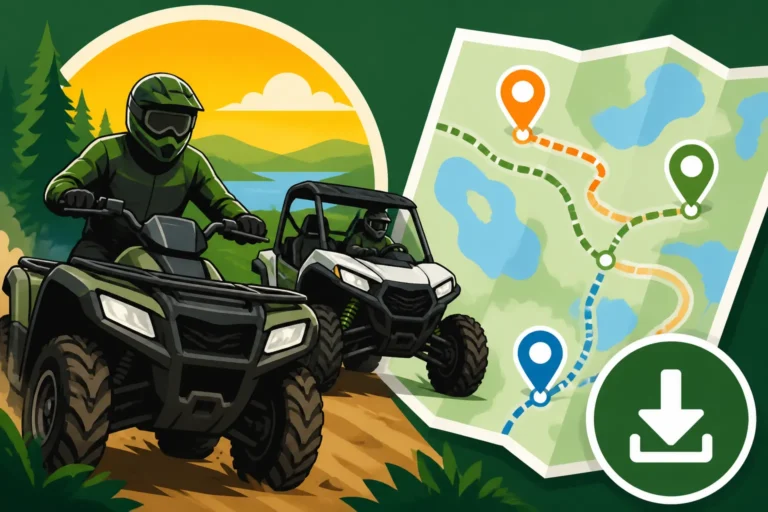
A navigation app such as onX Offroad can help you keep track of your intended route, but download or prepare for the possibility of weak cell service. Carry a paper map or another offline navigation option if your ride takes you away from reliable coverage. Tell someone where you plan to ride and when you expect to return; that simple step matters more when changing conditions could cause delays.
Share the area safely with hunters
Make your machine and your presence easy to notice
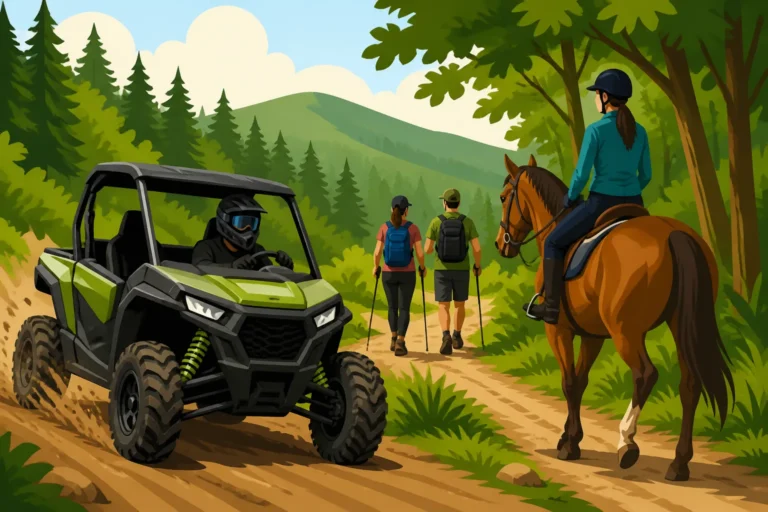
A hunter may be focused on a specific location, moving quietly, or watching the woods rather than listening for an approaching machine. Reduce speed near trail junctions, access points, parked vehicles, and places where people could be on foot. Stop if you see someone ahead, and give them time and space rather than trying to squeeze past.
Use required lights and equipment, and keep your machine in good working order. Avoid unnecessary revving, sudden acceleration, or loud idling near people who are hunting or staying at nearby properties. Noise can be frustrating for other trail users and can make a tense encounter more likely, especially when riders and hunters are surprised by one another. [Manitoba Trail Etiquette Locals Expect] offers useful guidance for sharing club trails respectfully.
If you come upon a hunter on foot, do not assume that a wave or brief conversation means the route is clear. Ask whether it is safe to pass, and follow their direction if they ask you to wait. If you cannot establish a clear, safe way through, turn around or take another route. Courtesy is not just about being polite; it gives everyone a chance to understand what is happening before a machine moves closer.
Treat firearms and hunting equipment with care
Never approach, touch, move, or handle a firearm, ammunition, bow, or other hunting equipment you find unattended. Do not ride through a group of hunters or into an area where you can see someone aiming, preparing equipment, or retrieving game. Give the activity a wide berth and use a different route where possible.
If you are hunting yourself and using an ATV or UTV to reach an area, riding access does not automatically authorize hunting, firearm use, or game retrieval in every location. Confirm the applicable hunting rules, land permissions, and machine-use restrictions before your trip. [Manitoba Hunting Access by Machine] is a useful related read for separating the question of machine access from the rules that apply to hunting.
A good habit is to discuss the plan with your riding group before anyone starts the engine. Agree that every rider will slow down when visibility is limited, stop when someone signals, and keep the group together near shared access areas. If one rider sees a hunter, a vehicle, or an uncertain trail condition, the message should reach the whole group—not just the person at the front.
| Situation | Safer response |
|---|---|
| A truck or trailer is parked beside the trail | Slow down, give it room, and watch for people nearby |
| You see a hunter on foot | Stop at a safe distance and ask whether passing is appropriate |
| A firearm or hunting equipment is unattended | Leave it untouched and avoid the immediate area |
| A trail sign or closure notice is posted | Follow the notice and do not ride around the restriction |
| You are unsure whether a route is open | Confirm with the responsible club or land authority before riding |
Confirm rules, permissions, and closures
Do not confuse a trail map with permission to ride
A mapped line, a visible tire track, or an old route description does not establish current legal access. Routes can cross different kinds of land, and the person or organization responsible for one section may not control the next. If your planned route leaves a designated club trail, confirm who owns or manages the land and whether you have permission to travel there.
This is especially important if your ride connects a club trail to a hunting location, a cabin, a private road, or a Crown lease. Permission for one purpose may not cover another. A landowner could allow hunting but not recreational riding, or a lease holder could have access concerns that are not obvious from the trail. If the route is unclear, ask before you go rather than relying on what another rider did last season.
onX Offroad can help riders compare mapped routes and think through navigation, but it should be used as a planning aid—not as proof of permission, a current closure notice, or a legal boundary determination. Keep checking the signs on the ground and information from the group or authority responsible for the route. For more on the limits of access, see [Manitoba Private Land Permission] and [Manitoba Crown Lease Access Rules].
Watch for seasonal closures and local notices
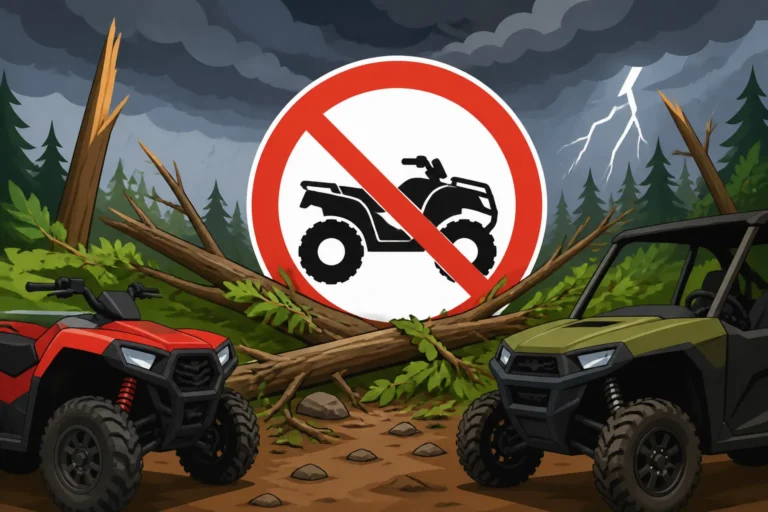
A closure can be temporary and still matter for your ride. Weather damage, wildfire conditions, maintenance, land-use concerns, or a local decision may affect access. Do not move a barricade, ride around a closed gate, or assume a short detour is allowed. A closure notice applies even when the trail beyond it appears dry or passable.
Before heading out, check any relevant club updates and government or local notices for the area. During periods of wildfire risk, restrictions can affect travel and outdoor activity, so review [Manitoba Wildfire Season Rules for Riders] when applicable. Also look for storm-related changes through [Manitoba Trail Closures After a Storm]. If a sign at the trailhead conflicts with an older map or saved route, follow the current sign and seek clarification.
Keep a flexible plan. Pick a main route, identify a shorter alternative, and agree on a turnaround point before the group sets off. If the trail is closed, too muddy, crowded, or unclear, changing plans is not a failed ride. It is a way to avoid damaging the trail, getting into a conflict, or ending up somewhere your group is not authorized to be.
Prepare your group for a responsible autumn ride
Pack for shorter days and slower travel
Autumn rides often take longer than expected. A stopped group, a muddy section, a detour, or a conversation about access can consume daylight quickly. Bring warm layers, water, food, a first-aid kit, and a charged phone. If cell coverage may be unreliable, carry a navigation backup and make sure more than one rider understands the planned route.
Before leaving the staging area, inspect tires, lights, brakes, and basic recovery equipment. Carry what your group needs to manage a minor problem without damaging the trail or leaving someone behind. Decide who is leading and who is sweeping, and make sure the last rider knows the plan if the group has to stop or turn around. For local wildlife awareness, [Manitoba Wildlife on the Trail] is another helpful topic to review.
If hunting activity is present, be especially deliberate about where you stop. Avoid blocking gates, driveways, access roads, and places where people may need to load or unload equipment. Park only where it is permitted, and keep noise and unnecessary movement away from nearby cabins or residences. A quick pre-ride discussion can prevent the awkward moment when one rider’s “short stop” blocks someone else’s access.
Use a simple go or no-go check
Before unloading, ask four practical questions: Is the route confirmed open? Do we have permission for every part of the planned ride? Can we travel and return safely before dark? Is the group prepared to change plans if hunters, closures, or trail conditions make the route unsuitable?
If any answer is uncertain, pause and resolve it. Contact the club, land manager, or appropriate local office rather than guessing. The resource [Manitoba Trail Conditions Before You Haul] can help frame those checks, while [Manitoba Hunting Access by Machine] is relevant if your ride involves reaching a hunting area. For broader trail-sharing guidance, [Manitoba Trail Etiquette Locals Expect] can help riders set expectations before they start.
A practical Sandilands fall ride is not about covering the most ground. It is about using a route that is open, respecting the people already in the area, and leaving the trail in good condition for the next visitor. When access is confirmed and the group is ready to slow down, communicate, and turn around if needed, ATV and UTV riders can make better decisions throughout hunting season.
Disclaimer
This article is for general informational purposes only and does not constitute professional advice. Laws, prices and regulations vary by location and change over time. Consult a qualified professional for guidance on your specific situation.