Consent From a Landowner in Manitoba
One of the biggest headaches for off-road enthusiasts in Manitoba, especially when you're exploring beyond the designated club trails or provincial parks, is figuring out where you're actually allowed to ride. It's not always as simple as seeing an open field or a tempting bush path and assuming it's fair game. The truth is, many riders get caught off guard by trespass laws, leading to fines, frustration, and damaged relationships with rural communities. This guide is here to walk you through the critical importance of obtaining landowner consent in Manitoba, how to approach it, and what you need to know to ride responsibly and legally.
Why Landowner Consent is Absolutely Essential in Manitoba
Many riders, especially those new to the sport or visiting from out of province, might not fully grasp the legal and ethical implications of riding on land that isn't their own or a publicly designated trail. It's easy to assume that if there's no fence or "no trespassing" sign, the land is open for business. Unfortunately, that assumption can lead to serious trouble. In Manitoba, the vast majority of land outside of major population centres is either privately owned, managed as Crown land, or falls under municipal jurisdiction, each with its own set of rules and requirements for access.
The Legal Framework: Trespass vs. Permitted Use
At its core, riding an off-road vehicle (ORV) on private land without explicit permission from the owner is considered trespassing. It doesn't matter if you meant no harm, if you thought it was abandoned, or if you were just "cutting through." If the land belongs to someone else and you haven't been given the green light, you're breaking the law. Manitoba's Petty Trespasses Act is pretty clear on this. Property owners have the right to privacy and the peaceful enjoyment of their land, and that includes keeping unauthorized vehicles off it.
This isn't just about a potential slap on the wrist. Trespassing can result in fines, and if you cause any damage to the property – whether it's tearing up a field, damaging crops, or disturbing livestock – you could face civil lawsuits for damages. Imagine rolling through a farmer's newly planted canola field, or startling a herd of cattle. The financial impact on the landowner can be significant, and your quick shortcut could become a very expensive mistake. Even seemingly innocuous actions, like riding along a fence line, can cause stress to animals or damage to property that might not be immediately visible. Remember, [Manitoba Trespass Law for Riders] exists for a reason, and it's something every rider needs to take seriously.
The Ethical Angle: Respecting Private Property
Beyond the legalities, there's a huge ethical component to respecting private property. Landowners, whether they're farmers, cottagers, or just people who own a piece of bush, have often invested their lives and livelihoods into their land. They care deeply about it. Uninvited riders can cause a lot of anxiety and frustration. It erodes trust within the community, making it harder for all riders to find places to enjoy their sport.
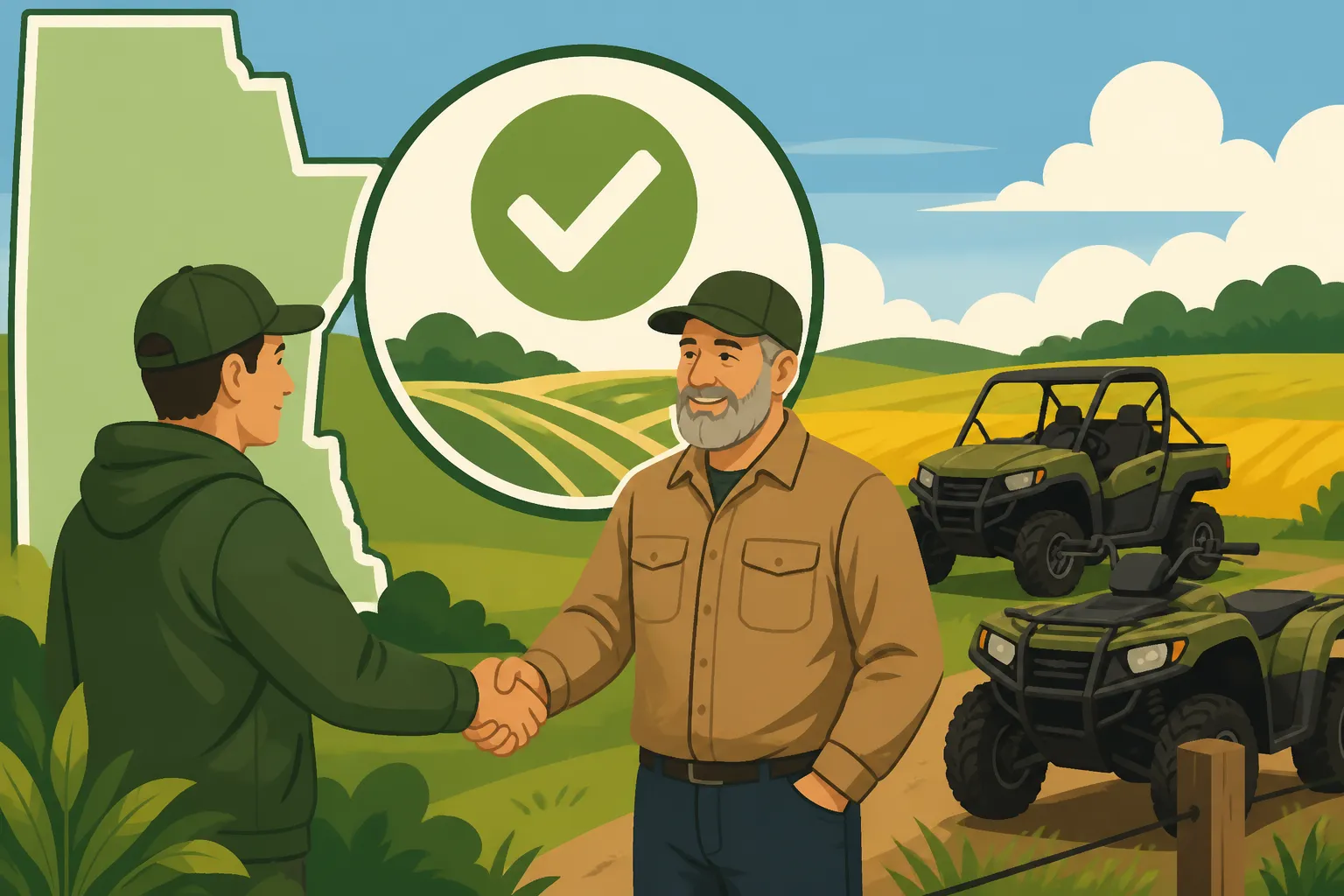
When you take the time to ask for permission, you're showing respect. You're acknowledging their ownership and their right to decide who accesses their property. This simple act can open doors to riding opportunities you might never have found otherwise. Many landowners are perfectly happy to let responsible riders use their land, especially if they know who you are, what you're doing, and when you'll be there. It's about building positive relationships, not just avoiding a ticket. Ignoring this basic courtesy casts a shadow over the entire ORV community, making it more challenging for everyone to find good places to ride.
How to Obtain Consent from a Landowner
So, you've scouted a promising area, perhaps a network of old logging roads or a scenic piece of bush near your cabin, and you suspect it's private property. The next logical step is to get permission. This might seem daunting, especially if you're not used to approaching strangers, but it's a fundamental part of responsible riding.
Identifying the Landowner and Making Contact
The first hurdle is often figuring out who actually owns the land. This isn't always obvious. Sometimes, there might be a clear farmhouse nearby, or a name on a mailbox. Other times, the land might look undeveloped or vacant. Here are a few ways to identify and contact a landowner:
- Local Enquiries: If you're in a rural area, ask around at the local general store, gas station, or community centre. People in small towns often know who owns what land. Be polite, explain your intentions, and ask if they can point you in the right direction.
- Municipal Offices: Your local municipal office (RM, LGD, or town office) often has property assessment maps that can identify landowners by lot number or legal description. You might need to visit in person or check their website for public access to property information.
- Online Mapping Tools: Some online mapping services (like municipal GIS systems, if available publicly) can show property lines and ownership information, though this varies greatly by region.
- Knock on the Door (Respectfully): If there's a dwelling on or near the property, a direct approach can work. Choose a reasonable time of day, go alone or with one other person, and be prepared to introduce yourself and explain your request clearly and concisely. If you feel uncomfortable, or if the property seems unwelcoming, don't push it.
When you do make contact, be clear about your intentions. Explain that you're an ORV rider, you're looking for a place to enjoy the trails, and you want to ensure you're doing so legally and respectfully. Offer to show them your vehicle, so they know what kind of machine you're on, especially if you're riding a [Manitoba Registration for a Side-by-Side] or a different kind of machine.
What to Discuss: Setting Expectations and Boundaries
Once you've got the landowner's attention, it's crucial to have a clear conversation. Don't just ask, "Can I ride here?" Be specific and proactive in addressing their potential concerns.
Here's what to discuss:
- Specific Areas: Point out on a map or describe exactly where you'd like to ride. Are you looking to use an existing trail, a fire break, or just a specific section of their bush?
- Time and Frequency: How often do you plan to ride? Just once, or regularly? What days and times of day? (e.g., "I'd only ride on weekends, between 10 AM and 4 PM, and never during hunting season.")
- Group Size: Will you be riding alone, or with a small group of friends? If with a group, how many machines?
- Respect for Property: Reassure them that you will stay on designated paths, won't disturb livestock, won't cut fences, and will pack out anything you pack in. Mention that you're well-equipped with things like a SuperATV winch kit, so you'll be able to recover your machine if you get stuck, preventing potential damage to their land from frantic recovery efforts.
- Safety and Noise: Address concerns about noise and safety. Explain that your machine has a proper muffler and that you ride responsibly.
- Contact Information: Offer your name and phone number so they can reach you if there's an issue or if their plans change. Ask for their preferred method of contact as well.
- Other Activities: Ask if there are any specific times or areas to avoid due to farming operations, hunting, or family gatherings. [Manitoba Hunting Access by Machine] often requires specific considerations, for example.
This conversation is your chance to build trust. Be honest, be polite, and be prepared to hear "no." If they say no, thank them for their time and move on. Pushing the issue will only create resentment.
Documenting Consent: Why a Verbal Agreement Might Not Be Enough
While a verbal "yes" is a great start, relying solely on spoken permission can sometimes lead to misunderstandings down the road. Memories fade, people move, or property changes hands. For your protection and theirs, especially for regular access, consider documenting the agreement.
This doesn't need to be a complex legal document. A simple written note, signed by both parties, outlining the agreed-upon terms can be incredibly helpful. It could include:
- The names of the rider(s) and landowner(s).
- A description of the property.
- The specific areas where riding is permitted.
- Any restrictions (times, dates, number of riders, conditions of use).
- The duration of the permission (e.g., "for the 2024 season," "until further notice").
- Date and signatures.
This written record serves as proof of consent if questions arise. It also forces both parties to be very clear about the terms, preventing future disputes. If an officer ever questions your presence on the land, having a signed note from the owner can save you a lot of hassle.
Navigating Different Types of Land in Manitoba
Manitoba offers a diverse landscape, from vast agricultural fields to dense boreal forests and countless lakes. Knowing the difference between private land, Crown land, and municipal property is crucial, as the rules for each vary significantly.
Private Land: Farms, Acreages, and Undeveloped Lots
This is the most straightforward category. If a piece of land is privately owned, you must have explicit permission from the owner to ride on it. This includes everything from active farms and cultivated fields to wooded lots, recreational acreages, and even vacant parcels of land. Just because land looks unused doesn't mean it's public. Many landowners keep undeveloped sections for future use, wildlife habitat, or simply as part of their larger property.
For farmers, their land is their livelihood. Driving an ORV through crops or sensitive areas can cause significant economic damage. Even riding on headlands or along field edges can compact soil, spread weeds, or disturb drainage systems. The same goes for livestock producers; disturbing animals can lead to stress, injury, or even lost production. When seeking [Consent From a Landowner in Manitoba] who operates a farm, be extra sensitive to their operations and offer to adhere to specific agricultural needs, such as avoiding fields during planting or harvesting season. Even a product like a SuperATV cargo box, used for carrying gear, should be kept off sensitive ground.
Crown Land and Crown Leases: Special Considerations
Crown land in Manitoba is land owned by the provincial government. It includes provincial forests, parks (with specific caveats), and vast tracts of undeveloped wilderness. While often perceived as "public," Crown land isn't a free-for-all for ORV riding. There are often rules and restrictions in place.
- General Access: In many areas of Crown land, responsible ORV use is permitted, but this can vary. You generally need to stay on existing trails, roads, or designated routes. Cross-country travel can be restricted to protect sensitive ecosystems or during certain times (e.g., wet conditions). Always check with Manitoba Environment and Climate Change for specific regulations in the area you plan to ride. [Manitoba Crown Land Riding Explained] is a good starting point.
- Provincial Parks: Provincial Parks have their own strict rules. Generally, ORVs are restricted to designated trails only, and many parks don't allow them at all. Never assume you can ride in a park without first checking the park's specific regulations. For example, [Manitoba Parks Allow Machines on Designated Routes Only].
- Crown Leases: This is a critical distinction. While the land itself is Crown land, it may be leased to an individual or company for a specific purpose, such as agriculture (grazing leases), forestry, or commercial operations. When Crown land is under lease, the leaseholder has exclusive rights to use that land for the term of their lease. This means you must obtain permission from the leaseholder to ride on it, just as you would with private property. This is a common point of confusion for riders, but legally, the leaseholder's permission is paramount. [Manitoba Crown Lease Access Rules] are very clear on this.
| Land Type | Who Owns It | Who Grants Permission | Common Riding Scenarios |
|---|---|---|---|
| Private Land | Individual, Family, Company | The registered owner | Farms, cottages, undeveloped lots, recreational properties |
| Crown Land (General) | Provincial Government | Provincial government (rules & regulations) | Provincial forests, wilderness areas (check local rules) |
| Crown Lease | Provincial Government (leased) | The leaseholder | Grazing lands, forestry operations, commercial sites |
| Municipal Land | City, Town, RM, LGD | The municipal council/bylaws | Road allowances, ditches, parks, public works land |
Municipal and Town Lands: Local By-laws and Rules
Cities, towns, rural municipalities (RMs), and Local Government Districts (LGDs) also own various parcels of land within their boundaries. This can include municipal parks, public utility land, road allowances, and even some ditches. Access to these areas is governed by municipal by-laws, which can vary wildly from one community to another.
Many municipalities have by-laws that restrict or prohibit ORV use on municipal roads, ditches, and other public lands within their jurisdiction, especially near populated areas. While the province might allow [Manitoba Ditch Riding Rules] in some areas, local by-laws can override or further restrict this. You might find some communities have specific by-laws that open certain routes for ORVs, but these are exceptions rather than the rule.
Before riding on any land that you suspect might be under municipal control, it's wise to check the local by-laws. A quick call to the municipal office can clarify what's allowed and what's not. Assuming provincial rules apply everywhere can lead to tickets from local law enforcement. [Manitoba Municipal By-Law Powers] are broad, and they are enforced.
Common Pitfalls and Misconceptions About Access
Even with the best intentions, riders can sometimes fall into common traps regarding land access. Misunderstandings about ownership and legal permissions are frequent, and they can lead to uncomfortable, or even costly, situations.
"It's Just a Ditch, No One Owns It" – The Dangers of Assumption
This is perhaps one of the most widespread misconceptions among ORV riders. While ditches can be legal places to ride in Manitoba under specific conditions (e.g., [Manitoba Ditch Travel With Traffic]), it's critical to understand that the land underneath and beside the ditch is still owned by someone. Road allowances, including ditches, are typically owned by the Crown (provincial government) or a municipality. The adjacent property owner often has rights and responsibilities related to that ditch area, even if they don't own the land itself.
Riding in a ditch might be legal from an operating standpoint, but it doesn't give you free rein to trespass onto the adjacent private property. Swerving out of the ditch onto a field, or parking your machine on someone's property line, is still trespassing. Always assume the land beyond the ditch is private and requires permission. Furthermore, just because you can legally ride in some ditches doesn't mean all ditches are open. Local by-laws can prohibit ditch riding, and you must respect those local rules. [Manitoba Ditch Riding Rules] come with a lot of conditions, and not all ditches are created equal in the eyes of the law.
Old Trails and Unused Land: Still Someone's Property
Another common pitfall is the belief that if a trail looks old, overgrown, or unused, it's implicitly open for public use. Or, if a piece of land appears vacant or neglected, it must be abandoned. This is rarely the case. Old logging roads, forgotten farm paths, or trails cut years ago for access by previous landowners are almost certainly still part of someone's private property or fall within a Crown lease.
Just because you don't see anyone actively using or maintaining the land doesn't mean it's fair game. Landowners may not visit certain parts of their property regularly, or they may be managing it for conservation purposes. The absence of "no trespassing" signs also does not grant permission. It's the responsibility of the rider to ascertain ownership and obtain permission, not the landowner's responsibility to explicitly forbid access to every corner of their property. You might see a path that looks perfect for testing out new SuperATV suspension, but without consent, it's off-limits.
The Consequences of Trespassing: Fines, Damage, and Loss of Trust
Ignoring landowner consent can have a range of negative consequences, from minor inconveniences to serious legal and financial repercussions.
- Fines: Under Manitoba's Petty Trespasses Act, you can be fined for trespassing. These aren't usually astronomical, but they are certainly an unwelcome expense. Repeat offenses can lead to higher fines.
- Civil Liability for Damages: If your ORV causes any damage to private property – whether it's rutting up a field, damaging a fence, or disturbing livestock – the landowner can pursue civil action against you to recover their losses. This can be far more expensive than a simple fine, potentially costing thousands of dollars, plus legal fees.
- Loss of Future Access: Trespassing burns bridges. If you trespass on someone's land, not only will you likely lose any chance of gaining future permission from that landowner, but word often spreads in rural communities. This can make it harder for you, and for other responsible riders, to find places to ride in the future. It damages the reputation of the entire ORV community.
- Impoundment: In some cases, if you're found trespassing, law enforcement might have the authority to impound your vehicle, adding towing and storage fees to your list of expenses.
- Confrontation: Trespassing can lead to uncomfortable, and potentially volatile, confrontations with landowners who are understandably protective of their property. It's always best to avoid these situations entirely by getting permission upfront.
Ultimately, respecting landowner rights and seeking consent is about more than just avoiding trouble; it's about being a responsible, ethical, and welcome member of the outdoor recreation community in Manitoba. It ensures the long-term viability of ORV riding by fostering positive relationships and promoting sustainable access to the province's beautiful landscapes.
Disclaimer
This article is for general informational purposes only and does not constitute professional advice. Laws, prices and regulations vary by location and change over time. Consult a qualified professional for guidance on your specific situation.