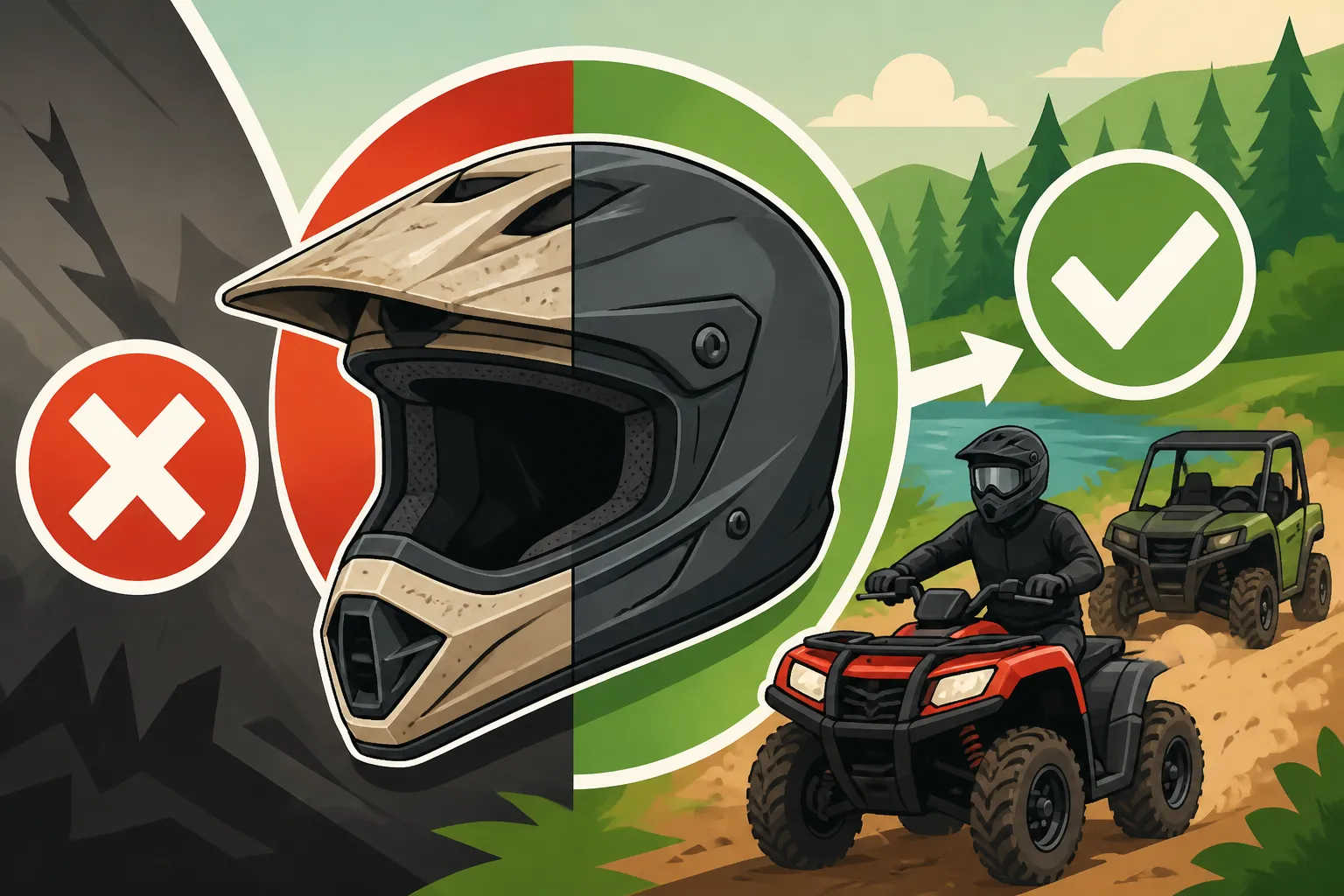
Keeping an Older Helmet the Rules Still Accept
One of the most common dilemmas riders face when it comes to safety gear is whether their trusty, perhaps slightly battle-scarred, helmet is still good enough. It's easy to look at a helmet that "seems fine" and rationalize keeping it, especially when new ones can be a significant investment. This guide is here to walk you through exactly what Manitoba's rules say about off-road vehicle (ORV) helmets, how to properly inspect your older head protection, and, most importantly, when it's truly time to say goodbye and invest in new gear for your safety.
The Rider's Dilemma: Why We Cling to Our Trusted Helmets
We've all been there: staring at our well-worn helmet, knowing it's seen a few seasons, but feeling a pang of reluctance at the thought of replacing it. There are valid reasons why riders often delay upgrading their head protection, but it's crucial to understand when those reasons start to compromise your safety.
Comfort and Familiarity
Let's be honest, a new helmet can feel stiff, unfamiliar, and sometimes downright uncomfortable until it's properly broken in. Your old helmet, on the other hand, fits like a glove. The padding has molded to your head, the straps are adjusted just right, and you know exactly how it feels on those long trail rides. This comfort isn't just about feeling good; it can also contribute to focus on the trail, as you're not constantly adjusting or distracted by an awkward fit. We invest time, and often a decent amount of money, into finding that "perfect" helmet, and it feels wasteful to discard something that still feels perfectly fine.
There's also an emotional attachment. That helmet has been with you through countless adventures, muddy trails, and memorable trips with friends. It's part of your riding identity. The thought of starting fresh with a new one can feel like losing an old friend, especially if it’s a brand or style you particularly liked and that might not even be available anymore. This attachment is perfectly understandable, but it's important to separate sentimentality from actual safety.
The Misconception of "Just a Few Years Old"
Many riders operate under the assumption that if a helmet looks good on the outside – no visible cracks, no major scuffs – then it must still be safe. We think, "I only ride a few times a year, so it's practically new!" or "It's just sat in the garage; it hasn't been abused." Unfortunately, this can be a dangerous misconception. A helmet's ability to protect isn't solely judged by its external appearance. The critical components that absorb impact are often hidden from view and degrade over time, even if the helmet has never been involved in a crash or dropped.
The inner EPS (Expanded Polystyrene) liner, which is essentially high-density Styrofoam, is designed to crush upon impact, dissipating energy and protecting your head. Over time, this material can lose some of its resilience due to age, temperature fluctuations, and exposure to everyday chemicals, like those found in cleaning products or even exhaust fumes. This degradation is invisible, meaning a helmet that looks pristine on the outside could be a ticking time bomb regarding its actual protective capabilities. Relying solely on visual cues can give a false sense of security, which is why understanding the deeper science of helmet longevity is so vital.
Manitoba's Official Stance on ORV Helmets
Navigating the rules and regulations around ORV use in Manitoba can feel like deciphering ancient texts sometimes, and helmets are no exception. The good news is that the province has clear guidelines regarding acceptable head protection, focusing on established safety standards rather than arbitrary expiry dates.
The Law and Accepted Safety Standards
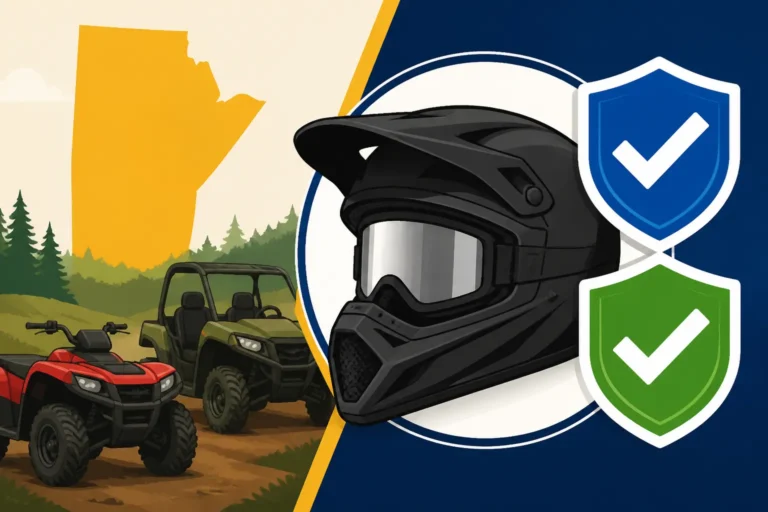
In Manitoba, the Off-Road Vehicles Act is quite clear that if you're operating or riding as a passenger on an ORV, you must wear a helmet that meets specific safety standards. Crucially, the law doesn't state a mandatory "expiry date" for helmets based on age. Instead, it focuses on the certification. The acceptable standards generally include:
- DOT (Department of Transportation) Standard: This is a minimum standard for helmets used on public roads in the United States, and it's widely accepted for ORV use in Manitoba. Helmets with a DOT certification have undergone testing to ensure they can withstand certain impacts.
- Snell Memorial Foundation Standard (M or SA): Snell is a voluntary, non-profit organization that develops more stringent helmet testing standards. A Snell-certified helmet (look for M2015, M2020, SA2015, SA2020, etc.) typically offers a higher level of impact protection than DOT-only helmets, including testing for multiple impacts in the same area.
- ECE (Economic Commission for Europe) Regulation 22.05 or 22.06: This is an internationally recognized standard, especially prevalent in Europe, and is also accepted in Manitoba. ECE testing is comprehensive and includes impact, abrasion, and retention system assessments.
The key takeaway here is that an older helmet, if it still clearly displays one of these certifications and has not been compromised in any other way (which we'll get to), is technically still acceptable under the law. For a deeper dive into the legal requirements, you can check out [Manitoba Helmet Law and Its Exemptions] and [Manitoba Helmet Standards Accepted]. The emphasis is on proving the helmet was designed and tested to a recognized protective level.
How to Identify a Certified Helmet
So, how do you know if your helmet meets these critical standards? It’s usually simpler than you might think, though sometimes the labels can fade over time. You'll typically find certification labels on the back of the helmet, often as a sticker, and/or sewn into the internal padding or chin strap.
- DOT: Look for a sticker on the back of the helmet that clearly states "DOT FMVSS No. 218." This indicates compliance with the Federal Motor Vehicle Safety Standard 218. It's a federal self-certification, meaning manufacturers certify their own products, but they are subject to random testing.
- Snell: You'll usually find a Snell sticker inside the helmet, often under the comfort liner, with a code like "Snell M2015" or "Snell M2020." The "M" stands for motorcycle, which covers ORV use. Snell certification is a rigorous, independent testing process.
- ECE: The ECE label is often a circular sticker or sewn tag, typically found on the chin strap or inside the helmet, containing "E" followed by a number (indicating the country of certification), and then a series of numbers like "22.05" or "22.06" (the specific regulation version).
It's vital that these labels are present and legible. If they've worn off, peeled away, or been removed, an officer might have difficulty verifying your helmet's compliance during an [Manitoba Equipment Checks by Officers]. Without clear proof of certification, you could face penalties, regardless of how good you think your helmet is. Be wary of novelty helmets that might look protective but lack these essential certification marks; they offer virtually no real protection in a crash.
Assessing Your Older Helmet: A Practical Checklist
Even if your helmet proudly displays a valid certification sticker, that doesn't automatically mean it's still safe. Helmets are complex pieces of safety equipment, and their effectiveness can degrade over time due to various factors, including use, storage, and accidental impacts. It's essential to perform a thorough, honest inspection of your older helmet regularly.
External Inspection: Shell and Visor
Start with the visible parts of your helmet. The outer shell is your first line of defense against penetration and abrasion, while the visor ensures clear vision.
- Shell Integrity: Carefully examine the entire outer shell for any signs of cracks, deep scratches, gouges, or areas where the finish is flaking off. Even seemingly minor cracks, especially around vents or attachment points, can indicate a compromised shell that won't provide adequate protection in an impact. Deeper scratches can weaken the material, creating a potential failure point. Remember, the shell is designed to spread impact force over a wide area; any weakness can prevent it from doing its job effectively.
- Visor Condition: Your visor is critical for clear vision, protecting your eyes from dust, debris, insects, and the elements. Check for deep scratches, cracks, or excessive haziness that could impair your vision, especially in low light or glare conditions. A scratched visor can create dangerous distortions, making it harder to see obstacles or other riders. While you can replace visors, a severely damaged one should prompt you to consider the overall age and condition of the helmet. Maintaining a clear, scratch-free visor is just as important as ensuring your machine's [Manitoba Lighting Requirements on a Machine] are up to par for safe riding, especially when you're looking for every advantage to enhance your field of view with accessories from companies like SuperATV.
Internal Inspection: Liner, Straps, and Buckle
The interior components of your helmet are just as, if not more, crucial than the exterior shell. These are the parts that directly manage impact energy and keep the helmet securely on your head.
- EPS Liner: This is the most critical part of your helmet for impact absorption. Gently pull back the comfort padding (if removable) to expose the EPS foam. Look for any signs of crushing, cracking, dents, or areas where the foam appears compressed or discolored. The EPS is designed to crush once to absorb energy. If it's already compromised, it won't protect you in a subsequent impact. Run your fingers over the surface; it should feel smooth and uniform, not lumpy or brittle.
- Comfort Padding and Fit: Over time, the internal comfort padding can compress, flatten, or become detached. This isn't just a comfort issue; it affects the helmet's fit. A helmet that's too loose can shift during an impact, reducing its protective capability or even coming off. If the padding is excessively worn, torn, or no longer provides a snug, secure fit, it's a major red flag. Also, consider the hygiene – if the padding is perpetually smelly or stained despite cleaning, it might be time for an upgrade.
- Chin Strap and Buckle: The retention system (chin strap and buckle) is what keeps the helmet on your head during a crash. Inspect the chin strap for fraying, tears, or excessive wear. Check the buckle mechanism to ensure it latches securely and releases properly. If it's a D-ring system, make sure the rings aren't bent or excessively worn. Any compromise here means the helmet could come off in an accident, rendering all other protective features useless. A faulty buckle or worn strap means the helmet cannot perform its fundamental job.
Impact History and Storage Conditions
These are two often-overlooked factors that significantly impact a helmet's lifespan, regardless of its visible condition.
- Any Impact, Any Time: This is the golden rule: A helmet is designed for one impact. If your helmet has ever been involved in a crash, even a minor one, or if it's been dropped onto a hard surface from a significant height (say, off the back of your ORV), it needs to be replaced immediately. The EPS liner can suffer invisible damage, compressing in the area of impact, which means it won't be able to absorb energy effectively in a subsequent crash. Even if there are no visible external cracks, the internal structure may be compromised. It's a tough pill to swallow, especially if the helmet looks perfectly fine, but your head isn't worth gambling on.
- Storage Environment: How you store your helmet plays a huge role in its longevity. Helmets should be stored in a cool, dry place, away from direct sunlight and extreme temperatures. Prolonged exposure to UV light can degrade the shell materials, paints, and internal components. High heat (like being left in a hot vehicle) can accelerate the breakdown of glues and resins, while freezing temperatures can make materials brittle. Avoid exposing your helmet to harsh chemicals, fuels, or solvents, as these can severely weaken the materials. Riders who keep their machines and gear tucked away, perhaps like in a [Manitoba Machines Stored Over Winter] scenario, should pay particular attention to the environmental conditions their helmet is exposed to during the off-season.
Beyond the Rules: When an Older Helmet Just Isn't Enough
While Manitoba's laws focus on certification, there are compelling reasons, rooted in safety science and practical experience, why you should consider replacing your helmet even if it technically meets the legal requirements. Sometimes, an older helmet just can't offer the level of protection you need, especially as technology advances and materials age.
The "One-Impact" Rule and Material Degradation
We mentioned it earlier, but it bears repeating: every helmet is designed as a single-impact device. Its primary function is to absorb and dissipate the energy of one significant blow to protect your head. Once that energy has been absorbed – whether through a collision, a serious fall, or even a hard drop onto concrete – the internal EPS liner's structure is compromised. It cannot "reset" or regain its full protective capacity. Even if the shell looks untouched, the hidden damage means the helmet can no longer guarantee the safety it was designed for.
Beyond impacts, materials simply degrade over time. The resins that bind the shell fibres, the glues that hold the various layers together, and the very foam of the EPS liner can all break down due to natural aging processes. This isn't a dramatic, overnight failure; it's a gradual weakening that diminishes the helmet's ability to perform as intended. Most helmet manufacturers and safety organizations recommend replacing a helmet every 5 to 7 years from its manufacture date, regardless of its apparent condition or impact history. This guideline accounts for this invisible, time-based material degradation, ensuring that the helmet's components are still at their peak performance when you need them most.
Evolving Safety Technology and Fit
Helmet technology, like that of ORVs themselves, is constantly improving. Newer helmets incorporate advancements in materials, design, and impact management systems that simply didn't exist a decade ago. For example, many modern helmets feature rotational impact protection systems (like MIPS), which are designed to reduce the rotational forces that can cause severe brain injuries, an advancement not typically found in older models. Materials are becoming lighter, stronger, and more energy-absorbent, offering superior protection with less bulk.
Ventilation systems are also much better, leading to greater rider comfort and reducing fatigue, which indirectly contributes to safety. Furthermore, even if your helmet once fit perfectly, the internal padding can compress and pack out over years of use, leading to a looser, less secure fit. A helmet that moves around on your head during a crash can be just as dangerous as one that's structurally compromised. Regularly checking your fit and considering newer models that offer enhanced protection can significantly upgrade your safety profile, going above and beyond the minimum [Manitoba Helmet Standards Accepted].
The Cost of a Head Injury vs. a New Helmet
This is where the rubber meets the road, so to speak. While a new, high-quality helmet can feel like a significant expense upfront, it pales in comparison to the potential costs – both financial and personal – of a serious head injury. Think about the medical bills, potential long-term care, rehabilitation, lost income, and the profound impact on your quality of life and the lives of your loved ones. These are consequences that no amount of money can truly fix.
When you weigh these potential outcomes against the cost of a new helmet, the decision becomes much clearer. Investing in a new helmet is an investment in your brain, your future, and your ability to continue enjoying the trails and adventures that you love. It's a vital piece of personal protective equipment that deserves to be in top condition. Just as you invest in maintaining your machine or upgrading it with quality parts from brands like SuperATV to enhance performance and durability, ensuring your helmet is current and uncompromised is perhaps the most crucial upgrade you can make. Safety should always be the priority, and a fresh helmet is a small price to pay for peace of mind and genuine protection. When considering the [Manitoba ORV Registration Cost] and [Manitoba ATV Insurance Options], remember that those cover the machine and some liability, but your personal well-being starts with your gear.
| Inspection Point | What to Check For | Why It Matters | Action If Found |
|---|---|---|---|
| Outer Shell | Cracks, deep scratches, gouges, discolouration | Compromises structural integrity, reduces impact resistance. | Replace immediately. |
| EPS Liner (Interior) | Crushing, cracks, dents, discolouration, brittleness | Main energy absorber; single-impact design. | Replace immediately, even if external shell looks fine. |
| Chin Strap | Fraying, cuts, stretched material, worn stitching | Helmet security during impact. | Replace helmet if strap is integrated/non-replaceable. |
| Buckle System | Difficulty latching/unlatching, bent components, rust | Critical for keeping helmet on head. | Replace helmet if buckle is integrated. |
| Comfort Padding | Excessive compression, tears, loose fit, persistent odour | Affects snug fit and hygiene; loose fit reduces protection. | Replace padding if possible; if not, replace helmet. |
| Visor/Shield | Deep scratches, cracks, haziness, poor seal | Impairs vision, reduces eye protection. | Replace visor; if shell is also damaged, replace helmet. |
| Certification Labels | Legibility, presence of DOT, Snell, or ECE marks | Proof of legal compliance and tested safety standards. | If illegible or missing, consider replacement for legal reasons. |
Disclaimer
This article is for general informational purposes only and does not constitute professional advice. Laws, prices and regulations vary by location and change over time. Consult a qualified professional for guidance on your specific situation.