Passengers Must Wear a Helmet Just Like Operators
Oh, the age-old question that often sparks confusion out on the trails! Many a new ATV or UTV owner in Manitoba has scratched their head, or perhaps even risked a quick ride with a friend or family member, wondering if everyone on board really needs to be wearing a helmet. It's easy to assume that if you're in a side-by-side with a roll cage, or just putting around on private land, the rules might be a little looser. But here in Manitoba, safety is paramount, and the law is surprisingly clear and, in most cases, non-negotiable when it comes to head protection for every single person on your machine. This guide will walk you through exactly what Manitoba's Off-Road Vehicles Act says about helmets for passengers, address those common misconceptions, and ensure you're geared up correctly for every adventure.
The Core Rule: Helmets for Everyone on an ORV in Manitoba
Let's get straight to it: when you're riding an off-road vehicle (ORV) in Manitoba, whether it's an ATV, a dirt bike, a snowmobile, or a side-by-side, if you're operating it or riding as a passenger, you're expected to have a helmet securely fastened. It's not just a recommendation; it's a legal requirement aimed at protecting everyone from serious injury. This rule applies almost universally across the province, from the well-groomed club trails in the Eastman region to the vast expanses of Crown land up north, and even on those quick jaunts on a legal ditch.
Why No One Gets a Pass (Almost)
The reason behind this blanket rule is simple: safety. Off-road riding, while incredibly fun and a fantastic way to experience Manitoba's diverse landscapes, inherently carries risks. Accidents can happen quickly, often unexpectedly, and even at low speeds. A sudden bump, an unforeseen obstacle, or even a simple misjudgment can lead to a spill or an ejection from the machine. In such scenarios, a properly worn helmet is your absolute best defence against head trauma, which can range from concussions to far more severe, life-altering injuries. The frustration for some riders comes from feeling over-regulated, especially if they're used to other vehicles where passengers might not always wear helmets. However, ORVs are fundamentally different from cars or trucks, offering less inherent protection in a rollover or collision.
Think about it: when you're in a car, you have a steel cage around you, airbags, and seatbelts designed to keep you secure within that protective shell. An ORV, even a UTV with a roll cage, doesn't offer the same level of passive safety. Ejection is a real risk, and your head, unfortunately, is often the first thing to make impact. This is why the province, through its Off-Road Vehicles Act, has decided to mandate helmets for everyone. It’s a proactive measure to mitigate those risks and ensure that a day of fun doesn't turn into a tragic emergency. It’s far better to err on the side of caution and ensure every person on your machine is protected.
Understanding Approved Helmet Standards
It’s not enough to just wear any helmet; it needs to be an approved helmet. What does "approved" mean? In Manitoba, the law specifies that helmets must meet certain safety standards to be considered legal. Generally, this means a helmet that has been certified by recognized safety organizations. You'll typically see markings inside the helmet indicating compliance with standards like Snell, DOT (from the U.S. Department of Transportation), or ECE (from the Economic Commission for Europe). These certifications mean the helmet has undergone rigorous testing to ensure it can withstand various impacts and penetrations.
When you're out shopping for helmets, whether for yourself or a passenger, always look for these labels. Don't skimp on quality, especially when it comes to head protection. A properly fitting helmet is also crucial; it shouldn't wobble or be too tight, and the chin strap must be securely fastened. An ill-fitting helmet, even if certified, won't provide the protection it's designed for in an accident. Many riders make the mistake of buying a helmet that's "good enough" for a passenger, or perhaps using an old, expired helmet. Helmets do have a lifespan, as the materials can degrade over time, and if a helmet has sustained a significant impact, it should be replaced immediately, even if it looks fine from the outside. Always ensure your passengers, especially children, have a helmet that fits them snugly and comfortably. You can learn more about specific requirements by checking out [Manitoba Helmet Standards Accepted].
Specific Scenarios and Common Questions About Passenger Helmets
Even with the general rule established, questions often pop up regarding specific situations. Is it different for kids? What about those big side-by-sides with roll cages? Let's dive into some of these common scenarios.
Carrying Children and Youth Passengers
This is a big one, and often where well-meaning adults can inadvertently fall afoul of the law or, more importantly, put a child at risk. The Manitoba Off-Road Vehicles Act is very clear: children, just like adult passengers, must wear an approved helmet when riding on an ORV. There are no exemptions for age when it comes to head protection. This means if your excited youngster wants to ride along on your quad or sit in the passenger seat of your side-by-side, they absolutely need their own, properly fitted, certified helmet.
The challenge sometimes lies in finding helmets that fit very young children securely. It's vital that the helmet is sized appropriately for their head. A helmet that's too large can shift around, obstruct their vision, or even come off in an accident, rendering it useless. Parents also need to ensure that the child is old enough and mature enough to ride as a passenger, and that the machine is designed to safely carry a passenger. While the helmet rule is non-negotiable, the Act also has age-tier rules for operators and specific regulations for carrying child passengers. Always prioritize their safety, and never let them ride without proper gear. It's a key part of [Manitoba Rules for a Child Passenger].
Side-by-Sides and Roll-Over Protection
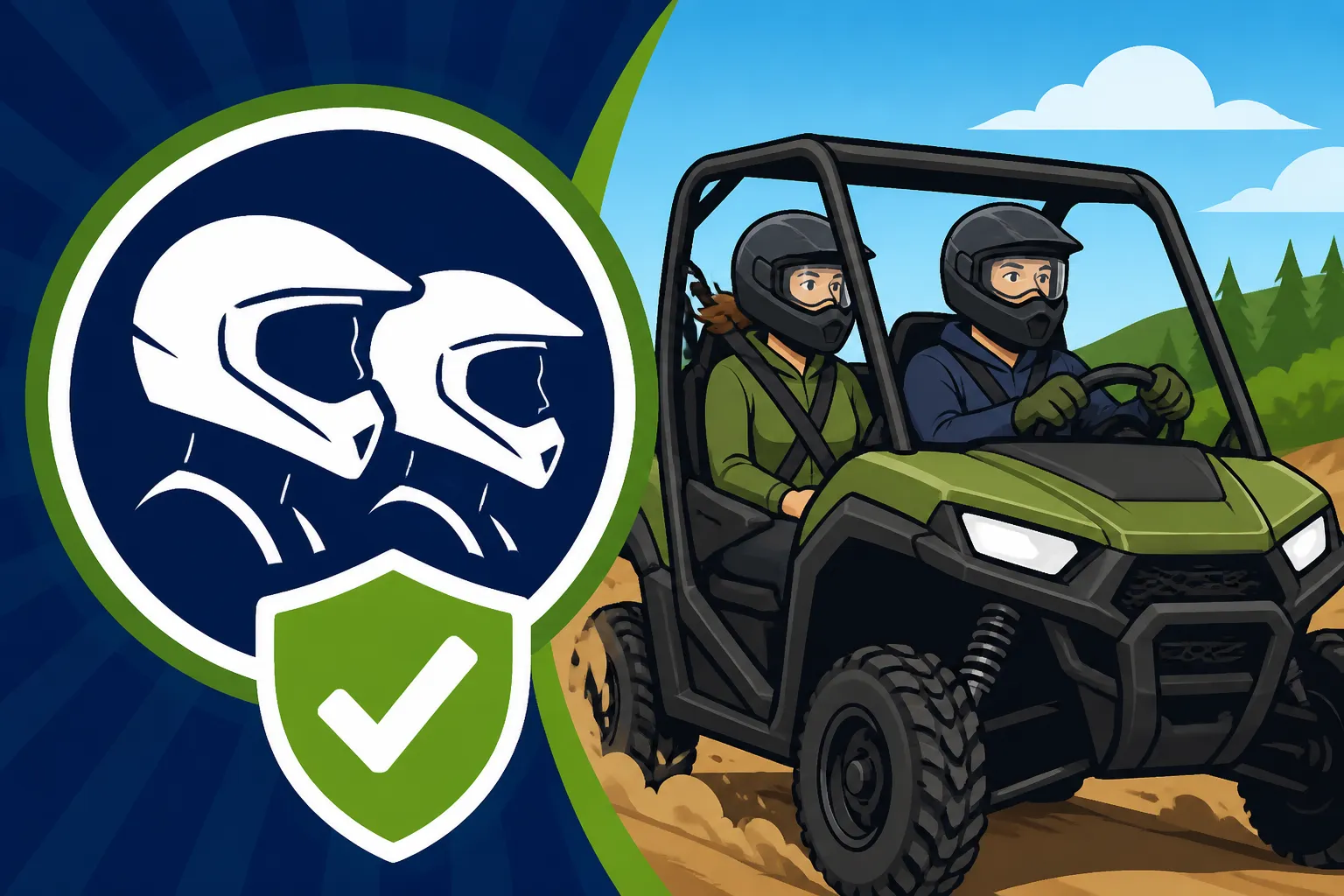
Ah, the side-by-side (SxS) or UTV – these machines sometimes create the most confusion regarding helmets. Many owners look at the robust roll cage, the seatbelts, and the overall enclosed feeling of a UTV and think, "Surely, a helmet isn't necessary in here, right?" It feels more like a car or a dune buggy than an open-air quad. However, for the vast majority of UTVs operating in Manitoba, the helmet law still applies to all occupants, operator and passengers alike. The roll cage is fantastic for structural integrity and preventing the cab from collapsing in a rollover, but it doesn't protect your head from impact inside the vehicle, nor does it prevent your head from striking something outside the vehicle if you're ejected or partially ejected.
There is a very specific and narrow exemption within the Manitoba Off-Road Vehicles Act that can sometimes lead to misunderstandings. This exemption states that a person operating or riding in an ORV that is equipped with a roll-over protective structure and a seat belt for each occupant is exempt from wearing a helmet if they are wearing the seat belt. However, this is primarily aimed at certain work-specific UTVs or very particular designs, and in practice, for recreational riding on most consumer-grade UTVs, it's safest and generally expected that helmets are worn. The intent of the general helmet law for passengers is broadly applied. Companies like SuperATV offer excellent aftermarket roll cages and safety enhancements, but these additions don't automatically negate the helmet requirement. Always ride with a helmet, even in a UTV, unless you are absolutely certain your specific machine and situation meet the extremely precise criteria for the seat belt exemption, and even then, consider the added safety a helmet provides. It's a fine line and often misinterpreted, but remember the primary rule: helmets for all! This nuance is detailed in [When a Seat Belt Replaces a Helmet], but always lean towards helmet use for maximum safety.
Helmet Exemptions: The Very Specific Cases
While the general rule is "helmets for everyone," Manitoba does have a few, very specific, and limited exemptions. It's critical to understand that these exemptions are not for general recreational riding or casual passengers. They are tied to specific activities or locations. Misinterpreting these can lead to serious legal trouble and, more importantly, put lives at risk.
For instance, there are exemptions related to certain occupational activities. If you're engaged in bona fide farming or commercial fishing operations, and the ORV is being used directly for those purposes, there might be an exemption. Similarly, licensed trappers operating within their registered trapline district can sometimes be exempt. Even certain Hydro crews operating above the 53rd parallel during specific seasons might have an exemption due to the nature of their work and remote conditions. These exemptions are detailed in [Manitoba Farming and Fishing Helmet Exemptions], [Manitoba Hunting and Trapping Helmet Exemptions], and [Manitoba Hydro Crews North of the 53rd Parallel]. What these all have in common is that they are not about leisure. They are about specific, designated work activities where the nature of the work itself, or the environment, makes a helmet impractical or less critical than other safety considerations. For any recreational passenger, however, these exemptions simply do not apply. If you're taking your buddy for a spin on the weekend, or your kids out for a ride, helmets are mandatory.
Beyond the Helmet: Other Passenger Safety Considerations
While wearing a helmet is non-negotiable for passenger safety, it's just one piece of the puzzle. There are several other crucial factors that contribute to a safe and enjoyable ride for everyone on your machine.
Passenger Limits and Machine Design
Every ATV and UTV is designed with a specific carrying capacity for both weight and passengers. This isn't just a suggestion from the manufacturer; it's a critical safety parameter. Overloading your machine with too many passengers, or passengers who exceed the weight limit, can drastically alter its handling characteristics. It can make the ORV unstable, especially on uneven terrain or during turns, increasing the risk of a rollover or loss of control. It can also strain the suspension, tires, and frame, leading to premature wear or even catastrophic failure.
Before you even think about carrying a passenger, confirm that your specific ORV is designed for it. Many sport ATVs are single-rider machines and are not meant to carry passengers at all. Utility ATVs and larger touring models often have a designated passenger seat, usually with handholds and footrests. Side-by-sides are generally designed for multiple occupants, but again, stick to the manufacturer's stated capacity (e.g., two-seater, four-seater). Trying to squeeze an extra person into a two-seater UTV, even if they're small, is a recipe for disaster and can lead to fines. Products from companies like SuperATV can enhance your machine's utility, but always ensure any modifications or accessories, especially seating, adhere to the machine's design limits and legal requirements for passenger safety. Pay close attention to [Seat Belts and Passenger Limits on a Manitoba UTV] to ensure compliance.
Maintaining Control with a Passenger
Operating an ORV with a passenger is fundamentally different from riding solo. The added weight, changes in the centre of gravity, and the passenger's movements all impact how the machine handles. As the operator, you have a heightened responsibility to adjust your riding style accordingly.
Here are a few tips:
- Communicate: Before you even set off, brief your passenger. Explain what they should do in turns (lean with you, not against you), how to hold on securely, and to avoid sudden movements. Tell them to keep their feet on the footrests and their hands on the designated grab handles at all times.
- Smooth Inputs: Accelerate, brake, and steer more gently than you would when riding alone. Abrupt movements can unbalance the machine and unnerve your passenger.
- Adjust Speed: Reduce your speed, especially on rough terrain, tight turns, or descents. The added weight increases braking distances and makes the machine less agile.
- Weight Distribution: On ATVs, the passenger should sit behind the operator and lean with them as they navigate turns and hills. In UTVs, ensure passengers keep their limbs inside the vehicle and are not reaching out.
- Regular Checks: Periodically check in with your passenger to ensure they are comfortable, secure, and still enjoying the ride.
Your ability to maintain control is key to everyone's safety, and having a passenger onboard requires extra vigilance and a more conservative approach to riding.
The Legal Ramifications of Non-Compliance
Ignoring the helmet law for passengers, or any ORV safety regulation for that matter, carries more than just the risk of injury; it also comes with legal consequences. Law enforcement officers, including RCMP, conservation officers, and local police, are empowered to enforce the Off-Road Vehicles Act.
If you or your passenger are caught riding without an approved, fastened helmet where required, you can expect a ticket. Fines for such infractions can be substantial, and accumulating multiple tickets can lead to more severe penalties. Beyond the immediate financial hit, there are other potential repercussions. In the event of an accident, if a passenger was not wearing a helmet and sustained a head injury, insurance claims could be complicated, potentially leading to reduced payouts or even denial of certain benefits. Your basic registration includes some liability coverage, but it often does not cover injuries to the operator or passenger directly if safety regulations were not followed. Always remember [Manitoba Insurance Included With Registration] has limits. It's just not worth the risk, financially or physically.
Here's a quick look at how various aspects of ORV operation relate to safety and compliance:
| Aspect | Requirement/Best Practice | Consequence of Non-Compliance (General) |
|---|---|---|
| Passenger Helmets | Approved, properly fitted, securely fastened for all passengers. | Fines, potential injury, insurance issues. |
| Machine Capacity | Adhere to manufacturer's passenger and weight limits. | Instability, fines, mechanical damage, injury. |
| Operator's License | Valid driver's license for highway crossings and ditch riding. | Fines, impoundment, legal action. |
| Registration | Current registration and plate displayed. | Fines, impoundment. |
| Insurance | Basic MPI coverage is included with registration, consider extra. | Fines, personal liability in accidents. |
| Spark Arrester | Functional spark arrester on exhaust. | Fines (fire hazard), environmental damage. |
| Lights | Working headlights and taillights after dark or in low visibility. | Fines, increased accident risk. |
| Alcohol/Cannabis | Absolutely no impaired operation. | Severe fines, license suspension, criminal charges. |
This table illustrates that the helmet rule is part of a broader framework designed to ensure responsible and safe ORV use in Manitoba. Understanding [Manitoba Ticket Costs for Riders] can be a stark reminder of the financial implications of not adhering to these regulations.
At the end of the day, the rules about helmets for passengers in Manitoba are there for a very good reason: to keep everyone safe. It might feel like an extra step, but that small effort can make all the difference in preventing a tragic outcome. So, gear up, buckle up (if you're in a UTV), and always ensure your passengers are as protected as you are. Happy, safe riding!
Disclaimer
This article is for general informational purposes only and does not constitute professional advice. Laws, prices and regulations vary by location and change over time. Consult a qualified professional for guidance on your specific situation.