Can You Ride an ATV on the Road in Manitoba?
Oh, the age-old question that every ATV and UTV enthusiast in Manitoba wrestles with! It's super frustrating when you just want to get from one trail section to another, or even just down the street to a neighbour's place, and you're left wondering if you're going to get a ticket for riding your quad on the pavement. The rules around riding off-road vehicles (ORVs) on public roads in Manitoba can feel like a tangled mess, full of "can I?" and "can't I?" scenarios. This guide is here to untangle that knot for you, breaking down exactly where and how you might, or more often, might not, be able to ride your ATV or UTV on or near the road in our beautiful province.
The Strict Truth About Riding ATVs on Manitoba Roadways
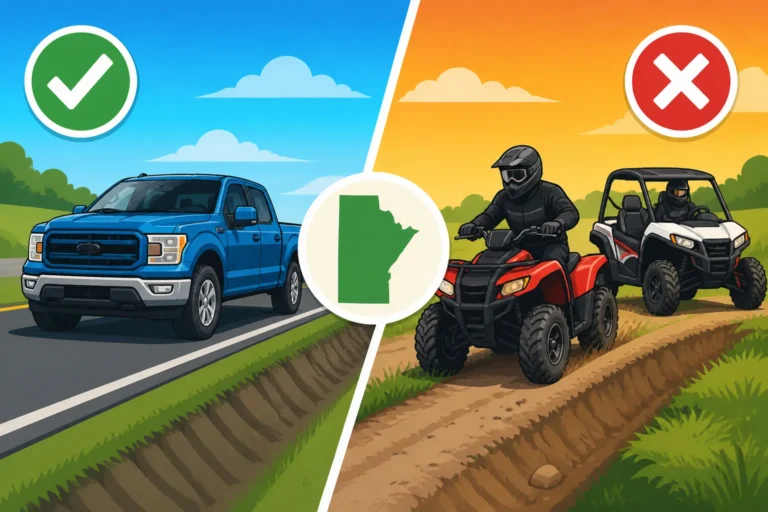
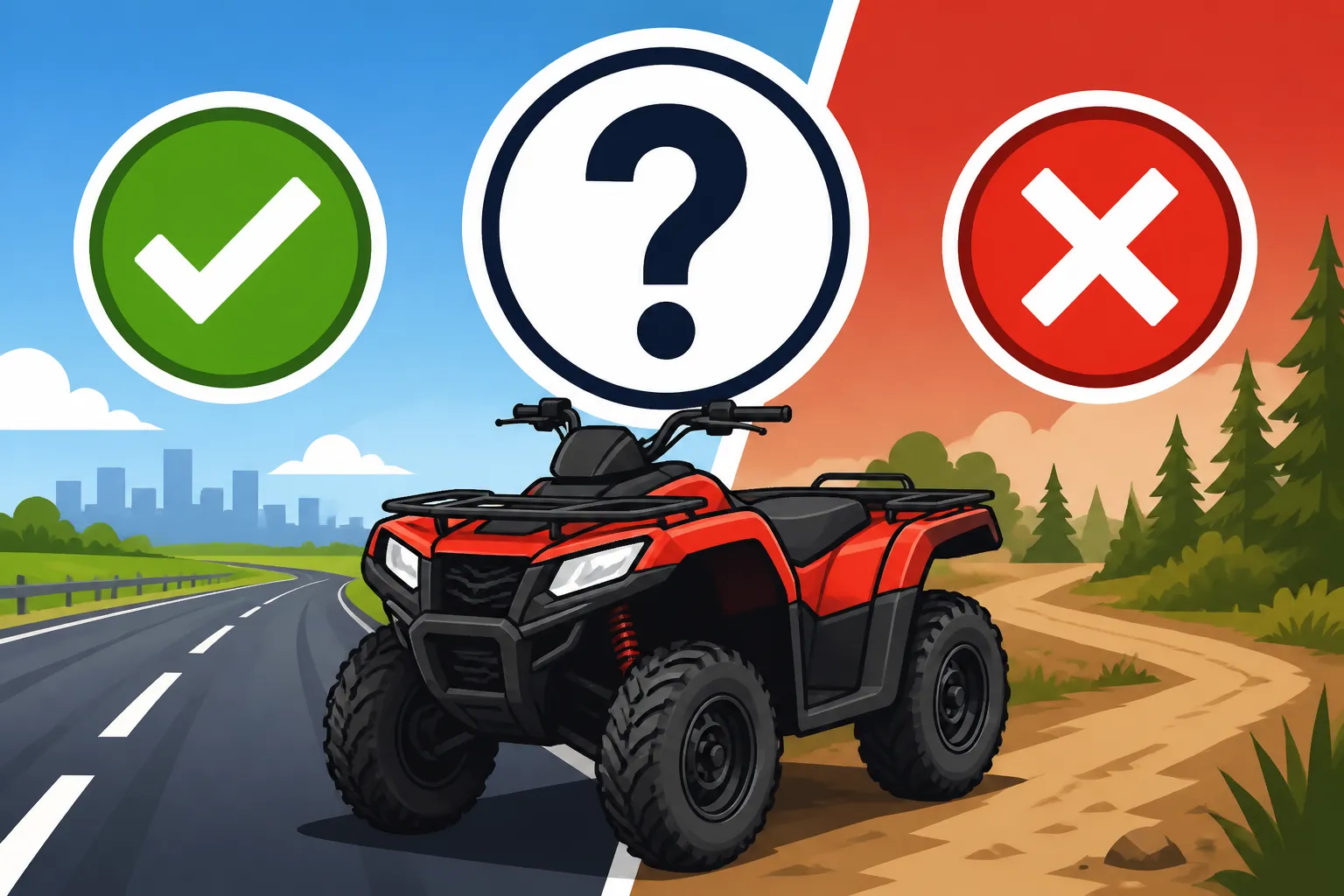
Let's get straight to the heart of it: generally speaking, you cannot ride your ATV or UTV on a paved or gravel roadway in Manitoba. The provincial Off-Road Vehicles Act is pretty clear on this. It's designed to keep both ORV operators and other road users safe, as these machines simply aren't built for the speed, traffic, and dynamics of regular road travel.
Why Paved Roads and Medians Are Off-Limits
The core of the issue lies in the definition of a "roadway" and the primary purpose of an ATV or UTV. A roadway, in the eyes of the law, is the portion of a highway that is ordinarily used for vehicle travel. This includes the paved or gravel surface itself. Your trusty quad, while capable of incredible feats off-road, lacks many of the safety features, signaling capabilities, and structural integrity that cars, trucks, and motorcycles have for road use.
Imagine an ATV, designed for uneven terrain and lower speeds, trying to keep up with highway traffic or even navigating busy city streets. It's a recipe for disaster. The handling characteristics are different, they're harder for other drivers to see, and they offer minimal protection in a collision. Because of these inherent safety differences, the provincial law prohibits ORVs from using these main arteries. This isn't just a suggestion; it's a fundamental rule under the [Manitoba Bans Riding on Roadways]. This ban also extends to the median of a divided highway and the area of an interchange, which are also considered off-limits due to their nature as part of the main traffic flow or as critical junctions. So, if you're eyeing that stretch of asphalt or even a wide gravel road, unless there's a specific, lawful exception we'll get to, your ATV needs to stay off it.
The Ditch Riding Dilemma: Where You Can and Can't Go
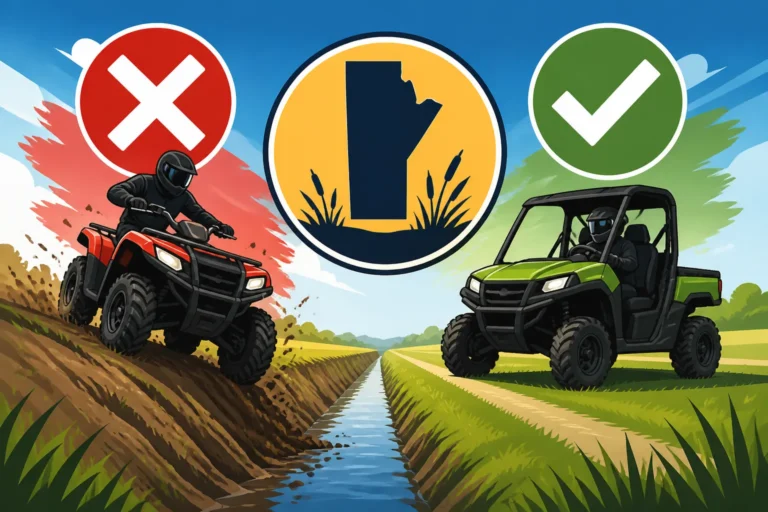
Now, here's where things get a little more nuanced, and often, more confusing for riders. While the roadway itself is generally a no-go, the Act does make provisions for riding in the ditch. But hold on, it's not a free-for-all! When it comes to [Manitoba Ditch Riding Rules], there are very specific conditions you must adhere to.
First and foremost, you can only ride in the ditch on the right-hand side of the roadway in the same direction as traffic. This rule about [Manitoba Ditches to the Right of a Roadway] is crucial for visibility and predictability. Riding against traffic in a ditch, even if it feels safer to you because you can see oncoming vehicles, is illegal and incredibly dangerous. Picture a situation where you're riding your ORV in the ditch, diligently following the traffic flow. You're still expected to be aware of what's happening on the main roadway, anticipating turns, driveways, and cross-traffic. Your machine's lights might be good for the trail, but they don't always provide the same level of visibility for a ditch rider to oncoming motorists, especially at dusk or dawn.
Furthermore, not all ORVs are created equal under this rule. Four-wheeled vehicles, including most side-by-sides, are often specifically [Manitoba Four-Wheel-Drives Barred From Ditches] if they're not explicitly designed for a single operator. The intent of ditch riding provisions is usually for smaller, more agile machines like quads (ATVs). If you're operating a larger side-by-side, which often resembles a small car and can be quite wide, fitting safely and legally into a ditch might be impossible, let alone navigating culverts and other obstacles. Always check your specific machine type against the regulations, as interpretations can vary and the onus is on you, the rider, to know the rules.
Navigating Crossings and Shoulders: Limited Exceptions
While riding on the road is mostly forbidden, there are instances where you'll need to interact with roadways, primarily for crossing purposes or, in very specific cases, using the shoulder. These aren't blanket permissions; they are tight, conditional exceptions designed for practicality while maintaining safety.
Crossing Rules: Getting from One Side to the Other
You're out on the trails, maybe exploring some Crown land or a club trail, and suddenly, you hit a provincial highway. You need to get to the other side to continue your journey. This is where the specific [Manitoba Crossing Rules at 5 Metres and 3 Kilometres] come into play. You can't just zip across wherever it's convenient.
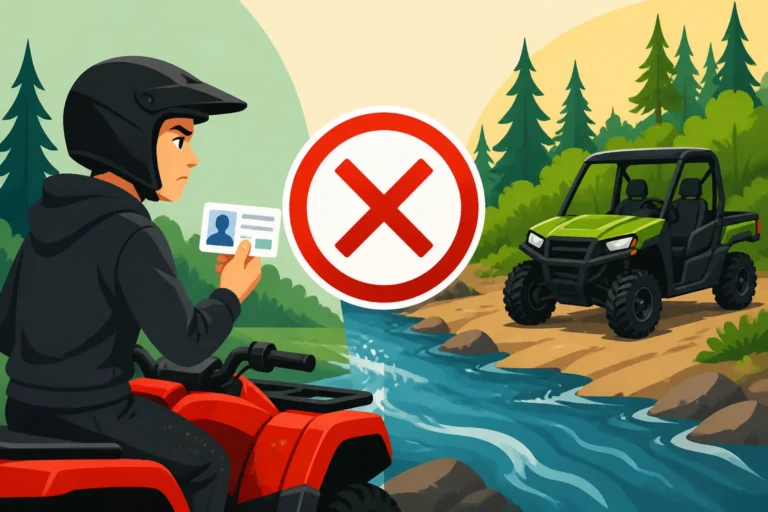
When crossing a highway, you must do so at a right angle to the roadway. This minimizes the time you spend exposed to traffic. The law specifies that you must cross either within five metres of an intersection or at least three kilometres from the nearest intersection, provided you have a clear, unobstructed view in both directions. The purpose of these distances is to ensure that you're either crossing at a predictable point (an intersection, where drivers expect cross-traffic) or in an open area where both you and drivers have ample time to see each other. Before crossing, you are obligated to stop and yield to any approaching traffic. Think of it like a pedestrian crossing a busy street: stop, look, listen, and only proceed when it's safe. It’s also important to remember that [Manitoba Crossings Need a Driver's Licence] for the operator, and for safety, [Manitoba Crossings One Machine at a Time] is the rule, not a group charge. Even with the best visibility, a highly visible flag, and perhaps some bright LED lights from a company like SuperATV, safety is paramount, and the law has very specific steps to follow to minimize risk.
The Agricultural Shoulder Exception
Here's another specific carve-out in the rules, and it's absolutely vital not to misunderstand it as a general permission slip for all riders. The [Manitoba's Agricultural Shoulder Exception] allows farmers, and only farmers, to operate an ORV on the shoulder of a roadway under very strict conditions. This isn't for recreational riding; it's purely for agricultural purposes.
If you are a farmer operating an ORV (and this typically applies to utility quads or side-by-sides used for work) to access your fields, move equipment, or perform other farm-related duties, you may use the shoulder. However, you must display a slow-moving vehicle sign on the rear of your machine, and your speed is strictly limited, usually to 40 km/h. This sign, often a bright orange triangle with a red border, is critical for alerting faster-moving traffic that you are operating at a reduced speed. It's also important that the machine is truly being used for agricultural purposes, not just as a convenient way to get to your favourite fishing spot. Any recreational use of the shoulder, even by a farmer, would likely be considered a violation. Tools from SuperATV, like heavy-duty tires or a cargo rack, might make your farm machine more capable, but they don't change the legal parameters of this very specific exception. If you're not actively engaged in farming activities, this exception does not apply to you.
The Role of Local By-Laws and Staying Informed
While provincial law sets the general framework, it's also important to remember that local governments can have a say in how ORVs operate within their jurisdictions. This is where things can get incredibly localized and require a bit of homework on your part.
How Municipalities Can Change the Rules Sometimes
One of the biggest questions riders have is about urban areas or smaller towns: "Can I ride my quad down Main Street in my small town?" The general provincial ban on riding on roadways applies across Manitoba, but local governments – that is, municipalities, local government districts, and even northern community councils – have the power to enact by-laws that can either open up certain roadways to ORV use or impose further restrictions.
For example, some rural municipalities, especially those in areas with extensive trail networks, might pass by-laws that allow ORVs to travel short distances on specific streets or highways to connect trail sections or access services like fuel or food. This is often seen in communities that embrace ORV tourism. However, these by-laws are highly specific, often outlining designated routes, specific hours of operation, and other conditions. It's not uncommon to see signs indicating where ORVs are permitted. If you're planning a ride through a town or municipality, it is absolutely essential to check with the local government offices or their websites for any [Manitoba Municipal By-Law Powers] that might affect your route. Don't assume that because one community allows it, all do. A quick phone call or website visit can save you a lot of hassle, and potentially a hefty fine. Think of it this way: the province gives the default "no," but local authorities can issue a conditional "yes" for very limited areas.
Penalties and Keeping Your Ride Legal
Ignoring the rules can lead to more than just a stern talking-to; there are significant penalties for illegal ORV operation on roadways. Getting caught riding where you shouldn't be can result in fines that quickly add up, and in more serious cases, could even lead to your machine being impounded. The Off-Road Vehicles Act carries a general penalty of up to $2,000 for various infractions, and careless operation can even cost you up to $5,000. These aren't minor parking tickets; they reflect the seriousness with which authorities view unsafe operation.
Beyond the fines, there's also the issue of insurance and liability. Your basic ORV registration in Manitoba includes some third-party liability coverage, but this coverage can be voided if you are operating your machine illegally. Imagine being involved in an accident on a roadway where ORVs are prohibited. Your insurance provider might deny coverage, leaving you personally responsible for damages and injuries. That's a financial nightmare you absolutely want to avoid. Always carry your [Manitoba Registration Cards Carried at All Times] and proof of insurance, and ensure your machine is properly equipped with a spark arrester and appropriate lighting, especially if you're riding near dawn or dusk. Even if you've kitted out your machine with top-tier performance parts from SuperATV, they won't protect you from the legal repercussions of riding where you're not allowed. Staying informed and sticking to the designated off-road areas, ditches where permitted, and legally open municipal routes is the best way to enjoy your ride without unwelcome surprises.
Here's a quick summary of where you can and cannot typically ride your ORV in Manitoba:
| Location Type | General Rule in Manitoba | Specific Conditions/Exceptions |
|---|---|---|
| Paved Roadways | NO | Prohibited under the Off-Road Vehicles Act. |
| Gravel Roadways | NO | Prohibited, same as paved roads, unless local by-law specifically permits. |
| Medians of Divided Hwys | NO | Prohibited. |
| Interchanges/Sidewalks | NO | Prohibited. |
| Right-Hand Ditch | YES, but with strict conditions | Must travel in the same direction as traffic. Not for all 4-wheeled vehicles (e.g., UTVs). |
| Left-Hand Ditch | NO | Prohibited, travel must be with traffic flow on the right-hand ditch. |
| Shoulder (General Use) | NO | Prohibited for general recreational ORV use. |
| Shoulder (Agricultural) | YES, for farmers only | Must be for agricultural purposes, display slow-moving vehicle sign, limit speed (40 km/h). |
| Crossing Highways | YES, but with strict conditions | At right angles, within 5m of intersection or 3km from nearest (with clear view), stop, yield, licence required. |
| Designated Municipal Rds | YES, if local by-law permits | Highly specific to each municipality; check local by-laws for designated routes and times. |
Ultimately, while the allure of taking the "easy" route on a paved road might be strong, the law in Manitoba is quite restrictive for ORVs. Your best bet is to embrace the vast network of trails and designated riding areas Manitoba offers. Always know before you go, check local by-laws, and prioritize safety to ensure your off-road adventures remain thrilling and legal.
Disclaimer
This article is for general informational purposes only and does not constitute professional advice. Laws, prices and regulations vary by location and change over time. Consult a qualified professional for guidance on your specific situation.