A Maker’s Age Rating Is Not the Law
One of the most common headaches for ATV and UTV enthusiasts in Manitoba, especially parents, is trying to figure out if that "Y-10" sticker on a machine means a 10-year-old is legally allowed to ride it. The truth is, manufacturer age ratings, while important for safety and design, don't necessarily align with the actual laws governing off-road vehicle operation here in Manitoba. This guide will cut through the confusion and explain exactly how Manitoba's ORV Act dictates who can ride what, and where, regardless of what the machine's manufacturer suggests.
The Disconnect Between Manufacturer Age Ratings and Manitoba Law
It's a common sight: you walk into a dealership or browse online, and every youth ATV or UTV has a prominent sticker indicating an age range, like "Y-6," "Y-10," or "Y-12." Many parents understandably assume these ratings are the definitive legal guideline for allowing their child to ride. However, that's not how it works in Manitoba. Our provincial laws have their own set of age requirements that often supersede or interpret these manufacturer guidelines in a specific, legal context.
Why Manufacturer Ratings Exist and What They Mean
Manufacturer age ratings on ATVs and UTVs are primarily about product liability, design specifications, and general safety recommendations based on typical rider skill levels and physical development. These ratings are developed through industry standards, extensive testing, and an understanding of a child's cognitive and physical abilities at various ages. For example, a "Y-6" machine is usually smaller, lighter, and has a restricted speed, designed for younger children to learn basic controls in a supervised setting. As the age rating increases, so too does the engine size, weight, speed capability, and the complexity of handling the machine.
These ratings are incredibly valuable for initial purchasing decisions and for ensuring a rider is physically and mentally capable of handling a particular machine safely. They tell you, "This machine was engineered for someone around this age to operate safely under ideal conditions." But what they don't tell you is, "This is the minimum legal age for operation on public or private land under provincial law." That's where Manitoba's specific Off-Road Vehicles Act comes into play. It's a critical distinction that many riders, particularly parents, often miss.
How Manitoba Defines "Youth" and "Adult" Riders
Manitoba's Off-Road Vehicles Act takes a different approach to defining who is considered an "adult" capable of operating an ORV, and what restrictions apply to younger riders. Instead of focusing on the machine's design age, the law primarily looks at the operator's actual age and, in some cases, their possession of a valid driver's licence. This means that a 15-year-old might be legally permitted to ride a machine rated for "Y-16" by the manufacturer, but still face significant restrictions under Manitoba law that a 16-year-old wouldn't.
The province sets clear age tiers that dictate where and how an ORV can be operated, especially concerning road crossings, ditch riding, and the need for supervision. It's not about the size of the quad or its engine, but rather the age of the person in the driver's seat. This legal framework is designed to ensure public safety and minimize risks associated with ORV operation, which includes protecting younger, less experienced riders from situations they might not be ready for. Understanding these tiers is crucial for any rider or parent to stay on the right side of the law and, more importantly, stay safe. For a deep dive into these age brackets, check out [Manitoba Age Tiers for Young Riders].
Manitoba's Specific Age Requirements for ORV Operation
Navigating the rules for young riders in Manitoba can feel like trying to untangle a knot, but it's essential for safe and legal riding. The provincial Off-Road Vehicles Act breaks down permissible activities based directly on a rider's age, setting out clear guidelines for supervision, location, and even the need for a driver's licence. It's less about the horsepower of the machine and more about the experience and maturity of the person operating it.
Riders Under 14: Strict Supervision and Designated Areas
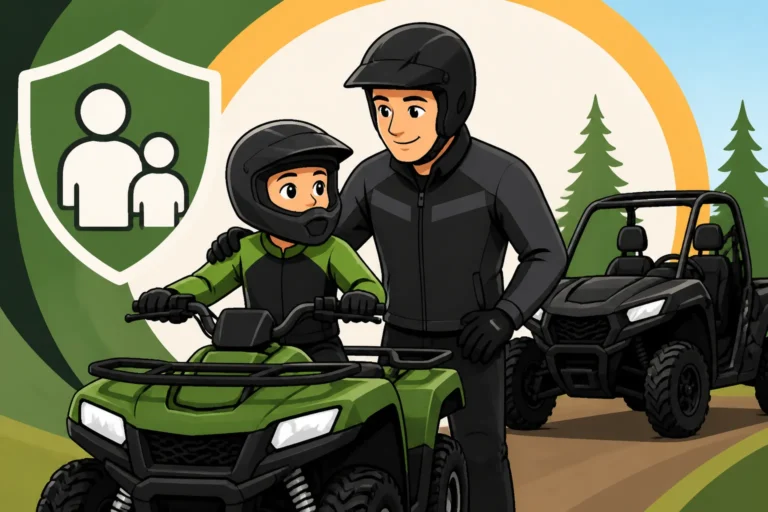
For our youngest riders, the rules are quite clear and strictly enforced: if you're under 14 years old, you cannot operate an off-road vehicle on Crown land, a road, or a highway. This means no ditch riding, no road crossings, and no riding on most public trails. The only places a rider under 14 is legally permitted to operate an ORV are on private land with the owner's consent or on designated club trails specifically designed for supervised youth riding. Even then, direct supervision by an adult is always required. It's a critical safety measure, acknowledging that children of this age lack the necessary judgment and experience for public spaces.
Parents or guardians need to be fully aware of these limitations. Allowing a child under 14 to ride in prohibited areas, even with what you might consider close supervision, can lead to fines and legal complications. The intent is to keep our youngest riders safe, teaching them the ropes in controlled environments before they venture into more complex riding scenarios. This also means choosing a machine that is appropriate for their size and skill level, ensuring they can physically control it under supervision. For more specific details on what's allowed for this age group, refer to [Manitoba Rules for a 12-Year-Old Rider].
Riders 14 and 15: More Freedom, But Still Restrictions
As riders in Manitoba reach the ages of 14 and 15, the rules become slightly less restrictive, but important limitations still apply. At 14, an operator can legally ride an ORV on Crown land and designated trails without direct adult supervision. This is a significant step, offering a bit more independence for responsible young riders. However, the critical caveat remains: they still cannot operate an ORV on or across a provincial highway or any road where a driver's licence is required. This means ditch riding, which is permitted for licensed adult operators in certain situations, is generally off-limits for 14 and 15-year-olds.
For those who are 15 and a half, and hold a Class 6 Learner's Licence (for motorcycles), they may operate an ORV on a highway or road in a ditch, but only for the purpose of crossing, and still under specific conditions. They still cannot simply ride in the ditch as a regular route of travel. It’s a delicate balance: the law recognizes increasing maturity but maintains safety protocols for situations involving public roadways. Parents still play a crucial role in ensuring their 14 and 15-year-olds understand and adhere to these regulations, fostering responsible riding habits. You can learn more about the specifics for this age group in [Manitoba Rules for a 14-Year-Old Rider].
Riders 16 and Over: The "Adult" Standard in Manitoba
Once a rider turns 16 in Manitoba, and provided they hold a valid Class 1-5 driver's licence (a full licence, not a learner's permit), they are generally considered an "adult" operator under the Off-Road Vehicles Act. This is the point where many of the significant age-based restrictions are lifted, aligning the ORV operating privileges more closely with those of an experienced adult driver. At 16, with a valid licence, you are permitted to operate an ORV on Crown land, designated trails, and crucially, you can legally operate in road ditches and cross highways, adhering to specific crossing rules.
It’s important to remember that while the age barrier often drops at 16, the need for a valid driver’s licence for road-related maneuvers is key. Without that licence, even a 16-year-old cannot legally cross a highway or ride in a ditch. This regulation ensures that anyone engaging with public roadways on an ORV has demonstrated a basic understanding of road rules and traffic safety. This distinction between age and licensing is often misunderstood, but it's central to operating legally in Manitoba. For more on the specifics that apply to riders aged 16 and above, refer to [Manitoba Rules for a 16-Year-Old Rider].
Practical Implications and Common Misconceptions
The gap between manufacturer age ratings and Manitoba's legal requirements can lead to real-world problems and dangerous situations. It's not just about understanding the law; it's about making informed decisions for the safety of all riders, especially the younger ones. Let's clear up some common areas of confusion and discuss the practical side of these regulations.
Can a Child Ride an "Adult" Machine?
This is perhaps one of the most frequently asked questions, and the answer in Manitoba is nuanced: legally, yes, depending on the child's age and the specific location, but from a safety perspective, it's often a resounding no. Manitoba's ORV Act doesn't explicitly prohibit a 14-year-old from operating a large "adult" ATV if they are on private land with permission or on a designated trail. The law focuses on the rider's age, not the machine's engine size or manufacturer's recommended age for that specific model.
However, just because it might be legal doesn't make it safe. Placing an undersized or inexperienced child on a machine designed for adults is incredibly dangerous. These larger machines have more power, are heavier, harder to steer, and have different balance characteristics. An adult machine might literally be too heavy for a child to right if it tips, or too powerful for them to control in an emergency. Manufacturer ratings, while not law, are still excellent safety guidelines. While you might consider modifying a larger machine with aftermarket parts to make it "fit" a smaller rider, perhaps with lower suspension or adjusted controls from a brand like SuperATV, the fundamental safety risks related to weight, power, and response time for a child on an adult-sized machine persist. It's always best to match the machine to the rider's physical capabilities and experience level first, then ensure legal compliance with age restrictions.
Why Knowing the Law is Crucial Beyond Safety
Beyond the obvious safety concerns, understanding Manitoba's ORV laws is crucial to avoid severe legal and financial repercussions. Operating an ORV illegally, whether due to age, location, or lack of proper licensing, can result in significant fines. These aren't just minor tickets; they can range from hundreds to thousands of dollars, depending on the infraction. For parents or guardians, allowing an underage rider to operate an ORV in a prohibited area or without proper supervision can make them liable for any damages or injuries that occur. This could extend to civil lawsuits if others are harmed.
Furthermore, illegal operation can invalidate insurance coverage. While basic third-party liability is included with ORV registration in Manitoba, if you're found to be operating outside the law (e.g., an underage rider without a licence on a roadway), your policy may not cover the costs of an accident, leaving you personally responsible for potentially massive expenses. Ignorance of the law is not a defence. Knowing the rules, especially those related to age and location, protects not only the rider but also their family and finances. For a broader understanding of penalties, including those for serious infractions, you can read [Manitoba Impaired Riding Penalties].
Equipping for Safety, Regardless of Age Rating
Regardless of the manufacturer's age rating or the rider's legal age, safety gear is non-negotiable in Manitoba. Every ORV operator and passenger must wear an approved helmet that meets specific safety standards (e.g., Snell or FMVSS). This isn't just a recommendation; it's the law. Beyond helmets, essential gear includes eye protection (goggles or a helmet with a visor), sturdy over-the-ankle boots, gloves, and long-sleeved shirts and pants. These items provide crucial protection against impacts, abrasions, and debris, significantly reducing the risk of serious injury in a fall or collision.
For young riders especially, ensuring all gear fits properly is paramount. An ill-fitting helmet can shift during a crash, offering inadequate protection, while oversized boots can interfere with operating foot controls. Parents should regularly check and replace gear as children grow. While the law focuses on helmets, investing in a full range of protective gear is a responsible choice for any rider, enhancing their safety on every outing. For comprehensive information on helmet requirements, refer to [Manitoba ATV Helmet Law].
Here’s a simplified comparison of manufacturer age ratings versus Manitoba's legal age and allowed activities:
| Factor | Manufacturer Age Rating (e.g., Y-10) | Manitoba Legal Age (e.g., 10-year-old) | Implications & Allowed Activities (General) |
|---|---|---|---|
| Primary Focus | Product design, liability, general safety for typical rider skill. | Legal operation on public/private land, public safety. | Manufacturer ratings are guidelines; legal age is law. |
| Under 14 Years | Y-6, Y-10, Y-12 typically. | Under 14 | Law: Only private land (owner consent) or designated supervised club trails. No Crown land, roads, ditches, or crossings. Safety: Match machine to child's size/skill. |
| 14-15 Years | Y-12, Y-16, some Adult models. | 14-15 | Law: Crown land, designated trails allowed (no supervision required). Still no roads, ditches (generally), or crossings. Safety: Consider physical capability for larger machines. |
| 16+ Years | Adult ATVs/UTVs, some Y-16. | 16+ (with valid driver's licence) | Law: All legal ORV areas, including ditches and road crossings (with licence and following rules). Safety: Still requires responsible operation and appropriate gear. |
| Supervision | Often implied for younger riders. | Required for under 14s in legal areas. | Law dictates when supervision is mandatory. |
| Road/Ditch Access | Not addressed by manufacturer rating. | Limited/prohibited for under 16s; conditional for 16+ with licence. | This is where law diverges most significantly from manufacturer. See [Manitoba Ditch Riding Rules] and [Manitoba Crossing Rules at 5 Metres and 3 Kilometres]. |
Navigating Purchase and Operation with Age Laws in Mind
Bringing a new ORV into the family, especially for a younger rider, is exciting. But it also comes with the responsibility of understanding the legal landscape. Making smart choices at the time of purchase and consistently adhering to operating rules will ensure not just legality, but also maximum enjoyment and safety on the trails.
Buying an ORV for a Young Rider
When you're looking to purchase an off-road vehicle for a child or youth, the initial instinct might be to look for the "Y-something" sticker that matches their age. However, in Manitoba, the first and most critical consideration should be the provincial laws governing who can ride, where, and when. This means understanding the age tiers we've discussed and matching the purchase to what your child is legally permitted to do, rather than solely relying on the manufacturer's recommendation.
Once the legal age requirements are understood, then look at the manufacturer's rating as a safety guideline. It’s always best to start with a machine that is appropriately sized for the child’s physical stature and skill level. A child should be able to comfortably reach and operate all controls, and stand on the footrests without being overly stretched or cramped. Don't be tempted to buy a machine they can "grow into" if it means they're operating something too large or powerful for them now. Safety should always come first. Many dealerships and reputable sellers can guide you toward youth-specific models that are a good fit for beginners and growing riders. For specifics on registering a machine for a youth, check out [Manitoba Registration for a Youth Quad].
Supervising Young Riders on the Trail
For riders under 14, supervision isn't just a good idea; it's a legal requirement when they're allowed to ride in designated areas. Effective supervision goes beyond simply being in the vicinity. It means actively observing the young rider, maintaining visual contact, and being close enough to intervene quickly if a problem arises. On private land or specific club trails, this might mean riding a separate machine behind or alongside them, or walking close by. The goal is to provide immediate guidance, prevent dangerous situations, and ensure they are following safety protocols.
It’s also crucial to choose appropriate riding environments. Start in open, flat areas with minimal obstacles before progressing to more challenging terrain. Teach them about trail etiquette, respecting other users, and being mindful of wildlife. Regular check-ins on their comfort and fatigue levels are also important. Even for older youth who don't legally require supervision, open communication and continued mentorship from experienced adult riders can foster a lifelong appreciation for safe and responsible ORV operation. If your child is between 16 and 18, parental consent can still play a role, as detailed in [Manitoba Parental Consent From 16 to 18].
When a Manufacturer's Rating Still Matters
Despite the Manitoba ORV Act's specific age requirements, manufacturer age ratings still hold significant weight when it comes to the practical aspects of safe riding. These ratings are not arbitrary; they are the result of extensive research and development focused on rider safety and optimal machine performance for a given age group. They tell you about the intended power, weight distribution, stability, and handling characteristics of the machine.
For example, an "Adult" rated ATV will typically have a higher centre of gravity, more powerful engine, and potentially a larger turning radius than a "Y-10" model. While a 14-year-old might be legally permitted to ride an adult machine on a private property with owner's consent, doing so might put them at a higher risk of losing control, tipping over, or being unable to react effectively in an emergency simply because the machine is too much for their physical capabilities. While you might consider using aftermarket components from a company like SuperATV to enhance the stability or control of your machine, even the best modifications can't change the fundamental physics of an adult-sized machine being operated by a child. Always weigh the legal allowances against the fundamental safety recommendations provided by the manufacturer to ensure the safest riding experience possible.
Disclaimer
This article is for general informational purposes only and does not constitute professional advice. Laws, prices and regulations vary by location and change over time. Consult a qualified professional for guidance on your specific situation.