When a Farm Quad May Use the Shoulder
It can be incredibly frustrating to own an ATV or UTV and feel restricted from using it for practical purposes, especially if you live on a farm and rely on your machine for daily tasks. You might look at the paved shoulders of rural roads, knowing they'd be the quickest way to get from one field to another, but worry about breaking the law. This guide will clarify when and how a farm quad can legally use the shoulder in Manitoba, helping you navigate the rules without anxiety.
The General Rule: Shoulders Are Not for Off-Road Machines
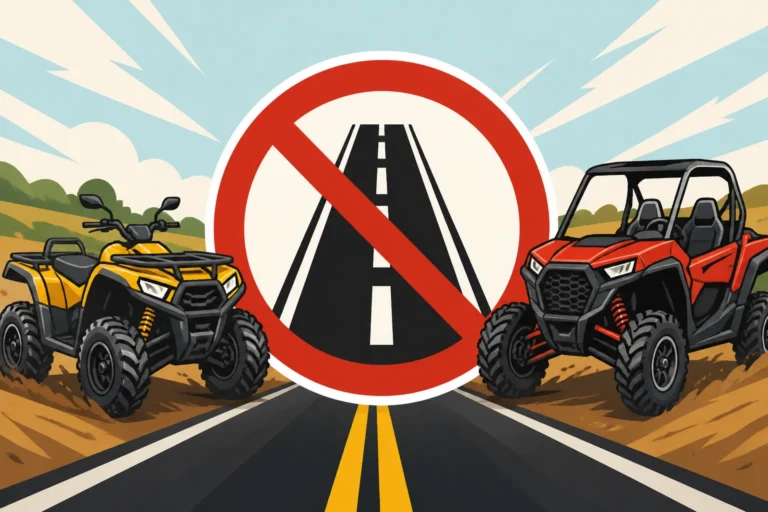
Let's start with the baseline, because it's important to understand why the agricultural exception even exists. Generally speaking, off-road vehicles (ORVs) like ATVs and UTVs are not permitted on the shoulders of provincial roads and highways in Manitoba. The provincial government has a clear stance that these machines are designed for off-road use, not for sharing space with road traffic, even if it's just the shoulder.
Why Standard ORVs Are Restricted from Shoulders
Imagine a bustling provincial road with vehicles zipping by at highway speeds. An ATV, even a large one, operates differently from a car or truck. It has different braking characteristics, acceleration, and visibility. Allowing all ORVs on shoulders could create significant safety hazards for both ORV operators and other motorists. The intent of the regulations is to keep ORVs in their designated environments, like trails or private land, to minimize potential conflicts and accidents on public roadways. This is a common point of confusion for many riders, especially those who come from areas with more permissive rules. It's not about being difficult; it's about road safety as interpreted by the province. Many riders ask, [Can You Ride an ATV on the Road in Manitoba?], and the answer is generally no, with very specific exceptions.
Differentiating Shoulders from Ditches
It’s also crucial to distinguish between riding on the shoulder and riding in the ditch. While regular ORVs have very specific rules for ditch riding—often requiring travel in the same direction as traffic, maintaining certain distances from intersections, and having a valid driver's license for crossing roadways—these rules are separate from shoulder use. The shoulder is considered part of the "roadway" for the purposes of these prohibitions, even if it's unpaved or separate from the main lanes of travel. This is where many riders get tripped up, thinking "if I can ride the ditch, surely the shoulder is okay," but that's a common [Manitoba Rules Riders Get Wrong].
The Agricultural Exception: When Your Farm Quad Gets a Pass
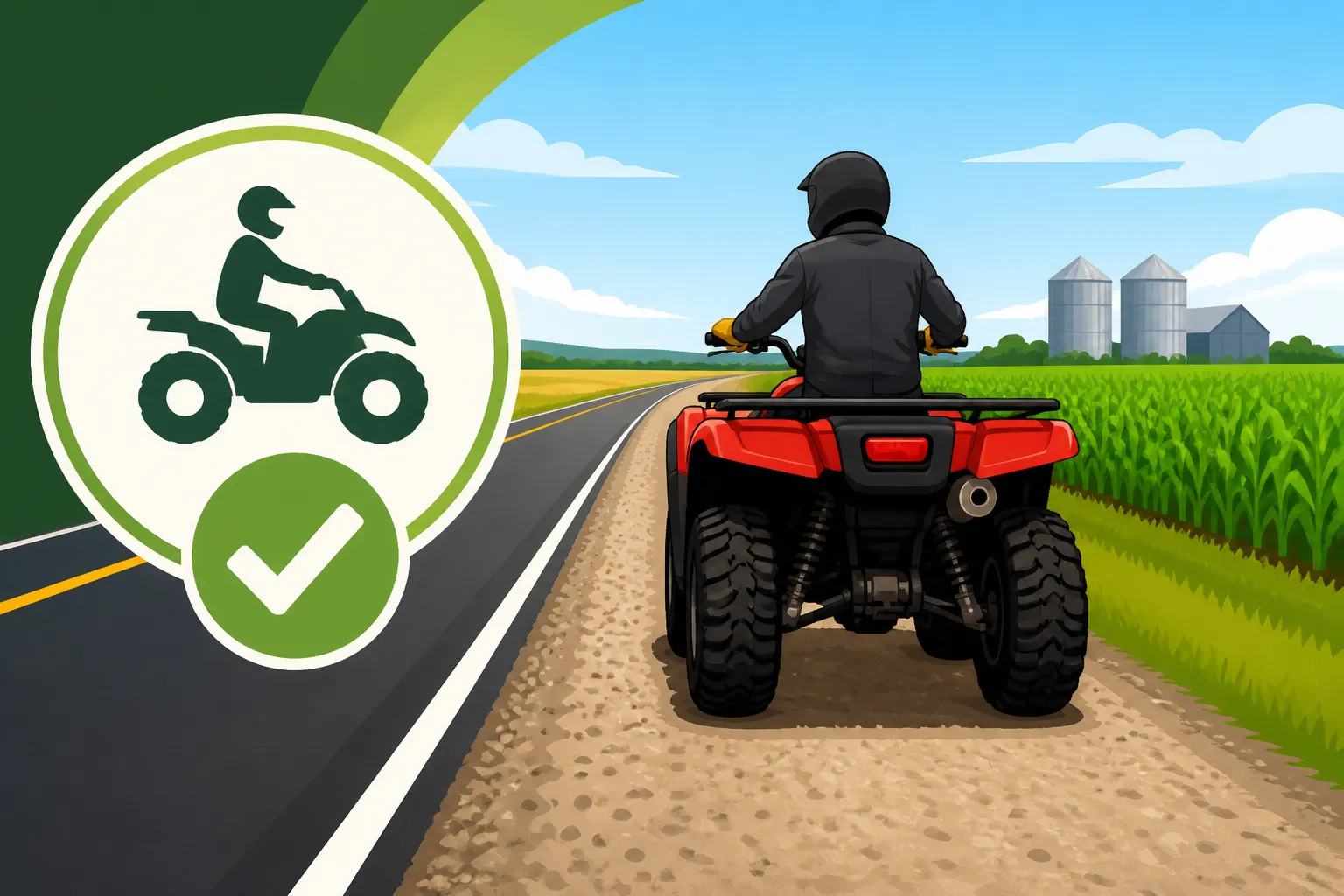
Now, for the good news if you're a farmer. Manitoba recognizes the essential role that ATVs and UTVs play in modern agricultural operations. To support farmers in their work, there's a specific exception that allows off-road vehicles to use the shoulder of a provincial highway when those machines are being operated for agricultural purposes. This isn't a blanket permission for any ORV; it's narrowly defined to ensure it genuinely serves the needs of the farming community.
What Constitutes "Agricultural Purposes"?
This exception isn't for going to town for groceries or taking a joyride after a long day in the fields. "Agricultural purposes" means using the ORV directly for farming activities. This could include things like:
- Moving between fields: Transporting yourself or small equipment from one field to another that are separated by a provincial road.
- Inspecting crops or livestock: Driving along the shoulder to quickly access different parts of your land for inspection.
- Hauling tools or supplies: Using your UTV, perhaps outfitted with a SuperATV cargo bed, to move small hand tools, fence repair materials, or animal feed from your barn to a remote pasture.
- Accessing farm equipment: Getting to a tractor or other piece of machinery that's located further down the road, if it's within the scope of your farming operations.
The key here is that the use must be integral to the operation of your farm. It's not about personal convenience but about the necessity of performing agricultural duties.
The Specifics of the "Agricultural Shoulder Exception"
The law makes it clear that this exception applies to "an off-road vehicle having more than two wheels, or an amphibious vehicle." This means your typical two-wheeled dirt bike doesn't qualify for this shoulder-riding exception, even if you use it on your farm. However, most common farm quads (ATVs with four wheels) and side-by-sides (UTVs) certainly do. It's a pragmatic rule designed to allow the most common workhorse machines on farms to move efficiently. For farmers, understanding [Manitoba Shoulder Riding for Farming Only] is crucial for compliance and safety.
Meeting the Conditions for Farm Shoulder Use
Having a farm quad and using it for agricultural purposes isn't quite enough on its own. The exception comes with a few very important conditions that must be met to ensure safety for everyone on the road. Failing to meet these conditions can lead to tickets and penalties, even if you genuinely believe you're operating within the spirit of the law.
Displaying a Slow-Moving Vehicle Sign
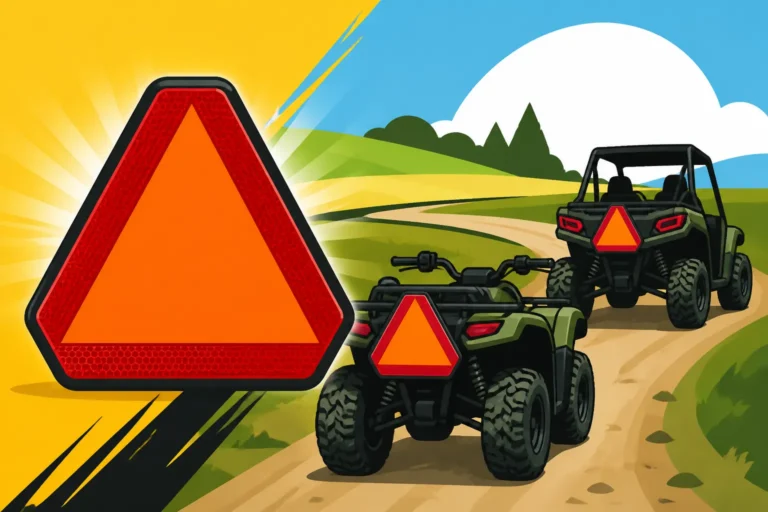
This is perhaps one of the most visible and critical requirements. When your farm quad is operating on the shoulder of a provincial highway under this exception, it must display a "Slow-Moving Vehicle" sign. This is the familiar fluorescent orange triangle with a dark red reflective border. This sign is designed to warn other motorists that your machine is traveling at a much slower speed than they might expect, giving them ample time to react and adjust. Without this sign, you're not meeting the conditions of the exemption and could be treated like any other ORV illegally operating on the shoulder. You can learn more about [The Slow-Moving Vehicle Sign a Farm Quad Needs].
Adhering to the Speed Limit
Even on the shoulder, speed is a factor. When operating a farm quad under this exception, you must not exceed 40 kilometers per hour. This speed limit is in place to ensure that even with the slow-moving vehicle sign, your speed differential with other traffic isn't so great as to create an undue hazard. It also reflects the typical operational speed of such machines when used for agricultural tasks. Pushing beyond this limit not only puts you at risk but also invalidates the protection of the agricultural exception. You'll find this detailed in [Manitoba's 40 km/h Shoulder Limit].
Driver's Licence Requirements
Another often-overlooked detail is the driver's license. When operating a farm quad on the shoulder of a provincial road, the operator must hold a valid driver's licence that is not restricted from operating an off-road vehicle. This means you can't be riding on a learner's permit or a license with a specific ORV restriction. While [Do You Need a Licence for an ATV in Manitoba?] is a common question for general ORV use, when you're interacting with provincial roadways, even on the shoulder, the requirements become more stringent.
Here's a quick comparison of general ORV rules vs. farm ORV shoulder use:
| Feature | General ORV on Shoulder (Provincial Road) | Farm Quad on Shoulder (Agricultural Exception) |
|---|---|---|
| Legality | Generally Prohibited | Permitted with conditions |
| Purpose | N/A (Prohibited) | Agricultural use only |
| Vehicle Type | N/A (Prohibited) | More than two wheels, or amphibious |
| Slow-Moving Vehicle Sign | Not applicable | Required |
| Maximum Speed | Not applicable | 40 km/h |
| Driver's Licence | Not applicable | Valid, unrestricted driver's licence required |
| Helmet Requirement | Generally required | May be exempted if equipped with roll-over protection |
Helmet Exemptions for Farm Use
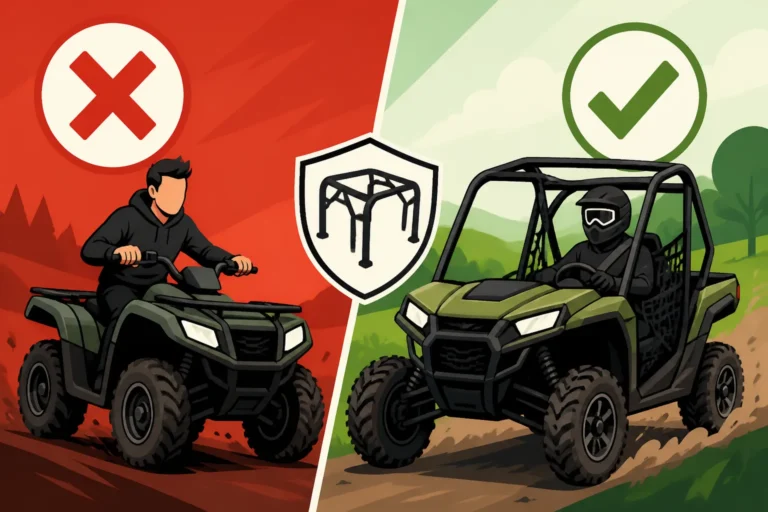
On the topic of safety, it's worth noting that while helmets are generally mandatory for ORV operators in Manitoba, there's an exemption for agricultural and other specific uses. If your farm quad (especially a UTV) is equipped with a roll-over protective structure (ROPS) and a seat belt, and you are using it for an agricultural purpose, you may not be required to wear a helmet. However, safety should always be your top priority, and wearing a helmet, even when not legally required, is always a wise choice. This is part of [Manitoba Farming and Fishing Helmet Exemptions]. If your machine doesn't have a ROPS, or you're riding an ATV, a helmet is still generally required.
Practical Considerations and Related Rules
Beyond the explicit rules, there are always practical aspects to consider when using your farm quad on the shoulder. These small details can make a big difference in your experience and compliance.
The Most Direct Route
The spirit of the agricultural exception is to allow farmers to move their machines efficiently for work. This implies taking the "most direct route" necessary to get from one part of the farm to another. It's not an invitation to travel long distances down a highway shoulder if there are viable off-road alternatives or if the purpose isn't genuinely agricultural. Law enforcement can, and often does, scrutinize the intent behind your travel if it appears you're abusing the exception.
Equipping Your Farm Quad for Safety and Efficiency
For farmers relying on their UTVs for daily tasks, outfitting the machine properly is key. Companies like SuperATV offer a range of accessories that can enhance safety and utility. Think about robust lighting for visibility during early mornings or late evenings, mirrors for better situational awareness, and perhaps a horn to alert others. Heavy-duty tires designed for varied terrain, like those that can handle both field and occasional paved shoulder use, are also a smart investment. For carrying tools, a secure cargo box or bed extender can make a big difference. Remember, the better equipped and more visible your machine is, the safer you'll be.
What Officers Can Ask to See
Should you be stopped by an officer while operating your farm quad on the shoulder, they will likely ask for your driver's licence and your ORV registration. They'll also check for the slow-moving vehicle sign and observe your speed. Carrying your registration card at all times is not just good practice, it's a requirement. [Carrying Your Registration Card on Every Ride] means having the physical card with you, not just knowing your registration number. Ensure all your documentation is in order before you head out, and keep it in a waterproof bag to protect it from the elements.
Importance of Local By-Laws
While provincial rules govern provincial highways, remember that local municipalities and Local Government Districts (LGDs) have the power to enact their own by-laws regarding ORV use on roads and shoulders within their boundaries. While the agricultural exception generally applies to provincial highways, it's always wise to be aware of any specific local rules if you're operating on municipal roads or within town limits. [Manitoba Municipal By-Law Powers] can sometimes create additional layers of regulation that are important to check.
Reporting Trail Damage to a Manitoba Club
Even if you're primarily using your ORV for farm work, being aware of and supporting local ORV clubs is a great idea. While you're on the shoulder for agricultural reasons, you might still encounter general trail systems or notice issues that impact the wider riding community. Supporting these clubs helps maintain and develop designated off-road areas, potentially reducing the need for shoulder use in some situations and fostering a positive image for all riders.
Understanding when a farm quad may use the shoulder in Manitoba is all about knowing the specific conditions and why they exist. It's not a free-for-all, but a carefully carved-out exception to help farmers get their essential work done efficiently and safely. Always prioritize safety, adhere to the regulations, and keep your machine properly equipped and visible.
Disclaimer
This article is for general informational purposes only and does not constitute professional advice. Laws, prices and regulations vary by location and change over time. Consult a qualified professional for guidance on your specific situation.