A Learner’s Permit Will Not Let You Cross
It's a common misconception, especially among younger or new riders in Manitoba, that if you hold any type of driver's permit, you're cleared for all off-road vehicle activities, including crossing public roadways. However, this isn't the case, and assuming your learner's permit is a green light for highway crossings can lead to serious fines, accidents, and jeopardize everyone's safety. This guide will clarify Manitoba's strict rules regarding who can legally cross a highway on an ORV and why your learner's permit simply doesn't make the cut.
The Harsh Reality of Manitoba's Crossing Rules for Young Riders
Riding an off-road vehicle (ORV) in Manitoba offers incredible freedom and access to our beautiful landscapes, but that freedom comes with a significant responsibility, especially when it involves public roadways. Many new riders, full of enthusiasm, don't fully grasp the nuances of the law, particularly when it comes to crossing highways or paved roads. It's a critical area where mistakes can be costly, both in terms of fines and, more importantly, safety.
Why Age and Licence Type Matter for Crossings
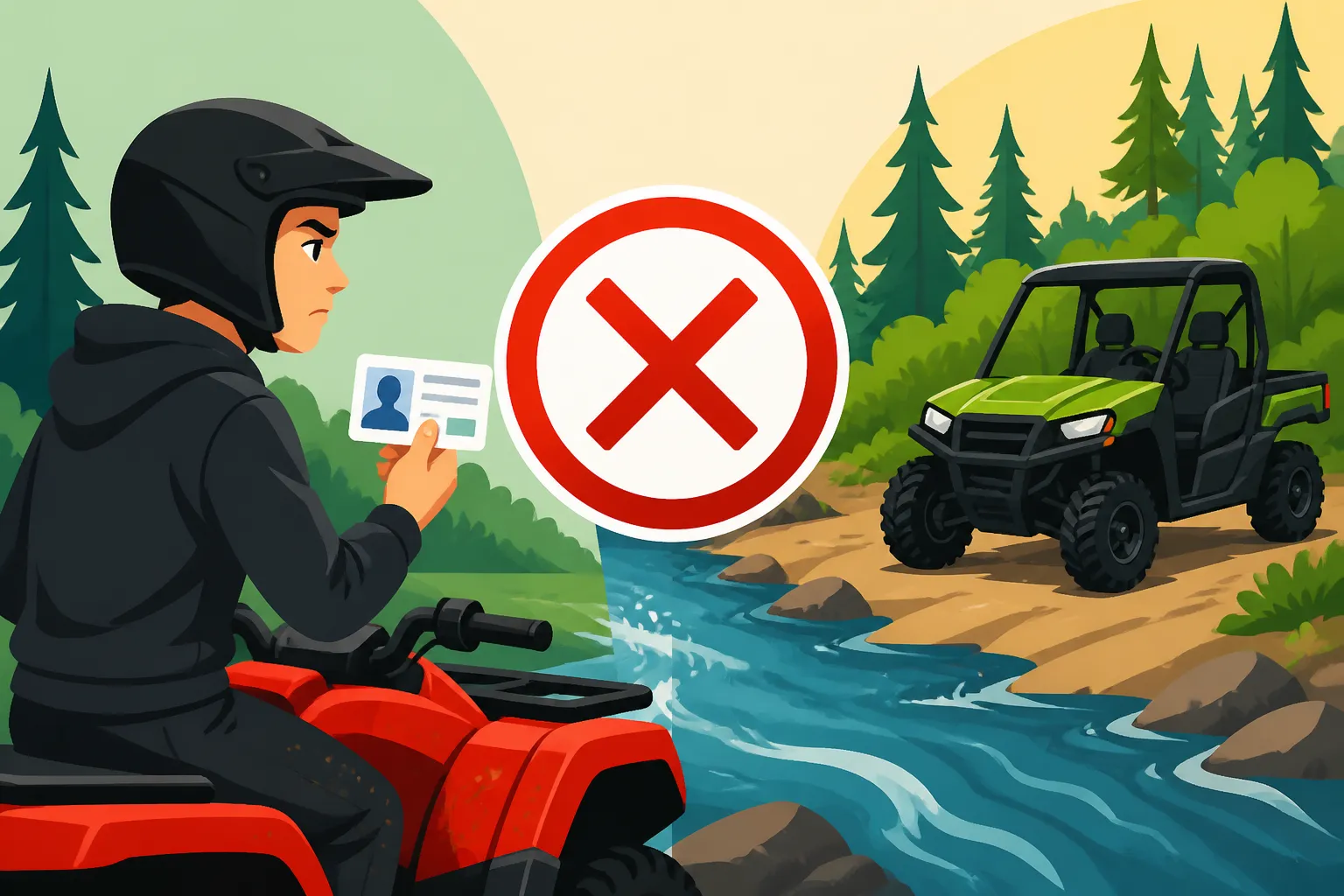
Let's get straight to it: a learner's permit for a car or even a motorcycle does not grant you the legal authority to cross a provincial highway or any public roadway on an ORV in Manitoba. This rule often catches people off guard, but it's rooted firmly in safety and the distinct operational challenges an ORV presents, especially when interacting with high-speed traffic. While a learner's permit signifies a basic understanding of road rules for a car, an ORV handles very differently, and the specific hazards of crossing a busy road on one are considerable.
The province has a clear stance on this to protect riders and other motorists. The rules are designed to ensure that anyone operating an ORV in such a high-risk scenario possesses a certain level of experience, judgment, and a full understanding of road dynamics. A learner's permit, by its very nature, indicates that a person is still learning and requires supervision, which isn't practical or safe in the context of an ORV crossing a highway. This is why [Manitoba Crossings Need a Driver's Licence], not just a learner's permit.
Beyond the Permit: Who Can Cross a Highway?
So, if a learner's permit won't do, what does Manitoba law require for you to legally cross a highway on your ATV or UTV? The answer is straightforward: you need a valid, un-restricted driver's licence. This means a Class 1, 2, 3, 4, 5, 6, or 7 (Farm) driver's licence. The key here is "un-restricted," meaning it cannot be a learner's stage licence (like a Class 5L or 6L). The government wants to see that you've passed your driving tests and are considered a competent, solo operator of a motor vehicle on public roads.
This requirement isn't just about showing a plastic card; it's about demonstrating a proven level of skill and responsibility. When you're crossing a highway, you're briefly entering a high-speed environment where immediate decisions and precise control are paramount. This is a far cry from riding on a secluded bush trail or even within a designated [Manitoba Ditch Riding Rules] area. The risks of misjudging traffic, stalling, or losing control on a paved surface are magnified, and the law reflects this by demanding a higher standard of licensing.
Think about common scenarios: you're out riding with friends, and the trail ends abruptly at a highway, or you need to get from one side of a rural road to another to access a different section of Crown land. In these moments, if you or a member of your group only has a learner's permit, you simply cannot make that crossing legally. You'd have to find an alternative route, trailer your machine across, or risk a significant penalty. The rules are also very specific about [Manitoba Crossing Rules at 5 Metres and 3 Kilometres], detailing distances from intersections where crossings are permitted.
The "Stop, Look, and Listen" Protocol at Crossings
Even with a full driver's licence, crossing a highway on an ORV is not something to be taken lightly. There's a mandatory "stop, look, and listen" protocol that every rider must adhere to, regardless of their experience level. This isn't just common sense; it's a legal requirement designed to minimize the inherent dangers of these intersections. Before you even think about putting a tire on the pavement, you must bring your machine to a complete stop.
Once stopped, you need to conduct a thorough check of traffic in both directions. This means actively looking, not just a casual glance. You need to ensure there's enough clear space and time for you to cross safely, without impeding or surprising oncoming vehicles. The "listen" part is equally important – sometimes you can hear approaching vehicles, especially larger trucks, before you see them. It's a moment for intense focus, free from distractions.
This rigorous protocol underscores the seriousness of highway crossings for ORVs. They are not like car crossings; your visibility might be different, your acceleration might be slower than a road vehicle, and other drivers might not expect to see an ORV. It’s a moment where your full attention is required, and any lapse in judgment or adherence to the rules can have severe consequences. So, when in doubt, err on the side of caution – wait for a larger gap in traffic, or better yet, find a safer, alternative route if possible.
Understanding Manitoba's Broader Age and Licensing Framework for ORVs
Manitoba's regulations for off-road vehicles are designed to ensure safety while still allowing people to enjoy their machines. However, these rules can feel like a maze, especially for families with younger riders or those new to the ORV scene. It's not just about what kind of licence you hold; it's also about your age and what activities you're undertaking. Understanding these distinctions is crucial for staying on the right side of the law and keeping everyone safe.
The Different Age Tiers for Off-Road Riders
Manitoba has a clear tiered system for ORV riders based on age, which dictates where and how they can operate a machine. This system helps to gradually introduce riders to the responsibilities of operating an ORV. It's not a "one size fits all" approach, and knowing where you or your child falls within these tiers is fundamental.
-
Riders Under 14 Years Old: This is the most restrictive tier. Children under 14 are generally prohibited from operating an ORV on Crown land, roadways, or designated trails, unless they are under direct adult supervision and riding on land where the owner has given consent. Even then, the machine must be of an appropriate size for their age and physical capabilities. The emphasis here is heavily on safety and controlled environments. [Manitoba Riders Under 14 Need Supervision] is not just a suggestion; it's the law.
-
Riders 14 Years Old and Over (But Under 16): At 14, things open up a bit, but significant restrictions still apply. Riders 14 and over can operate an ORV without direct adult supervision in certain approved areas, primarily designated trails and agricultural land with consent. They can also ride in ditches, provided they adhere to all other ditch riding rules. However, they are still not permitted to operate on public roadways, including crossing them, and they cannot hold a full driver's licence. [Manitoba Riders 14 and Over in Ditches] highlights a key privilege for this age group, but it doesn't extend to roads.
-
Riders 16 Years Old and Over: Once a rider turns 16, the rules align more closely with adult driving privileges, provided they obtain a valid, unrestricted driver's licence (as discussed in the previous section). With a full licence, a 16-year-old can operate an ORV on public roadways where permitted (e.g., crossing, agricultural shoulder use), and they can generally ride without direct supervision in all legal ORV areas. It’s important to remember that just because you're 16 doesn't automatically mean you can do everything; the full driver's licence is the key. You can find more details on these tiers in [Manitoba Age Tiers for Young Riders].
Driver's Licence Requirements Beyond Highway Crossings
It's easy to get confused about when a driver's licence is truly necessary for ORV operation. The general rule is this: if you're riding purely off-road, on private property with permission, or on designated trails and within legal ditch riding areas, a driver's licence isn't always a mandatory requirement for operation itself (though age restrictions still apply). The licence becomes critical the moment your ORV interacts with a public roadway.
This distinction is fundamental. You could be a seasoned trail rider in the Sandilands Forest, navigating challenging terrain, and technically not need a driver's licence for that activity alone (assuming you meet age requirements). However, the moment you need to cross Provincial Road 210 to get to another section of trail, that's when the full, unrestricted driver's licence becomes non-negotiable. It's the point of contact with regulated public infrastructure that triggers the higher licensing standard.
This also extends to situations like driving on the shoulder of an agricultural road for specific farming purposes. While some exceptions exist, typically for farmers using their ORV for agricultural tasks, even these scenarios often require a valid driver's licence. The intent of the law is clear: any operation of an ORV in proximity to public road traffic demands the proven competency that comes with a full driver's licence.
Parental Consent and Responsibility for Young Riders
For parents and guardians, the responsibility for young riders in Manitoba is significant. Until a rider is 18 years old, parental or guardian consent is often legally required for certain ORV activities and can play a crucial role in registration and legal matters. Beyond the legalities, there’s a moral obligation to ensure young riders are safe, well-trained, and operating their machines appropriately.
This means actively teaching them the rules, ensuring they have the right safety gear, and supervising them closely, especially at younger ages. If a young rider (under 18) is involved in an incident or caught breaking ORV rules, the parents or guardians can often be held liable. This includes ensuring they are not making illegal highway crossings with a learner's permit.
It’s not just about avoiding fines; it's about instilling responsible riding habits from a young age. Discussing the rules, practicing safe riding, and emphasizing the "why" behind regulations like the no-learner's-permit-for-crossings rule can make a huge difference. Consider enrolling young riders in voluntary safety courses. While [Manitoba Youth Certification Is Not Required], it's an excellent investment in their safety and skill development.
Common Misconceptions and Penalties for Breaking Crossing Rules
It’s easy to fall into the trap of thinking "it'll be fine" or "everyone does it" when it comes to ORV rules, especially if you're just trying to get from one section of trail to another. However, these are precisely the mindsets that lead to trouble. Manitoba's ORV laws, particularly those concerning roadway crossings, are in place for serious reasons, and ignoring them carries significant consequences that go far beyond a simple slap on the wrist.
The Danger of Assuming "Any Permit is Enough"
The most prevalent misconception we encounter is the belief that if you have any form of driver's permit—whether it's for a car, motorcycle, or even a moped—it automatically qualifies you to make a highway crossing on your ORV. This simply isn't true in Manitoba. The provincial government has distinct and specific requirements for ORV operators interacting with regulated roadways, and a learner's permit for other vehicle types falls short. Riders often feel frustrated by this, believing their basic road knowledge should suffice.
The danger in this assumption is twofold. Firstly, it exposes the rider to significant legal penalties, which we'll get to in a moment. Secondly, and far more critically, it exposes them and other road users to unnecessary risk. Operating an ORV, even for a brief crossing, requires a different set of skills and situational awareness than driving a car. The machine's handling characteristics, visibility to other motorists, and your ability to react to unexpected situations are all factors that a full, unrestricted licence is meant to certify. Relying on a learner's permit, which explicitly signifies a lack of full driving competency and the need for supervision, is a recipe for disaster in such a high-risk scenario.
What Happens if You're Caught Crossing Illegally?
So, what are the actual consequences if you or a young rider under your care is caught making an illegal highway crossing with only a learner's permit? Prepare for a rude awakening, because the penalties can be steep. Officers are well-versed in ORV regulations and take these violations seriously due to the inherent dangers involved.
Firstly, you can expect a significant fine. These aren't minor parking tickets; [Manitoba Ticket Costs for Riders] can quickly add up, and a careless operation charge can be even more substantial. For illegal operation, especially involving a roadway, penalties can range into hundreds of dollars or more. Beyond the immediate fine, there could be consequences for your driver's licence or permit, potentially leading to demerits or even suspension. If a minor is involved, parents or guardians can also face liability.
Furthermore, in some cases, an officer may choose to impound the ORV, especially if there are other violations or if the rider is deemed to be a significant safety risk. Imagine being miles from home, having your machine towed away, and then having to pay impound fees on top of your fine. It's a logistical nightmare that quickly outweighs any perceived convenience of an illegal crossing. For more severe infractions, especially if an accident occurs, charges like [Manitoba Careless Operation Penalties] can be applied, which carry even higher fines and potential court appearances.
Planning Your Route to Avoid Illegal Crossings
The best way to avoid these penalties and, more importantly, stay safe, is to plan your route meticulously. Before you even load up your machine, take a good look at maps of your riding area. Identify any major roadways, highways, or even paved municipal roads that you might encounter. If you have a rider with only a learner's permit in your group, these areas become no-go zones for crossing.
Look for designated ORV trails that run parallel to roads or underpasses that allow for safe passage. Many ORV clubs and associations, like the Eastman ATV Association, put a lot of work into creating interconnected trail systems that minimize the need for highway interactions. Use trail maps, GPS devices, or even apps that show designated ORV routes. If a crossing is absolutely unavoidable, and you have a rider with only a learner's permit, the only legal solution is to find a safe spot to trailer the machine across the road. This might seem like an inconvenience, but it's a minor one compared to a fine, impoundment, or a serious accident.
When in doubt, always consult local municipal by-laws or contact provincial parks offices if you're riding in those areas. Local knowledge can be invaluable. Sometimes, what looks like a minor gravel road might still be considered a "roadway" under the ORV Act, requiring a full licence for crossing. Taking a few extra minutes for planning can save you a lot of grief and ensure your day out on the trails remains enjoyable and legal for everyone.
Equipping for Safety, Regardless of Age or Permit
Beyond understanding the legalities, equipping yourself and your ORV properly is paramount for safety. This isn't just about adhering to regulations; it's about protecting yourself from injury and ensuring your machine performs reliably in the varied and often challenging Manitoba terrain. Regardless of your age or the type of licence you hold, safety gear and a well-maintained machine are non-negotiable components of responsible off-road riding.
Essential Gear for Every Rider
Let's be real: ORV riding is a blast, but it's also inherently risky. Trails can be unpredictable, other riders can make mistakes, and accidents can happen even to the most experienced among us. That's why high-quality safety gear isn't just a suggestion; it's your first line of defense. The most critical piece of equipment is, without a doubt, a helmet. [Manitoba Helmet Law and Its Exemptions] details the legal requirements, but honestly, you should wear one anyway. It should be DOT-approved, fit snugly, and be in good condition. Don't skimp here—your brain is worth it.
Beyond the helmet, think head-to-toe protection. Goggles are essential for keeping dust, mud, branches, and insects out of your eyes, ensuring clear vision at all times. Sturdy, over-the-ankle boots protect your feet and ankles from impacts and provide grip on the footrests. Long pants and a long-sleeved shirt, preferably made of durable material, will guard against scrapes, branches, and sun exposure. Gloves protect your hands, improve grip, and reduce fatigue. Chest protectors, elbow pads, and knee pads are also highly recommended, especially for aggressive riding or for younger, less experienced riders. This isn't about looking cool; it's about being prepared for the inevitable bumps and bruises that come with the territory.
Machine Maintenance and Safety Features
Your ORV is only as safe as its maintenance. A well-maintained machine is more reliable, predictable, and ultimately safer to operate. Before every ride, you should conduct a quick pre-ride inspection. Check your tires for proper inflation and tread wear. Inspect your brakes to ensure they're working effectively and not spongy. Verify that all your lights—headlights, taillights, and brake lights—are functional, especially if there's any chance you'll be riding near dusk or in low visibility conditions. These are critical for being seen by others and for illuminating your path.
Beyond the basics, think about your machine's specific safety features. Are your seatbelts (if equipped on a UTV) in good condition and being used correctly? Is your spark arrestor clean and functional? (This is a legal requirement in Manitoba, especially during fire season). Consider adding aftermarket accessories that enhance safety or utility. For instance, reputable brands like SuperATV offer a range of products from full windshields that protect from debris to heavy-duty bumpers that add impact protection. While these enhancements don't replace good riding judgment or legal compliance, they can certainly improve your overall safety and riding experience.
The Importance of Rider Training (Even When Not Mandatory)
While [Manitoba Training Is Voluntary for Everyone], investing in a proper rider safety course is one of the best decisions you can make, especially for new or young riders. These courses, often offered by certified instructors, teach fundamental riding techniques, safe operation practices, emergency maneuvers, and a deeper understanding of ORV laws and etiquette. They go beyond what you might pick up from a friend or through trial and error, providing structured learning in a controlled environment.
Think of it as an investment in confidence and competence. A rider who has completed a safety course is better equipped to handle unexpected situations on the trail, understands the limitations of their machine, and is more likely to make responsible decisions, like avoiding illegal highway crossings. For parents, sending a child to an ORV safety course not only enhances their skills but also reinforces the importance of responsible riding and the seriousness of the sport. While no specific permit or certificate is required to ride an ORV on most trails in Manitoba, the knowledge gained from a course is invaluable for preventing accidents and ensuring a lifetime of enjoyable, safe riding. You can explore options from providers like [Manitoba Safety Services Training Options].
| Age Category (Years) | Where You Can Generally Ride | Driver's Licence for Crossings | Required Supervision |
|---|---|---|---|
| Under 14 | Private land (with consent), specific supervised areas | No (Not permitted) | Direct adult supervision required |
| 14 to 15.5 | Designated trails, ditches, agricultural land (with consent) | No (Not permitted) | May ride unsupervised in approved areas |
| 16 and Over | Designated trails, ditches, agricultural land, roads (with valid licence) | Yes (Unrestricted Class 1-7) | No supervision required (with full licence) |
Disclaimer
This article is for general informational purposes only and does not constitute professional advice. Laws, prices and regulations vary by location and change over time. Consult a qualified professional for guidance on your specific situation.