Group Crossings Go One Machine at a Time
Navigating Manitoba's trails with a group of fellow ATV and UTV enthusiasts is an incredible experience, full of camaraderie and shared adventure. However, when your route requires crossing a public road, the excitement can quickly turn to confusion, especially for new riders or those accustomed to different regulations. It's a common frustration: you're riding with friends, the trail ends at a paved road, and suddenly everyone is wondering how to safely and legally get to the other side without breaking up the group or causing an accident. This guide is here to demystify the rules around group crossings for off-road vehicles in Manitoba, ensuring your rides are as safe and compliant as they are enjoyable.
The Absolute Rule: Crossings Are One Machine at a Time
Let's cut right to the chase, because this is perhaps the most critical rule you need to engrave in your mind when riding ATVs and UTVs in Manitoba: when it comes to crossing a public roadway, it's strictly one machine at a time. I know, it feels counter-intuitive when you're riding in a group. You want to stick together, keep an eye on each other, and maintain that flow of shared experience. But the law is clear, and it’s in place for your safety and the safety of everyone else on the road.
Imagine a line of four or five off-road vehicles suddenly attempting to cross a provincial highway, one right after another, without pausing. It creates a much larger, more unpredictable obstruction for oncoming traffic than a single machine would. Drivers on the roadway might spot the first machine and slow down, but then be caught off guard by a continuous stream of ORVs, leading to potential hazards. This rule is designed to minimize the time any off-road vehicle spends exposed to active road traffic, reducing the risk of collisions. It forces each operator to take individual responsibility for their crossing, ensuring they have a clear, safe window before proceeding. Think of it less as a break in your group ride and more as a series of individual, highly cautious maneuvers.
Why This Rule Exists
The core reason behind the "one machine at a time" rule is safety and visibility. Roads are designed for cars, trucks, and other on-road vehicles, which move at much higher speeds than ORVs typically do when crossing. When a group of ORVs attempts to cross simultaneously or in rapid succession, it dramatically increases the complexity for oncoming drivers. They have to process multiple moving targets, assess multiple speeds, and predict multiple trajectories, all while potentially travelling at 80-100 km/h. This is a recipe for disaster.
By requiring each machine to cross individually, the law simplifies the interaction between ORVs and road traffic. It ensures that the driver of an on-road vehicle only has to account for one off-road vehicle at a time. This allows for clearer sightlines, better judgment of distance and speed, and ultimately, a safer environment for everyone involved. It also places the onus firmly on each individual ORV operator to confirm their own safety before entering the roadway. They can't just follow the leader blindly; they must actively scan for hazards, stop, and yield. This critical pause ensures that each rider makes a conscious, deliberate decision to cross only when it's genuinely safe. Without this rule, the temptation for group members to simply follow the machine in front, even if the timing isn't perfect for their crossing, would be immense, and the risks would skyrocket.
Practical Steps for a Single Machine Crossing
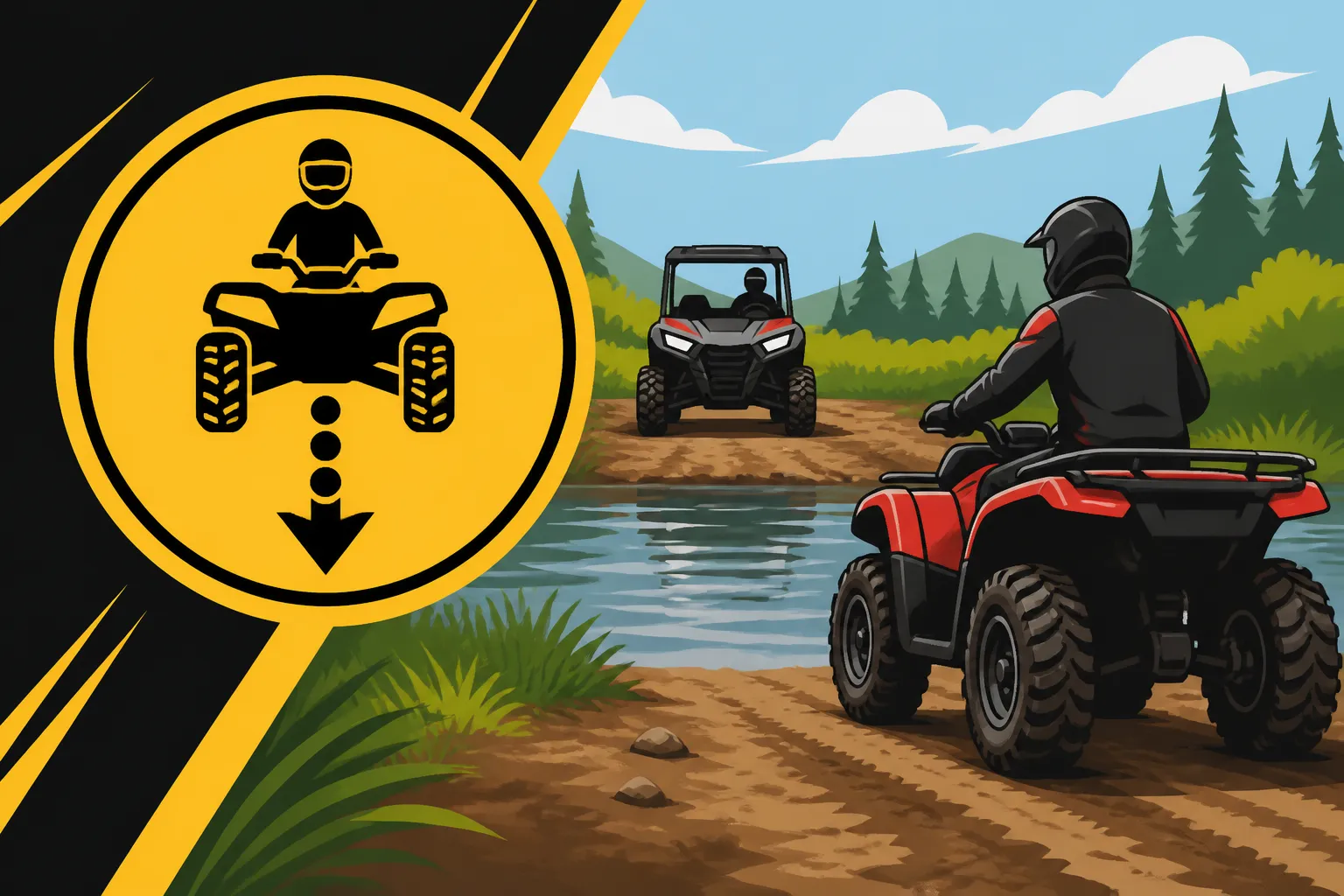
So, what does this "one machine at a time" rule actually look like on the ground? It means approaching the roadway, coming to a complete stop, looking in both directions for traffic, and waiting for an unequivocally clear and safe opportunity to cross. Once one machine has successfully traversed the roadway and is safely off the pavement on the other side, the next machine in the group can then begin its own independent assessment and crossing.
Here’s a breakdown of the steps:
- Stop Well Back: As your group approaches the road, all machines should pull over and stop a safe distance from the edge of the pavement. This prevents encroaching on the roadway and gives ample space to assess traffic.
- Leader Goes First: Typically, the lead rider in your group will be the first to cross. They should approach the edge of the roadway, come to a complete stop, and thoroughly check for traffic in both directions.
- Confirm Clear Path: The lead rider must ensure that there is absolutely no oncoming traffic that would necessitate them to stop or accelerate dangerously on the pavement. This isn't just about a gap; it's about a safe gap.
- Cross Quickly and Directly: Once the path is clear, the lead rider should cross the roadway at a right angle, as directly as possible, and proceed immediately to the safe off-road area on the other side. Do not dawdle, perform stunts, or travel along the road. The goal is to minimize time on the pavement.
- Clear the Roadway: The lead rider should be completely off the road before the next rider even begins to prepare for their crossing. They should signal to the next rider that the way is clear for their assessment.
- Repeat for Each Rider: Every subsequent rider then repeats this exact process. They approach, stop, look, yield, and cross individually. There should be no pressure to rush because someone else is waiting. Each rider must make their own independent judgment. This is also why having good communication within your group, perhaps via hand signals or helmet comms, can be helpful to manage the flow without rushing.
Remember, the goal is always maximum safety, and that means adhering to [Manitoba Crossings Go One Machine at a Time].
Planning a Group Crossing Safely
While the law dictates individual crossings, that doesn't mean you can't plan your group crossing strategically. In fact, careful planning is paramount to ensuring everyone in your party gets across safely and efficiently, minimizing stress and potential risks. It's about being organized and communicating effectively, so each rider knows their role and the expectations. Think of it like a well-choreographed dance, where each dancer has their solo moment.
It’s not enough just to know the rule; you need to implement it effectively. This planning becomes even more crucial if you’re riding with varying skill levels or with younger riders. Ensuring everyone understands the process beforehand can prevent mistakes and keep the whole group together, even if briefly separated by the crossing.
Pre-Crossing Communication and Strategy
Before you even get close to a road crossing, your group should have a clear communication strategy. This often involves designating a lead rider and a sweep rider, but also ensuring that everyone in between knows what to do. A quick huddle before a known crossing point, especially on a new trail, can make all the difference.
Here are some points to discuss:
- Hand Signals: Establish clear hand signals for "stop," "clear to cross," "wait," and "traffic coming." This is vital when engine noise or distance makes verbal communication difficult.
- Designated Leader: The lead rider is responsible for identifying the safest crossing point (if there's a choice), assessing traffic, and being the first to cross. They're the eyes and ears for the group at that critical moment.
- Designated Sweeper: The sweep rider ensures that everyone has crossed safely and that no one is left behind. They're often the last to cross.
- Gap Assessment: Remind everyone that the "clear to cross" signal from the person ahead only means they found it safe. Each individual must still make their own independent assessment of traffic.
- Rider Order: Decide on the order of crossing if there are riders with less experience or those who might need more time. Often, more experienced riders will go first, and then strategically place less experienced riders between calm, confident operators.
- Gathering Point: Agree on a clear and safe gathering point on the other side of the road. This should be well off the pavement, allowing ample space for all machines to re-group without blocking traffic or other trail users.
Clear communication can prevent confusion and ensure each rider feels supported, even when they're crossing alone. Tools like helmet-mounted communication systems can be incredibly helpful for maintaining constant contact during complex maneuvers like road crossings, allowing the lead rider to relay real-time traffic updates or specific instructions.
Emphasizing Designated Crossing Points
It might sound obvious, but you can't just cross a road anywhere. Manitoba law specifies particular rules for where and how ORVs can cross. You need to use proper intersections or designated crossing points. Attempting to cut across a busy highway, blind corner, or private property can lead to serious legal trouble and, more importantly, put lives at risk. [Manitoba Crossings Need a Clear View] is not just a suggestion, it's a requirement. You need to be able to see oncoming traffic, and oncoming traffic needs to be able to see you.
When planning your route, be aware of where these crossings occur. Trail maps often highlight official crossing points. If you're on Crown Land or a club trail, these points are usually marked with signage indicating an ORV crossing. Always prioritize these designated spots, even if it means a slightly longer ride to get there. They're designed to maximize visibility for both ORV operators and motorists. Avoid areas where the road is curved, where there are hills that obstruct views, or where traffic is particularly fast-moving. Sometimes, the safest crossing isn't the most direct one. Being proactive in identifying these points before you even leave home is a mark of a responsible rider.
Checking Local By-Laws
While provincial legislation sets the baseline for ORV operation and road crossings, municipalities and local government districts in Manitoba have the power to enact their own by-laws. These local rules can sometimes add further restrictions or even designate specific roads where ORVs are permitted to cross or even travel short distances, under certain conditions. For instance, a small town might have a by-law that allows ORVs to use a specific municipal road for a short stretch to connect two trail sections, but this is an exception, not the norm.
Before riding in an unfamiliar area, especially around towns or organized communities, it's a smart move to quickly check if any specific local by-laws apply. You can often find this information on the municipality's website or by contacting their local administration office. While the provincial rule of "one machine at a time" will always apply to crossings, a local by-law might dictate where those crossings are permissible or add extra requirements like specific hours for crossings. Ignoring these local rules could lead to unexpected fines or even complications with your [Manitoba Insurance Included With Registration] if an incident occurs in an area where you shouldn't have been. Being informed prevents headaches later.
Legal Requirements Beyond the "One at a Time" Rule
While the "one machine at a time" rule for group crossings is paramount, it's part of a broader set of legal requirements that every ORV operator in Manitoba must adhere to when interacting with public roadways. These rules are non-negotiable and are designed to ensure maximum safety for all road users. Understanding these nuances is crucial, not just to avoid a ticket, but to prevent serious accidents. Failing to follow these regulations can result in hefty fines and jeopardize your safety. An officer performing [Manitoba Equipment Checks by Officers] might also ask about your awareness of these rules.
Driver's Licence and Clear View
First and foremost, to cross any highway in Manitoba, the ORV operator must hold a valid driver's licence. This isn't just a recommendation; it's a legal requirement. This means that younger riders who may be operating an ORV off-road under supervision, but do not yet possess a driver's licence, are not legally permitted to cross public roads. [Manitoba Crossings Need a Driver's Licence] for a reason – it ensures a baseline level of competency and understanding of road rules.
Furthermore, any crossing must be executed where you, the operator, have a clear and unobstructed view of oncoming traffic in both directions for a sufficient distance to complete the crossing safely. This also means that motorists on the roadway must have a clear view of your approaching ORV. This "clear view" requirement directly impacts where you can cross. You cannot cross over a blind hill, around a sharp corner, or in an area with dense foliage blocking your sightlines. If you can't see, or can't be seen, you simply cannot cross. This is about mutual visibility and predictability.
The 5-Metre and 3-Kilometre Rules
Manitoba's Off-Road Vehicles Act also contains specific rules about the proximity of your crossing to intersections. You are not permitted to cross a highway within 5 metres of an intersection. This rule is in place to prevent ORVs from conflicting with turning traffic or obscuring drivers' views as they approach an intersection. Intersections are already complex points on a road network, and adding an ORV crossing immediately adjacent to one significantly increases the risk of collision.
Conversely, if you're attempting to cross a provincial trunk highway (like a PTH, which often has higher speed limits and greater traffic volumes), there's a "3-kilometre rule" that comes into play. You are required to cross at least 3 kilometres from the nearest intersection with another provincial trunk highway or an all-weather road. This rule helps to direct ORV traffic away from major intersections, pushing crossings into more rural, less congested areas where traffic might be lighter and sightlines potentially better. These rules reinforce the idea that road crossings are not to be taken lightly and must be planned with precision. For a deeper dive into these specifics, refer to [Manitoba Crossing Rules at 5 Metres and 3 Kilometres].
Stopping, Yielding, and Proper Lighting
Before entering the travelled portion of any roadway, every ORV operator must come to a complete stop. This isn't a "rolling stop" or a slow crawl; it's a full stop, checking both ways. Once stopped, you must yield the right-of-way to all traffic on the highway. This means waiting until the road is absolutely clear, with no approaching vehicles that would require you to rush or cause them to brake or swerve. You are the one interrupting the flow of traffic, so the responsibility to ensure safety rests squarely on your shoulders. [Stopping and Yielding Before You Cross a Highway] is fundamental to safe operation.
Finally, proper lighting is not just for night riding; it's crucial for visibility during crossings, especially during dusk, dawn, or in adverse weather conditions. Your ORV must be equipped with working headlights and taillights, and these should be on whenever you are operating near or crossing a roadway. This significantly improves your visibility to other motorists, giving them more time to react. Consider supplementing your machine's stock lighting with additional, high-quality LED lights, perhaps from a brand like SuperATV, which offers robust lighting solutions designed for off-road conditions but also enhance safety during brief on-road interactions. While the lights are primarily for the trail, they offer invaluable assistance when you briefly interact with the road network. A brighter machine is a safer machine when cars are involved. [Manitoba Lighting Requirements on a Machine] outlines these requirements in detail.
Common Mistakes and How to Avoid Them
Even with the rules clearly laid out, it's easy to fall into common traps, especially when riding in a group. The group dynamic can sometimes override individual caution, leading to mistakes that could have serious consequences. As an experienced rider, I've seen these errors firsthand, and they're almost always preventable with a bit of foresight and discipline. Understanding these pitfalls is the first step to avoiding them.
Impatience and Group Mentality
One of the biggest mistakes riders make during group crossings is succumbing to impatience or the "herd mentality." You see the rider ahead make it across, and you instinctively want to follow immediately, perhaps not even taking the time to properly assess the traffic for your specific crossing. This can be exacerbated by the feeling of holding up the group or the desire to stay tightly together. However, this is precisely when the "one machine at a time" rule becomes most critical.
How to avoid it: Reinforce within your group that each rider is responsible for their own safe crossing. Encourage patience. The few extra seconds it takes for each rider to safely cross individually are insignificant compared to the potential consequences of rushing. The lead and sweep riders should also communicate that it's okay for individuals to take their time. Remember, the trail will wait. Installing an upgraded horn from SuperATV can also give you an extra layer of warning for distracted motorists, though it's always secondary to safe crossing practices.
Lack of Proper Signaling
While you're required to yield to all traffic, clear communication with your fellow riders is also crucial. A lack of proper hand signals or verbal cues (if using helmet communication) can lead to confusion about when it's safe for the next rider to proceed or when someone needs to wait. This isn't about signaling to oncoming cars, but about internal group communication.
How to avoid it: Before the ride, establish a simple, unambiguous set of hand signals for "safe to proceed" and "wait – traffic." Practice these signals. The rider who has just crossed safely should clearly signal to the next rider in line that they are off the road and it's their turn to begin their own assessment. This signal should never imply the road is clear for the next person, only that the previous person has cleared the path.
Underestimating Traffic Speed or Volume
It’s easy to misjudge the speed of an approaching vehicle, especially on open stretches of highway where cars might be traveling at high speeds. What looks like a safe gap can close rapidly, leaving you stranded on the pavement or forcing a dangerous maneuver. Similarly, underestimating the sheer volume of traffic, particularly during peak hours or on long weekends, can mean long waits and an increased temptation to take risks.
How to avoid it: Always err on the side of caution. If there's any doubt about whether you have enough time to safely cross, wait. Wait for a larger gap than you think you need. On busy roads, sometimes it means waiting for several minutes for a truly clear window. Teach riders to look far down the road, not just at immediate traffic, and to use the "two-second rule" or more for judgment (i.e., if the car will reach your crossing point in two seconds, it's too close). Also, be aware of peak traffic times in the areas you're riding and try to plan your crossings for quieter periods if possible. A robust machine, perhaps equipped with high-performance components from SuperATV, can provide confidence in acceleration when a safe gap appears, but no amount of power can substitute for sound judgment.
Table: Safe vs. Unsafe Group Crossing Practices
Here’s a quick overview of what to do and what to absolutely avoid when your group encounters a road crossing in Manitoba:
| Feature | Safe Group Crossing Practice | Unsafe Group Crossing Practice |
|---|---|---|
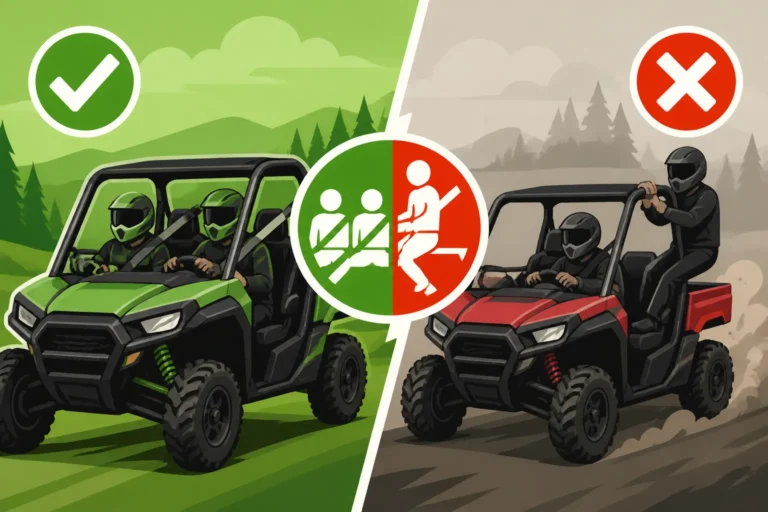
| Crossing Method | Each machine stops, assesses, and crosses individually. | Multiple machines cross in a continuous stream or side-by-side. |
| Approach | All machines stop well back from the roadway's edge. | Riders creep onto the shoulder or edge of the pavement while waiting. |
| Visibility | Only cross where you have a clear, long-range view of traffic. | Crossing on blind curves, over hills, or where sightlines are poor. |
| Right-of-Way | Each ORV yields to all roadway traffic, waiting for a clear path. | Assuming traffic will slow down or yield to the ORV group. |
| Communication | Pre-established hand signals and clear instructions for each rider. | No clear plan, reliance on guessing, or simply following the leader. |
| Licensing | All crossing operators possess a valid driver's licence. | Unlicensed youth or riders attempting to cross. |
| Road Rules | Adherence to 5m/3km rules and immediate crossing. | Travelling along the roadway, riding on shoulders, or cutting corners. |
| Patience | Willingness to wait for an ample, safe gap in traffic. | Rushing due to group pressure or impatience, taking unnecessary risks. |
This table highlights the stark difference between a responsible, safe crossing and one fraught with danger. Always prioritize safety, even if it means a slight delay for your group.
When you're out exploring the incredible trails Manitoba has to offer, remember that safe operation is everyone's responsibility. Understanding and strictly adhering to the "one machine at a time" rule for road crossings, along with all other provincial regulations, is not just about avoiding fines; it's about protecting yourself, your fellow riders, and other road users. Take the time to plan your crossings, communicate effectively, and always err on the side of caution. Happy, safe riding!
Disclaimer
This article is for general informational purposes only and does not constitute professional advice. Laws, prices and regulations vary by location and change over time. Consult a qualified professional for guidance on your specific situation.