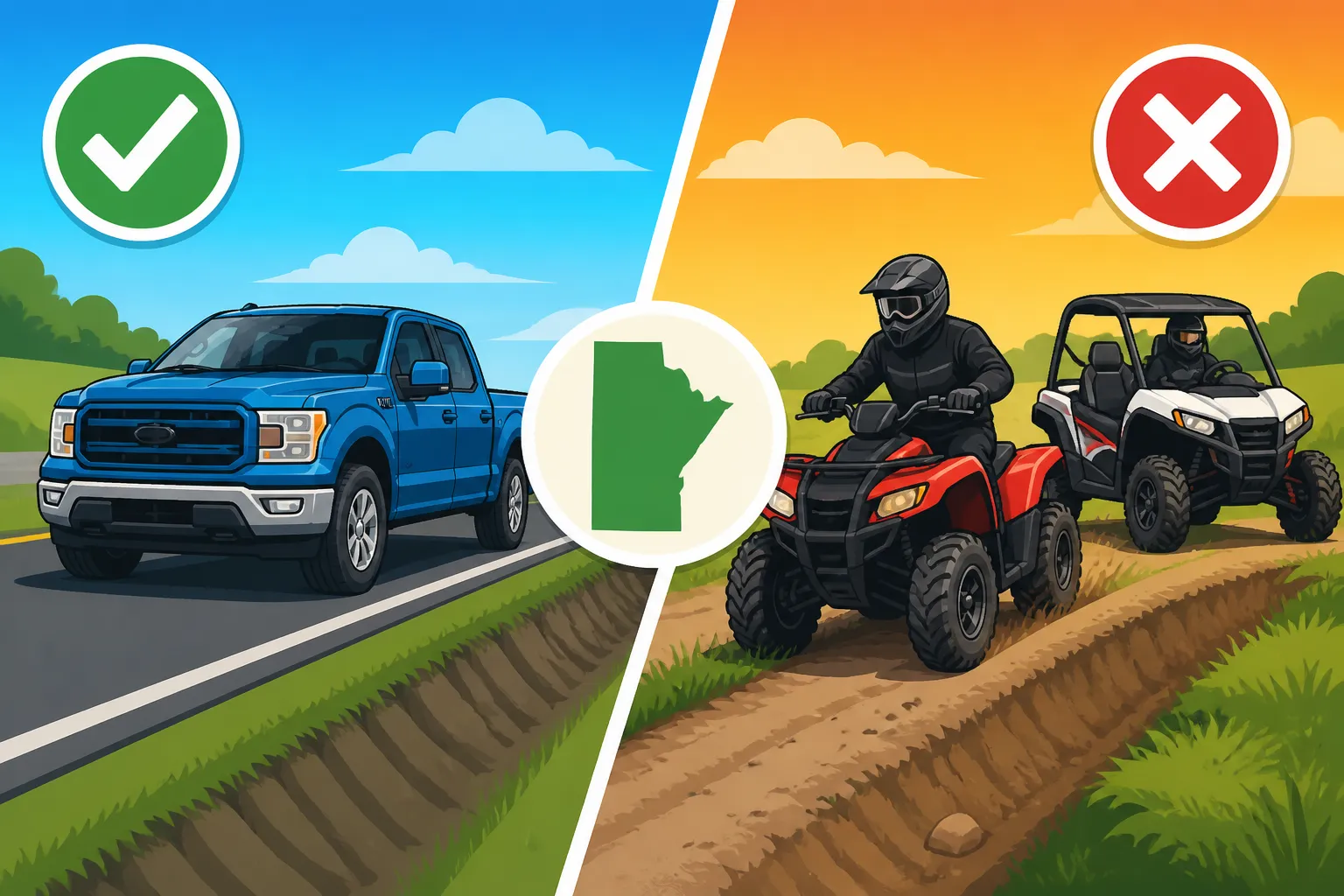
Trucks and Quads Get Different Ditch Rules
It can be incredibly frustrating to see one type of vehicle cruising along a ditch while another, seemingly similar, machine is strictly forbidden. This common confusion often leads to head-scratching moments for many Manitoban riders, particularly when trying to understand why a pickup truck might get away with something your quad can’t, or vice-versa. This guide aims to clear up the differences in ditch riding rules between off-road vehicles (ORVs) like ATVs and UTVs, and standard highway-licensed trucks, helping you stay on the right side of the law and out of trouble.
The Core Difference: Why a Truck Isn't a Quad in the Ditch
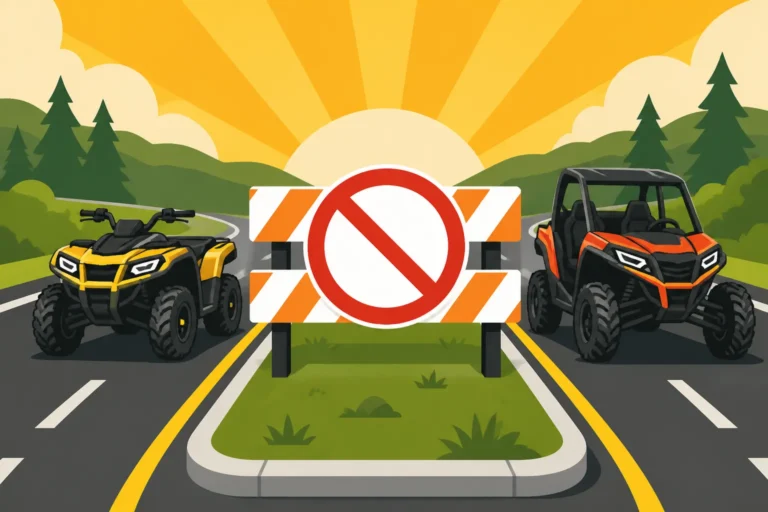
When we talk about vehicles on public land or adjacent to roadways in Manitoba, it's easy to lump them all into one category. But legally speaking, the provincial government draws a very clear line between what it considers a "highway vehicle" (like your truck) and an "off-road vehicle" (like your ATV). This distinction is the bedrock of why the rules for ditch riding differ so significantly, and understanding it is key to navigating Manitoba's diverse terrain without a run-in with the law.
Defining an Off-Road Vehicle ORV in Manitoba
First, let's get granular about what an ORV actually is under Manitoba law. When the province refers to an Off-Road Vehicle, it's talking about a motorized vehicle designed to travel on land other than a highway. This category includes your typical all-terrain vehicles (ATVs), utility task vehicles (UTVs, often called side-by-sides), snowmobiles, dirt bikes, and even some amphibious machines. These machines are built for rugged terrain, with specific tire types, suspension, and overall construction that sets them apart from your everyday truck. They're meant for trails, fields, and bush, not paved roads. Because of their design and intended use, ORVs have a different set of regulations governing where and how they can operate, especially when it comes to areas like highway ditches. For instance, a robust UTV equipped with heavy-duty A-arms and lift kits, perhaps from a brand like SuperATV, is clearly built for off-pavement performance, making it an ORV in the eyes of the law, distinct from a truck.
Highway Traffic Act Versus Off-Road Vehicles Act
The fundamental reason for the differing rules boils down to the legislation that governs each type of vehicle. Your pickup truck, or any other road-legal car, falls primarily under Manitoba's Highway Traffic Act. This act is all about regulating traffic, safety, and infrastructure on designated highways and roadways. It's comprehensive, covering everything from speed limits and licensing to vehicle maintenance and insurance for vehicles that are primarily designed for highway travel.
On the other hand, ORVs are primarily governed by the Off-Road Vehicles Act. This separate piece of legislation recognizes that ORVs operate in different environments and pose different challenges and risks. It outlines specific rules for registration, helmet use, age restrictions, and crucially, where ORVs are permitted to operate. The fact that two entirely different acts govern these vehicles means their permitted areas of operation, including ditches, are inherently distinct. The Highway Traffic Act generally prohibits highway vehicles from operating on road allowances (like ditches) unless specifically authorized (e.g., for maintenance or emergency services), whereas the Off-Road Vehicles Act provides specific conditions under which ORVs can use ditches. You might want to brush up on the comprehensive [Manitoba ORV Road Rules Explained] for a broader understanding of where your machine fits in.
Where Quads Can Ride the Ditch (Legally Speaking)
Okay, so we know ORVs and trucks are treated differently. But where does that leave your quad in the ditch? It's not a free-for-all, by any means, and there are very specific conditions you need to adhere to. Many riders mistakenly believe that any ditch is fair game, but that's a quick way to find yourself explaining things to a conservation officer or the RCMP.
The "Right-Hand Ditch" Rule
This is probably the single most important rule for ORV riders in Manitoba when it comes to ditch travel. The Off-Road Vehicles Act clearly states that if you're going to ride in a highway ditch, it must be the one on the right-hand side of the roadway, in the same direction as the adjacent traffic flow. This isn't just a suggestion; it's a hard and fast rule. Think of it like this: if you were driving your truck on the road, you'd be on the right, moving with traffic. Your ORV in the ditch needs to mimic that. You can't just pick the ditch that looks easier or less muddy if it means you're going against the flow of traffic. The reasoning here is purely for safety, reducing the risk of head-on collisions with other ORVs or unexpected encounters with vehicles entering or exiting the roadway. It also ensures that other riders and drivers can anticipate your movement. This means that if you're heading west, you must be in the ditch to the north of the road, moving west. [Only One Ditch of the Two Is Legal], and it must be the one where you are [Travelling the Same Way as Traffic]. It's a key distinction that sometimes catches even experienced riders off guard.
Navigating Intersections and Crossing Roadways
Riding a ditch often means you'll eventually encounter an intersection or need to cross a paved roadway. These aren't just minor inconveniences; they are critical points where specific rules apply, and where many riders make mistakes. You can't simply blast across a highway like it's another part of the trail.
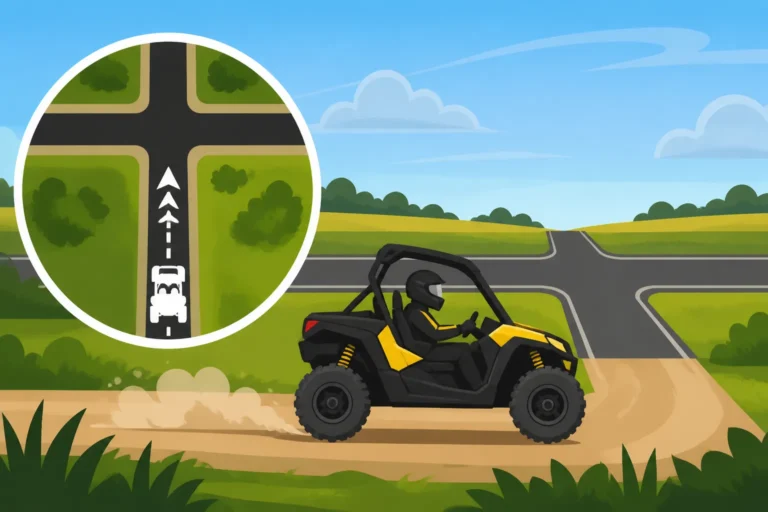
When approaching a crossing, you must stop, look for traffic, and yield to all highway vehicles. The law requires you to cross at a 90-degree angle to the roadway, as directly and safely as possible. You need to have a clear view of the roadway for at least 150 metres in both directions, and the crossing itself must be at least 5 metres from an intersection. If another intersection is within 3 kilometres, you must use the one that is further away.
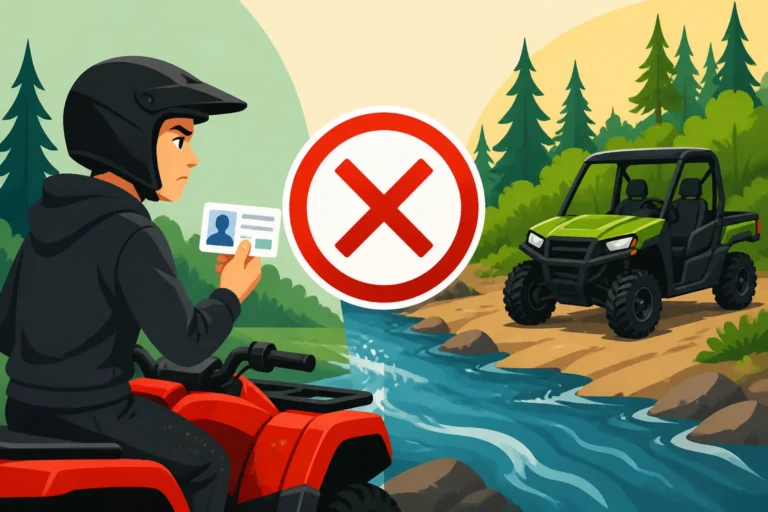
Furthermore, to legally cross a highway, the ORV operator must hold a valid driver's licence. No learner's permits or provisional licences for these maneuvers! This is a rule designed to ensure that anyone crossing a busy road has a fundamental understanding of traffic laws and road etiquette. Ignoring these rules can lead to serious fines and dangerous situations. For more details on this, check out [Manitoba Crossings Need a Driver's Licence].
The Importance of Local By-Laws
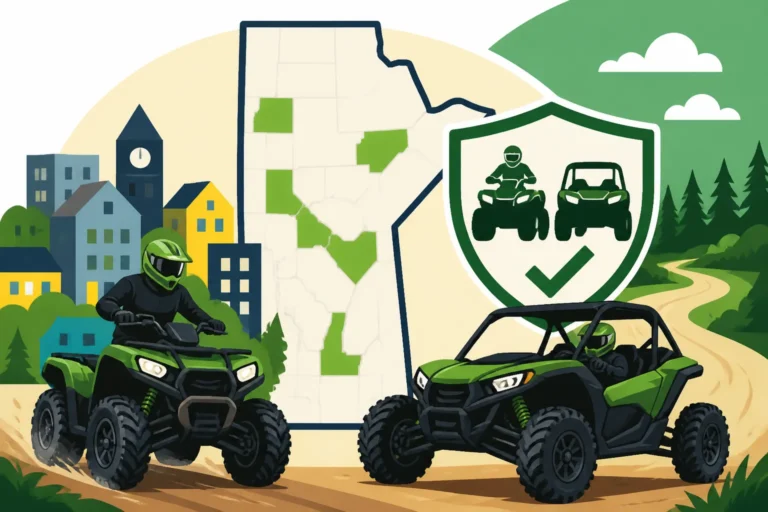
Here’s where things can get even more complicated. While the provincial Off-Road Vehicles Act sets the baseline rules, municipalities in Manitoba have the power to create their own by-laws that further regulate ORV use within their specific boundaries. This means that what's legal in one rural municipality might be strictly prohibited just a few kilometres down the road in another.
For example, a rural municipality might allow ORVs on certain low-traffic municipal roads or ditches, while a neighbouring town might have a blanket ban on ORVs within its limits. Some by-laws might specify certain times of day ORVs can operate, or designate specific routes. These local variations are a common source of frustration for riders who travel across different jurisdictions. It’s absolutely critical to research the by-laws of any municipality you plan to ride through. There's no single provincial map that shows all these variations, so a quick call to the local municipal office or checking their website before you head out can save you a lot of grief. This local power is highlighted in [Manitoba Municipal By-Law Powers]. When upgrading your machine with accessories, like specialized winches from SuperATV, always consider whether they comply with any local noise or safety regulations, as these can sometimes be part of local by-laws.
Why Trucks Are (Mostly) Barred from Ditches
Now, let's flip the coin and talk about why your trusty pickup truck, which might navigate some pretty rough back roads, is generally not allowed to use highway ditches for travel, despite what you might occasionally see. The distinctions here are both legal and practical, rooted in vehicle design and the purpose of road allowances.
Safety and Design Limitations
First off, a truck is designed to operate on a relatively flat, consistent surface: the road. While a 4×4 pickup can certainly handle off-road conditions, it's not built with the same agility, suspension travel, or low centre of gravity as an ATV or UTV. Ditches, by their very nature, are uneven, often steep, and can hide all sorts of hazards like culverts, deep ruts, and debris.
Driving a full-sized truck in a ditch presents significant safety risks:
- Rollover Risk: Trucks have a higher centre of gravity, making them much more susceptible to rollovers on uneven, sloped terrain.
- Visibility: From the driver's seat of a truck, it's much harder to see the immediate terrain in a ditch, increasing the risk of hitting obstacles or driving into hazards.
- Damage: Even if a truck doesn't roll, the suspension, steering components, and undercarriage are not designed for the constant abuse of ditch travel. You're far more likely to cause significant damage to your vehicle.
These design limitations mean that even if a truck could physically navigate a ditch, it's not a safe or intended environment for it. This is a primary reason why [Manitoba Ditch Riding Rules] for trucks differ so much from ORVs.
Road Allowance and Maintenance
Beyond safety and design, there's a practical and legal reason: road allowances. The ditch and the land immediately adjacent to the paved or gravel road are part of the "road allowance." This land is owned by the province or municipality and is primarily intended for infrastructure purposes. This includes drainage, snow storage, utility lines (hydro, gas, fibre optics), and future road expansion.
Allowing general vehicle traffic, especially heavy trucks, in these areas would:
- Damage Infrastructure: Heavy vehicles can compact soil, damage drainage systems (culverts, swales), and create ruts that interfere with water flow, leading to road degradation.
- Interfere with Maintenance: Road crews need unobstructed access to ditches for tasks like mowing, snow removal, and repairing utilities. Vehicle traffic makes their jobs harder and more dangerous.
- Environmental Impact: While ORVs also have an impact, the larger footprint and weight of trucks can cause more significant erosion and habitat disruption in these sensitive areas.
In essence, the ditch isn't meant to be another travel lane for highway vehicles. It's an essential part of the road's infrastructure, and its integrity is protected by law under the Highway Traffic Act. This is a key reason for [Why a Jeep May Not Ride a Ditch] – it’s about vehicle classification and the designated purpose of the land.
Exceptions for Agricultural and Commercial Use
Now, before you say, "But I see farmers in their pickups in the ditch all the time!" let's clarify. There are very specific, and typically limited, exemptions for certain types of vehicles when performing essential agricultural or commercial duties.
- Agricultural Operations: Farmers often need to access fields, move equipment, or spray crops using the road allowance. In many cases, provincial regulations and local by-laws will have provisions that allow for this, provided it's directly related to the farm operation, and often with specific requirements like displaying a "slow-moving vehicle" sign. This isn't general travel; it's a specific-purpose use.
- Commercial/Utility Work: Similarly, utility companies (hydro, telecom), land surveyors, or emergency services might need to access areas via the ditch. These are typically under specific permits or statutory rights that do not apply to the general public or recreational use.
These exemptions are highly conditional and do not grant permission for the average truck driver to simply drive their vehicle in a highway ditch for convenience or recreation. They exist to facilitate critical work, not to expand recreational driving opportunities. These agricultural exceptions often require specific signage, such as a [The Slow-Moving Vehicle Sign a Farm Quad Needs], and even then, there are limitations, like [Manitoba's 40 km/h Shoulder Limit] that may apply.
Common Misconceptions and Penalties
Despite the clear distinctions in Manitoba law, confusion persists, and many riders and drivers continue to make assumptions that can lead to costly consequences. Let's tackle some of these common pitfalls and outline what you stand to lose if you ignore the rules.
"Everyone Else Does It": Debunking the Myth
One of the most dangerous phrases you can utter when discussing off-road rules is, "Everyone else does it." This mentality often leads people to believe that if they see others breaking a rule without immediate consequence, it must be permissible. This is absolutely not the case. Just because you see a truck in a ditch or a quad going the wrong way in a ditch doesn't mean it's legal or safe.
Enforcement varies. A conservation officer or RCMP patrol might not be present every time someone breaks a rule, but that doesn't validate the illegal behaviour. When they are present, or when an incident occurs, those who have been "doing what everyone else does" will find themselves facing the full weight of the law. The rules are in place for safety, environmental protection, and ensuring fair use of public land. Following what "everyone else does" is a recipe for an accident or a ticket. This common misconception is why we often hear about [Manitoba Rules Riders Get Wrong].
The Cost of Getting It Wrong
Ignoring the provincial Off-Road Vehicles Act or the Highway Traffic Act can be a costly mistake, both in terms of fines and potential legal repercussions. The penalties for violating these regulations are significant and designed to deter unsafe and illegal activities.
For ORV violations under the Off-Road Vehicles Act, a general penalty fine can be substantial. For example, operating an unregistered ORV, riding in a prohibited area, or failing to adhere to ditch riding rules can lead to a fine of [The $2,000 General Penalty Under the ORV Act]. If the operation is deemed "careless," penalties can escalate dramatically, potentially reaching up to $5,000. These fines are just for the provincial act; if you're also violating municipal by-laws, there could be additional penalties.
For truck drivers, operating a highway vehicle in an unauthorized area like a ditch can result in fines under the Highway Traffic Act, potentially for infractions like operating off the designated roadway, or even more serious charges if damage to infrastructure occurs.
Beyond financial penalties, there are other consequences:
- Vehicle Impoundment: In some serious cases, your ORV or truck could be impounded.
- Insurance Issues: If you're involved in an accident while illegally operating in a ditch, your insurance coverage could be jeopardized, leaving you personally liable for damages or injuries.
- Criminal Charges: In extreme cases, especially if reckless behaviour leads to property damage, injury, or death, criminal charges could be laid.
Understanding and adhering to the rules isn't just about avoiding a ticket; it's about protecting your finances, your vehicle, and most importantly, your safety and the safety of others. So, next time you're about to head out, remember that a little research and adherence to the law goes a long way.
Here's a quick comparison of the general rules:
| Feature | Off-Road Vehicle (ATV/UTV) | Highway Vehicle (Truck/Car) |
|---|---|---|
| Primary Governing Act | Off-Road Vehicles Act | Highway Traffic Act |
| Ditch Riding Generally | Permitted under strict conditions | Generally prohibited |
| Direction of Travel | Right-hand ditch, with traffic flow | Not applicable for general travel |
| Crossing Roadways | Permitted at 90 degrees, specific visibility/distance, licensed operator | Only at designated crossings/intersections as per road rules |
| Local By-Law Impact | Significant, can override provincial permissions | Can impose further restrictions on general vehicle use |
| Agricultural/Commercial | Exemptions for specific ORV use (e.g., farm quads) | Limited exemptions for specific work (e.g., farming, utilities) |
| Primary Purpose of Ditch | Drainage, utilities, road allowance | Drainage, utilities, road allowance |
| Key Concern | Safety, environmental impact, compliance | Safety, infrastructure damage, legal compliance |
Disclaimer
This article is for general informational purposes only and does not constitute professional advice. Laws, prices and regulations vary by location and change over time. Consult a qualified professional for guidance on your specific situation.