Why an Interchange Right-of-Way Is Off Limits
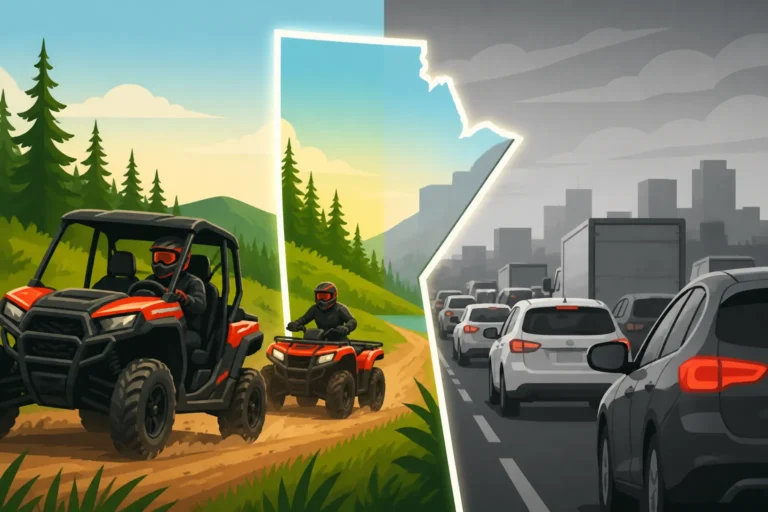
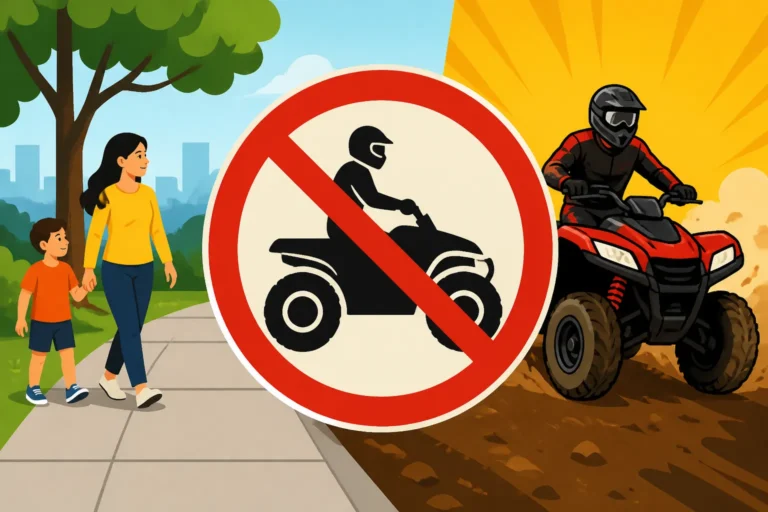
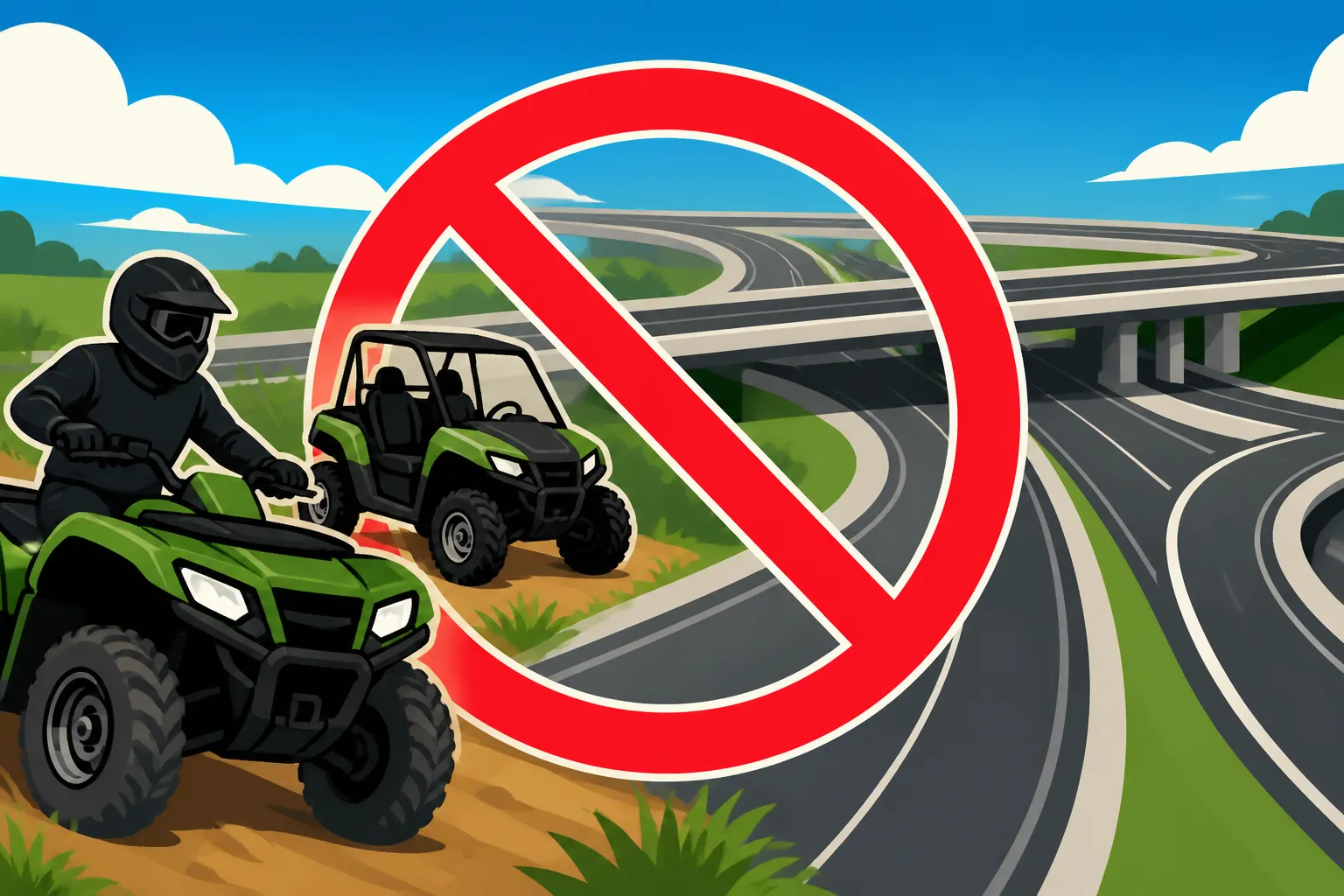
It's completely understandable to look at a highway interchange, with all its sweeping ramps and open spaces, and wonder if it could be a shortcut or an easy way to get around. After all, when you're on your ATV or UTV, navigating back roads or planning a long detour can be a bit of a hassle. You just want to get to your destination, whether that's a new trail or a friend's cabin. However, that tempting stretch of asphalt and green space around an interchange is, without exception, off-limits for off-road vehicles in Manitoba. This guide will clarify exactly what an interchange right-of-way entails and, more importantly, explain why venturing into these areas on your machine isn't just illegal, but incredibly dangerous.
Understanding What an Interchange Right-of-Way Actually Is
Before we dive into why you can't ride your off-road vehicle through an interchange, let's get clear on what an interchange right-of-way actually encompasses. It's more than just the paved roads; it's an entire zone of infrastructure designed for specific purposes, and it's almost always high-traffic.
Anatomy of an Interchange
An interchange is essentially a sophisticated system of roads that allows traffic to change directions or switch from one highway to another without having to stop or make left turns against oncoming traffic. Think about those big cloverleafs or diamond interchanges you see on major highways. They include:
- Mainlines: These are the primary lanes of the highway itself, where vehicles travel at high speeds.
- Ramps: These are the connecting roads that allow traffic to enter or exit the mainline, often curving or sloping. They're designed to either accelerate vehicles up to highway speed or slow them down to arterial road speeds.
- Shoulders: The paved or unpaved strips alongside the mainline and ramps, intended for emergency stops, disabled vehicles, or sometimes for maintenance access. They are absolutely not meant for regular travel by any vehicle, let alone an ORV.
- Medians: The strips of land (often grass or concrete barriers) that separate opposing directions of traffic on the mainline. You'll often see vegetation planted here.
- Overpasses and Underpasses: Bridges or tunnels that allow one road to pass over or under another, minimizing conflicts in traffic flow.
The entire footprint of these elements – from the outermost ditch line to the innermost median, including all paved surfaces, grassy areas, and anything in between – falls under the "interchange right-of-way." It's a complex, integrated system.
The Concept of "Right-of-Way" in Road Design
When we talk about a "right-of-way" in the context of roadways, it refers to the legal strip of land dedicated to the construction and maintenance of transportation infrastructure. This isn't just the asphalt; it extends to the ditches, slopes, and even certain setback areas from the travelled portion of the road. This land is acquired by the government (provincial or municipal) to ensure that the roadway can function safely and efficiently, and be maintained without encroaching on private property.
For an interchange, the right-of-way is particularly expansive because of the need for wide curves, merging lanes, and clear sightlines. It's a zone where high-speed vehicles need predictable conditions, and any unplanned presence, like an off-road vehicle, introduces a significant and unacceptable risk. The rules governing these areas are designed to protect everyone using the transportation network, including those on the highway and those who might be tempted to cut through on a quad. You might notice that [Manitoba Bans Riding on Roadways] entirely, and this prohibition extends firmly to the entirety of an interchange's right-of-way.
Why ORVs and Interchanges Don't Mix: Safety and Design
The primary reason off-road vehicles are prohibited from interchange rights-of-way boils down to a fundamental incompatibility between the design and intended use of these areas and the characteristics of ATVs and UTVs. It's a matter of safety, efficiency, and maintaining the integrity of the infrastructure.
Speed Differentials and Collision Risk
Highway interchanges are engineered for vehicles moving at high speeds—often 90 km/h or more. ATVs and UTVs, by their very nature, are not designed for sustained high-speed travel, nor do they offer the same level of protection as a car or truck. Even a performance-oriented side-by-side equipped with SuperATV suspension components and powerful engines simply isn't built to blend safely with highway traffic.
Imagine trying to merge onto a highway ramp at 40-50 km/h while cars are accelerating to 100 km/h. The difference in speed creates a massive risk for collisions. ORVs are also much smaller and lower to the ground, making them less visible to drivers of larger vehicles, especially in blind spots or during adverse weather conditions. The unexpected presence of an ORV in an interchange can cause drivers to swerve, brake suddenly, or take evasive action, leading to multi-vehicle accidents. The simple fact is that these areas are for regulated, high-speed travel, and an ORV's presence destabilizes that environment completely.
Infrastructure Protection and Maintenance
While an ATV might seem like it could handle a grassy median or a dirt shoulder, these areas within an interchange right-of-way are not built to withstand the traffic patterns and weight distribution of off-road vehicles. ORV tires can compact soil, damage drainage systems, and erode shoulders, leading to costly maintenance issues. Road shoulders, even if unpaved, are crucial for supporting the main road surface and providing runoff for water; they are not intended as alternative travel lanes for off-road use.
Furthermore, driving an ORV on a median or embankment can damage landscaping, signage, and other critical infrastructure. This isn't just about aesthetics; it's about the functionality and longevity of the highway system. Any damage caused by unauthorized ORV use diverts taxpayer money and resources from essential road maintenance and improvements. It’s a subtle but significant way that misusing these spaces can negatively impact everyone.
Legal Precedent and The Off-Road Vehicles Act
The prohibitions against ORVs in interchange rights-of-way are not arbitrary; they are codified in Manitoba's Off-Road Vehicles Act. This legislation clearly defines where and how ORVs can be operated, and high-speed roadways and their associated infrastructure are consistently excluded. Specifically, the Act, alongside the Highway Traffic Act, designates areas like medians of divided highways as off-limits to off-road vehicles. This is explicitly stated in regulations, reinforcing that [The Median of a Divided Highway Is Closed] for ORV use.
The intent of these laws is to ensure public safety and to maintain the orderly flow of traffic. An ORV is classified differently than a highway vehicle, and its operating environment is distinct. The rules are in place because the dangers are real and well-documented. Ignoring these regulations isn't just a minor infraction; it's a direct challenge to the safety framework of Manitoba's roads, and something that law enforcement takes seriously. You need to understand [Manitoba Classes Covered by the Act] to ensure you're operating your machine within its legal bounds.
The Penalties for Illegal Interchange Use
Riding your ATV or UTV in a prohibited area, especially within an interchange right-of-way, carries significant consequences. It's not just about getting a slap on the wrist; the penalties can be severe, impacting your wallet, your insurance, and potentially even your freedom.
Fines and Legal Ramifications
If you're caught operating an ORV in an interchange right-of-way, you can expect to face substantial fines. Enforcement officers, whether RCMP or local police, are well-versed in the Off-Road Vehicles Act and the Highway Traffic Act. They have the authority to issue tickets, and these aren't cheap. The general penalty under the ORV Act can be quite steep, and repeated offenses, or actions deemed "careless operation," can lead to even higher fines. We're talking about [Manitoba Ticket Costs for Riders] that can quickly add up to hundreds, if not thousands, of dollars.
Beyond just a ticket, your machine could be impounded, leading to towing and storage fees that will further drain your bank account. In some cases, particularly if your actions are deemed reckless or if they contribute to an accident, you could face more serious charges, which might include court appearances, higher penalties, and even a criminal record. For example, if impaired, you could face [Manitoba Impaired Riding Penalties], which are incredibly serious. These legal consequences highlight why it's crucial to know and abide by the regulations, not just for your safety, but for your legal and financial well-being. Officers conducting [Manitoba Equipment Checks by Officers] will also verify your location is legal for ORV operation.
Insurance Implications
One often-overlooked consequence of illegal ORV use is the impact on your insurance. Your basic [Manitoba Insurance Included With Registration] provides a certain level of third-party liability coverage, but this coverage is typically contingent on you operating your machine legally. If you're involved in an accident while riding in a prohibited area like an interchange, your insurance provider could deny your claim.
This means that you would be personally responsible for all damages and injuries. Imagine hitting another vehicle or causing property damage while illegally riding in an interchange – you could be on the hook for tens or even hundreds of thousands of dollars out of your own pocket. This financial risk alone should be a powerful deterrent. Always review your policy details, but generally, operating outside the law means operating without protection. It's simply not worth the gamble.
| Illegal ORV Use | Potential Consequences | Financial Risk |
|---|---|---|
| Riding in Interchange | Substantial Fines, Impoundment | High |
| Causing Damage | Restitution, Repair Costs | Very High |
| Causing Injury | Lawsuits, Medical Bills | Extremely High |
| Insurance Voided | No Coverage for Damages | Full Personal Liability |
| Careless Operation | Higher Fines, Legal Charges | High |
Finding Your Legal Paths: Where You Can Ride in Manitoba
While highway interchanges are definitively off-limits, that doesn't mean you can't enjoy your ATV or UTV in Manitoba! The province offers a wide array of fantastic, legal riding opportunities for off-road enthusiasts. The key is knowing where these places are and understanding the specific rules that apply.
Exploring Designated Trails and Crown Land
Manitoba boasts a growing network of designated ORV trails, many maintained by dedicated local clubs. These trails are specifically designed for off-road use, offering diverse terrain, beautiful scenery, and a safe, legal environment to ride. Places like the Agassiz Trail or trails in the Eastman region provide hundreds of kilometres of adventure. These are the places where you can truly appreciate the capabilities of your machine, whether it's a stock quad or a UTV upgraded with serious SuperATV portal gear lifts for extra ground clearance over rough terrain.
Beyond club trails, significant portions of Crown land are open to ORV use, though often with specific restrictions. It's crucial to confirm access rules for any Crown land you plan to ride on, as some areas may have environmental protections, seasonal closures (like during wildfire season), or be designated for other uses. Organizations like the Manitoba ATV Association often have resources and maps to help you find these legal riding zones. Always look for official signage and check with local authorities, like Manitoba Conservation and Climate, before heading out. For more details on these opportunities, check out [Manitoba ATV Trails: Club Ground and Crown Land].
Ditch Riding and Road Crossings with Caveats
Manitoba's Off-Road Vehicles Act does permit some forms of roadside travel, but these are highly specific and not a blanket permission to ride anywhere near a road. This is where many riders get into trouble, assuming that "ditch riding" is always legal. It's not.
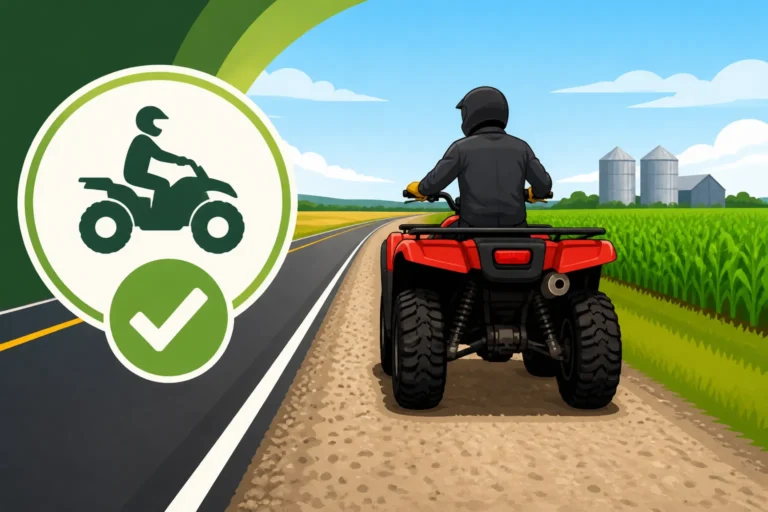
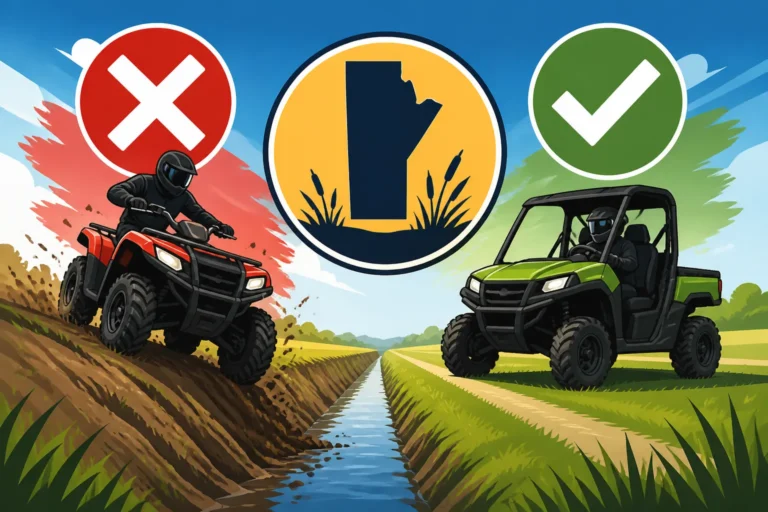
- Ditch Riding: You can sometimes ride in the ditch immediately adjacent to the right side of the roadway, traveling in the same direction as traffic. However, this is only allowed on certain roads, requires caution, and is never permitted in ditches adjacent to divided highways, in urban areas where prohibited by by-law, or where it's unsafe. [Manitoba Ditch Riding Rules] are quite specific and often misunderstood. You cannot ride in the median of a divided highway, for example, as [The Median of a Divided Highway Is Closed].
- Road Crossings: You are allowed to cross a provincial road or highway under very strict conditions. This involves coming to a complete stop, yielding to all traffic, crossing at a 90-degree angle, and having a clear view of at least 150 metres in both directions. There are also rules about how far you must be from an intersection (5 metres) and the distance to the next intersection (3 kilometres). These are not shortcuts; they are specific, regulated movements to get from one legal riding area to another. Learn the specifics with [Manitoba Crossing Rules at 5 Metres and 3 Kilometres].
It's vital to remember that these allowances are exceptions, not the rule. They do not grant permission to travel on the paved surface of any highway, use on-ramps or off-ramps, or ride through interchanges.
Planning Your Route Legally
The best advice for any ORV rider in Manitoba is to plan your route in advance and always assume that roads and their rights-of-way (especially major ones) are off-limits unless explicitly stated otherwise by local bylaws. Many [Manitoba Municipal By-Law Powers] exist, and a municipality or Local Government District can have specific rules about ORV use within their boundaries, sometimes opening local roads for specific seasons or closing them year-round. Always check with the local authorities if you're unsure.
There are many digital maps and apps available that show legal ORV trails. Utilize these resources, join local ATV/UTV clubs, and talk to experienced riders. Ignorance of the law is not a defence, and the consequences of riding illegally are simply not worth the temporary convenience. For those looking to upgrade their machine for legal trail use, SuperATV offers a range of durable parts perfect for Manitoba's varied terrain, from lift kits and heavy-duty axles to winches and skid plates, ensuring your ride is ready for adventure on approved paths. A sturdy [Manitoba Lighting Requirements on a Machine] is always a good idea too, especially if you get caught out later than planned on a legal trail.
Disclaimer
This article is for general informational purposes only and does not constitute professional advice. Laws, prices and regulations vary by location and change over time. Consult a qualified professional for guidance on your specific situation.