Manitoba Rules for Crossing a Highway
Many off-road vehicle enthusiasts in Manitoba find themselves needing to cross a highway to get from one trail system to another, or even just to access different sections of a local riding area. It's a common dilemma that can feel pretty confusing, given that most off-road machines aren't allowed on the highway itself. This guide is here to untangle the specific rules and requirements Manitoba has in place for safely and legally crossing provincial roadways with your ATV or UTV.
Why Highway Crossings are So Heavily Regulated in Manitoba
It’s easy to get frustrated when you just want to get your machine from Point A to Point B and hit a public road. Why all the fuss, you might wonder? Well, the truth is, off-road vehicles like ATVs and UTVs are designed for rough terrain, not the smooth, high-speed environment of a paved highway. This fundamental difference in design, coupled with the speed and volume of highway traffic, creates significant safety concerns that Manitoba’s regulations aim to mitigate. It’s not about making your life harder; it’s about preventing serious accidents.
Think about it: an ATV or UTV has a higher center of gravity, narrower tires, and often lacks the sophisticated braking systems or crumple zones of a car or truck. These characteristics make them inherently less stable and harder to control at highway speeds, especially in an emergency braking situation. Furthermore, their lower profile can make them harder for drivers of larger vehicles to see, particularly during adverse weather conditions or at dawn and dusk. The province takes these risks seriously, which is why you’ll find very specific, often strict, guidelines around any interaction between your off-road machine and the highway system. They're trying to protect everyone on the road, including you. The rules are there to bridge the gap between the wild freedom of the trail and the structured demands of public roads.
Understanding the "No Riding on Roadways" Rule
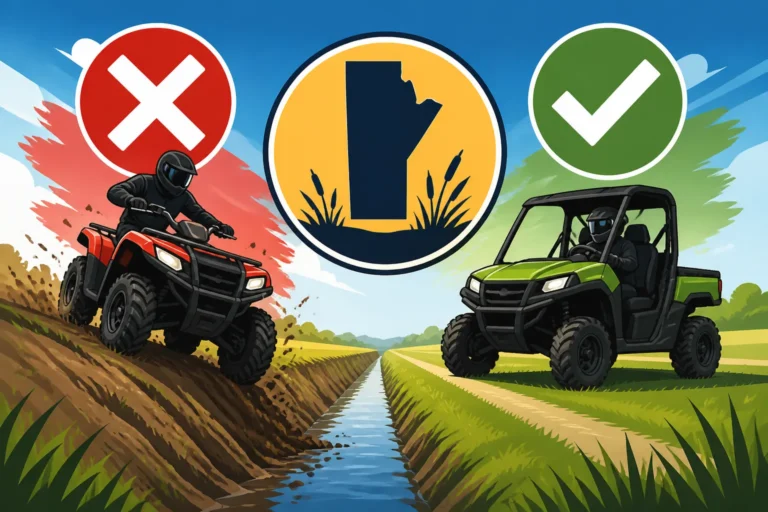
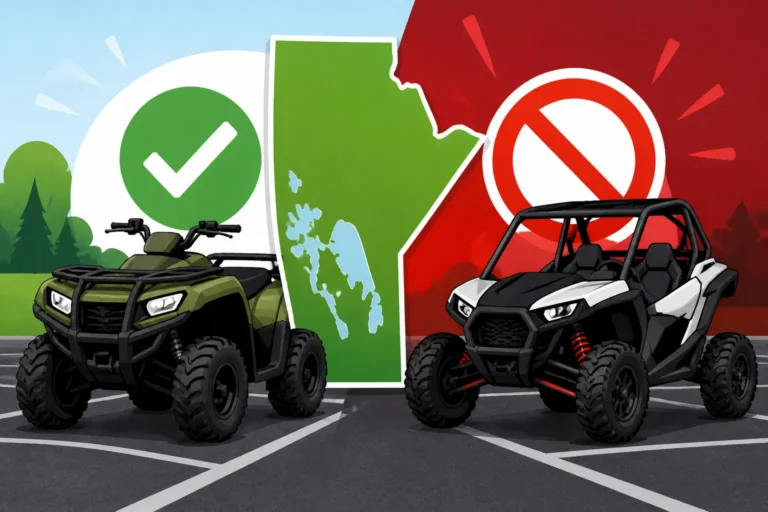
This is the golden rule, and it's absolutely crucial to grasp: off-road vehicles are generally prohibited from operating on provincial highways and roadways in Manitoba. Period. You can't just hop on the highway and ride it like a regular vehicle, even for a short distance to get to the next trail. This is laid out pretty clearly in the provincial regulations, and it's a rule that officers will enforce strictly. The intention behind [Manitoba Bans Riding on Roadways] is to keep off-road machines in their intended environment – the trails, ditches, and private lands – and away from the fast-moving, high-traffic environment of a road built for cars and trucks.
Many riders, especially those new to the sport or visiting from other regions, sometimes misunderstand this. They might think a quick dash down the shoulder is acceptable, or that if traffic is light, it's okay for a few hundred metres. This is a dangerous misconception. The only time you're allowed to be on a roadway, apart from specific agricultural exemptions, is when you are crossing it, and even then, under very particular circumstances. Any extended travel on the roadway itself, or even on the shoulder, is generally illegal and incredibly risky. The machine simply isn't engineered for it, and the drivers on the highway aren't expecting you there, which is a recipe for disaster.
The Specifics of the 5-Metre and 3-Kilometre Crossing Rules
Alright, so you know you can't ride on the highway, but you can cross it. However, this isn't a free-for-all. Manitoba has very precise rules about where and how these crossings can happen. You can't just pick any spot. The main regulations revolve around proximity to intersections: you must either cross within 5 metres of an intersection or, failing that, at least 3 kilometres away from the nearest intersection. This might sound counterintuitive at first glance, but there's a good reason behind it, and it's all about predictability and visibility.
Crossing within 5 metres of an intersection (or an entrance/exit to a highway, which counts as an intersection for this purpose) allows you to use the more controlled environment of a junction. Drivers are already expecting changes in traffic flow, potential turning vehicles, and slower speeds. It gives you a better chance of being seen and for other drivers to react safely. On the flip side, if you're not near an intersection, you need to be at least 3 kilometres away from the closest one. This "3-kilometre rule" is designed to keep crossings out of areas where drivers are likely to be accelerating, decelerating, or making decisions related to upcoming intersections. It places your crossing in a more open stretch of road where drivers might have a longer line of sight to spot you. These rules, often referred to as [Manitoba Crossing Rules at 5 Metres and 3 Kilometres], are critical for your safety and for avoiding fines. It means you might have to ride your ditch or an adjacent trail a bit further to find a legal crossing point, but that extra effort is well worth it for the added safety and legality.
One Machine at a Time and Clear Views
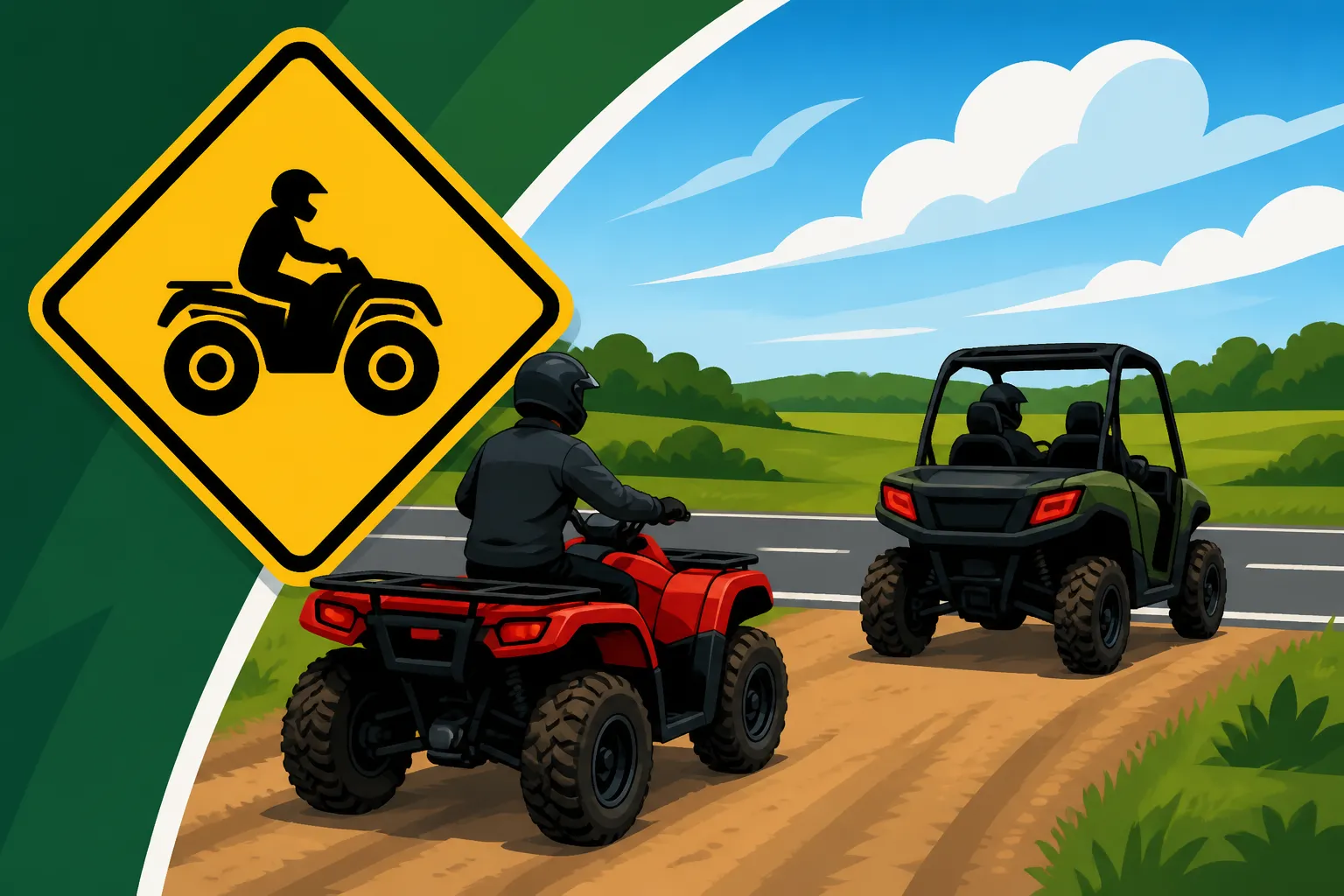
When it comes to the actual act of crossing, there are further layers of safety protocols. It's not just about where you cross, but how. The rule here is clear: [Manitoba Crossings One Machine at a Time]. This means if you're riding with a group, everyone must cross individually. You can't just barrel across the highway in a convoy. This is because crossing as a single unit allows each operator to focus completely on their own safety, assess traffic, and execute the crossing without being influenced or rushed by others. It reduces the chance of a chain reaction accident, where one rider's mistake could affect everyone in the group.
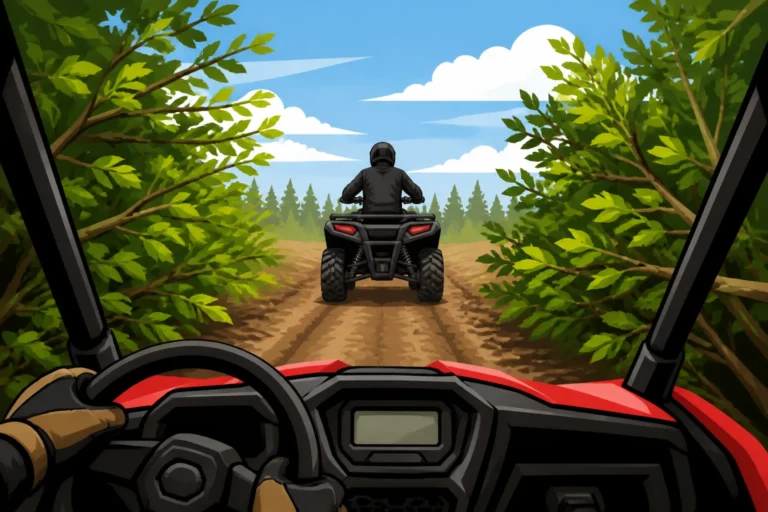
Equally important is the "clear view" requirement, which emphasizes that you must have a clear, unobstructed view of oncoming traffic in both directions before you even consider crossing. This isn't just a suggestion; it's a mandatory step. If there's a blind curve, a rise in the road, or heavy vegetation blocking your sightlines, that spot is not a safe or legal place to cross. You need to be able to see far enough down the road to ensure there's ample time for you to cross safely before any oncoming vehicle reaches your position. Think about the closing speed of highway traffic – it's incredibly fast. What looks like plenty of time to a pedestrian might be mere seconds for a vehicle travelling at 100 km/h. Taking a few extra moments to ensure you have a truly [Manitoba Crossings Need a Clear View] is non-negotiable for your safety. Sometimes, this means choosing a different crossing spot or waiting patiently for traffic to clear significantly.
Essential Operator and Machine Requirements for Safe Crossing
Beyond the geographical and procedural rules, Manitoba also places requirements on the operator and the machine itself to ensure crossings are as safe as possible. It’s not enough to just pick the right spot; you also need to be properly equipped and prepared. These requirements are in place because crossing a highway is a moment of heightened risk, and every factor that can improve visibility, control, and judgment needs to be in play. Ignoring these can not only lead to serious consequences but also put your life and the lives of others in danger.
Imagine trying to cross a busy road on an underpowered machine with dim lights, or as an inexperienced rider without proper supervision. It just wouldn't be safe, would it? The province agrees, and that's why they've mandated certain standards that every rider and every off-road vehicle must meet before attempting a highway crossing. These aren't arbitrary rules; they're grounded in decades of experience with vehicle safety and traffic management.
Driver's Licence Requirements for Crossings
One of the most fundamental requirements for legally crossing a highway in Manitoba is that the operator must hold a valid driver's licence. This isn't just for driving a car; it extends to operating an off-road vehicle when interacting with public roadways. This means that if you're a young rider with only a learner's permit for a car, or if you don't possess a valid driver's licence at all, you cannot legally perform a highway crossing. The reasoning is straightforward: crossing a highway requires a certain level of judgment, understanding of traffic laws, and experience that is generally associated with holding a full driver's licence. It’s about ensuring the person at the controls has demonstrated a basic competency in navigating traffic scenarios.
This rule is sometimes a point of confusion, especially for younger riders who might be perfectly capable on the trails but haven't yet obtained their full Class 5 licence. While [Manitoba Rules for a 16-Year-Old Rider] might allow them to operate an ORV on certain terrain, the moment that machine approaches a public highway for a crossing, the licensing requirements for road use kick in. So, before you plan your route, make sure that every operator intending to cross a highway holds the necessary provincial driver's licence. There’s no getting around this one – it’s a critical legal and safety requirement, reinforcing the gravity of mixing off-road machines with public road infrastructure. [Manitoba Crossings Need a Driver's Licence] is not a suggestion, it's a hard rule.
Machine Readiness: Lights, Visibility, and Spark Arresters
Your machine itself also has to be up to snuff. Before attempting any highway crossing, your ATV or UTV needs to be equipped with proper lighting and other visibility aids, especially if it's anywhere near dusk, dawn, or during adverse weather conditions. This includes working headlights and taillights that are clearly visible for a sufficient distance. Remember, drivers on a highway are often travelling at high speeds, and they need to see you well in advance. Having a bright, functioning lighting system isn't just good practice; it's often a legal requirement when operating near or on public land, even for a crossing. Consider adding aftermarket lights, perhaps from a brand like SuperATV, if your stock lights feel inadequate, especially if you anticipate crossings in less-than-ideal light. Their advanced LED light bars or cube lights can dramatically increase your visibility to oncoming traffic, making that critical crossing much safer.
Beyond lights, ensure your machine is in good working order – brakes responsive, steering tight. A breakdown or control issue right in the middle of a crossing would be catastrophic. And don't forget the spark arrester! This little piece of equipment, often overlooked, is crucial for preventing wildfires. While it might not seem directly related to highway crossing safety, it's a general requirement for off-road machines, especially during wildfire season. An officer could certainly check for it if they pull you over, even for a crossing infraction. Adhering to [Manitoba Lighting Requirements on a Machine] and [Manitoba Spark Arrester Requirements] shows you’re a responsible rider, which goes a long way.
Supervision for Younger Riders
While Manitoba has age restrictions for operating ORVs in general, when it comes to crossing highways, the licensing requirement for a full driver's licence essentially sets a de facto age minimum. However, for those under 16 who might be operating an ORV in permissible areas (like private land or designated trails under supervision), the idea of them crossing a highway independently simply isn't allowed due to the driver's licence rule.
For younger riders permitted to operate ORVs in other contexts, adequate adult supervision is paramount. Even if they are operating off-road legally, any situation that brings them close to a roadway demands heightened vigilance. The rules are designed to prevent situations where inexperienced operators, or those without the legal credentials, face the complex decisions required for a safe highway crossing. It’s always best for an experienced, fully licensed adult to handle all highway crossings, even if it means swapping machines for that brief, critical moment. The risks involved are simply too high to leave to chance or inexperience.
Navigating the Crossing: A Step-by-Step Approach
Knowing the rules is one thing; actually executing a safe and legal highway crossing is another. It requires a calm head, careful observation, and a precise sequence of actions. Don't rush it. This isn't a race or a casual jaunt; it's a serious maneuver that demands your full attention. Many riders get into trouble not because they don't know the rules, but because they get complacent or impatient. Taking a methodical approach will drastically reduce your risk and ensure you meet the legal requirements.
Think of it like a pilot going through a pre-flight checklist. Every step is there for a reason, designed to maximize safety and minimize potential hazards. This is particularly true when you're introducing a machine not meant for pavement onto a high-speed traffic artery. The environment is foreign to your vehicle, and the drivers on the highway are likely not expecting you, which heightens the need for an organized, deliberate approach.
Approaching the Highway Safely
Your approach to the highway is just as important as the crossing itself. You can't just burst out of the bush onto the shoulder. You need to slow down, be predictable, and make your intentions clear. As you near the highway, reduce your speed significantly and approach the edge of the roadway perpendicular to the flow of traffic. This means coming straight up to the edge, rather than riding parallel to it for any distance on the shoulder (unless a specific agricultural exemption applies, which is rare for general ORV use). Come to a complete stop before entering the shoulder or the road surface. This stop provides you with a critical moment to assess the traffic situation fully and make a safe decision.
It’s tempting to ride the ditch or shoulder for a bit to get a better view, but remember that the "no riding on roadways" rule often extends to the shoulder as well, unless you are using a designated [Manitoba Ditch Riding Rules]. Your goal is to minimize time spent in any high-traffic area. Ensure you position your machine so that you have the clearest possible view of oncoming traffic from both directions without encroaching on the active lanes. Sometimes, this might mean dismounting your machine and scouting ahead on foot if visibility is truly poor from the driver's seat. Taking these extra precautions during your approach can prevent a hurried or ill-advised crossing.
Assessing Traffic and Making the Crossing
Once you're stopped and have a clear view (remember [Manitoba Crossings Need a Clear View]!), it's time for the crucial assessment. Look left, look right, look left again. Pay attention not just to immediate vehicles, but to the speed and density of traffic in the distance. Don't just look for gaps; look for safe gaps – ones that provide you with more than enough time to accelerate across the highway without causing other drivers to brake or swerve. It's better to wait an extra five minutes for an absolutely clear window than to try and squeeze through a tight one.
When you see that safe gap, engage your machine and cross directly across the highway, maintaining a steady, safe speed. Do not linger, do not stop in the middle, and do not make any sudden, unpredictable movements. The goal is to get from one side to the other as efficiently and safely as possible, minimizing your time on the roadway itself. If you're riding a UTV or ATV and feel your stock tires might not give you the necessary traction or control for a quick, decisive crossing on pavement, consider upgrading to a more versatile tire designed for mixed terrain, possibly from SuperATV. Their selection includes options that can provide better grip on asphalt while still excelling on the trails, giving you more confidence in these critical moments. Once you're safely on the other side, immediately move off the roadway and into the ditch or designated trail area.
What Not to Do: Common Mistakes
It's just as important to know what not to do as what to do. One of the biggest mistakes is assuming that because traffic is light, the rules don't apply. They always apply. Another common error is riding the ditch too close to an intersection, or using the shoulder as a temporary travel lane. As discussed, these areas are generally off-limits for continuous travel by ORVs. Also, never, ever attempt a crossing if your visibility is compromised – by weather, darkness, or obstructions. Wait it out, or find another route.
Perhaps the most dangerous mistake is trying to cross in a group, or pressuring others to cross before they feel ready. Remember, [Manitoba Crossings One Machine at a Time] is there for a reason. Each rider is responsible for their own safety assessment. And finally, never try to wave traffic on or communicate with drivers on the highway; their focus should be solely on the road and their own driving, not on interpreting your hand signals. Your best communication is clear, predictable action and strict adherence to the rules.
Penalties and What Happens When Rules Are Broken
Breaking the rules for highway crossings isn't just a slap on the wrist. Manitoba has serious penalties in place, reflecting the high risk associated with improper ORV operation on or near provincial roadways. These aren't just theoretical fines; enforcement officers, including RCMP and conservation officers, are well-versed in ORV regulations and regularly patrol areas where infractions are common. The financial cost can be significant, but more importantly, a violation can have lasting impacts on your record, your insurance, and potentially lead to injury or worse.
It's vital for every rider to understand that operating an ORV is a privilege that comes with responsibilities. When those responsibilities are neglected, especially in a high-risk scenario like a highway crossing, the consequences can be severe. It's not just about the moment you get caught; it's about the potential for long-term repercussions that can affect your ability to ride, drive, and even your financial well-being. Ignorance of the law is never a valid defence, and officers expect you to know and follow these critical safety measures.
Fines and Immediate Consequences
If an officer witnesses you violating the rules for crossing a highway – for example, crossing outside the designated [Crossing Within 5 Metres of an Intersection] or [Crossing at Least 3 Kilometres From an Intersection] zones, crossing without a valid driver's licence, or doing so in an unsafe manner – you can expect a hefty fine. The specific amount can vary depending on the nature of the infraction and whether it's a first offense, but these are rarely cheap tickets. We're talking hundreds of dollars, easily. These fines are designed to be a deterrent, to make riders think twice before cutting corners. Beyond the immediate financial hit, you might also face other consequences on the spot.
In some cases, especially if your operation is deemed reckless or dangerous, an officer might impound your machine. This not only adds significant towing and storage fees to your woes but also means a major disruption to your day and potentially a long process to get your machine back. Furthermore, repeat offenders or those involved in particularly egregious violations could face even stiffer penalties, including potential driving record points or even charges for careless operation. Remember, [Manitoba Careless Operation Penalties] can be substantial, often reaching into the thousands of dollars, demonstrating the province’s commitment to safety. It's a clear signal that the rules around public roadways are not to be trifled with.
Insurance Implications and Liability
Beyond fines, an improper highway crossing can have serious repercussions for your insurance. While your basic ORV registration in Manitoba includes some third-party liability coverage, an incident resulting from an illegal or careless crossing could complicate any claims. If you're found to be in violation of the law at the time of an accident, your insurer might deny coverage or significantly increase your premiums in the future. Imagine causing an accident on the highway because you crossed illegally – the damages to vehicles, potential injuries to other drivers, and legal fees could easily run into the hundreds of thousands of dollars. Your basic liability coverage might not be enough, and if the insurer deems your actions illegal, you could be personally on the hook for a substantial portion of those costs.
This is where having robust aftermarket protection can indirectly help your peace of mind, not by excusing rule-breaking, but by protecting your investment. If you've invested in quality skid plates or bumpers from SuperATV to protect your machine, it shows you care about its longevity, but that doesn't mean your insurance will cover illegal activity. The best protection is always to follow the rules precisely. An incident report noting an illegal crossing is a black mark that can follow you for years, making it harder and more expensive to insure not just your ORV, but potentially your other vehicles too. Always prioritize legal and safe operation to protect yourself financially and legally.
A Table of Key Highway Crossing Rules
To help clarify the various rules we've discussed, here's a quick summary:
| Rule Category | Specific Requirement | Why it Matters |
|---|---|---|
| Location | Cross within 5m of intersection OR 3km from nearest | Ensures predictability for other drivers and optimal sightlines. |
| Method | One machine at a time; direct, perpendicular crossing | Reduces confusion, allows individual assessment, minimizes time on roadway. |
| Visibility | Clear view of traffic in both directions | Absolutely critical for avoiding collisions with high-speed vehicles. |
| Operator Licencing | Valid driver's licence required | Ensures operator possesses the necessary judgment and understanding of road rules. |
| Machine Equipment | Working lights, functional brakes, spark arrester | Enhances visibility to others, ensures control, and prevents environmental hazards. |
| Prohibition | No riding on the highway/roadway | ORVs are not designed for highway speeds/traffic; creates extreme safety hazards. |
Remember, these are not optional guidelines. They are provincial regulations designed to keep everyone safe.
Crossing a highway in Manitoba with your ATV or UTV is a serious maneuver that demands your complete attention and strict adherence to the rules. It's not a casual part of your ride; it's a regulated interaction with high-speed traffic that carries significant risk if not handled correctly. By understanding the "no riding on roadways" principle, familiarizing yourself with the specific 5-metre and 3-kilometre crossing rules, and ensuring you and your machine meet all operator and equipment requirements, you can navigate these necessary transitions safely and legally. Never rush, always assess traffic carefully, and prioritize safety above all else. Following these guidelines will protect you, your machine, and other road users, ensuring your adventures on the Manitoba trails remain enjoyable and incident-free.
Disclaimer
This article is for general informational purposes only and does not constitute professional advice. Laws, prices and regulations vary by location and change over time. Consult a qualified professional for guidance on your specific situation.