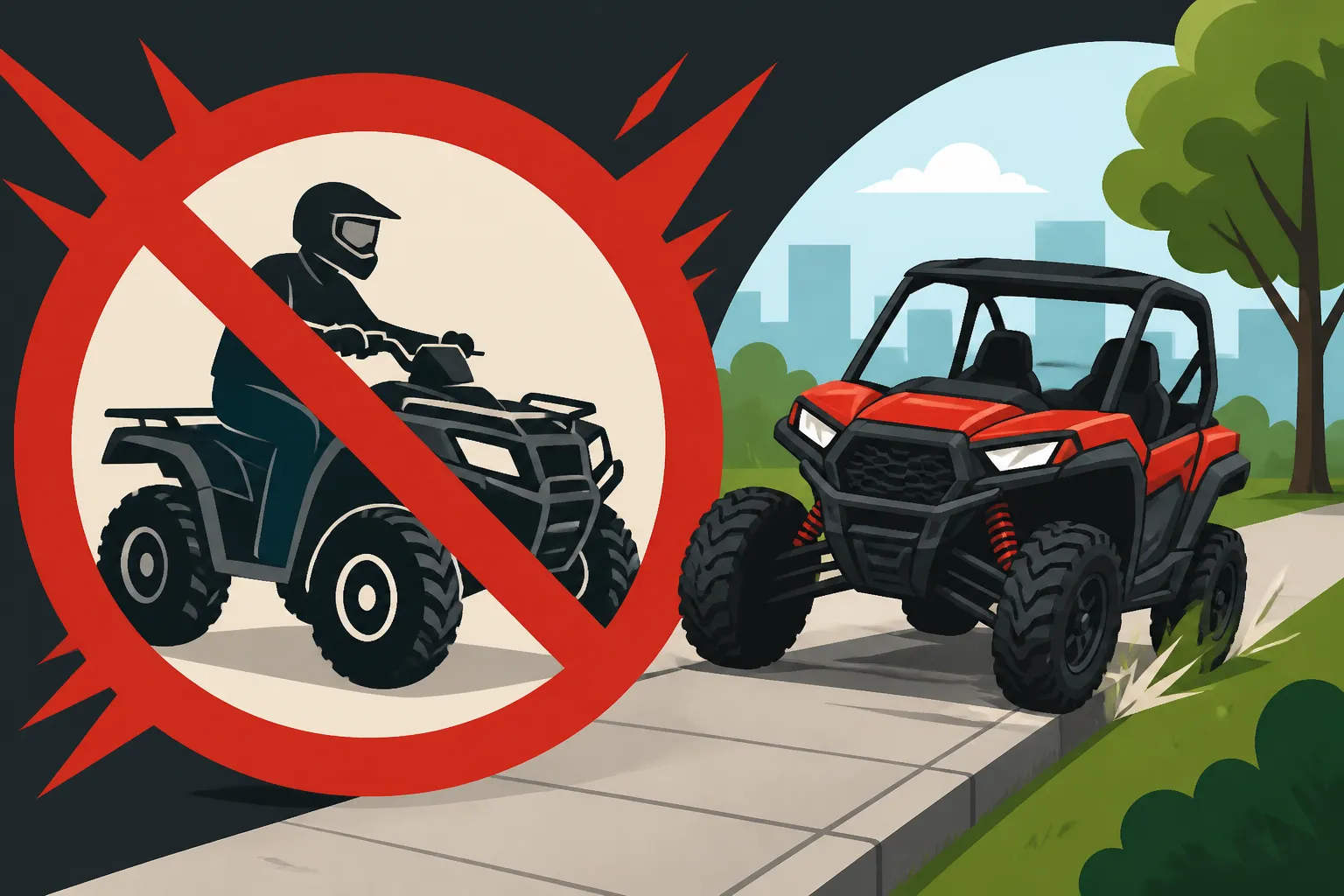
Manitoba Bans Riding a Sidewalk
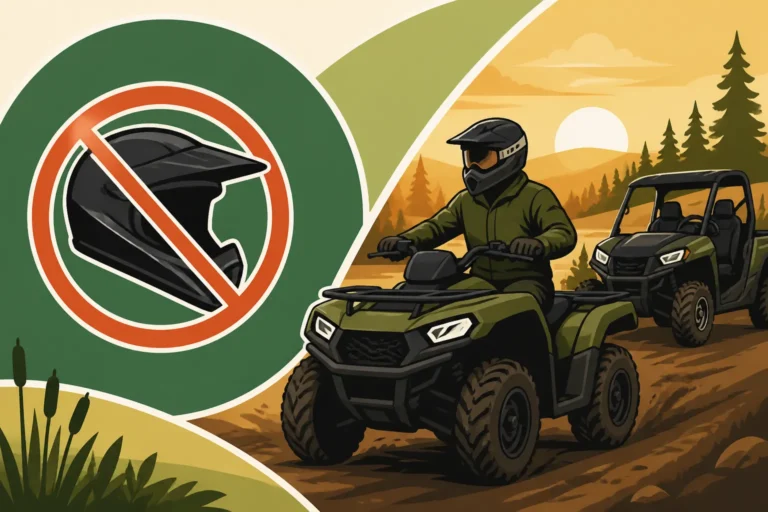
It’s a common frustration for off-road vehicle owners in Manitoba: you’re trying to get from point A to point B, and sometimes the quickest route seems to be just hopping on that wide, paved sidewalk. You might think, "What's the harm? It's just a short stretch." But the truth is, riding your ATV or UTV on any sidewalk in Manitoba is not only illegal but also incredibly dangerous. This guide will walk you through why sidewalks are strictly off-limits, what the law actually says, and what safe, legal alternatives you have for enjoying your machine.
The Clear Ban: Why Sidewalks Are Off-Limits to ORVs
Let's be absolutely clear from the get-go: Manitoba law does not permit off-road vehicles (ORVs) on sidewalks. This isn't just a suggestion; it's a hard and fast rule designed to protect everyone, especially pedestrians. Many riders, particularly those new to the ORV scene or visiting from other regions, might see a wide, empty sidewalk and think it's a harmless shortcut. However, this assumption can lead to serious consequences, not just for the rider but for innocent bystanders.
Safety First: Protecting Pedestrians and Property
The primary reason for banning ORVs from sidewalks boils down to safety. Sidewalks are specifically designed for foot traffic, bicycles, wheelchairs, and strollers. They are not built to withstand the weight, speed, or maneuverability of an ATV or UTV. Imagine a child suddenly darting out from behind a bush or a senior citizen slowly making their way with a walker; an ORV, even at low speeds, simply doesn't have the same stopping power or visibility in these environments as a pedestrian. The potential for a serious collision is astronomical, and the consequences could be life-altering. Beyond direct collisions, the noise and sheer size of an ORV can startle pedestrians, leading to falls or other accidents. Plus, the weight and knobby tires of many machines can cause significant damage to sidewalk surfaces, landscaping, and even underground utilities, leading to unexpected repair costs for municipalities.
Legal Definitions: What the Law Says About Sidewalks
The province of Manitoba's Off-Road Vehicles Act is quite explicit about where ORVs are and are not allowed. It defines a "roadway" and other areas, and sidewalks fall under a category of spaces strictly reserved for non-motorized traffic. Generally, a sidewalk is understood to be the part of a street that is set aside for pedestrian use, typically paved and separate from the main vehicular lanes. There's no grey area here; if it looks like a sidewalk and acts like a sidewalk, it's a sidewalk, and your ORV doesn't belong on it. This is a common point of confusion, as some riders might mistake a paved multi-use path for a permissible ORV route, but these are distinct in law and design. It's crucial for riders to understand the precise definitions used in the Act to avoid unknowingly breaking the rules.
The Dangers of Sidewalk Riding: More Than Just a Fine
While the thought of a ticket might be enough to deter some, the dangers associated with riding an ORV on a sidewalk extend far beyond financial penalties. These risks pose a threat to everyone in the vicinity, including the rider themselves. It's important to grasp the full scope of these hazards to truly understand why the ban exists.
Unforeseen Encounters with Pedestrians
Picture this: you're cruising along what seems like an empty stretch of sidewalk, perhaps thinking you're being discreet. Suddenly, around a blind corner or from behind a row of parked cars, a family emerges. A child on a scooter, a parent pushing a stroller, a dog walker – any one of these common sidewalk users can appear without warning. Your ORV, with its size, engine noise, and speed, is not built for such close-quarters navigation. Even if you're going slowly, the reaction time required to avoid an accident is often insufficient. The design of ORVs, particularly side-by-sides, can also create significant blind spots, making it incredibly difficult to see small children or objects directly in front or to the immediate sides. This is a terrifying scenario that could lead to severe injuries for pedestrians and immense legal trouble for the rider.
Property Damage and Public Infrastructure
Beyond direct harm to people, ORVs can cause considerable damage to public property. Sidewalks are typically constructed with concrete, asphalt, or pavers, designed for the lighter loads of pedestrians and occasional light maintenance vehicles. The weight and aggressive tire treads of an ATV or UTV can crack pavement, dislodge pavers, and wear down surfaces rapidly. This damage can then become a tripping hazard for pedestrians, creating another layer of risk. Furthermore, sidewalks often run adjacent to lawns, gardens, and other landscaping elements that are vulnerable to straying vehicles. Think about utility boxes, streetlights, fire hydrants, or even decorative shrubbery – all of these can be damaged by an errant ORV, leading to expensive repairs funded by taxpayer dollars. This isn't just about a scuffed curb; it can be about undermining the integrity of public spaces. For more information on where you can and cannot ride, check out [Manitoba Bans Riding on Roadways].
The Machine Itself: Not Designed for Sidewalks
It might seem obvious, but ORVs are engineered for off-road conditions – dirt, mud, rocks, and uneven terrain. They are not designed for the smooth, hard, and often narrow confines of a sidewalk. The suspension, steering, and braking systems on an ORV behave differently on pavement compared to trails. On a hard surface, an ORV can be less stable, prone to skidding, and more difficult to control, especially if an emergency stop or sharp turn is required. Moreover, the noise produced by many ORVs, while perhaps tolerable in an open field, becomes amplified and incredibly disruptive in residential areas, causing distress to residents. Even a high-performance machine from a brand like SuperATV, known for rugged off-road components, is not meant for urban paved surfaces. These parts are made for the challenges of the wild, not the quiet of a neighbourhood sidewalk.
Penalties and Enforcement: What Happens If You Get Caught
Manitoba takes its ORV regulations seriously, and riding on a sidewalk is a clear violation. Enforcement officers, including RCMP and local police, are well aware of the rules and are prepared to issue tickets or take further action against riders who disregard the safety of the public. The consequences can be swift and costly, serving as a stark reminder that these rules are in place for a reason.
Fines and Immediate Consequences
If you are caught riding your ORV on a sidewalk, you can expect to face significant fines. The Off-Road Vehicles Act outlines a general penalty for violations, which can be substantial. These aren't minor parking tickets; they reflect the serious nature of endangering public safety. Beyond the initial fine, you might also face additional charges if your actions caused any damage to property or if you were operating your machine recklessly. Enforcement officers have the discretion to issue warnings in some cases, but for a blatant disregard of sidewalk rules, a ticket is often the immediate result. This financial hit can quickly put a damper on your riding season. To understand the broader scope of penalties, you might want to read [Manitoba Ticket Costs for Riders].
Potential for Seizure and Impoundment
In more egregious cases, or for repeat offenders, law enforcement has the authority to seize and impound your off-road vehicle. This is a far more severe consequence than a simple fine, as it means losing access to your machine, potentially for an extended period. Getting an impounded ORV back can be a complex and expensive process, involving impoundment fees, storage costs, and administrative penalties, all of which add up quickly. This is a measure taken to remove a dangerous operator and their vehicle from public spaces, preventing further harm. Imagine your weekend plans disappearing because your machine is locked away in an impound lot – it's a sobering thought.
Insurance Implications and Liability
Beyond legal penalties, riding on a sidewalk can have serious repercussions for your insurance coverage. Most ORV insurance policies are designed for legal operation on designated trails or permissible areas. If you're involved in an accident while operating your ORV illegally on a sidewalk, your insurance provider might deny coverage for damages or injuries. This means you could be personally liable for massive medical bills for an injured pedestrian, property damage costs, and legal fees. The basic liability coverage included with your registration is primarily for off-road use, and operating in prohibited areas can void its applicability. It's a risk that is simply not worth taking, as it could lead to financial ruin. Think about the costs of a simple fender bender on a road, now amplify that with serious personal injury claims, and you'll understand the gravity.
Legal Alternatives for ORV Travel: Where You Can Ride in Manitoba
Just because sidewalks are off-limits doesn't mean you can't enjoy your ATV or UTV in Manitoba. The province offers a variety of legal and safe options for riders, from dedicated trails to specific allowances for ditch riding in certain circumstances. The key is to know and respect these rules, ensuring a fun and responsible riding experience.
Designated ORV Trails and Riding Areas
Manitoba boasts a growing network of designated ORV trails, maintained by clubs and the province, that offer incredible riding experiences. These trails are specifically designed for machines like yours, taking into account safety, environmental impact, and rider enjoyment. Areas like the Sandilands Provincial Forest or the trails around Whiteshell Provincial Park offer diverse terrain, scenic views, and a community of fellow riders. Supporting these trails often involves becoming a member of a local ATV club, which contributes to trail maintenance and advocacy. These clubs are passionate about providing legal and safe riding opportunities and are a fantastic resource for discovering new routes. Riding on these designated trails not only keeps you legal but also ensures you're riding in an environment that is prepared for your machine. For more details, explore resources on [Manitoba ATV Trails: Club Ground and Crown Land].
Ditch Riding Rules and Exceptions
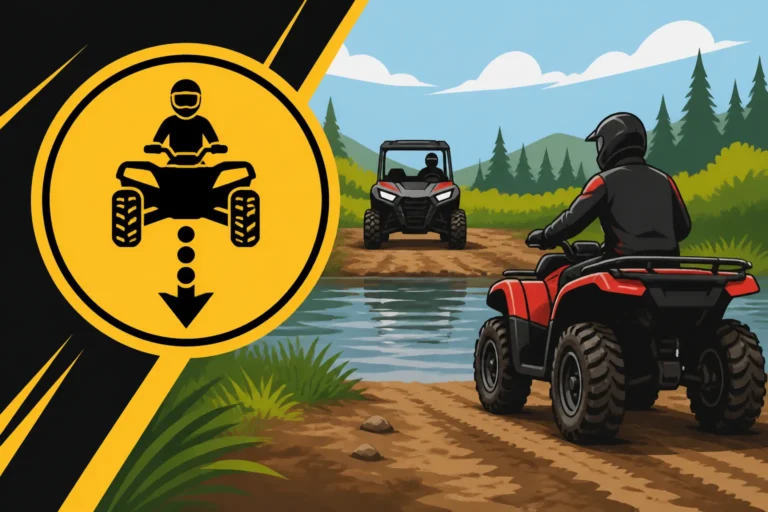
While sidewalks are out, ditch riding is a common practice in Manitoba, but it comes with its own strict set of rules. Generally, ORVs are permitted to ride in ditches alongside municipal roads and highways, but only on the right side in the same direction as traffic. This is a conditional privilege, not an unrestricted right. There are specific rules regarding speed limits, distance from dwellings, and when you can cross roadways. For instance, [Manitoba Ditch Riding Rules] specifies conditions for safe travel. You cannot just hop into any ditch; you must ensure it's on the right side of the road, that you're travelling with traffic flow, and that you maintain a safe distance from intersections and private properties. These rules are in place to prevent collisions with vehicles entering or exiting roadways and to minimize disturbance to residents.
| Area Type | ORV Riding Status | Key Considerations |
|---|---|---|
| Sidewalk | Illegal | Designed for pedestrians. High risk of collision, property damage, legal penalties, and insurance denial. |
| Roadway | Illegal | Generally prohibited for ORVs, with very specific, limited exceptions for crossing or agricultural use. |
| Ditches | Conditional Legal | Must be on the right side, with traffic flow. Strict rules apply regarding speed, proximity to dwellings, and crossings. Refer to [Manitoba Ditches to the Right of a Roadway]. |
| Designated Trails | Legal | Best option for safe, legal riding. Maintained by clubs or province. Often require registration and a trails fee. |
| Private Land | Legal (With Permission) | Requires express permission from the landowner. Trespassing laws apply without it. |
| Crown Land | Conditional Legal | Generally accessible but with specific restrictions on protected areas, sensitive environments, and during fire bans. Always check local regulations. For details, see Manitoba Crown Land Riding Explained. |
Respecting Private Property and Crown Land
Riding on private land is permissible only with the explicit permission of the landowner. Trespassing is a serious offence, and ignoring "No Trespassing" signs or assuming access can lead to fines and strained relationships within the community. Always seek permission before entering private property, even if it appears unmaintained or remote. When it comes to Crown land, much of Manitoba's vast wilderness is available for recreational use, including ORV riding. However, there are significant restrictions in sensitive ecological areas, provincial parks (unless on a designated route), and during specific seasons, such as wildfire season. Always consult local regulations and maps for Crown land access to ensure you're riding responsibly and legally. This is where a reliable GPS with topographical maps, perhaps mounted with a durable SuperATV mount, really comes in handy, ensuring you stay on track and out of restricted zones.
Beyond the Sidewalk: Understanding Wider Urban Riding Bans
The ban on sidewalk riding is just one piece of a larger puzzle regarding ORV use in urban and populated areas of Manitoba. It's a common misconception that if a path isn't a "main road," it's fair game. However, the legislation is designed to keep ORVs out of most public spaces within towns and cities, not just sidewalks.
Why Roads, Medians, and Interchanges Are Also Closed
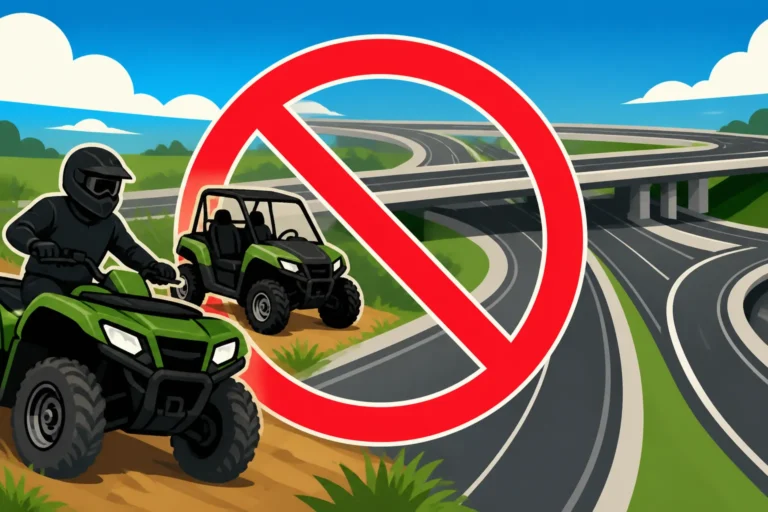
Just like sidewalks, the vast majority of roadways in Manitoba are closed to ORVs. This is articulated in [Manitoba Bans Riding on Roadways], emphasizing that ORVs are generally not allowed on paved roads, gravel roads, or highways unless for very specific, limited purposes like crossing at designated points or for agricultural operations on shoulders. This means no casual rides down a city street to visit a friend, and certainly no using the median of a divided highway as a shortcut. Medians and interchanges are incredibly dangerous areas for ORVs due to high-speed traffic, complex merging patterns, and structures that create blind spots. These areas are designed for high-volume, high-speed vehicle traffic, and ORVs simply do not have the same safety features or visibility as cars and trucks in these environments. Trying to navigate these zones on an ORV is an invitation to a serious accident.
The Role of Municipal By-Laws in Urban Areas
While the provincial Off-Road Vehicles Act sets the baseline, municipalities in Manitoba have the power to create their own by-laws that can further restrict or, in rare cases, permit ORV use within their specific boundaries. This means that rules can vary significantly from one town or city to another. A rural municipality might have more lenient rules for ditch riding or even open certain low-traffic roads to ORVs for short distances, while a larger city like Winnipeg or Brandon will almost certainly have very strict bans on ORV use anywhere within city limits. Before you trailer your machine into any community, it's always wise to check with the local municipal office or police service for their specific by-laws. This extra step can save you a headache and a hefty fine. You can learn more about how local governments impact riding rules by consulting [Manitoba Municipal By-Law Powers].
The Importance of Respecting Residential Areas
Even in areas where some ORV use might be conditionally permitted, it's paramount to respect residential areas. This means being mindful of noise levels, especially early in the morning or late at night. Riding too close to homes, schools, or playgrounds is not only inconsiderate but often illegal, with specific rules like [Manitoba's 30-Metre Dwelling Rule] dictating minimum distances. The loud engines and aggressive riding associated with some ORV use can be a significant disturbance to residents and erode public support for ORV recreation. Responsible riding includes being a good neighbour and minimizing your impact on those who live near riding areas. Maintaining a positive image for ORV enthusiasts helps preserve access to the places we can ride, and prevents further restrictions from being imposed.
Disclaimer
This article is for general informational purposes only and does not constitute professional advice. Laws, prices and regulations vary by location and change over time. Consult a qualified professional for guidance on your specific situation.