Manitoba Bans Riding on Roadways
It's a common and often frustrating misconception: many off-road vehicle (ORV) enthusiasts, whether you're on a zippy ATV or a robust side-by-side, assume that if a road looks quiet or remote enough, it's fair game. Unfortunately, in Manitoba, this simply isn't the case, and this misunderstanding can lead to hefty fines or worse, dangerous situations. This comprehensive guide will unravel the complexities of Manitoba's rules for ORVs on or near roadways, helping you ride safely and legally.
The Fundamental Rule: Why Roadways Are Generally Off-Limits
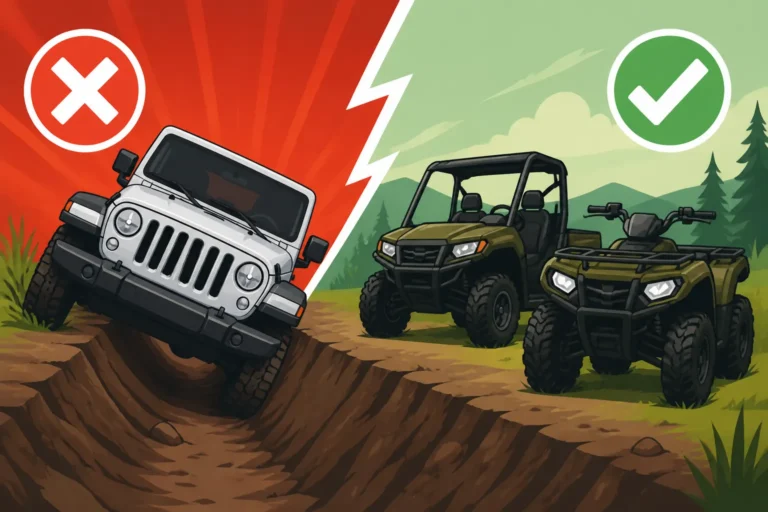
Let's cut right to the chase: operating an ATV or UTV directly on a designated roadway in Manitoba is, with very few exceptions, against the law. This isn't just a suggestion; it's a core principle of the province's ORV Act. Many riders, especially those new to the sport or visiting from other regions, get caught off guard by this. You might see a paved or gravel road stretching invitingly into the distance and think, "What's the harm?" The harm, unfortunately, often comes in the form of a ticket and a lesson learned the hard way.
Understanding the "Roadway" Definition: What Does the Law Actually Consider a Roadway?
When the law talks about a "roadway," it's usually referring to the travelled portion of a street, highway, or public thoroughfare that is normally used by motor vehicles like cars, trucks, and motorcycles. It includes the paved surface, gravel, or graded earth that forms the main path of traffic. This definition is pretty broad and intentionally so. It’s not just the Trans-Canada Highway we're talking about; it applies equally to that quiet municipal road leading to your favourite fishing spot or the gravel grid road cutting through farmland.
The critical distinction here is that ORVs are classified differently from standard road-licensed vehicles. They are designed for varied terrain, not for shared use with high-speed, multi-tonne vehicles. The province has made a clear legislative decision to separate these types of traffic for safety and operational reasons. Therefore, when you look at that stretch of asphalt or dirt, understand that in the eyes of the law, it's reserved for a different kind of vehicle than your quad or side-by-side.
The Rationale Behind the Ban: Why Are ORVs Excluded from Public Roads?
The ban on ORVs on roadways isn't arbitrary; it's rooted deeply in public safety and the fundamental differences between off-road machines and street-legal vehicles. Think about it: ORVs typically have different braking distances, often lack the comprehensive lighting and signaling systems of cars, and are generally much less visible in traffic. Their tires, designed for grip in mud, sand, and snow, don't always perform optimally on hard pavement, affecting handling and stopping power. This can be especially true if you've outfitted your machine with aggressive tires designed for serious bush crawling, perhaps from a brand like SuperATV, which, while fantastic for the trails, might be less than ideal for pavement.
Furthermore, there's the speed differential. While some modern UTVs can reach impressive speeds, they are still not built for sustained highway travel, nor are they as stable or protected as an enclosed vehicle. The risk of serious accidents involving ORVs and other vehicles, particularly at higher speeds, increases dramatically on shared roadways. This is why you'll find that [Roadways Are Closed to Every Off-Road Machine] in Manitoba, aiming to keep everyone safer by minimizing these interactions. The legislation prioritizes minimizing collision potential and ensuring that all road users can anticipate predictable vehicle behaviour.
Common Misconceptions and Costly Tickets: The Difference Between a Road and a Ditch
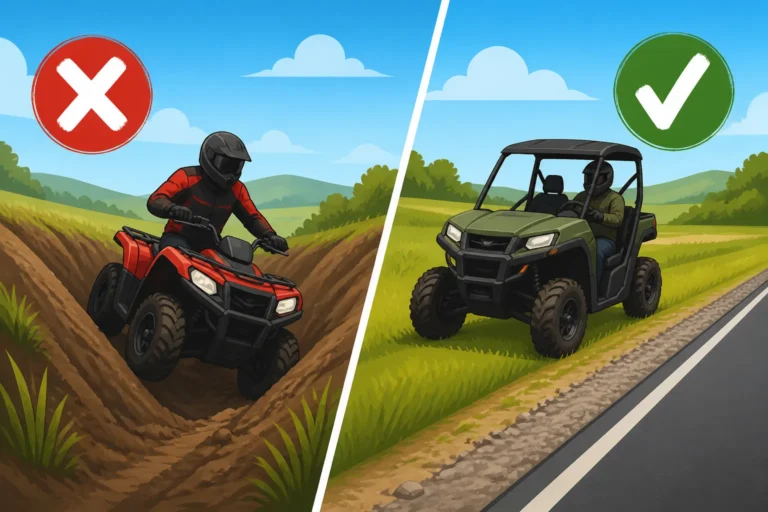
One of the biggest areas of confusion, and consequently, a source of many tickets, revolves around the distinction between the "roadway" itself and the "ditch" or "shoulder" alongside it. Many riders mistakenly believe that if they just stick to the edge, they're fine. However, in Manitoba, the roadway is often defined quite broadly, extending beyond the paved or gravel surface to include areas like the shoulder. The ditch, in specific circumstances, is indeed a separate legal operating area, but it has its own stringent rules.
It’s not uncommon for a rider to be pulled over, having thought they were doing everything right by keeping to the far side of the road, only to be informed they were still on the "roadway" and therefore in violation. These tickets are not minor; they can be a significant financial hit, often accompanied by demerit points and increased insurance premiums. Understanding this critical difference is paramount. An enforcement officer isn't usually looking to ruin your day, but they are there to uphold the safety regulations, and those regulations draw a very firm line around what constitutes a legal operating area for an ORV.
Navigating Ditches: When and How It's Permitted
While the roadway itself is mostly off-limits, Manitoba's legislation does provide specific circumstances under which an ORV can be operated in the ditch adjacent to a public road. This is where many riders get some relief, as it allows for travel between trail sections or access to certain areas. However, "permitted" does not mean "unrestricted." There are very clear rules to follow, and misunderstanding them can quickly land you in trouble.
The "Right Ditch Only" Rule: Understanding the Legal Ditch
One of the most fundamental rules for ditch riding in Manitoba is that you must operate your ORV in the ditch on the right-hand side of the roadway in the direction of travel. This mirrors the flow of traffic on the road itself and is a crucial safety measure for visibility and predictability. Imagine riding in the left ditch against the flow of traffic; you'd be a head-on hazard for any vehicle turning or pulling off the road to your side, or even for other ORVs.
This means if you're traveling east, you must be in the ditch on the south side of the road. If you need to switch directions, you must carefully and legally cross the roadway to the other side to continue in the correct ditch. You cannot simply turn around in the ditch and head back the way you came on the "wrong" side. This principle is explicitly covered in the [Manitoba Ditch Riding Rules], emphasizing safety by ensuring ORVs moving in ditches are always flowing with the adjacent road traffic. It's about making your presence predictable to other drivers and riders.
Speed Limits and Direction of Travel: Keeping Pace and Staying Safe
Even when you're legally in the ditch, you're not entirely free to open it up. There are generally speed limits that apply, often significantly lower than the posted speed limit for the adjacent roadway. The specific limits can vary, but the intent is always to ensure that ORVs in ditches are operating at a speed that allows for quick reactions to changing terrain, obstacles, or unexpected situations, such as a vehicle pulling over or a pedestrian. It's also about minimizing noise and dust in residential or high-traffic areas.
Furthermore, as mentioned, your direction of travel in the ditch must be the same as the traffic flow on the adjacent roadway. This isn't just a suggestion; it's a legal requirement. Riding against traffic in a ditch is incredibly dangerous and highly illegal. An enforcement officer will not hesitate to issue a citation for this. This rule helps maintain a consistent flow, reduces the chance of head-on incidents with other ORVs, and makes it easier for drivers on the road to anticipate your movements, especially if you need to cross the road or enter a private driveway.
Exclusions from Ditch Riding: Not All Machines or Situations Qualify
It's also important to recognize that not all ORVs are permitted to ride in ditches, or certain parts of ditches, under all circumstances. For example, some municipal by-laws might place further restrictions on ditch riding within town limits or specific zones. Also, while most ATVs and UTVs fall under the general ditch riding provisions, certain larger or specialized machines might be excluded, or require specific permits.
Moreover, the "ditch" itself isn't a universally defined, pristine strip of land. It might contain culverts, fences, deep water, or other hazards. The rules assume you're operating safely and responsibly within the limits of the machine and the environment. You can't, for instance, claim you were "ditch riding" if you're tearing up private property that happens to be next to the ditch, or if you're causing excessive damage to the ditch itself. Always be aware of the specific conditions and any local regulations that might add layers of complexity to the general provincial rules.
Crossing Roads: Specific Rules for Intersections and Highways
While continuous travel on a roadway is banned, there are times when you absolutely need to cross one to get from one legal riding area to another, or perhaps to access fuel or supplies. Manitoba's ORV Act allows for these crossings, but they are highly regulated to ensure safety for both the ORV operator and other road users. This isn't a free-for-all; it requires careful planning, adherence to specific distances, and often, a valid driver's license.
The "Clear View" and "One Machine at a Time" Principles: Safety First
When approaching any roadway crossing, the absolute paramount principle is safety. You must ensure you have a "clear view" of all approaching traffic from both directions, and that any drivers on the roadway have a clear view of you. This means no crossing over blind hills, around sharp corners, or when visibility is reduced due to weather or darkness. You should always stop, look, and listen, just as you would at an uncontrolled intersection in a car.
Furthermore, crossings must be performed "one machine at a time." This is a crucial safety measure, especially for groups. While it might feel like it takes longer, having each rider cross individually ensures that each operator can focus solely on their own safe passage, and that drivers on the road aren't overwhelmed by multiple ORVs attempting to cross simultaneously. A common mistake is for groups to try and cross as a unit, which significantly increases the risk of an accident and is explicitly prohibited.
Distance Requirements for Crossing: 5 Metres and 3 Kilometres Explained
Manitoba has specific distance rules for where you can legally cross a roadway. You are generally allowed to cross a roadway:
- Within 5 metres of an intersection: This means if you're approaching a stop sign or traffic light at a crossroads, you can cross the road very close to that intersection. The rationale is that drivers are already anticipating traffic and potential stopping at these points, and speeds are typically lower.
- At least 3 kilometres from the nearest intersection: If you're out in a rural area and there isn't an intersection close by, you're permitted to cross, but only if you're a significant distance – specifically 3 kilometres – away from the closest intersection. This rule aims to place crossings in areas where drivers are less likely to be anticipating cross-traffic and where they have ample time to react to a slowly moving ORV.
These distances are not guidelines; they are strict legal requirements. Getting them wrong can result in a ticket and put you in a very dangerous situation. Riders often forget about the "3 kilometres from the nearest intersection" rule, thinking any open stretch of road is fine. This is a key detail to remember, and [Manitoba Crossing Rules at 5 Metres and 3 Kilometres] provides a deeper dive into these specifics.
Driver's License Requirement for Crossings: Who Can Cross and Why
Here's another critical point that sometimes surprises riders: in Manitoba, to legally cross a provincial highway, a road, or a street, the ORV operator must hold a valid driver's license. This isn't just about knowing how to steer; it's about understanding road rules, anticipating traffic, and making safe decisions under pressure. A learner's permit for a car or truck isn't sufficient for this task.
This requirement specifically excludes younger riders who may be old enough to operate an ORV on a trail or private land, but who do not yet possess a full driver's license. For example, while a 14-year-old might be legally riding an ATV in a ditch with supervision, they cannot be the one to cross a highway. This rule ensures that individuals performing potentially hazardous manoeuvres like crossing traffic have demonstrated a foundational understanding of road safety and traffic laws. It’s a protection for everyone, including the young rider themselves, reinforcing the idea that road interaction requires a different skill set than pure off-road riding.
Agricultural and Special Use Exemptions
While the general rules for ORVs on roadways are quite strict, Manitoba, being a province with significant agricultural activity and vast remote regions, does acknowledge that certain situations warrant exemptions. These aren't loopholes for recreational riders; rather, they are specific allowances made for essential work, access, or unique geographic circumstances. Understanding these exemptions is key, but it's even more crucial to recognize that they come with their own set of conditions and are not a blanket pass for anyone.
Shoulder Riding for Farmers: When an ORV Can Use the Shoulder
Manitoba farmers often rely on ATVs and UTVs for daily operations, whether it's checking fences, moving equipment, or tending to livestock across large land parcels. Recognizing this necessity, the province has a specific provision allowing farmers to operate ORVs on the shoulder of certain roadways for agricultural purposes. This is a vital exemption, enabling farmers to efficiently manage their land without having to trailer their machines for short distances.
However, this isn't a free pass to cruise down the shoulder on your weekend joyride. The exemption is strictly tied to agricultural purposes. You must be actively engaged in a farming operation, and the ORV's use must be directly related to that work. There are also requirements for specific signage, such as a slow-moving vehicle sign, and often speed restrictions apply. Furthermore, the [Manitoba's Agricultural Shoulder Exception] typically applies to utility-style ORVs, which are commonly used in farming, not necessarily high-performance sport models. This ensures that the privilege is used responsibly and for its intended purpose, helping farmers get their work done while maintaining overall road safety.
Working Near Roadways: Essential Services and Specific Jobs
Beyond agriculture, other essential services and specific occupations may also have exemptions or special permits for operating ORVs near or on roadways. This could include utility crews, emergency services personnel, or maintenance workers. Imagine a hydro crew needing to access a remote power line that runs parallel to a highway, or a conservation officer patrolling a provincial park where ORV trails intersect with service roads. In these scenarios, the ORV is a tool essential to performing public duties or maintaining critical infrastructure.
These exemptions are usually granted under very specific conditions, often requiring special markings on the ORV, additional safety equipment, and strict adherence to operational protocols. They are not something a private citizen can simply claim; they are tied to authorized personnel performing designated tasks. The general public should always assume the standard rules apply to them unless they have explicit authorization or fall under a clearly defined statutory exemption.
Remote Community Exceptions: Life in the Far North
Manitoba is a vast province, and its northern regions present unique challenges for transportation and access. Many remote communities lack extensive road networks, and ORVs are often the primary, or even sole, means of transportation for daily life, essential services, and accessing traditional hunting and fishing grounds. Recognizing this, Manitoba's ORV Act includes provisions for "remote communities."
In these designated remote communities, the rules for ORV operation, particularly on local roads or within community limits, are often relaxed compared to southern, more densely populated areas. This allows residents to use their ATVs and UTVs for necessary travel, commuting, and local errands. However, even in remote communities, there are still expectations for responsible operation, and provincial highways passing through these areas might still have restrictions. It's not a complete free-for-all; it's an adaptation of the rules to fit the practical realities of life where traditional roads are scarce. The key is to understand what [What Counts as a Remote Community for Registration] and what specific by-laws or provincial rules apply within those unique geographic zones.
Understanding Prohibited Areas Beyond the Roadway Itself
While we've spent a lot of time on the roadway and ditches, it's equally important to understand that there are other areas adjacent to roads or within public spaces where ORV operation is strictly prohibited. These rules are in place to protect pedestrians, property, and the environment, as well as to ensure the peace and quiet of communities. Just because it's not the main lane of traffic doesn't mean it's an open invitation for your quad or side-by-side.
Medians, Sidewalks, and Interchanges: Where Else You Can't Ride
Beyond the main roadway, there are several other critical areas where ORVs are explicitly banned. These include:
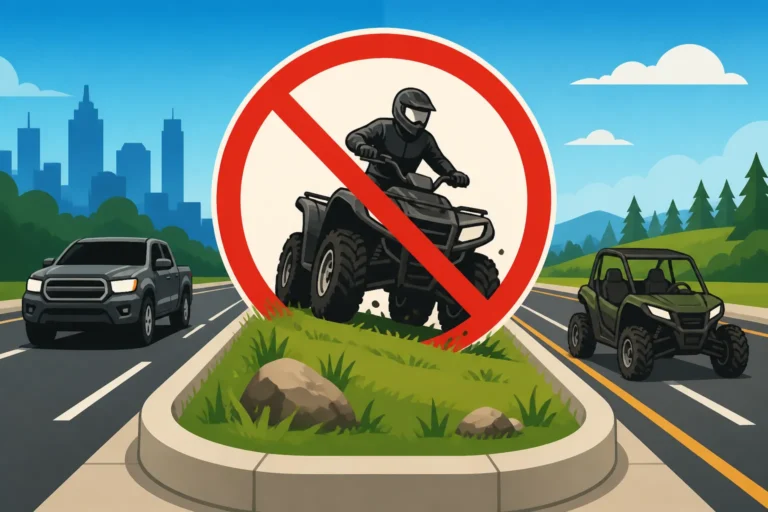
- Medians: The strip of land, often grassed or landscaped, that separates opposing lanes of traffic on a divided highway. Riding here is not only illegal but incredibly dangerous, placing you directly in the path of high-speed vehicles. [Manitoba Bans Riding a Median] for very good reasons – it's an extreme hazard.
- Sidewalks: These are designated for pedestrian traffic, plain and simple. Operating an ORV on a sidewalk puts pedestrians at severe risk and is never allowed. Your machine, whether it's a nimble ATV or a larger side-by-side, does not belong where people are walking, let alone where children might be playing.
- Interchanges: The complex system of ramps and roads that allow vehicles to transition between different highways or major roads. These are high-speed, high-traffic zones with intricate traffic patterns. ORVs are explicitly prohibited from operating within these areas due to the extreme danger this would pose.
These prohibitions are clear-cut and leave no room for interpretation. They are fundamental safety rules designed to keep ORVs out of areas where they pose an unacceptable risk to themselves and others.
The 30-Metre Dwelling Rule: Keeping Quiet in Residential Areas
Imagine trying to enjoy a peaceful evening at home only to have an ORV roar past your bedroom window. This is precisely the kind of disturbance the "30-metre dwelling rule" aims to prevent. In Manitoba, it is generally prohibited to operate an ORV within 30 metres of a dwelling (a house or other residence) between midnight and 7 a.m. This rule isn't about outright banning ORVs near homes; it's about respecting residents' right to quiet enjoyment during typical sleeping hours.
This rule is a recognition of the noise generated by ORVs, especially those with aftermarket exhaust systems, or even just the general sounds of an engine at idle. While it doesn't prohibit riding near a dwelling during the day, it does impose a curfew of sorts for close proximity. It's a pragmatic rule designed to balance the recreational use of ORVs with the need for peace in residential areas. Ignoring it can lead to noise complaints, by-law infractions, and fines, so always be mindful of where you're riding, especially late at night or early in the morning.
Municipal By-Laws: Local Rules That Can Add or Subtract Restrictions
Perhaps one of the trickiest aspects of ORV laws is navigating the layer of local municipal by-laws. While the provincial ORV Act sets the baseline, individual municipalities and local government districts in Manitoba have the power to create their own by-laws that can either restrict or, in some cases, even open up certain local roads or areas for ORV use. This means the rules can vary significantly from one town or rural municipality to another.
For instance, one municipality might have a by-law that allows ORVs on specific residential streets during daylight hours to access trails, while a neighbouring municipality might have a blanket ban on all ORV operation within its town limits, regardless of provincial allowances. This patchwork of rules can be incredibly confusing for riders. Before you head out, especially if you're venturing into a new area, it's always a good idea to check with the local municipal office or visit their website. [Manitoba Municipal By-Law Powers] highlights the importance of this local authority. Don't assume that what was legal in one area will be legal in another; always do your homework to avoid unexpected fines or confrontations.
Equipment and Operator Requirements When Near Roads
Operating an ORV anywhere, but especially near roadways, comes with a set of responsibilities regarding both the machine's equipment and the operator's qualifications. These rules are in place not just for legal compliance, but primarily for safety, ensuring that you and your machine are visible, controllable, and that you have the necessary skills to navigate potentially hazardous situations.
Helmet Law and Exceptions: Safety Gear Is Paramount
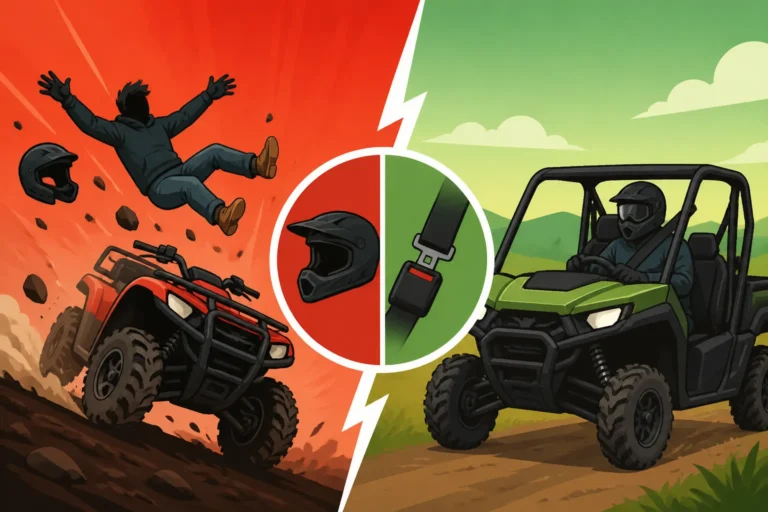
In Manitoba, wearing an approved helmet is generally mandatory when operating an ORV. This is a non-negotiable safety measure designed to protect against head injuries, which can be catastrophic in an accident. The helmet must meet recognized safety standards, such as those from the Snell Memorial Foundation or the U.S. Department of Transportation (FMVSS 218). It's not just any helmet; it needs to be one specifically designed and certified for powersports.
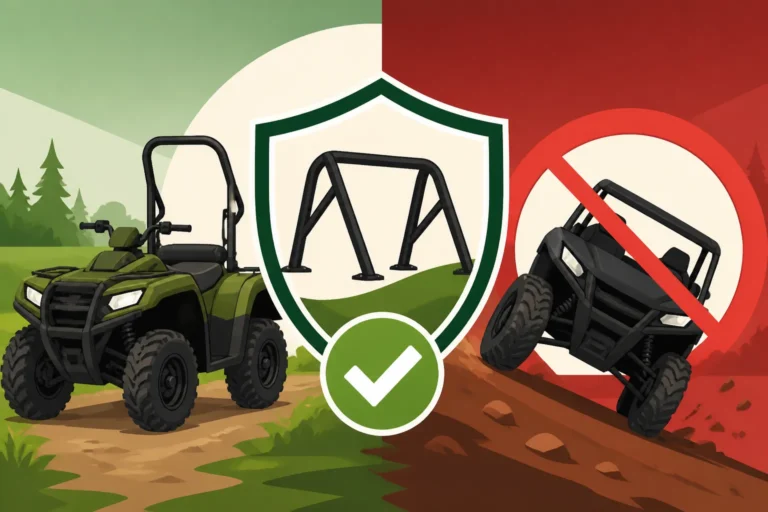
However, there are a few very specific and limited exceptions to the helmet law. For example, if your ORV is equipped with a roll-over protective structure (ROPS) and a seat belt, and you are wearing that seat belt, you might be exempt from wearing a helmet. Additionally, there are exemptions for certain agricultural, trapping, fishing, or hunting activities, and for workers north of the 53rd parallel. It's crucial to understand that these are exceptions, not general waivers. Most recreational riders will always be required to wear a helmet. [Manitoba Helmet Law and Its Exemptions] details these specific scenarios, so if you think you might qualify for an exemption, make sure you meet every single condition.
Lighting and Signage: Being Seen and Understood
Visibility is key, especially when operating an ORV near other vehicles. All ORVs in Manitoba are required to be equipped with specific lighting, including at least one headlight and one taillight, which must be illuminated from half an hour before sunset until half an hour after sunrise, and at any other time when visibility is limited to less than 60 metres. This ensures your machine is seen by other road users, whether you're crossing a road or riding in a ditch.
Beyond basic lighting, certain situations might require additional signage. As mentioned in the agricultural exemption, a slow-moving vehicle sign is often required when a farmer's ORV uses a road shoulder. These signs alert faster-moving traffic to your presence and slower speed, helping to prevent rear-end collisions. Even if not legally mandated for your specific situation, adding reflective tape or a brightly coloured flag, especially if you're riding a machine designed for heavy-duty work like a SuperATV build, can significantly enhance your visibility and therefore your safety.
Age and Supervision Rules: Protecting Younger Riders
Manitoba has clear age restrictions and supervision requirements for ORV operators, particularly for younger riders. These rules are crucial when an ORV is operated near roadways or in situations where interaction with public traffic is possible:
- Under 14 years of age: Riders under 14 are generally prohibited from operating an ORV in a ditch or crossing a roadway. They must be supervised by a parent or adult (18+) and typically only ride on private land or designated trails.
- 14 to 15.5 years of age: Riders in this age group may operate an ORV in a ditch, but they must be under the direct supervision of an adult (18+), and that adult must be in clear view of the younger rider. They cannot cross provincial highways or roads on their own.
- 15.5 years and holding a Learner's Permit (Class 6L): While a learner's permit for an ORV allows some independent operation, it still has limitations, particularly when it comes to crossing higher-speed roadways.
- 16 years and holding a full Class 6 (Motorcycle) or Class 5 (Car) driver's license: At 16, with a full driver's license, ORV operators generally gain the full spectrum of ditch-riding and crossing privileges as outlined in the Act, provided they adhere to all other rules.
These age tiers are designed to gradually introduce riders to the complexities and dangers of ORV operation, ensuring they have the maturity, training, and supervision appropriate for their age. [Manitoba Age Tiers for Young Riders] offers an exhaustive breakdown of these rules, which are fundamental for both youth safety and legal compliance.
Consequences of Non-Compliance: What Happens When You Break the Rules
Breaking the rules of ORV operation in Manitoba, especially those concerning roadways, isn't just a minor slap on the wrist. The penalties can range from immediate financial fines to more severe consequences like machine seizure, court costs, and impacts on your driving record and insurance. It's vital for every rider to understand the potential repercussions, as ignorance of the law is never an excuse.
Tickets and Fines: The Financial Impact
The most immediate consequence of violating ORV rules, such as riding on a prohibited roadway or operating in an illegal ditch, is a ticket. These tickets come with set fines, which can be substantial. For example, operating an ORV on a prohibited highway can easily result in a significant fine. These aren't like parking tickets; they're serious infractions.
Beyond the initial fine, many ORV infractions can also carry demerit points against your driver's license, even if you weren't operating a road vehicle at the time. Accumulating demerit points can lead to increased insurance premiums, driver's license suspensions, or even a requirement to attend driver improvement courses. The financial burden can quickly escalate beyond the face value of the ticket itself. Always review the [Manitoba Ticket Costs for Riders] to understand the range of penalties you might face.
Insurance Implications: How Violations Affect Your Coverage
Your ORV's registration through Autopac in Manitoba includes basic third-party liability insurance. However, if you are involved in an accident while operating your ORV illegally, such as on a prohibited roadway, your insurance coverage could be jeopardized. Your policy might be nullified or reduced, leaving you personally liable for damages to property or injuries to others.
Imagine a scenario where you're riding your UTV on a local paved road, which is illegal. You get into an accident with a car. Your basic liability insurance, which covers you for accidents where you are at fault, might not apply because you were operating the vehicle outside of its legal parameters. This could mean you are personally responsible for tens of thousands, or even hundreds of thousands, of dollars in damages and medical bills. This is a risk no recreational rider wants to take, reinforcing the importance of understanding and following the rules.
Machine Seizure and Court Costs: Escalating Penalties
In more severe or repeat instances of non-compliance, the consequences can escalate dramatically. An enforcement officer has the authority to seize your ORV if you are found to be operating it in a dangerous manner, without proper registration, or repeatedly in prohibited areas. This means your machine could be towed away, impounded, and you would be responsible for all towing and storage fees, in addition to any fines. Reclaiming a seized machine can be a lengthy and expensive process.
Furthermore, some ORV infractions, especially those involving careless operation or repeated offenses, can lead to court appearances and potentially even higher fines, court costs, and other penalties imposed by a judge. This could include orders for your ORV to be forfeited, or even in rare, extreme cases, imprisonment. While these are less common for a first-time minor offense, they highlight the serious nature of ignoring ORV regulations. It's a stark reminder that while ORV riding is a fantastic pastime, it comes with a serious legal framework that needs to be respected. Carrying your [Manitoba Registration Cards Carried at All Times] and knowing your rights, as well as the rules, can save you a lot of grief.
Allowed vs. Prohibited ORV Road Interactions in Manitoba
To help clarify the often-confusing rules surrounding ORV operation near roadways in Manitoba, here's a table summarizing common scenarios. Remember, specific municipal by-laws and individual circumstances (like agricultural exemptions) can add further layers, so always check local regulations.
| Action/Location | General Provincial Rule | Conditions/Important Notes |
|---|---|---|
| Riding on the Roadway | PROHIBITED | This includes paved, gravel, or graded earth portions of public streets/highways. |
| Riding in the Ditch | PERMITTED (with strict conditions) | Must be on the right-hand side in the direction of travel. Specific speed limits apply. ORV must be legally registered. |
| Crossing a Roadway | PERMITTED (with strict conditions) | Must hold a valid driver's license. Only within 5m of an intersection or at least 3km from the nearest. Clear view required in both directions. One machine at a time. |
| Riding on the Shoulder | PROHIBITED (generally for recreational use) | Exception: Farmers may use the shoulder for agricultural purposes, with proper signage (e.g., slow-moving vehicle sign) and strict adherence to speed limits. |
| Riding on a Sidewalk | PROHIBITED | Sidewalks are for pedestrians only. |
| Riding on a Median | PROHIBITED | Medians separate traffic lanes and are not for ORV use. |
| Riding in an Interchange | PROHIBITED | These complex, high-speed areas are extremely dangerous for ORVs. |
| Near a Dwelling (Midnight-7 a.m.) | PROHIBITED (within 30 metres) | This rule is for noise control in residential areas during sleeping hours. |
| In Remote Communities | PERMITTED (with some relaxations) | Specific designated remote communities may have relaxed rules for local road use by ORVs as primary transport. Still not a complete free-for-all, and provincial highways within them likely retain restrictions. Check local by-laws. |
This table provides a quick reference, but always refer to the full legislation and consult local authorities for the most precise information relevant to your specific riding location and machine.
Disclaimer
This article is for general informational purposes only and does not constitute professional advice. Laws, prices and regulations vary by location and change over time. Consult a qualified professional for guidance on your specific situation.