Carrying Papers on a Manitoba Trail
There's nothing quite like the open air and the thrill of exploring Manitoba's incredible landscapes on your ATV or UTV. But before you hit that next gorgeous trail, let's talk about something incredibly important that often gets overlooked in the excitement: your paperwork. Forgetting essential documents can quickly turn a fantastic day into a frustrating one, potentially leading to fines or uncomfortable encounters with authorities. This guide is here to walk you through exactly what papers you need to carry, why they're crucial, and how to keep them safe and accessible, ensuring your adventures stay stress-free.
Why Carrying Your Papers Isn't Optional in Manitoba
It's easy to think of off-road riding as a carefree escape, a time to leave the worries of the world (and your wallet) behind. However, the reality on Manitoba trails, even deep in the backcountry, is that you're still operating a registered vehicle under provincial law. This isn't just a suggestion; it's a legal obligation designed to ensure accountability, safety, and proper land use. Ignoring this can lead to unwelcome surprises that put a serious damper on your day.
The Legal Requirement for Documentation
The Province of Manitoba, through the Off-Road Vehicles Act, is pretty clear about the expectations for riders. Just as you wouldn't drive your car on a public road without your driver's licence and vehicle registration, your ATV or UTV also has specific documentation requirements. These aren't arbitrary rules; they exist for several reasons: to identify the machine, confirm its legal registration, ensure the operator is qualified, and provide necessary information in case of an incident. Think of it as your machine's passport for the trails. You'll definitely want to have your [Manitoba Registration Cards Carried at All Times].
What an Officer Can Request to See
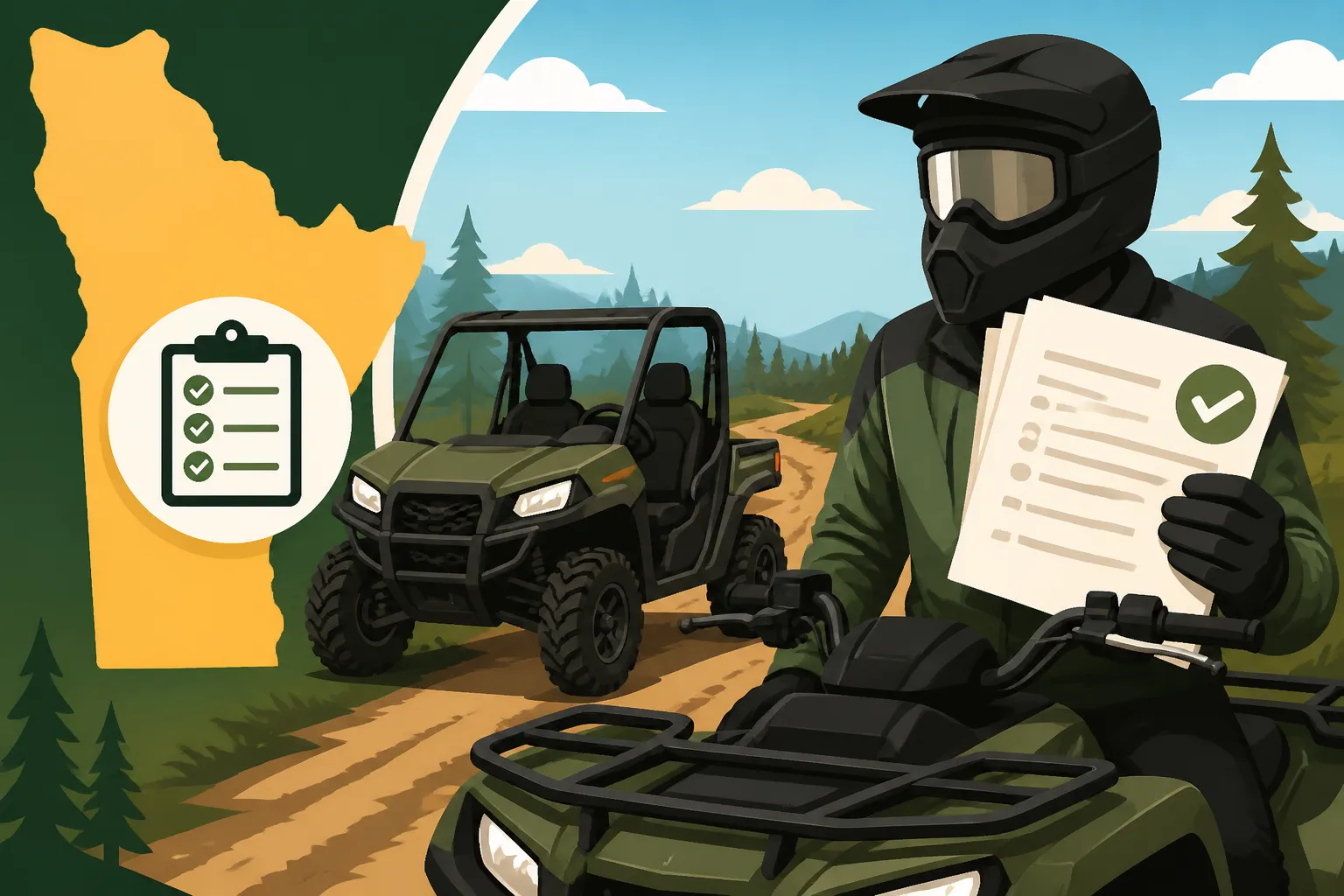
So, who might ask to see your papers out on the trail? It could be a Royal Canadian Mounted Police (RCMP) officer, a municipal by-law officer, or a conservation officer. These individuals have the authority to stop you and request proof of compliance with the Act. They're not just looking to spoil your fun; they're ensuring everyone is riding safely, legally, and responsibly, and that trails are being used properly. An officer will typically ask for your off-road vehicle registration certificate, proof of your driver's licence (if applicable to your riding scenario), and identification. It's important to remember [What an Officer Can Ask to See in Manitoba].
The Consequences of Not Carrying Your Papers
Riding without the proper documentation isn't just a minor oversight; it can carry some real weight. If you're stopped and can't produce the required papers, you could face fines. These aren't cheap, and they can quickly add up, turning a picturesque ride into a costly lesson. Beyond the financial penalty, an officer might also deem your machine to be operated illegally, which could lead to further complications. Nobody wants to deal with [Manitoba Ticket Costs for Riders] or even potentially more severe [Manitoba Impaired Riding Penalties] because of missing paperwork. It's a simple step to avoid a lot of hassle.
The Essential Documents for Every Manitoba Ride
Let's break down exactly what you should have with you every time you load up your machine and head out for a ride. These are the core documents that form the foundation of legal off-road operation in Manitoba, and they're essential for demonstrating that you're a responsible rider.
Your ORV Registration Certificate
This is arguably the most critical piece of paper you'll need. Every off-road vehicle operated in Manitoba (with very few exceptions, such as those used exclusively on private land or specific remote communities) must be registered with Manitoba Public Insurance (MPI). Your registration certificate confirms that your ATV or UTV is legally recognized and that the appropriate fees, including the provincial trails fee, have been paid. This certificate is specific to your machine and includes its Vehicle Identification Number (VIN), make, model, and the owner's information. It's paramount to be [Carrying Your Registration Card on Every Ride] for every outing. Make sure it’s the original or a clear, legible copy.
Proof of Valid Driver's Licence (for certain activities)
While you don't always need a full Class 5 driver's licence to operate an ATV or UTV in designated off-road areas, certain situations on the trails do require one. For instance, if you plan to cross a public highway, you absolutely need a valid driver's licence. The rules regarding age and licensing for off-road vehicle operation vary, so it's best to be prepared. If you're a young rider, understand [Manitoba Rules for a 16-Year-Old Rider] and other age-specific requirements. Always carry your driver's licence if there's any chance your ride might involve public road crossings or specific pathways that fall under the Highway Traffic Act.
Proof of Identity and Age
Even if you're not crossing a highway and don't technically need a driver's licence for the specific stretch of trail you're on, having proof of identity is always a good idea. In the event of an accident, a medical emergency, or an interaction with authorities, being able to quickly and clearly identify yourself is crucial. A valid driver's licence serves this purpose, but if you don't carry one, a provincial identification card or even a birth certificate (though less convenient) can serve as [Manitoba Proof of Age at Registration] and identity. This helps to confirm you meet any age requirements for operating your specific type of ORV.
Insurance Information (Beyond Basic Autopac)
When you register your ORV with MPI, you automatically receive basic third-party liability coverage. This is part of the integrated system and is why your registration certificate is so important – it acts as proof of this basic coverage. However, many riders choose to purchase additional coverage, such as collision, comprehensive (for theft or damage), or increased liability limits, from MPI or a private insurer. While the basic coverage is linked to your registration, it's wise to carry proof of any additional insurance you've purchased separately. This could be a separate policy card or a declaration page. It's good to know that [Manitoba Insurance Included With Registration] covers the basic liability, but anything beyond that will be a separate document.
Keeping Your Documents Safe and Accessible on the Trail
Having your documents is one thing; keeping them safe from the unpredictable Manitoba weather and accessible when you need them is another. Water, mud, and dust are the natural enemies of paper, and fumbling around for minutes while an officer waits isn't ideal. A little preparation goes a long way here.
Protecting Papers from the Elements
Manitoba's weather can change in an instant. A sunny morning can turn into a torrential downpour, or you might find yourself splashing through unexpected water crossings. Keeping your physical documents in a waterproof and dustproof container is non-negotiable. Ziploc bags are a good start for a temporary solution, but for long-term use, consider a robust dry bag, a small Pelican case, or a purpose-built document holder designed for outdoor use. Many riders integrate these into their machine's storage compartments or even their riding gear. Imagine trying to explain your situation with a soggy, illegible registration certificate!
Accessibility for Quick Presentation
When an officer asks for your papers, you want to be able to produce them quickly and efficiently. This means knowing exactly where they are. Don't bury them at the bottom of a gear bag packed full of tools and spare parts. Choose a spot that's easily reachable, even with gloves on, such as a dedicated pocket on your riding jacket, a small handlebar bag, or a compartment on your UTV's dash. The goal is to minimize delay and show that you're prepared and respectful of the rules.
Digital Copies vs. Physical Originals
In today's digital age, it's tempting to rely solely on photos of your documents on your phone. While having digital copies is an excellent backup (especially if your physical papers get damaged or lost), they generally do not replace the requirement for physical originals or clear, legible photocopies as accepted by the authorities. A dead phone battery, a damaged screen, or poor signal can render your digital copies useless. Always prioritize carrying the physical documents. However, for consent forms, perhaps for a youth rider or an agreement for private land access, a service like LawDepot can help you draft and print clear, legally sound documents that you can then protect for your ride.
Special Scenarios and Additional Documentation
While the core documents cover most situations, some specific scenarios might require additional paperwork or present unique considerations. Being aware of these can save you headaches down the line and ensure you're always riding within the rules.
Riding on Leased or Private Land
If your riding adventure takes you onto private land or land that is subject to a Crown lease, simply having your machine registered isn't enough. You absolutely need explicit permission from the landowner or leaseholder. This permission should ideally be in writing. While a verbal agreement might suffice in some neighbourly situations, a written agreement, especially for larger groups or frequent access, provides clear proof that you're not trespassing. A simple written note with contact information and dates can be enough, but for more formal arrangements, you might consider drawing up an agreement, and platforms like LawDepot can be quite helpful in providing templates for such permissions. Always understand [Manitoba Crown Lease Access Rules] and [Manitoba Trespass Law for Riders].
Youth Riders and Parental Consent
Manitoba has specific age requirements and supervision rules for young riders. If you're a parent or guardian of a rider aged 16 to 18, and they're riding on their own, you likely provided parental consent during the registration process. However, it's always prudent for younger riders, especially those under 16, to carry proof of age and, if applicable, a written note from their parent or guardian confirming permission to ride and acknowledging any supervision requirements. This can help clarify things quickly if they're stopped by an officer. A template for parental consent, easily drafted through a platform like LawDepot, can be a practical solution for this.
Out-of-Province Visitors
Visiting Manitoba with your ORV from another province or even the United States? Welcome! Our trails are fantastic. However, you still need to be properly documented. Generally, if your machine is legally registered in your home jurisdiction, and you carry that proof, you are exempt from Manitoba's registration requirements. This also usually applies to your home province's insurance. However, you are still subject to all of Manitoba's operating rules regarding helmets, age, passengers, and where you can ride. Always carry your home province's registration and proof of insurance, along with your driver's licence. Familiarize yourself with [Manitoba Rules for an Out-of-Province Machine] to ensure a smooth visit.
Here's a quick reference table for the documents you should carry:
| Document Type | Purpose | Required For | Best Storage Method | Notes |
|---|---|---|---|---|
| ORV Registration Cert. | Proof of legal ownership and basic liability insurance. | All registered ORV operation (exceptions for private land, remote communities) | Waterproof bag/case in easily accessible compartment | Must be original or clear, legible copy. Includes basic [Manitoba Insurance Included With Registration]. |
| Driver's Licence / ID | Proof of operator's qualification and identity. | Highway crossings, any interaction with authorities. | Wallet or secure, waterproof pocket. | Required for certain activities. [Manitoba Proof of Age at Registration] is important for confirming age requirements. |
| Additional Insurance Info | Proof of optional collision, comprehensive, or higher liability coverage. | For your own financial protection if an incident occurs. | With registration certificate. | Not strictly mandatory by law, but highly recommended for peace of mind. |
| Landowner Permission | Proof of legal access to private or leased land. | Riding on any land you do not own. | With other documents, or in a separate, easily accessible pouch. | Written permission is always best, especially when riding on [Manitoba Crown Lease Access Rules]. LawDepot can help draft these. |
| Parental Consent Form | Proof of guardian permission for youth riders. | Youth riders (especially under 16) operating independently. | With other documents, or carried by the minor. | Helps clarify authority for [Manitoba Rules for a 16-Year-Old Rider] and younger. A form from LawDepot can formalize this. |
| Home Province Reg./Ins. | Proof of legal operation for visitors. | Out-of-province visitors. | With ID, in a waterproof holder. | Required for [Manitoba Rules for an Out-of-Province Machine]. |
Ultimately, carrying the correct papers on your Manitoba trail ride is about more than just avoiding fines; it's about being a responsible, prepared, and safe rider. A little bit of foresight can save you a whole lot of stress and ensure that your focus remains where it should be: on enjoying the incredible off-road experiences Manitoba has to offer. So, check your papers, secure them, and have an amazing ride!
Disclaimer
This article is for general informational purposes only and does not constitute professional advice. Laws, prices and regulations vary by location and change over time. Consult a qualified professional for guidance on your specific situation.