Manitoba Registration Rules for a Dealer Lot
As a dealer of off-road vehicles (ORVs) in Manitoba, you’re juggling a lot: inventory, sales, customer service, and all the provincial regulations that come with it. One common area of confusion, and frankly, frustration, is understanding the specific rules around registering ATVs and UTVs that are sitting on your lot. It's not always clear what needs a plate, what doesn't, and what you need to do when a machine changes hands. This guide is here to untangle the nuances of Manitoba's ORV registration rules specifically as they apply to a dealer's inventory, helping you stay compliant and streamline your sales process.
The Core Exemption for Dealer Inventory
You've got a lot full of shiny new (or gently used) ATVs and UTVs, and the thought of individually registering every single one just to have it sit there waiting for a buyer is, well, frankly absurd. Thankfully, the province agrees, to a certain extent. There are specific exemptions in place to allow dealers to conduct their business without having to plate every machine on display.
Understanding the "Dealer Plate Exemption"
The good news is that Manitoba’s Off-Road Vehicles Act provides a specific exemption for machines that are part of a dealer’s inventory and are being held for sale. This means you don't typically need to register every single quad or side-by-side that's parked on your lot, ready for its next owner. The intent here is to facilitate commerce, allowing you to display and sell machines without incurring unnecessary registration fees and administrative burdens for temporary ownership. Imagine the paperwork if every machine had to be registered and then de-registered every time it moved from your lot to a new owner! The [Manitoba Dealer Plate Exemption] is a practical measure designed to keep things flowing for businesses like yours.
This exemption applies to machines that are genuinely "for sale" and remain on the dealer's physical property. It's about displaying your wares, letting customers browse, and having machines ready for immediate purchase. You're not expected to treat your inventory as if it were personal riding machines. The provincial government understands that these vehicles are in a transitional state, awaiting their permanent owner and subsequent registration.
Limitations of the Exemption
While the exemption is a lifesaver for inventory management, it's not a blanket pass for every situation. There are strict limitations to when and where an unregistered machine is permitted. Essentially, the exemption is confined to your dealer lot. This means the physical property where your business operates, where you store and display your inventory.
If a machine is removed from your lot for any reason beyond a very specific, limited demonstration (which we'll discuss next), it generally needs to be registered. This includes taking a machine home for personal use, lending it to an employee for their weekend ride, or even using it extensively for your own business operations beyond simple movement around the lot. The moment an unregistered machine ventures onto public land, a trail, or even private property not owned or leased by you for the express purpose of sale, it's likely no longer covered by the dealer exemption and would require proper registration. [Manitoba Machines Used Only on Your Own Land] has a separate exemption, but that applies to private individuals, not typically to dealer inventory off their designated lot.
It's crucial to understand this distinction. Your "lot" is the boundary. Anything beyond that usually triggers the need for a plate.
Navigating Off-Lot Movements and Sales
The moment an ORV leaves your dealer lot, even temporarily, the rules can change dramatically. This is where dealer plates become essential, and where your role in facilitating the buyer's registration truly begins.
Using Dealer Plates for Test Rides and Demonstrations
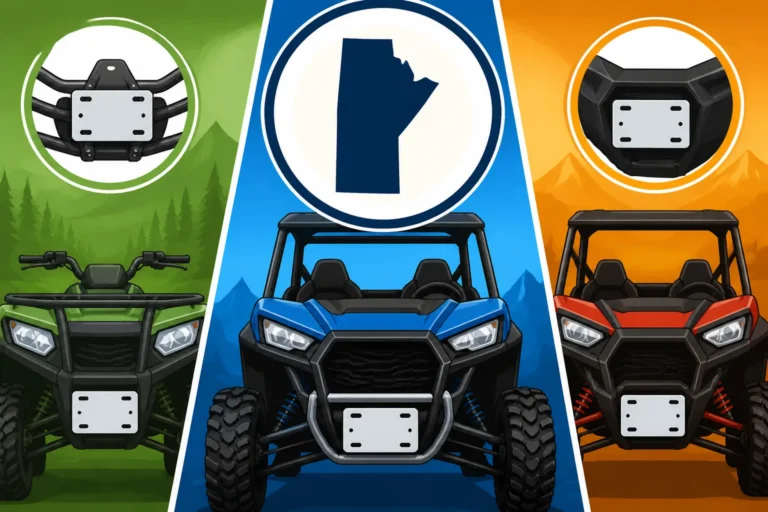
This is one of the most common reasons an unregistered machine needs to leave your lot: a customer wants to take it for a spin! Manitoba offers specific provisions for dealers to use dealer plates for test rides and demonstrations. These plates, distinct from regular ORV plates, allow you to temporarily operate an unregistered machine on public roads or trails, strictly for the purpose of demonstrating its capabilities to a potential buyer.
It’s important to properly apply for and display these dealer plates. They are not interchangeable with regular ORV plates, and they come with their own set of rules regarding their usage. Typically, dealer plates are meant for short, supervised demonstrations within a limited area close to your dealership. You can't just send a customer off for an hour-long joyride with a dealer plate; the intent must always be a legitimate demonstration leading to a potential sale. The rules around duration and distance are often quite restrictive, so it's wise to clarify the exact parameters with MPI to ensure you're always operating within the legal framework. Remember, these plates are a privilege, not a right, and misuse can lead to penalties.
Completing the Sale: Registration and Transfer
Once a customer decides to buy, your role shifts from demonstrating to facilitating ownership. As a dealer, you typically handle the initial [Manitoba ORV Registration Through MPI] process for the buyer right at the point of sale. This is a huge convenience for customers, as they can leave your lot with a legally plated and insured machine. You'll collect all necessary information from the buyer, process the registration paperwork, and issue a temporary permit (if applicable) until the official plate arrives.
During this process, you'll also be responsible for collecting sales tax, including Manitoba's 7% retail sales tax (RST) and the federal GST. [Manitoba RST Collected at Registration] is a key part of the transaction, and as a dealer, you act as the collection agent for the province. Make sure all figures are clearly itemized on the bill of sale. Speaking of documents, providing clear and comprehensive paperwork is paramount. A solid bill of sale is crucial, not just for the customer but also for your own records and for tax purposes. Online services like LawDepot can be invaluable for generating professional, legally sound bills of sale, consignment agreements, or purchase contracts that protect both your business and your customer. It’s not just about the sale; it’s about providing the new owner with everything they need to legally operate their machine. This also includes explaining [Manitoba Transfer of Ownership Rules] so they understand how their new registration works.
Essential Compliance and Best Practices for Dealers
Running a dealership means more than just selling machines; it means running a compliant business. Good record-keeping and staff training aren't just good business practices; they are critical for avoiding fines and maintaining a good reputation.
Maintaining Accurate Records
For every ATV and UTV on your lot, whether new or used, keeping meticulous records is non-negotiable. This includes detailed inventory logs, documenting when machines arrive, their VINs, their status (for sale, in service, sold), and any temporary movements. If a machine leaves the lot on a dealer plate for a demonstration, you need to log who took it, when, for what purpose, and when it returned. This paper trail protects you if there's ever a question about a machine's status or its legal operation.
Accurate records are also vital for tax purposes and for tracking your sales. Beyond basic inventory, having organized files for sales agreements, bills of sale, and copies of registration paperwork ensures you can quickly retrieve information if needed. Utilizing contract management tools or legal document services, such as LawDepot, can streamline this process significantly. They often offer templates for various types of agreements that ensure all necessary legal clauses and provincial requirements are met, saving you time and reducing the risk of oversight. These systems help ensure that your dealership's administrative backbone is as robust as the machines you sell.
Staff Training and Customer Education
It’s not enough for you to know the rules; every member of your sales and service team needs to be well-versed in Manitoba’s ORV regulations. This means regular training sessions on what constitutes a dealer lot exemption, the proper use of dealer plates, and the steps involved in new registrations and transfers. An informed staff member can confidently answer customer questions, ensuring a smooth sales process and preventing inadvertent violations.
Beyond your internal team, educating your customers is a critical service you provide. When a customer drives off with their new quad or side-by-side, they need to understand their responsibilities. This includes the fundamental truth that [Manitoba Registration Applies Everywhere, Not Just on a Trail]. They must understand that their machine needs to be registered and that they must always have their [Manitoba Registration Cards Carried at All Times] when operating it. Explaining the importance of proper plate mounting, like [Manitoba Plates on the Rear of a Quad], can also help them avoid early tickets. A well-informed customer is a happy, compliant customer, and that reflects positively on your dealership.
Avoiding Common Dealer Pitfalls
Even with the best intentions, it's easy to fall into common traps. One major pitfall is misinterpreting the dealer exemption for personal use. Just because you own the dealership doesn't mean you can take an unregistered demo model home for the weekend. That machine needs to be registered in your name or the company's name for personal use. Another common mistake is allowing unregistered demos beyond the permitted areas or for non-demonstration purposes. Stick strictly to the rules for dealer plate use to avoid hefty fines.
Finally, overlooking the importance of clear [Manitoba Dealer Paperwork at Delivery] can lead to headaches for both you and your customer. Ensure every document is signed, dated, and understood. For complex transactions like consignment sales or trade-ins, where ownership isn't a straightforward cash sale, ensure you have robust legal documentation in place. Using a service like LawDepot for clear, legally sound consignment forms or purchase agreements can prevent future disputes and ensure proper transfer of ownership and liability. Proactive compliance is always less costly than reactive damage control.
Specific Scenarios and Considerations
Beyond the day-to-day sales, dealers often encounter unique situations that require specific understanding of ORV registration rules.
Consignment Machines and Trade-Ins
Consignment sales are a fantastic way to expand your inventory without upfront capital, but they add a layer of complexity to registration. When you take a machine on consignment, it’s still legally owned by the individual consignor, but it's on your lot for sale. Typically, these machines will also fall under the dealer exemption while displayed on your property. However, the paperwork needs to be impeccable. You need a clear consignment agreement outlining responsibilities, pricing, and what happens if the machine is damaged or needs to be moved off-site. LawDepot provides excellent templates for consignment agreements, helping you define the terms clearly and legally.
Trade-ins, while usually a simpler process, still require attention to detail regarding registration. When a customer trades in an ORV, you take ownership, and the previous registration ends. You'll then process the machine as part of your inventory, applying the same dealer exemption rules as you would for a new machine until it's resold. Be aware of [Manitoba Trade-In Rules of the Same General Kind] which generally allows for tax savings when trading in a similar type of machine. Always ensure you receive a properly signed transfer document from the previous owner, confirming the change of ownership to your dealership.
Special Events and Off-Site Sales
Dealers often participate in expos, trade shows, or off-site sales events to reach a broader audience. When you transport unregistered ORVs to these locations, they are generally still considered part of your "for sale" inventory. However, the critical distinction comes if you intend to operate them at these events. If you're simply displaying machines in a booth, the dealer exemption likely still applies. But if you plan to offer test rides or demonstrations at an off-site location, you will almost certainly need to use your dealer plates and adhere to all the rules associated with them.
In some cases, especially for larger events or demonstrations on public land, you might even need to inquire about special permits from the event organizer or the local municipality. It’s always best to check ahead of time with the relevant authorities (e.g., MPI, local bylaws) to ensure full compliance for these temporary setups. Don't assume the same rules apply as on your main lot; the context of "your property" changes significantly.
Out-of-Province Sales and Imports
Manitoba dealers don't just sell to Manitobans! When you sell to a buyer from Saskatchewan, Ontario, or even the United States, their provincial or state registration rules will come into play. Your primary responsibility remains ensuring they have proper documentation (bill of sale) from you, and you'll collect Manitoba sales tax as usual. However, they will then be responsible for registering the machine in their home jurisdiction, often after paying any applicable taxes or duties there. You should provide them with all necessary paperwork to facilitate their registration elsewhere.
Conversely, if your dealership brings in inventory from outside Canada, you’ll be dealing with import procedures. [Manitoba Registration for an Imported Machine] outlines the requirements, which typically involve customs documentation and possibly inspections to ensure the machine meets Canadian standards before it can be legally sold and registered in Manitoba. This is a crucial step that needs to be handled correctly to avoid delays and issues with subsequent registration by your customers. Understanding the full journey of a machine, from import to final sale, helps ensure a smooth process for everyone involved. The [Manitoba Registration Processing Time] and [Manitoba Registration Cost] are important details that you'll be able to communicate to your customers based on your experience with these processes.
| Scenario | Registration Status on Lot | Plate Required for Off-Lot Movement | Documentation Required for Sale | Tax Collection Responsibility |
|---|---|---|---|---|
| New Machine (Dealer Inventory) | Exempt (for display/sale) | Dealer Plate (for demos) | Bill of Sale, Transfer Paperwork | Yes (RST, GST) |
| Used Machine (Dealer Inventory) | Exempt (for display/sale) | Dealer Plate (for demos) | Bill of Sale, Transfer Paperwork | Yes (RST, GST) |
| Consignment Machine | Exempt (for display/sale) | Dealer Plate (for demos) | Consignment Agreement, Bill of Sale | Yes (RST, GST) |
| Customer Test Ride (on-lot) | Exempt (for display/sale) | No (stays on private property) | N/A | N/A |
| Customer Test Ride (off-lot) | Exempt (for display/sale) | Yes (Dealer Plate) | N/A | N/A |
| Machine for Personal Use | Not Exempt | Yes (Regular ORV Plate) | N/A | N/A |
| Machine Transported for Service | Not Exempt (if off-lot) | No (if trailered) | N/A | N/A |
Disclaimer
This article is for general informational purposes only and does not constitute professional advice. Laws, prices and regulations vary by location and change over time. Consult a qualified professional for guidance on your specific situation.