Manitoba Registration for a Youth Quad
It can be a bit confusing when you're trying to figure out how to register an off-road vehicle (ORV) for a younger rider in Manitoba. You want to make sure everything is legal and above board, but the rules around age, ownership, and parental consent can feel like a maze. This guide is here to untangle all those knots, walking you through the specific steps and considerations for registering a youth quad in Manitoba, ensuring your young adventurer is ready to hit the trails safely and legally.
Understanding Youth Quad Registration in Manitoba
When it comes to youth quads in Manitoba, it's not just about the machine itself; it's heavily about the age of the person who will be the registered owner and, subsequently, the operator. Many parents assume that because a quad is designed for a youth, it automatically has different registration rules. While the operating rules have age restrictions, the registration process primarily focuses on legal ownership, which becomes a bit more nuanced when a minor is involved.
Age Requirements for Ownership and Operation
Manitoba has clear guidelines on who can operate an ORV, with age tiers affecting where and how a young person can ride. For example, riders under 14 have strict supervision requirements, while those 14 and over can ride in ditches under certain conditions. Once a rider hits 16, they gain more independence. However, these operating rules are distinct from ownership. Legally, in Manitoba, an individual must typically be at least 16 years old to register an ORV in their own name without parental involvement. If the intended owner is under 16, or even between 16 and 18, there are specific steps parents or guardians need to take to facilitate the registration process. This means that while a 12-year-old can certainly ride a youth quad under supervision, the machine itself would need to be registered in a parent's name or with significant parental consent. We've got more details on [Manitoba Registration Age of 16] if you want to dive deeper into that.
The key distinction here is that the ORV Act differentiates between who owns a machine and who operates it. A parent might be the legal owner and registrant of a quad, but their 10-year-old could still be the primary rider, provided all the operating rules like supervision and appropriate riding areas are followed. This often leads to parents registering the quad in their own name for ease, even if it's primarily used by a child.
Parental Consent and Legalities
If the goal is for the youth to be the registered owner of the quad, and they are under 16, a parent or legal guardian generally needs to register the machine in their own name. This ensures that a legally capable adult is responsible for the vehicle. For youth between 16 and 18, the situation changes slightly. While they can register an ORV in their own name, they still require the consent of a parent or guardian. This isn't just a verbal agreement; it's a formal process. The parent or guardian will need to complete specific forms, often signing off to acknowledge their responsibility and consent for the minor to own and operate the machine.
These consent forms are crucial. They legally bind the parent or guardian, ensuring that there's an adult ultimately responsible for the quad's registration and compliance with the rules. This might involve signing documents at the Autopac agent's office or having a notarized consent form ready. For many families, finding the right legal document can be daunting, but resources like LawDepot offer templates for various agreements, which can be helpful if you need to draft something formal to present to an Autopac agent, though always confirm exact requirements with MPI directly. Remember, the province wants to ensure that a responsible adult is in the loop when a minor is involved with an ORV. You can also explore [Manitoba Parental Consent From 16 to 18] for more specifics.
The Registration Process for a Youth Quad
Registering a youth quad in Manitoba follows a similar path to registering any other ORV, but with added layers of age verification and parental involvement. It's not overly complicated, but having all your ducks in a row before you visit an Autopac agent will save you a lot of time and frustration.
Required Documents and Information
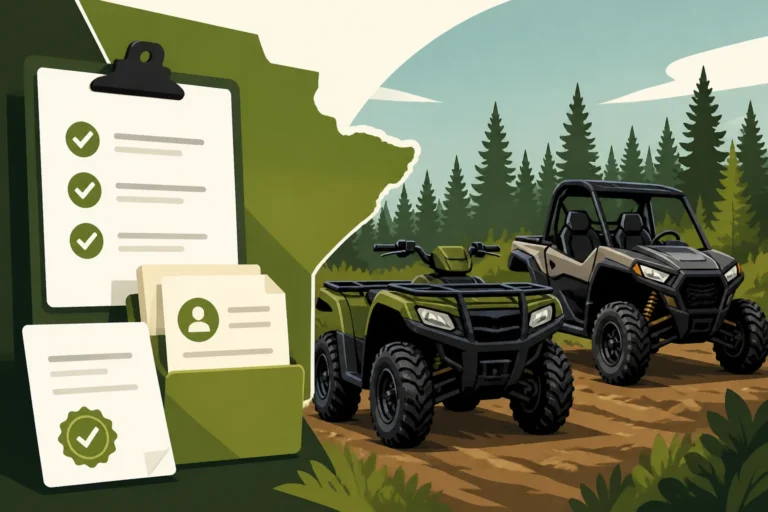
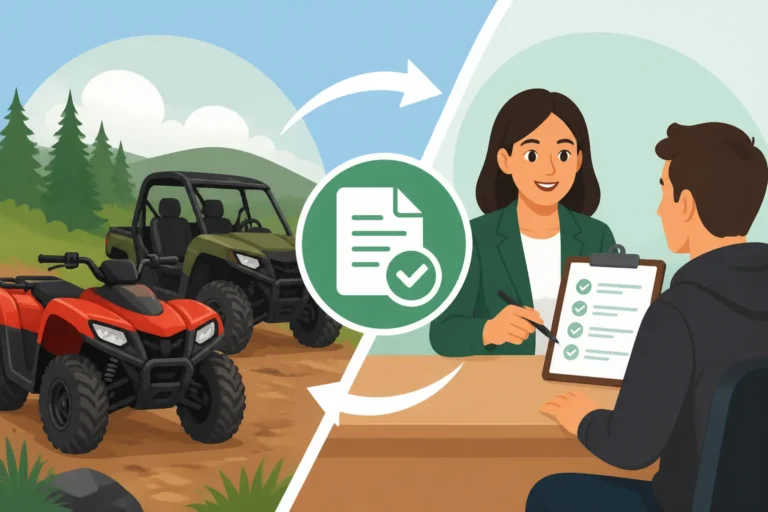
When you head to your local Autopac agent, whether the quad is registered in a parent's name or a youth's (with consent), you'll need a specific set of documents. First and foremost, you'll need proof of ownership for the quad. This is typically a bill of sale, especially if you're buying it new from a dealer or used from a private seller. If it's a private sale, make sure the bill of sale clearly identifies both the buyer and seller, the machine's VIN (Vehicle Identification Number), and the purchase price. Sometimes, people purchase from a neighbour or through less formal means, but a proper bill of sale is critical for proving ownership. For assistance with drafting a suitable bill of sale for a private transaction, especially one involving a minor or a parent on behalf of a minor, online platforms like LawDepot can provide customizable templates.
In addition to proof of ownership, you'll need personal identification for the person registering the vehicle. If the youth (aged 16-18) is registering it in their name, they will need their own ID, possibly a birth certificate to prove their age, and the signed parental consent form. If a parent is registering it, they'll need their ID. Don't forget your proof of address. If the machine is brand new, the dealer will typically provide the necessary paperwork, often including a New Vehicle Information Statement (NVIS). If you're bringing in a used machine, ensure you have the previous owner's signed transfer of ownership, which is often found on the original registration certificate. Without this, you might run into hiccups, and we cover that more in [Manitoba Transfer of Ownership Rules].
Steps at the Autopac Agent
Once you've gathered all your documents, the next step is a visit to any authorized Autopac agent in Manitoba. These agents handle all ORV registrations, not just vehicle insurance. When you arrive, be prepared to:
- Present your identification: The person whose name will be on the registration (parent or consenting youth) must provide valid ID. If it's a youth between 16 and 18, bring their birth certificate or another document proving their age.
- Provide proof of ownership: Hand over your bill of sale, NVIS, or the signed transfer document from the previous owner. The agent will verify the VIN to ensure it matches the paperwork and that the machine isn't stolen or has any other issues. You can check [Manitoba Registration Without a Bill of Sale] if you're in a unique situation without one.
- Complete the application form: The agent will guide you through the registration application. This is where parental consent forms will be submitted if the youth is between 16 and 18.
- Pay applicable fees and taxes: This will include the registration fee, the mandatory provincial sales tax (RST) on the purchase price (unless an exemption applies), and the non-refundable [The $25 Trails Fee Added to Every Registration]. Remember, even if you don't plan to ride on designated trails, this fee is collected with almost every ORV registration in Manitoba to support trail development and maintenance. The agent will calculate everything for you.
- Receive your registration certificate and plate: Once everything is processed and paid, you'll be issued a registration certificate and a single license plate. The agent will advise you on [Manitoba Plate Mounting by Machine Type] for your specific youth quad.
It's a fairly straightforward process if you have all the necessary paperwork ready. Many Autopac agents are very helpful and can answer specific questions you might have about youth registration nuances.
Important Considerations for Youth Quad Ownership
Beyond the initial registration, there are ongoing responsibilities and considerations that come with owning a youth quad in Manitoba. These often revolve around safety, compliance, and ensuring the machine is used responsibly by its young operator.
Safety Training and Supervision
While Manitoba does not currently mandate a safety course for ORV registration or operation, investing in proper safety training for youth riders is highly recommended. Safe riding practices are paramount, especially for younger, less experienced operators. Many organizations offer ATV rider training courses that cover essential skills, risk awareness, and proper machine handling. These courses can significantly reduce the risk of accidents and instill good habits from a young age. Even if the youth has ridden before, formal training can refine their skills and make them more confident and competent riders.
For younger riders, particularly those under 14, constant adult supervision is a legal requirement in many riding scenarios. This means an adult must be present and actively monitoring the child's operation of the ORV. It’s not just about being in the same general area; it's about being able to intervene quickly if needed. Teaching youth riders about trail etiquette, environmental responsibility, and always wearing appropriate safety gear (especially a helmet) should be an ongoing conversation. [Manitoba Rules for a 12-Year-Old Rider] and [Manitoba Helmet Law and Its Exemptions] provide more specific details on operating rules for different age groups.
Plate Mounting and Carrying Documents
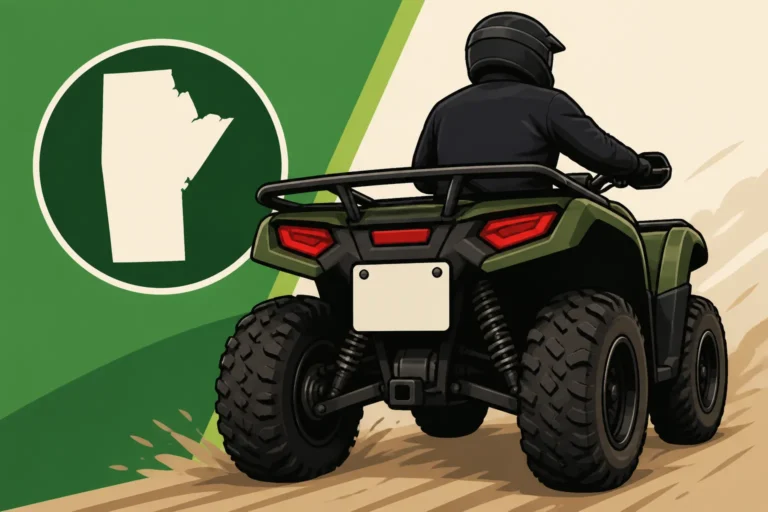
Once you've received your shiny new license plate, proper mounting is essential. For youth quads, which are typically ATVs, the plate must be mounted on the rear of the machine, where it is clearly visible. It should be securely attached and not obscured by mud, equipment, or modifications. An improperly mounted or illegible plate could lead to a ticket from law enforcement. You'll find more detailed guidance on [Manitoba Plates on the Rear of a Quad].
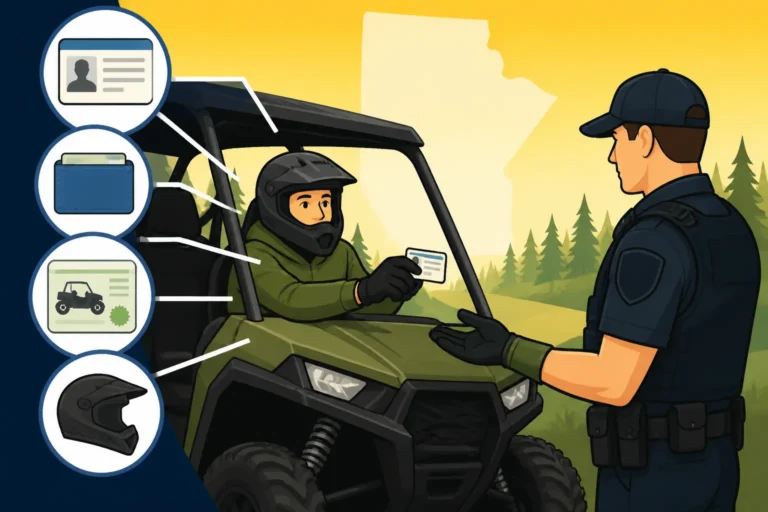
Equally important is carrying your registration certificate with you every time the quad is operated. This is a non-negotiable rule in Manitoba. The certificate serves as proof that the machine is legally registered and insured. Many riders keep it in a waterproof bag or container within a storage compartment on the quad to protect it from the elements. If asked by a peace officer, you must be able to produce this document. Think of it like carrying your driver's license when you're driving a car – it's just part of responsible operation. For more information on this, check out [Carrying Your Registration Card on Every Ride].
Common Questions and Pitfalls for Youth Quads
Navigating the world of ORV registration and use for youth can bring up unique questions. It's smart to anticipate these and understand the answers before they become a problem.
What if the Youth Turns 16 Mid-Season?
This is a common scenario. Let's say a parent registers a quad for their 15-year-old, and then that child has a birthday and turns 16 halfway through the riding season. Does the registration automatically transfer? Not quite. Even though the youth can now register a machine in their own name (with parental consent until 18), the existing registration remains in the parent's name until it's officially transferred.
If the intention is for the 16-year-old to become the primary registered owner, a transfer of ownership process would still need to occur. This would involve the parent "selling" or "gifting" the quad to the now 16-year-old, completing a new bill of sale (even if it's for $0), and then the 16-year-old (with parental consent until age 18) going to an Autopac agent to register it in their name. This would incur a new registration fee and potentially RST on the declared value, depending on the circumstances. Many families opt to simply keep the registration in the parent's name until the youth is fully 18 to avoid the extra paperwork and costs associated with a mid-season transfer.
The Trails Fee for Youth Quads
The mandatory $25 trails fee is not specific to adult-sized machines; it applies to virtually all ORV registrations in Manitoba, including youth quads. There's often a misconception that if a youth quad is only ridden on private property or within a specific area that isn't a "trail," this fee can be avoided. Unfortunately, that's not the case. The fee is collected at the time of registration by MPI as part of the total cost and is earmarked to support the development, maintenance, and promotion of Manitoba's provincial ORV trail network.
This means when you register a youth quad, you'll see that $25 added to the total. It's a non-refundable fee that helps improve the riding experience for everyone in the province, regardless of where your specific machine is primarily used. So, while your child might be riding in the backyard, their registration is still contributing to the broader ORV community. You can learn more about this by checking out [Manitoba's Off-Road Trails Fee Explained].
Summary of Key Youth Quad Registration Requirements
To help simplify things, here’s a quick overview of the main points to remember when registering a youth quad in Manitoba:
| Requirement | For Youth Under 16 | For Youth 16-18 | For Parent/Guardian |
|---|---|---|---|
| Registered Owner | Parent/Guardian | Youth (with consent) | Parent/Guardian |
| Proof of Ownership | Yes | Yes | Yes |
| Personal ID | N/A | Yes | Yes |
| Proof of Age (Youth) | N/A | Yes | N/A |
| Parental Consent Form | N/A | Yes | Required for youth ownership |
| Autopac Visit | Yes | Yes | Yes |
| Registration Fees | Yes | Yes | Yes |
| $25 Trails Fee | Yes | Yes | Yes |
| Plate Mounting | Rear (visible) | Rear (visible) | Rear (visible) |
| Carry Registration Card | Yes (operator) | Yes | Yes (operator) |
Remember, while the registration process is administrative, the goal is to ensure safe and legal enjoyment of ORV riding for all ages in Manitoba. Taking the time to understand these rules now will prevent headaches down the road, letting your family focus on the fun of the ride. If you're looking for documents like a robust bill of sale or consent forms for other legal needs, LawDepot can be a valuable resource for legally sound templates.
Disclaimer
This article is for general informational purposes only and does not constitute professional advice. Laws, prices and regulations vary by location and change over time. Consult a qualified professional for guidance on your specific situation.