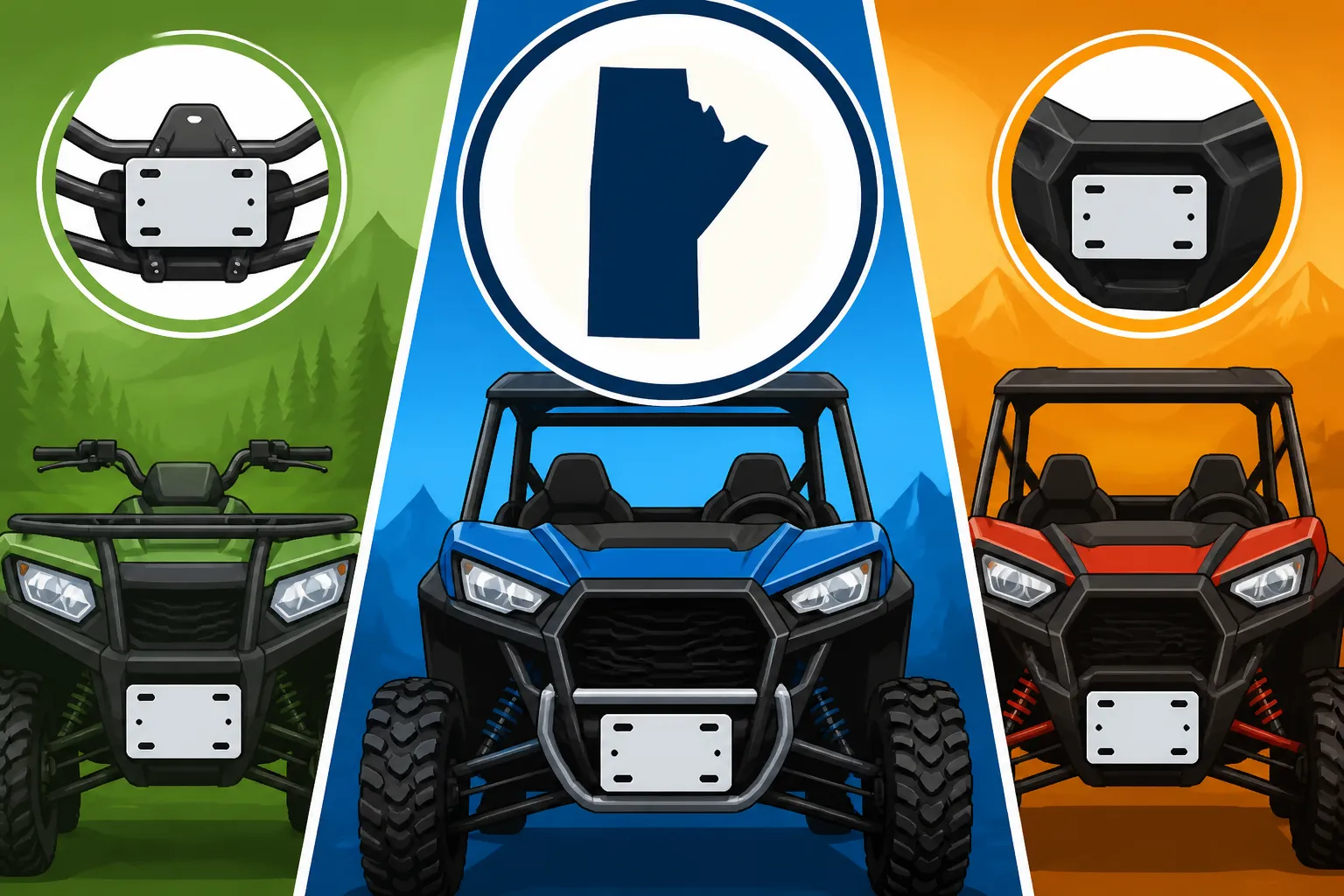
Manitoba Plate Mounting by Machine Type
It can be incredibly frustrating to get your brand new (or new-to-you) off-road vehicle all ready for its first adventure in Manitoba, only to realize you're not entirely sure where that shiny new license plate is supposed to go. It's not always as straightforward as it seems, with different rules for quads, side-by-sides, dirt bikes, and even snowmobiles. This guide will walk you through the precise requirements for mounting your off-road vehicle (ORV) plate in Manitoba, ensuring you stay compliant and avoid any unnecessary headaches on the trails or backroads.
Understanding Manitoba's Plate Requirements for Off-Road Vehicles
Before we dive into the nitty-gritty of where to bolt your plate, it's crucial to understand why this seemingly minor detail is so important in Manitoba. The provincial regulations are clear: if your ORV is required to be registered, then that registration comes with a plate, and that plate needs to be displayed in a very specific way. This isn't just about collecting fees; it's about identification, safety, and ensuring accountability for all riders on our shared lands.
The Mandate for Visibility
The core principle behind all plate mounting rules is visibility. Law enforcement, trail wardens, and even fellow riders need to be able to quickly and clearly identify your machine. This means your plate can't be tucked away, obscured by mud, or hidden behind gear. It needs to be clean, well-lit (if riding after dark), and easily readable from a reasonable distance. Think of it as your machine's official name tag – if it's not clearly displayed, how can anyone know who you are or that you're operating legally?
One Plate, Not Two: A Common Misconception
Many new ORV owners, especially those coming from other provinces or familiar with car registration, often assume they'll receive two plates for their machine. However, in Manitoba, that's not the case. You'll only ever receive one plate for your ORV, regardless of whether it's a quad, UTV, dirt bike, or snowmobile. This single plate must then be affixed in the designated spot for your specific machine type. This is a key detail, as trying to figure out where a "front" and "rear" plate might go can lead to confusion if you're expecting two. You can learn more about this by reading [Manitoba Issues One Plate, Not Two].
The Importance of Your Registration Card
While this article focuses on the physical plate, it's impossible to talk about registration without mentioning its inseparable partner: your registration card. Getting your plate properly mounted is only half the battle. You are legally required to carry your physical registration certificate with you whenever you operate your ORV. This card provides crucial details about your machine and its ownership, acting as proof that the plate on your vehicle is indeed legitimate and current. An officer can ask to see this at any time, so keeping it safe and dry (perhaps in a waterproof pouch) is just as vital as proper plate mounting. For more details, check out [Carrying Your Registration Card on Every Ride].
Mounting Plates on ATVs (Quads)
Ah, the trusty ATV, often the first image that comes to mind when you hear "off-road vehicle." These versatile machines are a staple on Manitoba trails, farms, and hunting grounds. When it comes to mounting your license plate on a quad, the rules are quite specific, aiming for maximum visibility without interfering with the machine's operation or the rider's safety.
Rear Mounting is the Standard
For ATVs, the rule is clear: your single Manitoba ORV plate must be securely fastened to the rear of the machine. This isn't just a suggestion; it's a legal requirement. The plate should be mounted in a horizontal position, meaning it reads left to right, just like a car plate. It needs to be easily visible and free from any obstructions. Typically, quads come with a designated flat area or a bracket on the rear rack or fender specifically for this purpose. Ignoring this could lead to issues if you're ever stopped by law enforcement.
It's common for riders to want to protect their plates from damage, especially if they ride aggressively or in dense bush. However, any protective measures you take must not obscure the plate's numbers or letters. Covering it with clear plastic, for instance, might be acceptable as long as it doesn't distort readability or become so scratched that it's no longer transparent. The key is to keep it front and centre (or, in this case, rear and centre) for all to see.
Ensuring Clear Visibility and Security
Beyond just the location, how you mount the plate is just as important. The plate needs to be securely attached so it doesn't flap, vibrate loose, or fall off during your ride. Using proper bolts, nuts, and washers is essential. Zip ties might seem convenient in a pinch, but they often don't provide the long-term security or rigidity required, especially with the constant jostling an ATV experiences on rough terrain. A lost plate means a trip to an Autopac agent for a replacement, which is a hassle you can easily avoid with a solid mounting job from the start.
Consider the potential for mud and debris. Riding in Manitoba means encountering all kinds of conditions, and a plate caked in mud is effectively invisible. While you're not expected to pull over every five minutes to wipe your plate, a mounting location that minimizes mud splash (such as higher up on a rear rack) can save you some cleaning time and keep you compliant for longer stretches between washes. Keeping a small cloth in your gear bag for quick clean-ups is always a good idea.
Dealing with Aftermarket Accessories
Many ATV owners love to customize their machines with aftermarket accessories like storage boxes, fuel cans, or specialized racks. While these additions can greatly enhance your riding experience, you need to be mindful of how they might impact your plate's visibility. A large gear bag strapped to the rear rack directly over your license plate, for example, would render it unreadable and put you in violation of the rules.
If your chosen accessories block the standard plate location, you'll need to find an alternative spot on the rear of the machine that maintains full visibility. This might involve fabricating a new bracket that extends the plate out, or simply repositioning your gear. The onus is on the operator to ensure the plate is always displayed correctly, regardless of the modifications made to the machine. Always do a quick check before you head out on your ride to confirm nothing is covering your plate. You can find more specific details by looking into [Manitoba Plates on the Rear of a Quad].
Mounting Plates on UTVs (Side-by-Sides)
Side-by-sides (UTVs) have exploded in popularity in Manitoba, offering a comfortable, often more social, way to explore the backcountry. Their design, however, presents some unique considerations when it comes to plate mounting. Unlike single-rider ATVs, UTVs often have a larger body, a bed for cargo, and various seating configurations, all of which can influence the best (and legal) spot for your plate.
The Challenge of UTV Design
The enclosed cabin, roll cage, and cargo box of a UTV mean that finding a universally perfect spot for a license plate can be a bit more challenging than on an open quad. Manufacturers often provide a dedicated space, but sometimes it's low on the bumper, prone to mud splash, or easily obscured by a hitch or aftermarket additions. The goal remains the same: highly visible, securely mounted, and free from obstruction.
Riders frequently use the cargo bed of their UTVs for hauling everything from hunting gear to firewood. This means any plate mounted near or on the bed needs to be positioned such that it won't be covered by your load. Imagine arriving at a trail after a long drive, only to realize your cooler or spare tire is completely hiding your plate. A quick check before you leave home can prevent this kind of oversight.
Front or Rear? Understanding the Options
Unlike ATVs where the rear is the sole option, UTVs generally offer a bit more flexibility, with the plate often permitted on either the front or rear of the machine. The critical factor is that it must be clearly visible and securely mounted. Many UTV owners opt for the rear, perhaps on the tailgate or a sturdy part of the roll cage, especially if they frequently use a front winch or bumper that might obscure a front-mounted plate. However, a front mount, perhaps integrated into a sturdy aftermarket bumper, is also a common and acceptable choice.
It's vital to choose a location that minimizes damage risk. A plate mounted too low on the front bumper might be easily bent or ripped off by brush, rocks, or mud. Conversely, a plate mounted too high might interfere with forward visibility for the driver. Think about your typical riding environment – if you're constantly pushing through dense brush, a recessed or protected mounting spot might be ideal. For more insights on this, refer to [Manitoba Plate Mounting on a Side-by-Side].
Protecting Your Plate on the Trail
UTVs, with their larger footprint and often heavier construction, can take a beating on rugged Manitoba trails. This makes plate protection a real concern. While some riders use clear covers, others might opt for a license plate frame made of robust metal to help prevent bending or tearing. The most important thing is that the chosen solution doesn't make the plate illegible.
When loading gear into your UTV's bed, always make sure it doesn't flop over or shift in a way that covers the plate. If you're towing a small utility trailer behind your UTV, remember that the UTV's plate must still be visible. The trailer will have its own separate plate, if required, but that doesn't excuse a hidden UTV plate. Regular checks of your plate's condition and mounting security are just good practice for any UTV owner who wants to avoid potential fines or hassle.
Mounting Plates on Dirt Bikes and Other Two-Wheelers
Dirt bikes, often referred to as off-road motorcycles, bring a whole different set of challenges when it comes to license plate mounting in Manitoba. Their minimalist design, focus on agility, and lack of extensive bodywork mean there are fewer "obvious" places to affix a plate. Yet, the same rules of visibility and security apply, just adapted for the two-wheeled world.
The Unique Requirements for Off-Road Motorcycles
For dirt bikes and other two-wheeled ORVs, the single Manitoba license plate must be mounted to the front of the machine. This is a crucial distinction from quads, where the plate goes on the rear. Why the front? Often, the rear fender of a dirt bike is designed to flex, shed mud, and accommodate wheel travel, making it an impractical and vulnerable place for a rigid plate. The front, however, offers a more stable platform.
The plate should be mounted horizontally and must not interfere with the steering or the operation of the front suspension. This often means attaching it to the front fender or a purpose-built bracket behind the front wheel, ensuring it faces forward and is clearly visible to anyone approaching the machine head-on. Given the rough nature of dirt bike riding, the security of this mounting is paramount to prevent loss. You can find more information about this rule by reading [Manitoba Plates on the Front of a Two-Wheeler].
Prioritizing Safety and Functionality
Mounting a plate on a dirt bike isn't just about legality; it's also about maintaining the machine's intended function and rider safety. A poorly mounted plate could catch on brush, interfere with the steering at full lock, or even come loose and jam in the front wheel. Therefore, the chosen location must be carefully considered to avoid any operational hazards.
Many riders use strong, heavy-duty zip ties or specialized bolts to attach their plate to the front fender. Ensure that whatever method you choose, it's robust enough to withstand the vibrations, impacts, and general abuse that a dirt bike typically endures. It’s not uncommon to see bent or torn plates on dirt bikes due to inadequate mounting, leading to the need for a replacement plate and a trip back to the Autopac agent.
License Plate Frames and Mud Guards
Given the amount of mud and debris that can be thrown up by a dirt bike's front wheel, keeping the plate clean and visible can be a challenge. While dedicated mud guards or plate extenders aren't explicitly mandated, they can be a wise investment to help keep your plate legible for longer periods. Again, any frame or guard must not obstruct the numbers or letters on the plate itself.
Some aftermarket front fenders come with integrated plate mounting areas, which can be an excellent solution. If your dirt bike doesn't have such a feature, you might need to get creative with brackets, always keeping in mind the need for security, visibility, and non-interference with the bike's mechanics. A quick pre-ride visual inspection to ensure the plate is still securely attached and reasonably clean is a habit worth cultivating for all dirt bike enthusiasts.
Mounting Plates on Snowmobiles
Winter in Manitoba brings with it the roar of snowmobiles, cutting across frozen landscapes and winding through snow-covered trails. These machines, while also off-road vehicles, have their own distinct plate mounting rules, primarily driven by their unique design and the environment in which they operate. The challenge here is less about mud and more about snow, ice, and cold-weather visibility.
Left Side, Forward-Facing: The Snowmobile Rule
For snowmobiles in Manitoba, the rule is quite specific: your single ORV plate must be mounted on the left side of the machine. Furthermore, it needs to be positioned so that it faces forward. This is different from other ORVs, which generally have their plates facing directly forward or backward. The "left side, forward-facing" orientation is unique to snowmobiles and is crucial for compliance.
This placement allows the plate to be easily seen by oncoming traffic, trail patrols, or anyone else needing to identify the machine. It needs to be securely attached, often to the cowling or a sturdy part of the chassis, in a horizontal position. Avoid mounting it too low where it could be easily buried in snowdrifts or struck by obstacles. Learning about [Manitoba Plates on the Left of a Snowmobile] will give you more context.
Visibility in Winter Conditions
Operating a snowmobile means contending with blowing snow, ice accumulation, and often low light conditions. Your plate needs to remain visible despite these elements. This means choosing a mounting location that minimizes snow build-up and is less prone to being obscured by spray from the track or skis. While keeping a plate perfectly clear in a blizzard might be impossible, choose a spot where it's least likely to be immediately caked over.
Consider using rust-resistant hardware for mounting, as the combination of snow, ice, and salt (if you transport your machine on salted roads) can quickly corrode standard bolts and brackets. A well-secured plate made with durable materials will stand up better to the harsh Manitoba winters.
Avoiding Damage from Snow and Ice
Snowmobiles are powerful machines that can generate considerable force, especially when hitting bumps, cutting through deep snow, or engaging in spirited riding. A poorly mounted plate can easily be ripped off by contact with snowdrifts, ice chunks, or even the machine's own components during suspension travel. The chosen location should be clear of any moving parts and protected from direct impacts.
Some snowmobiles come with a factory-designed mounting point on the left cowling, which is generally the best place to affix the plate. If your machine doesn't have such a spot, you might need to use a durable aftermarket bracket. Remember, the goal is always to keep the plate secure, legible, and visible throughout your winter adventures, saving you the headache and cost of a replacement.
Addressing Other Machine Types and Special Cases
While ATVs, UTVs, dirt bikes, and snowmobiles cover the vast majority of off-road vehicles in Manitoba, there are always a few outliers or specific scenarios that require careful consideration. The general principles of visibility, security, and compliance still apply, but their application might look a little different.
Amphibious Vehicles: Where Does the Plate Go?
Manitoba does recognize and register amphibious vehicles as ORVs. These fascinating machines, capable of traversing both land and water, present a unique challenge for plate mounting. While they are less common than other ORVs, the requirement for a visible plate still stands when they are operated on land where registration is required.
Given their design, which often lacks traditional fenders or bodywork in the same way a quad or UTV does, the plate must be mounted in a location that is visible from the rear (when on land) or where it can be clearly seen. This often means a sturdy bracket on the rear, perhaps high enough to avoid submersion when entering shallow water, but still accessible for inspection. The key is to find a spot that is durable, won't interfere with the vehicle's amphibious capabilities, and most importantly, meets the visibility standard. Consistency with rear-facing plates for multi-wheeled vehicles is generally the expectation.
Custom Builds and the Spirit of the Law
Manitoba is home to many skilled fabricators and enthusiasts who create custom off-road machines. Whether it's a heavily modified UTV or a completely bespoke creation, if it falls under the definition of an ORV and is operated in areas requiring registration, it needs a plate. For custom builds, where no "factory" mounting point exists, the owner has a greater responsibility to ensure the plate is mounted in a compliant manner.
In these cases, applying the "spirit of the law" is critical. If your custom ORV functions more like a quad, the plate should likely be rear-mounted. If it's a two-wheeler, a front mount is appropriate. The plate must be rigidly attached, clearly visible, and positioned to avoid damage or obstruction. If in doubt, consulting with an Autopac agent or even calling the local law enforcement non-emergency line for clarification on unique builds is always a good idea. They might not have seen everything, but they can guide you on the principles.
Dealer Plates and Exemptions
There are specific situations where an ORV might be operated without a permanent owner-assigned plate. Dealers, for example, use specialized "dealer plates" when test-driving machines or moving them between lots. These plates are temporary and signify that the machine is currently under the care of a registered dealer.
Additionally, certain machines or uses might be exempt from registration altogether, such as ORVs used exclusively on private land or specific machines for commercial fishing or trapping in designated areas. If a machine is exempt from registration, it naturally won't have a plate. However, these exemptions are very specific and don't apply to the vast majority of recreational riders. Always verify if an exemption truly applies to your situation before operating a machine without a plate. An accidental non-compliance could be costly. Reading [Manitoba Registration Exemptions Explained] might be useful here.
| Machine Type | Plate Mounting Location | Visibility Requirement | Key Considerations |
|---|---|---|---|
| ATV (Quad) | Rear of the machine | Clear, horizontal, unobstructed | Minimise mud splash, secure attachment, avoid obstruction by accessories. |
| UTV (Side-by-Side) | Front OR Rear of the machine | Clear, horizontal, unobstructed | Choose location least prone to damage/obstruction by cargo/accessories, sturdy mounting. |
| Dirt Bike (2-Wheeler) | Front of the machine | Clear, horizontal, forward-facing | Avoid interference with steering/suspension, secure mounting for rough terrain, resist mud. |
| Snowmobile | Left side, facing forward | Clear, horizontal, unobstructed | Resist snow/ice accumulation, use rust-resistant hardware, avoid moving parts. |
| Amphibious Vehicle | Rear (when on land) | Clear, horizontal, unobstructed | Durable, secure, high enough to avoid water submersion, won't impede amphibious function. |
| Custom Build | Dependent on machine type (quad/bike) | Clear, horizontal, unobstructed | Apply "spirit of the law," ensure rigid attachment, consult authorities if unsure for unique designs. |
Common Plate Mounting Mistakes and How to Avoid Them
It’s easy to think plate mounting is a minor detail, but small errors can lead to big headaches. In Manitoba, enforcement officers are well-versed in ORV regulations, and an improperly displayed plate is an easy catch. Avoiding common mistakes can save you from a fine and the hassle of correcting the issue.
Illegible or Obscured Plates
One of the most frequent mistakes is having a plate that simply can't be read. This can happen in several ways:
- Mud and Debris: After a particularly gnarly ride, your plate might be completely caked in mud, snow, or dust. While an officer might give some leeway if it's clearly a recent occurrence, a perpetually dirty plate suggests neglect. Get into the habit of giving your plate a quick wipe down before and after each ride.
- Aftermarket Accessories: We've touched on this already, but it bears repeating. A gear bag, a spare tire, a fuel jug, or even a winch cable can easily cover your plate. Always do a "walk-around" check of your machine before you head out, specifically looking at the plate's visibility.
- Damage: A bent, cracked, or severely scratched plate can also render it illegible. While accidents happen, if your plate is damaged to the point where numbers and letters are no longer clear, you need to apply for a replacement. Continuing to operate with an unreadable plate is not an option.
Loose or Damaged Plates
Another common issue is a plate that isn't securely fastened. Imagine tearing down a trail, only to have your plate vibrate loose and fall off somewhere in the bush. Not only do you risk a ticket, but you then have the extra step of reporting a lost plate and getting a new one.
- Inadequate Fasteners: Zip ties might seem like a quick fix, but they often fail under the stress and vibration of off-road riding. Use appropriate bolts, nuts, and washers (preferably locking hardware) to ensure a strong, long-lasting attachment.
- Poor Placement: Mounting a plate in a spot where it's constantly hitting brush, rocks, or other obstacles will quickly lead to damage. Choose a location that offers some protection from impacts while maintaining visibility.
- Corrosion: In Manitoba's varied climate, especially with winter riding, metal components are prone to rust. Use rust-resistant hardware for your plate mounting to prevent bolts from seizing or weakening over time.
DIY Solutions That Don't Cut It
While ingenuity is often celebrated in the ORV community, some DIY plate mounting solutions simply don't meet legal requirements or offer adequate security.
- Non-Rigid Mounting: A plate that flaps wildly in the wind or is attached with bungee cords isn't considered "securely fastened." It needs to be rigid and fixed in place.
- Incorrect Orientation: While rare, some riders mistakenly mount their plates vertically or at an odd angle. Remember, plates must be mounted horizontally, reading left to right, unless specifically dictated otherwise (like the forward-facing snowmobile plate on the left side).
- Lack of Lighting: If you plan to ride your ORV after dark, your license plate must be illuminated. While many ORVs don't come with integrated plate lights, this is a requirement. A small, aftermarket LED light kit can usually be wired in to ensure compliance.
By being mindful of these common pitfalls, you can ensure your Manitoba ORV plate is always mounted correctly, visible, and secure, letting you focus on the fun of the ride.
Ensuring Compliance and Avoiding Penalties
At the end of the day, understanding and adhering to plate mounting rules isn't just about avoiding a fine; it's about being a responsible ORV owner and contributing to safe and enjoyable trail systems for everyone. Ignoring these rules can lead to more than just a slap on the wrist.
What an Officer Looks For
When a Conservation Officer, RCMP officer, or other law enforcement personnel encounters an ORV, one of the first things they'll look for is proof of registration. This means checking for a visible, properly mounted license plate and then asking to see your registration certificate. They are specifically trained to identify:
- Correct Location: Is the plate on the front or rear as required for your machine type?
- Visibility: Is it free from mud, snow, accessories, or damage that would obscure the numbers and letters?
- Security: Is it securely fastened, or is it flapping loosely?
- Orientation: Is it mounted horizontally (or forward-facing for snowmobiles)?
- Illumination: If it's dark, is the plate adequately lit?
These checks are quick and efficient, and if your plate doesn't meet the standards, it raises a red flag, potentially leading to further inspection or a citation. Always remember that [Manitoba Registration Cards Carried at All Times] is a key companion to your visible plate.
The Consequences of Improper Mounting
Operating an ORV with an improperly mounted, illegible, or missing plate can result in fines and potentially other legal issues. While specific penalties can vary, you can expect a citation for non-compliance. These fines are not trivial and can quickly add up, making the initial effort to mount your plate correctly seem like a very small price to pay.
Beyond the immediate financial penalty, having an improper plate can also draw unwanted attention from authorities. If your plate isn't right, an officer might wonder what other rules you might be breaking, leading to more thorough checks of your machine, your safety gear, and your driving practices. It's simply better to ensure everything is in order from the outset to avoid unnecessary complications.
Getting Help with Paperwork
Sometimes, understanding all the ins and outs of ORV registration, ownership transfers, and the associated paperwork can feel overwhelming. If you're dealing with a lost plate, changing ownership, or just want to ensure all your documents are in order, don't hesitate to seek assistance. Companies like LawDepot offer templates and guidance for various legal documents, which, while not directly related to plate mounting, can be invaluable for ensuring your ownership and transfer documents are properly handled. Properly transferred ownership is crucial for getting your new plate in the first place, and tools like those found on LawDepot can simplify that process.
When you purchase a machine, ensuring you have a proper bill of sale or transfer of ownership document is critical for getting your plate. If you're buying privately, a well-drafted bill of sale, perhaps using a template from a resource like LawDepot, can protect both buyer and seller and prevent issues when you go to register the machine in your name. Proper paperwork is the foundation upon which your correctly mounted plate rests.
Disclaimer
This article is for general informational purposes only and does not constitute professional advice. Laws, prices and regulations vary by location and change over time. Consult a qualified professional for guidance on your specific situation.