Manitoba Rules for a Ten-Year-Old Rider
A ten-year-old may be able to operate an ATV or UTV in Manitoba, but age alone does not make every ride legal. The key is adult supervision, the machine’s intended use, and where the child rides. These rules explain the basic requirements and help parents plan a ride without mistaking private land, a trail or a visiting machine for an exemption.
What Manitoba’s age rule means for a ten-year-old
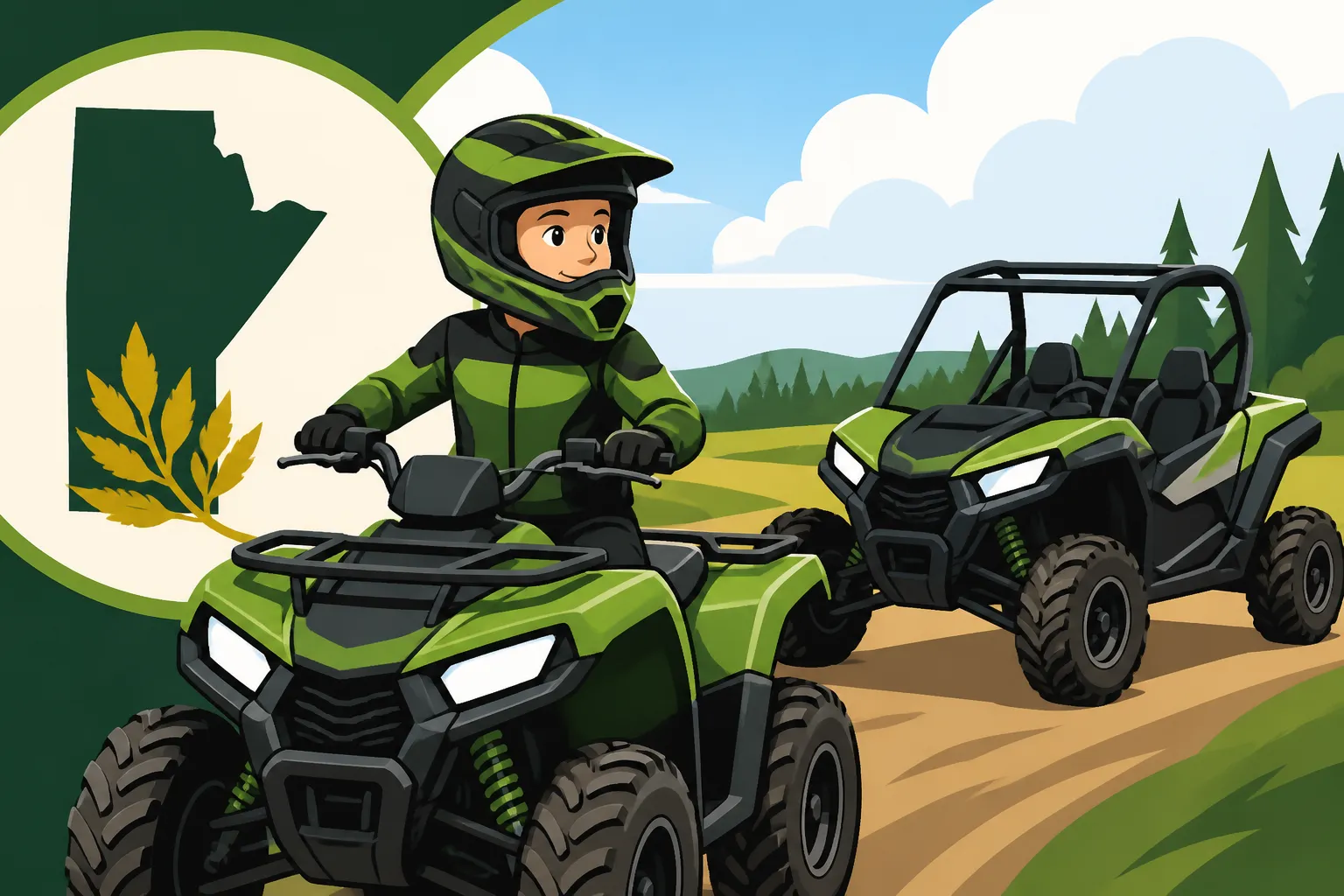
A ten-year-old is under 14. Manitoba requires a person under 14 operating an off-road vehicle to be accompanied and under the direct supervision of someone who is at least 18. The supervising adult must keep the child in clear view. An adult who is somewhere nearby but cannot see the rider should not be treated as providing direct supervision.
This rule applies to the child operating the machine, whether it is an ATV, a side-by-side or another vehicle covered by the law. It does not mean the child can ride unsupervised just because the route is familiar, the machine is small, or the property belongs to the family.
The supervising adult also needs to make a practical judgment about whether they can actually oversee the ride. A child who disappears behind trees, gets far ahead, or enters terrain the adult cannot see is no longer being watched in a meaningful way. Choose a route and pace that keep the rider visible and within the adult’s control.
A ten-year-old does not have to be the registered owner to operate a machine. Ownership and registration rules are separate from the age rule for operating. Check the applicable registration requirements for the machine and keep its required documents in order; a child’s age does not cancel those obligations. See Manitoba Registration Age of 16 and Carrying Your Registration Card on Every Ride for the distinction between registration and operation.
| Situation | What to keep in mind |
|---|---|
| Child is operating an ORV | A rider under 14 needs direct supervision by someone at least 18 |
| Adult is supervising | Keep the child in clear view throughout the ride |
| Ride is on private land | Permission and private property do not automatically remove operating rules |
| Child is crossing a highway | A ten-year-old cannot meet the driver’s-licence requirement for an ORV highway crossing |
| Machine is visiting from outside Manitoba | The rider must still follow Manitoba operating rules |
| Child is a passenger | Check the machine’s design, passenger limits, seat belts where fitted, and helmet rules |
The general youth rules are not a substitute for the machine maker’s age guidance. A quad that is too large or powerful for a child to control can be unsafe even if an adult is present and the legal supervision requirement is met. Conversely, an age recommendation printed by a manufacturer is not the same thing as Manitoba law. For more on the difference, see A Maker’s Age Rating Is Not the Law.
Where a ten-year-old may ride
Supervision does not turn a prohibited place into a legal riding area. Manitoba restricts where off-road vehicles may operate, and local rules can add further limits. Before unloading, identify who controls the land, whether ORVs are allowed there, and whether there are current closures or route restrictions.
Private property is not a blanket exception
A landowner’s permission matters, but permission is only one part of the decision. It does not mean the child can ride on any surface or use any route without regard to provincial operating rules. Property may also include public roads, road allowances, Crown land, leases, wetlands or other areas with different access conditions.
For a family property, set boundaries in advance. Identify safe routes, keep the rider away from roadways and public access points, and make sure the adult can maintain clear sight of the child. If the machine will use someone else’s land, get permission from the person with authority to grant it. Read Manitoba Private Land Permission and Manitoba Crown Lease Access Rules before assuming that a route is open.
Registration exemptions and riding permission are also different questions. A narrow exemption from registration does not automatically exempt a rider from age, helmet, insurance or location rules. Likewise, a machine that is properly registered is not automatically permitted on every trail or piece of land.
Public roads, ditches and highway crossings
Manitoba generally bars ORVs from roadways, subject to specific exceptions. A child should not ride along a public road simply because it connects two trails or appears quiet. A municipality or other authority may have its own by-law, and the existence of a trail nearby does not establish that the road itself is open to ORVs.
Ditch riding has separate restrictions, including rules about which ditch may be used and the direction of travel. The under-14 supervision requirement still applies. Do not assume that an adult’s presence makes an otherwise unlawful ditch route legal. Review Manitoba Ditch Riding Rules and Manitoba Municipal By-Law Powers for the relevant restrictions and local authority.
Crossing a highway is not the same as riding along it, but crossing is still tightly regulated. The crossing rules include a driver’s-licence requirement. A ten-year-old does not qualify to make an ORV highway crossing as the operator. The adult should choose a route that avoids requiring the child to cross, rather than trying to solve the problem by escorting the child across. More detail is available in Manitoba Rules for Crossing a Highway and Manitoba Crossings Need a Driver’s Licence.
Trails and parks
A named trail is not necessarily open to every type of vehicle or rider. Check the trail’s current access information, local signage and any applicable park rules. Some park areas allow machines only on designated routes; a hiking path, old road or visible track should not be treated as an approved ORV route without confirmation.
Trail conditions matter for a young rider as well as access rules. Mud, deep ruts, water crossings, steep slopes, loose sand and narrow shared-use corridors can quickly exceed a child’s ability. An adult may need to select a simpler route or turn back, even when the trail is open. See Manitoba Parks Allow Machines on Designated Routes Only and Manitoba Trail Conditions Before You Haul when planning a destination ride.
Safety, equipment and paperwork to check
Legal supervision is only the starting point. The adult should confirm that the child can reach and use the controls, understand basic instructions, and stop or turn the machine predictably. A ten-year-old should not be put on a vehicle that is too heavy, fast or difficult to manage just because the child can sit on it.
Helmet and protective gear
Helmet rules apply to young riders, with limited exemptions that are specific to the circumstances. Do not assume an exemption applies because the ride is on private land, the child is with a parent, or the machine is being used for recreation. Check that the helmet is the right size, fits securely and carries an accepted safety standard mark. A helmet that shifts, blocks vision or is damaged is not a sound choice.
Protective clothing can reduce exposure to brush, gravel, weather and contact with the machine. Consider sturdy boots, gloves, long sleeves and eye protection suited to the riding conditions. If ordering equipment through Amazon or another retailer, check the helmet’s certification and fit rather than relying on a product description or the retailer’s name. Read Manitoba ATV Helmet Law and Manitoba Helmet Standards Accepted for the legal requirements.
Match the machine to the child and ride
Before starting, review the controls and agree on simple instructions: where to stop, how to signal, what to do if the adult is no longer visible, and when the child must wait. Use a large, open area for practice rather than beginning on a busy or shared trail. Keep the adult close enough to intervene and avoid riding so quickly that the child cannot follow safely.
For a UTV or side-by-side, use only the seating positions and passenger capacity intended by the manufacturer. If the machine has seat belts, occupants should use them as designed. Do not carry a child in a cargo box or improvised seat. A passenger’s presence does not count as supervision unless the adult is also able to maintain the required direct oversight of the child operating the vehicle.
A child who is riding as a passenger is in a different situation from a child operating the machine. The adult should still check that the machine is designed for passengers, that the child can be properly seated and secured, and that helmet rules are followed. See Manitoba Rules for a Child Passenger and Manitoba Seat Belt Rules.
Registration and liability coverage
If the machine needs registration, make sure it is registered as required and that its plate and registration certificate are handled correctly. Registration is not a riding permit for every trail, and carrying a certificate does not authorize an otherwise prohibited route. Adults should also confirm that the required liability coverage is in place before riding. For details, see Manitoba ORV Registration Through MPI and Manitoba’s Liability Coverage Requirement.
A visitor’s machine is not a way around Manitoba’s operating rules. Home registration and insurance may be relevant to whether the vehicle can be operated here, but a visiting child still needs to follow Manitoba’s age and supervision requirements. Check Manitoba Visitors and Operating Rules if the machine is registered outside the province.
A practical plan for a child’s first rides
The simplest way to reduce confusion is to decide the route and checks before the machine starts. A short ride on an appropriate, permitted area is usually easier to supervise than a long trip that involves roads, unfamiliar trails or changing conditions.
- Confirm who may use the land. Get permission where needed, verify that ORVs are allowed, and check for posted restrictions or closures.
- Choose a route the adult can see. Avoid sections where trees, hills, distance or traffic separate the adult from the child.
- Check the machine. Confirm that the child can operate the controls and that the vehicle is appropriate for the rider and terrain.
- Review the safety basics. Fit the helmet, use any required seat belt, and explain how to stop, wait and signal for help.
- Check the paperwork. Confirm the registration and liability coverage requirements for the machine, and carry the required registration certificate.
- Set limits before riding. Agree on a low speed, stopping points and a clear rule that the child must wait if the adult is no longer in view.
- Stop when conditions change. Poor visibility, fatigue, a mechanical problem or a route that becomes harder than expected are good reasons to turn around.
Do not rely on another family’s practice as proof that a ride is allowed. Rules can depend on the vehicle, the land, the route and local restrictions. If the situation is unclear, ask an Autopac agent about registration questions and the relevant land or local authority about access. A quick check before hauling can prevent an unsafe ride or an avoidable compliance problem.
The main takeaway is straightforward: a ten-year-old’s ride in Manitoba requires direct supervision by an adult at least 18 who keeps the child in clear view. That condition does not override location rules, crossing restrictions, helmet requirements or the need for appropriate equipment. Plan a route that avoids public-road crossings, use a machine the child can control, and confirm access and paperwork before heading out.
Disclaimer
This article is for general informational purposes only and does not constitute professional advice. Laws, prices and regulations vary by location and change over time. Consult a qualified professional for guidance on your specific situation.