Beginner Routes at a Local ATV Club
Choosing a first ATV route can feel harder than riding it: trail maps may use unfamiliar symbols, conditions change quickly, and a route described as “easy” can still include mud, roots, or steep turns. This guide explains how to find beginner-friendly Manitoba club trails, check whether they suit your machine, and plan a first outing without relying on guesswork.
What makes a Manitoba ATV route beginner-friendly
Look beyond the word easy
“Beginner-friendly” does not mean perfectly flat, dry, or free of obstacles. It usually means a route is manageable for a newer rider who is comfortable with basic controls and has time to take things slowly. A wide, well-marked trail with room to stop and regroup may feel much less intimidating than a narrow route with frequent turns, even if both are rated at a similar difficulty.
In Manitoba, trail conditions can change the character of a route. A stretch that felt straightforward after a dry spell may become slick after rain, while low, wet sections can be challenging even when the rest of the ride is gentle. Roots, sand, ruts, loose gravel, and washouts also matter. “Easy” is best treated as a starting point for questions, not a guarantee about what you will encounter.
Ask the club or local trail contact how the route is rated and what that rating means in practice. Is it suitable for someone on their first off-road ride, or simply easier than the club’s more technical trails? Does the rating refer to the normal route, or can it change with weather? A specific answer is more useful than a label on its own. For help comparing route descriptions, see Manitoba Trail Difficulty Ratings.
Match the route to your machine and experience
The same trail can feel different on a small ATV, a long-wheelbase side-by-side, and a machine with tracks. Width, ground clearance, tires, turning radius, and rider experience all affect how comfortable a route feels. A tight wooded turn that is easy on a quad may be awkward for a larger UTV, while a sandy stretch may be more work for a machine with tires poorly suited to soft ground.
Be honest about your experience, too. A rider who is new to trail riding may be confident driving on a familiar property but still need time to learn how the machine handles ruts, uneven ground, and changes in traction. There is no shame in choosing a short out-and-back ride, taking breaks, or turning around when the route feels beyond your comfort level.
Before you go, ask whether the route accommodates your machine type and whether there are any restrictions on the club’s trails. Then check the rules for registration, required documents, and equipment. Manitoba’s riding requirements are a separate question from whether a route is suitable for beginners; start with Manitoba ORV Road Rules Explained and The Certificate Manitoba Riders Must Carry at All Times rather than assuming a club map covers every legal requirement.
Choose a route with an easy exit
For a first outing, a shorter route with a clear turnaround point is often a better choice than a long loop. If a section becomes too difficult, you want to know whether you can return the way you came, take a simpler branch, or reach the trailhead without continuing deeper into unfamiliar terrain.
Ask about the route’s length, surface, junctions, and access points. A trail may look short on a map but take longer than expected if you stop often, ride cautiously, or encounter rough conditions. Also find out whether there are spots where a group can pull over safely without blocking the trail. Those details can make the difference between a relaxed first ride and a stressful one.
How to find beginner routes through a local ATV club
Start with a nearby club and its current trail information
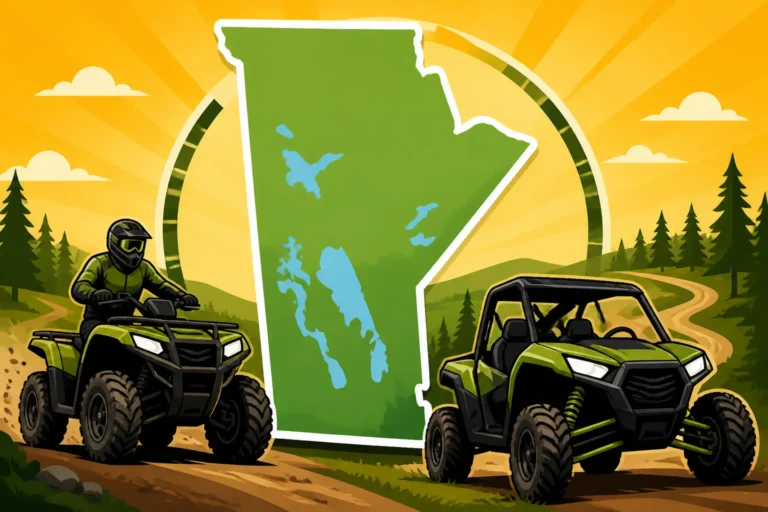
Local ATV clubs are often the most practical place to ask about routes because members may know which sections are in decent shape, where a trail gets rough, and whether a particular machine will fit comfortably. Manitoba has riding areas associated with clubs in different regions, including Eastman, Interlake, Westman, and northern communities. A location that looks close on a provincial map may still involve a long drive to the trailhead, so check the access point before loading your machine.
Begin with Manitoba ATV Clubs Worth Joining and look for a club that serves the area you want to ride. Check the club’s own map or trail updates, then contact the club if the route description is unclear. You can ask whether beginners commonly use that trail, whether it is open to your machine type, and whether recent rain, maintenance work, or seasonal restrictions have changed access.
A familiar place name is not enough to confirm that a route is open or appropriate. For example, riders may come across references to the Agassiz area, Belair Forest, or trails near Woodridge while planning a trip. Those names can help narrow the search, but conditions, access, and permitted routes should be confirmed with the club or relevant land manager before you travel. Start from Manitoba ATV Trail Map Downloads and Manitoba Trail Conditions Before You Haul, then verify details for the specific ride.
Ask questions that reveal the real difficulty
When you contact a club, explain that you are a beginner and give the details that affect the recommendation: your ATV or UTV model, whether you are riding alone or with a group, and how much trail experience you have. You do not need to know technical terms. A plain question such as “Is there a short route with firm footing and no difficult mud sections?” gives the person answering something concrete to work with.
Useful questions include:
- Which trail would you recommend for a new rider today?
- Is the route suitable for my machine’s width and setup?
- Are there narrow, muddy, sandy, or steep sections?
- Can I turn around easily if I am uncomfortable?
- Where should I park and unload?
- Are there current closures, construction, or seasonal limits?
- Is there cell service, and where is the nearest reliable help?
If you use onX Offroad to look at a route, treat it as a planning aid rather than a substitute for current club information. Map coverage can help you understand the general layout, but it may not show a temporary closure, a deteriorated section, or the latest local access guidance. Check the club’s information first, then use onX Offroad alongside that information if it helps you follow your plan.
Compare route options before choosing
A quick comparison helps you avoid selecting a trail just because it appears short or close. Use the table as a planning checklist, not as a claim that any specific trail is currently open or beginner-rated.
| Route feature | Usually easier for a first ride | Ask more questions if you see |
|---|---|---|
| Length | Short route with a known turnaround | Long loop with few exit points |
| Surface | Firm, predictable ground | Deep sand, standing water, or loose rock |
| Width | Room to pass or stop safely | Narrow brush or tight turns for a UTV |
| Navigation | Clear signs and a current club map | Unmarked junctions or uncertain access |
| Conditions | Recent local report available | Recent rain, washouts, or unknown mud |
| Support | Ride with an experienced companion | Solo ride in an unfamiliar area |
This is also where onX Offroad can be useful for reviewing the general route shape before leaving home. Compare what you see with the club’s own map and ask about any mismatch. If the map suggests a loop but the club says a section is closed, follow the current local guidance rather than trying to improvise a connection.
Plan your first club-trail ride
Prepare your machine and paperwork
A beginner ride is a poor time to discover that a tire is losing air, a belt is worn, or your registration certificate is buried under gear. Give the machine a basic check before loading it: inspect tires, brakes, lights, fuel, controls, and visible leaks. For a UTV, confirm that seat belts and other fitted safety equipment are in working order. Bring any tools and recovery items you know how to use.
Make sure the machine and rider meet applicable requirements before setting out. Check registration, insurance, and operating rules for your situation, and carry the documents required for the ride. If you are uncertain about the registration side, see How to Register an ATV in Manitoba. A trail recommendation from a club does not replace your responsibility to follow provincial rules, local bylaws, land-access conditions, and any posted restrictions.
Pack for the day rather than the ideal forecast. Weather can shift, and a stop beside the trail can feel much colder than expected. Bring water, food, suitable layers, basic first aid, a charged phone, and a way to navigate if you lose signal. A paper map can be a sensible backup in areas where reception is limited. Keep your route information accessible, and tell someone where you are going and when you expect to return.
Ride at a pace that lets you make decisions
On the trail, leave enough space between machines to react to dust, sudden stops, and obstacles. Avoid following so closely that the rider in front feels pressured to speed up. If you are riding with a more experienced group, agree beforehand that everyone will wait at junctions and regroup at planned stops. A supportive group makes it much easier for a new rider to ask for a break or say that a section feels uncomfortable.
Use a steady pace and look ahead instead of staring at the ground immediately in front of your tires. If you meet a rut, root, or muddy patch you are unsure about, stop somewhere safe and assess it before proceeding. Don’t let the pressure to keep up turn a manageable ride into a rushed one. An experienced rider can demonstrate a line through an obstacle, but you still get to decide whether you are comfortable trying it.
Navigation apps can help you follow your plan, but don’t watch a screen while moving. If onX Offroad is part of your preparation, check it while stopped and keep the club’s current route information handy. The safest response to a confusing junction is to pause, regroup, and confirm your location—not to guess and hope the trail reconnects later.
Keep the first outing simple
A first club ride does not need to be an all-day expedition. Choose one route, allow extra time, and resist the temptation to add a second trail just because the group is having fun. Riding carefully, learning how your machine reacts, and returning without a preventable mishap are worthwhile goals on their own.
If conditions are wetter, rougher, or busier than expected, shorten the ride or turn back. That is good judgment, not failure. Similarly, if the trail appears to cross private land, a lease, or a restricted area, do not assume that a line on a map gives permission to continue. Review Manitoba Crown Land Access Rules and confirm access with the appropriate local contact when needed.
After the ride, note what felt comfortable and what you would like to practise. Perhaps you want more confidence on loose gravel, better understanding of a map, or a machine setup that suits the terrain. That reflection makes it easier to choose the next route and gives a club member useful information when you ask for another recommendation. With each outing, a trail that once seemed intimidating can become familiar—provided you build up gradually and respect the conditions.
Disclaimer
This article is for general informational purposes only and does not constitute professional advice. Laws, prices and regulations vary by location and change over time. Consult a qualified professional for guidance on your specific situation.